
Korea Unveils 3-Point Korea–India SME Roadmap for 2026, Pushing AI Tech Matching, Omni-Channel Market Entry and JV Incubation
A joint KOSMA–KOSME–FISME workshop mapped out this year’s strategy to accelerate Korean SME entry into India and scale practical India–Korea partnerships through PoCs, local marketing residency and manufacturing-linked joint ventures.

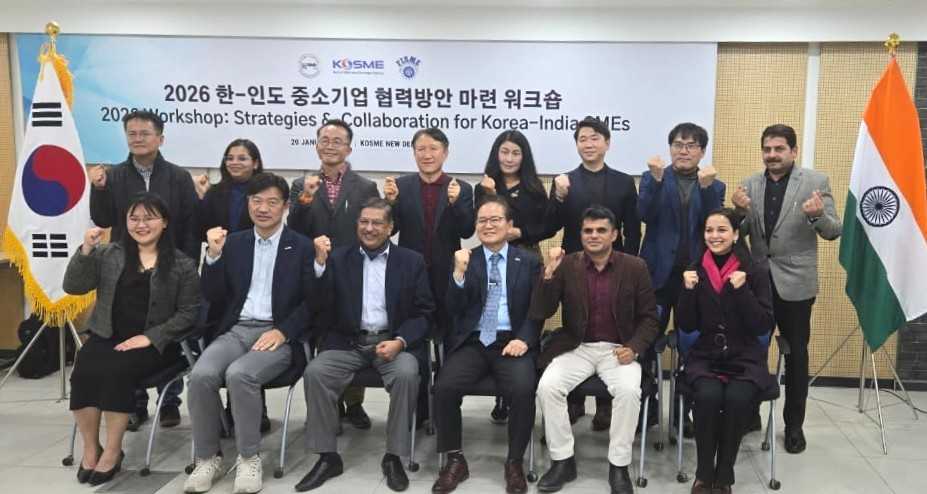
New Delhi, India – South Korea’s SME promotion agency KOSME has presented a structured three-point Korea–India engagement programme for 2026—anchored on AI-based precision technology matching, an omni-channel local marketing residency model, and a proposed India–Korea JV incubation framework—as part of a strategic push to accelerate collaboration between Indian and Korean SMEs and facilitate the entry of more Korean SMEs into the Indian market.
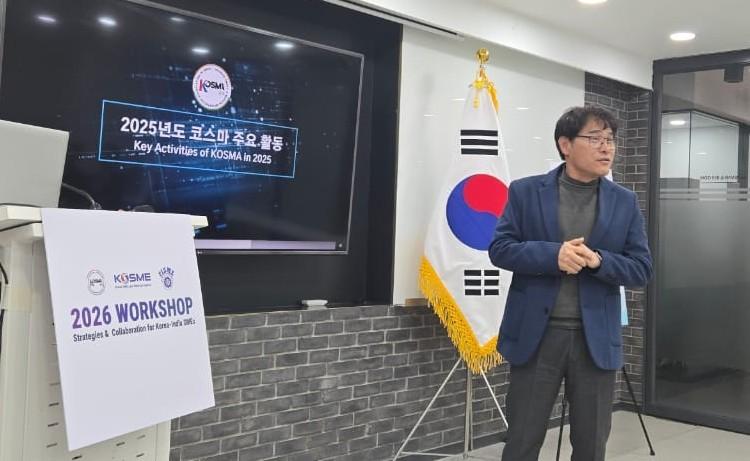
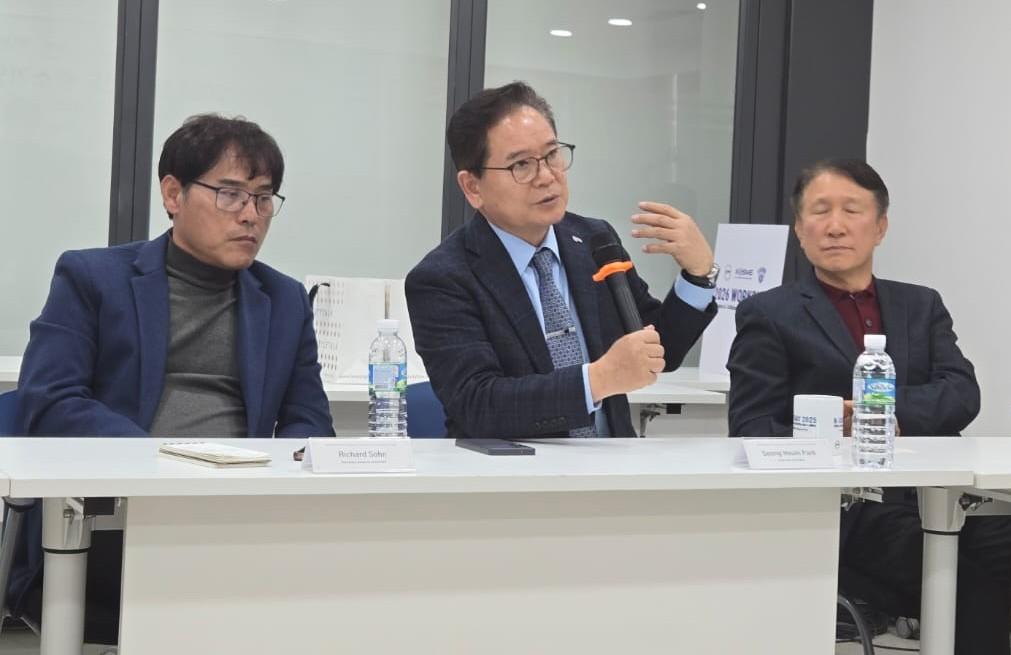 The roadmap was unveiled during the “2026 Workshop: Strategies & Collaboration for Korea–India SMEs”, jointly organised by KOSMA, KOSME, and FISME, at the Global Business Center (GBC), where the institutions aligned plans and responsibilities to expand Korea–India SME cooperation across manufacturing solutions, market access and long-term joint production models.
The workshop also featured senior officials and heads of the participating institutions, reinforcing the importance of 2026 as a year for deeper, more outcome-oriented engagement.
Present on the occasion were LEE Jae Kyeong, Director KOSME New Delhi GBC (Global Business Center), Sandeep Kishore Jain, President, Federation of Indian Micro and Small & Medium Enterprises (FISME), Park S H, Chairman, of the Korean SMEs Association in India (KOSMA). Other KOSMA office bearers included KIM Chang Hyun (MD, AA Studio & K-Friends), PAK Dong-sung, MD of Dicuria Pvt Ltd., Ms Jasmine Youngmi Park, MD of Delhi GolfZone, Richard Sohn, CEO of Beautytalk, HONG Jeong-Mun, MD of Miso Study, Kang Seung Jung, MD of I-KETS, Ms Kang Hyejung, Mayank Gaur, JS of FISME, and others.
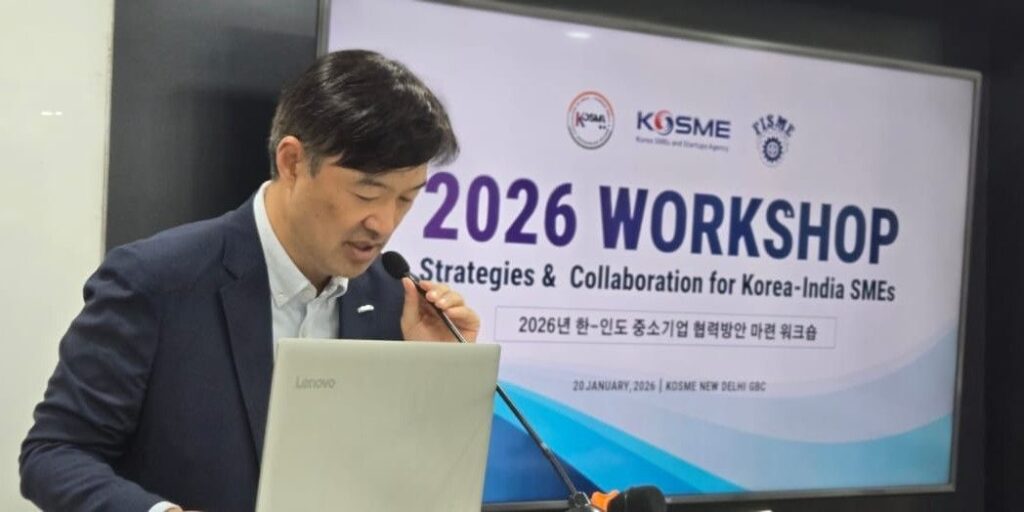 The event was jointly hosted by the Korea SMEs and Startups Agency (KOSME), the Federation of Indian Micro and Small & Medium Enterprises (FISME), and the Korean SMEs Association in India (KOSMA).
At the core of KOSME’s 2026 proposal was a belief that Korea–India SME partnership needed a sharper pipeline—one that could begin with technology problem-solving, transition into consumer-market validation, and ultimately mature into manufacturing-linked joint ventures that strengthen supply chains and investment linkages.
The first pillar of KOSME’s 2026 programme was framed as an AI-enabled “K-India Tech Solution Challenge”—a precision technology matching initiative meant to connect India’s production-side challenges with Korean technology solutions. Under the concept, the focus was placed on collecting real production and process requirements from Indian firms and using AI-led matching to identify Korean technology solution providers capable of addressing those demands.
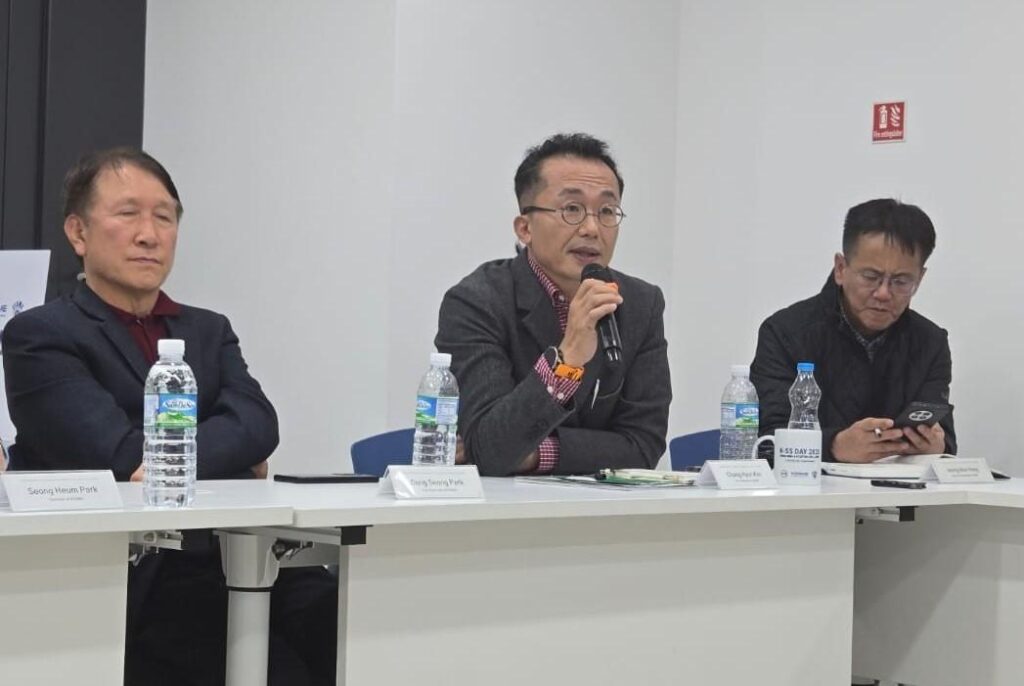 The structure also included a workshop presentation platform, followed by PoC and joint R&D cooperation, creating a direct bridge between manufacturing needs in India and solution capacity in Korea. Participants highlighted that this mechanism could significantly reduce trial-and-error in technology scouting by establishing a structured path from the identified problem to the matched solution, and then to PoC execution.
KOSME’s second pillar focused on accelerating the India entry journey for Korean SMEs by proposing a K-SS Omni-Channel Residency Programme, designed as an integrated online–offline local marketing system. The concept placed emphasis on sales generation and consumer insight development rather than solely on promotional visibility.
The programme proposed that Korean SMEs—particularly in sectors such as beauty and food—could be supported through a structured retail presence in India, complemented by weekly live commerce sessions. The process would generate real-time sales outcomes, track consumer responses, and build data-backed feedback loops for product positioning. By integrating retail presence with digitally driven consumer engagement, the model was pitched as a way to reduce uncertainty in India market entry while accelerating market validation and making it measurable.
 The third pillar brought a longer-term industrial lens to the cooperation roadmap through an India–Korea JV Incubator for Supply Chain Diversification, aimed at establishing local production bases in India through Korea–India joint ventures. The idea focused on strengthening supply chain resilience while enabling Korean firms to integrate into India’s manufacturing ecosystem with Indian partners. The proposed framework included supporting the identification of suitable partners, facilitating matchmaking, and offering structured advisory support—including legal and accounting guidance—so that joint ventures could move beyond intent into execution. The JV incubation pillar was presented as a critical step toward deeper industrial collaboration that could anchor long-term bilateral SME partnerships.
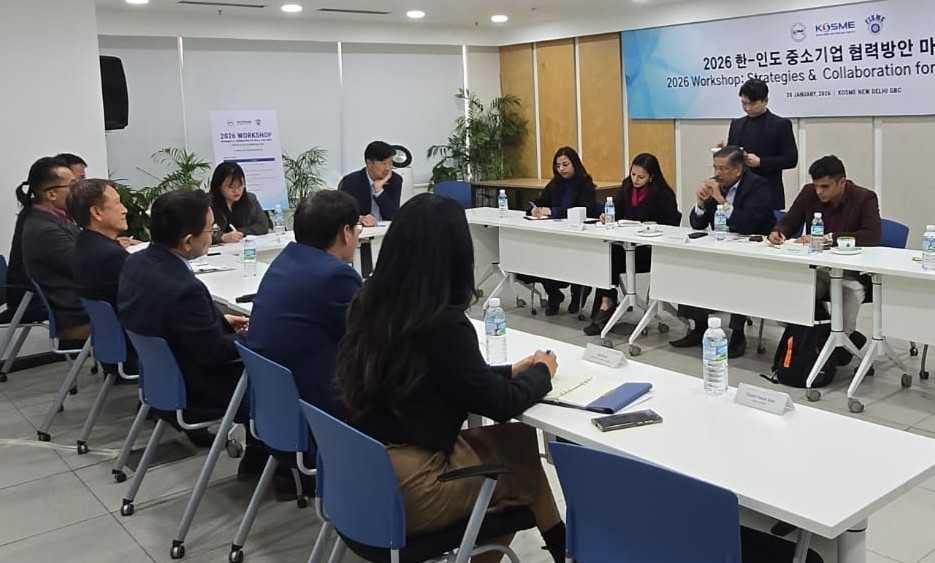 Alongside KOSME’s proposals, FISME presented its own recommendations and expectations for cooperation to ensure that the engagement pipeline delivers structured, scalable business outcomes. FISME emphasised that Korea–India SME cooperation required stronger institutional handholding, particularly in improving access to Korean trade and commerce institutions, building linkages with Korean industry bodies and associations, and identifying Korean SMEs ready for joint ventures, technology partnerships or licensing models with Indian counterparts. FISME also underlined the importance of ensuring participation of India-side initiatives such as CoEAS in key business and trade events in South Korea, and of creating consistent B2B liaison mechanisms so that engagement does not remain confined to workshops but continues through follow-up, mentoring, and business matchmaking.
The India-side body also outlined the immediate way forward to sustain momentum, including deeper engagement mechanisms with Korea, follow-up meetings with the Trade Counselor, orientation programmes for Korean delegations to India-side initiatives, and stronger coordination among the office bearers of FISME, KOSMA and KOSME. The underlying message in FISME’s intervention was that SME partnerships grow when institutions actively lower entry barriers, maintain continuity through structured engagement, and create dependable pathways for deals and partnerships to mature.
With KOSMA, KOSME and FISME bringing their frameworks together under one platform, the 2026 workshop functioned not merely as an event but as a strategic coordination point—where technology collaboration, market entry, and joint manufacturing were placed within one shared roadmap. Participants noted that the coming year presented a valuable opportunity to move from bilateral intent to real outcomes, particularly through pilot projects, PoCs and structured business development programmes that can be tracked and scaled.