

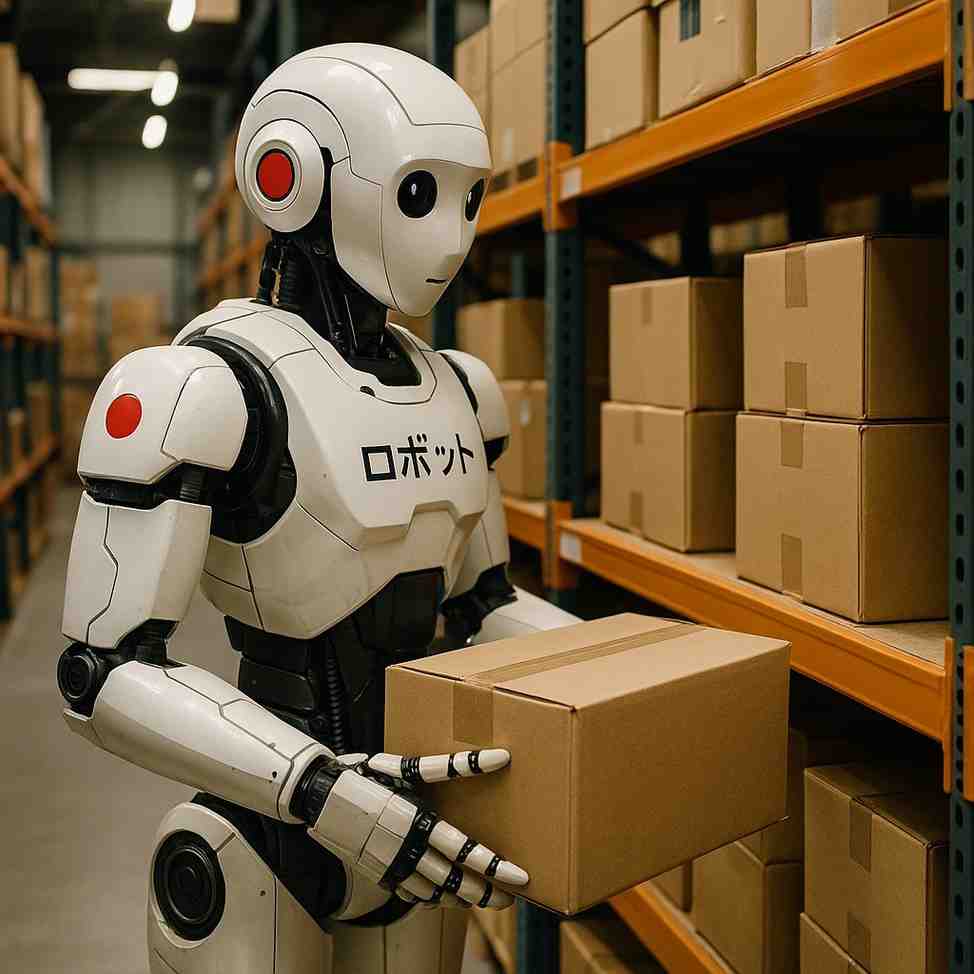
New Delhi, India, July 16, 2025 — In recent years, the industrial landscape of India has been undergoing a quiet but profound transformation, and at the heart of this shift lies a high-tech partnership with Japan. Japanese robots—renowned for their precision, reliability, and intelligent design—are revolutionizing Indian warehouses, injecting automation into a system long plagued by inefficiencies, labor shortages, and inconsistent productivity.
Japan has always been a pioneer in robotics. From the factories of Toyota to the humanoid bots of SoftBank, the country has consistently led the way in developing cutting-edge automation solutions. As India moves towards becoming a global manufacturing and logistics hub under initiatives like “Make in India” and “Digital India,” Japanese robotics technology has found fertile ground in the country’s rapidly growing warehousing sector.
What makes this development particularly exciting is the fusion of Japan’s mastery of automation with India’s logistical ambitions. Warehouses in cities like Mumbai, Delhi NCR, Bangalore, Pune, and Hyderabad are now equipped with intelligent robotic systems that can pick, sort, transport, and stack goods with minimal human intervention.
Some of the most impactful technologies making their way into Indian warehouses from Japan include:
- Automated Guided Vehicles (AGVs): These driverless robots move goods from one point to another inside vast warehouses, reducing dependency on forklifts and human labor. They follow magnetic strips or QR codes and are equipped with sensors to prevent collisions.
- Robotic Arms for Picking and Packing: Borrowing from precision-driven Japanese assembly lines, robotic arms with vision sensors are now used to pick items from shelves and pack them into boxes—ensuring accuracy and speed that human workers can seldom match.
- Automated Storage and Retrieval Systems (ASRS): These systems drastically reduce the time needed to locate and retrieve goods. Items are stored in multi-level racks and automatically retrieved by robotic shuttles.
- Smart Inventory Management Systems: Powered by artificial intelligence and machine learning, these systems communicate directly with robots, ensuring that every movement is optimized for space, time, and energy.
The integration of Japanese robotic technology is not just about glamourizing warehouses with flashy gadgets—it brings tangible, measurable advantages:
- Increased Efficiency: Robots can operate 24/7 without breaks, fatigue, or human error, resulting in faster turnaround times and consistent output.
- Space Optimization: With intelligent racking systems and high-precision movement, warehouses can store more in less space, a crucial advantage in urban India where real estate is expensive.
- Reduced Costs in the Long Run: Although initial setup costs are high, automated warehouses eventually bring down costs related to labor, shrinkage (loss due to damage or theft), and inventory mismanagement.
- Scalability: Robotic systems can be easily scaled as the business grows. Adding more AGVs or robotic pickers is simpler and faster than recruiting and training new staff.
- Enhanced Worker Safety: Robots take over the most physically demanding and hazardous tasks, reducing workplace injuries and ensuring a safer environment for human workers.
One reason Japanese robotics fits so well in Indian warehouses is the shared emphasis on discipline, routine, and process optimization. Japanese engineers and technicians working in India often find it easier to implement Kaizen-based (continuous improvement) methodologies in Indian supply chains.
Additionally, Japanese companies investing in India typically bring robust training programs. Indian warehouse staff are trained to operate, maintain, and manage robotic systems, which enhances skill development and boosts long-term employment prospects—even as the nature of jobs evolves.
Several industries in India have already begun to reap the benefits of robotic automation in their warehouses:
- E-commerce Giants: Companies like Flipkart, Amazon India, and Reliance JioMart are integrating Japanese robotic systems to handle the growing volume of orders with speed and accuracy.
- Pharmaceutical Sector: Precision and traceability are vital in pharma warehousing. Japanese robots help ensure hygienic, efficient, and tamper-proof handling of medicines and medical devices.
- Automotive Industry: Already familiar with Japanese practices via partnerships with companies like Suzuki, Honda, and Toyota, the auto sector in India has smoothly integrated robotic warehousing to manage parts and finished vehicles.
- FMCG and Retail: With massive SKU counts and fast delivery demands, FMCG companies now rely on robotic automation for sorting, packaging, and dispatch.
Despite the promising trends, the journey isn’t without hurdles. High capital costs, lack of standardization in warehouse infrastructure, and limited skilled manpower in smaller cities can slow adoption. There’s also a fear among traditional laborers of job losses due to automation.
However, as India’s supply chain infrastructure modernizes and the cost of robotics falls, these obstacles are gradually being overcome. The rise of warehouse automation parks, training centers for robotics, and government incentives for smart logistics is paving the way for broader adoption.
Japanese robots are not just changing how Indian warehouses function—they are redefining the very idea of work in logistics. By bringing in efficiency, safety, and scalability, they are setting new standards in an industry long considered labor-intensive and chaotic.
As India positions itself as a global logistics power in the coming decades, the silent, precise, and powerful presence of Japanese robots will likely be one of the key driving forces behind its success. This collaboration exemplifies how cross-cultural technological exchange can lead to practical, high-impact transformation in emerging economies.