Korea explores India’s shipbuilding, ship repair, and marine equipment manufacturing ecosystem
Senior policymakers, diplomats, maritime experts and industry voices from Korea and India are discussing India’s shipbuilding vision and exploring practical models in green vessels, smart shipyards and marine manufacturing.

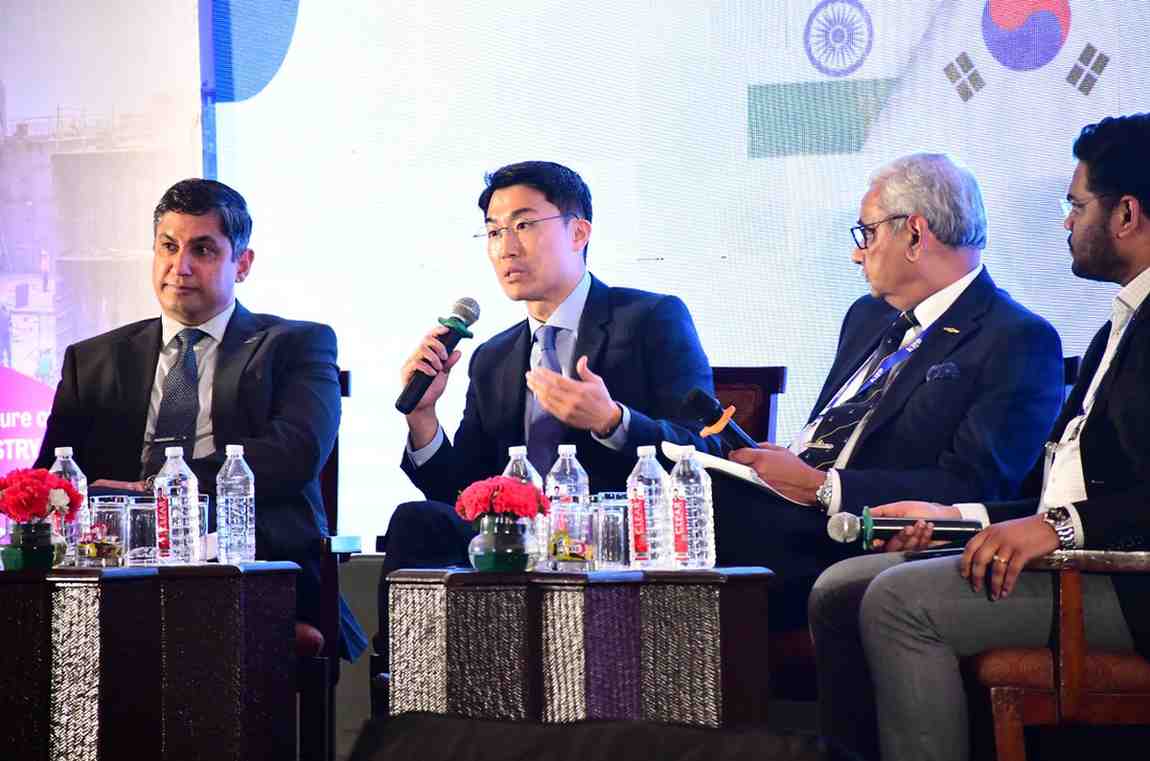
New Delhi, March 18, 2026: In a significant attempt to enhance India-Korea collaboration in the shipbuilding landscape, the 4th Korea-India Future Economy and Industry Forum 2026 (KI-FEIF) held in New Delhi on Wednesday, brought together senior government officials, diplomats, researchers and maritime experts to discuss the present status and future direction of India’s shipbuilding industry and identify concrete avenues for Korea–India cooperation in the sector.
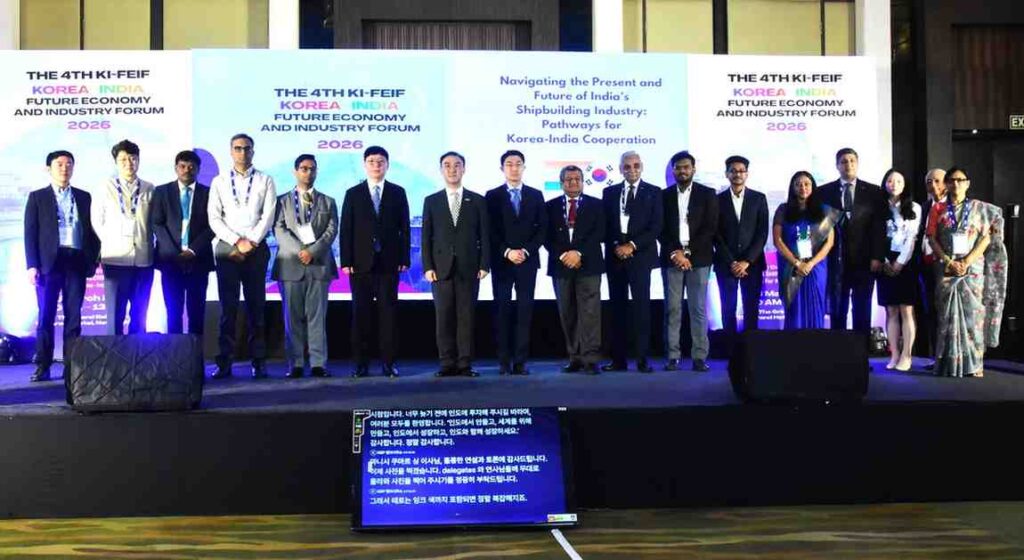 The forum was organised by the Delhi Office of the Korea Institute for International Economic Policy (KIEP) at The Grand Ballroom, The Grand Hotel, under the theme “Navigating the Present and Future of India’s Shipbuilding Industry: Pathways for Korea-India Cooperation.”
According to the forum overview and concept note, the event aimed to create a platform for in-depth discussion of the current landscape, prospects, government policies, and opportunities for bilateral cooperation in India’s shipbuilding, ship repair, and marine equipment manufacturing ecosystem.
The note highlighted that India’s shipbuilding sector was gaining renewed strategic importance at a time when the global shipping industry was being reshaped by decarbonisation, digitalisation and supply-chain realignment. It also pointed to India’s long-term maritime policy ambitions under the Maritime Amrit Kaal Vision 2047 and the Maritime India Vision 2030, which seek to position the country as a global hub for shipbuilding, repair, and recycling.
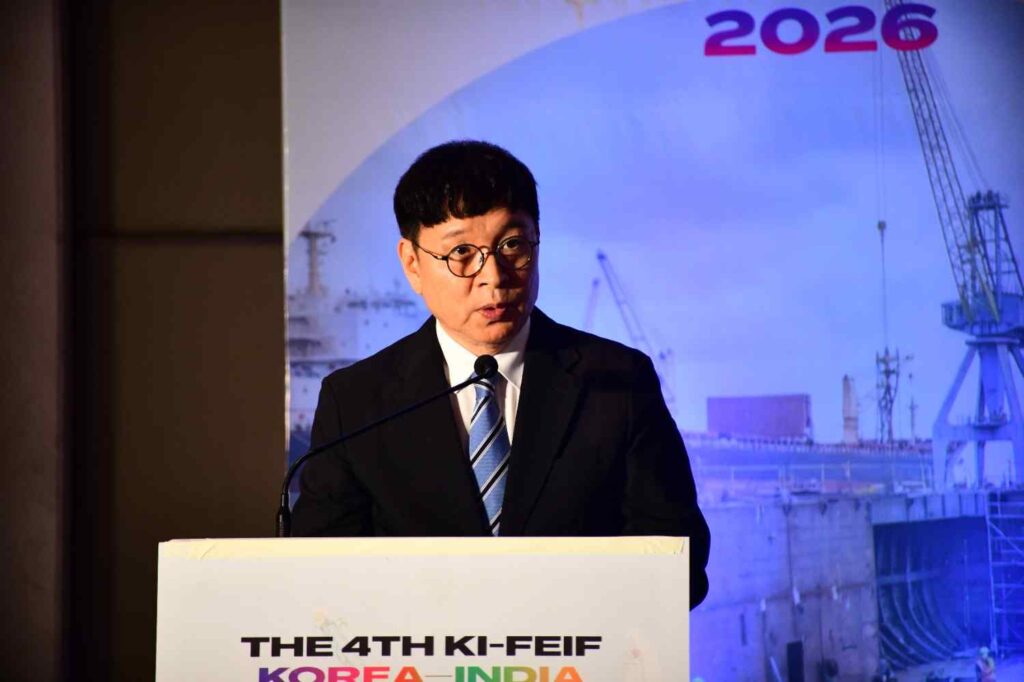 The event opened with remarks by Dr Lee Siwook, President of KIEP, followed by congratulatory remarks from H.E. Lee Seong-ho, Ambassador of the Republic of Korea to India, and Bhuvnesh Pratap Singh, Director, DPIIT, Ministry of Commerce and Industry, Government of India. The keynote session was delivered by Vipul Singhal, Director, Ministry of Ports, Shipping and Waterways, Government of India, who addressed the theme “Shipbuilding India: Navigating the Maritime Amrit Kaal Vision 2047.”
The keynote, as outlined in the programme, focused on India’s long-term shipbuilding roadmap, including policy priorities, reforms, incentive frameworks and the role of shipbuilding in supporting self-reliance, sustainability and global competitiveness.
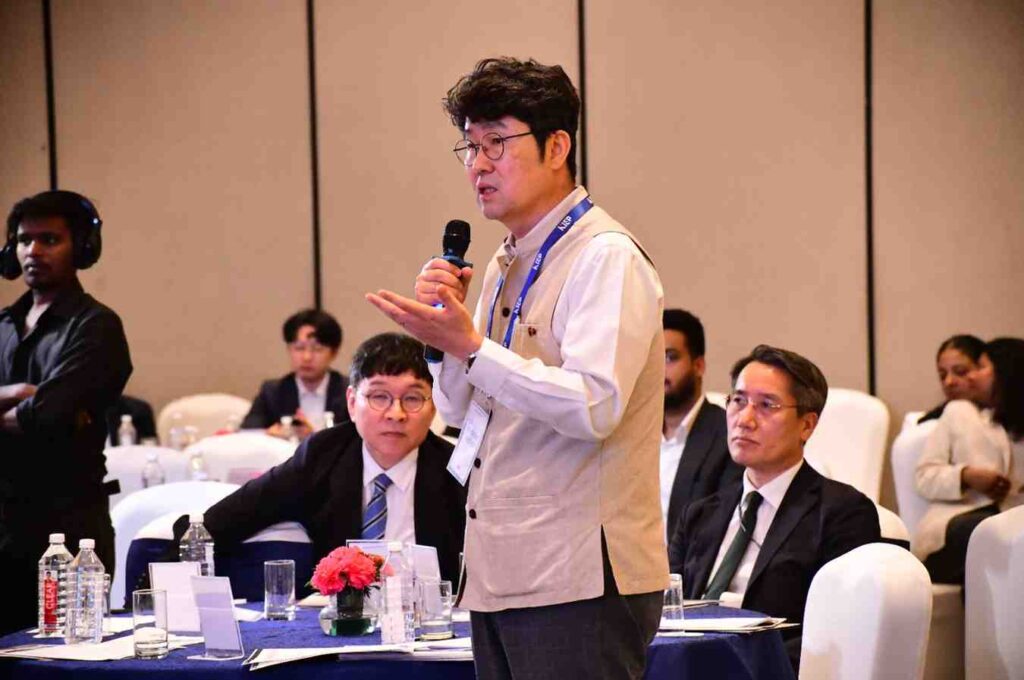 The first session of the forum examined India’s shipbuilding industry—its current status, future prospects and policy direction. The programme indicated that the discussion covered shipyard capacity, ship repair, demand trends in commercial and defence segments, marine equipment manufacturing, infrastructure challenges and India’s growth potential in global shipbuilding and repair markets.
Speakers in this session included Ravi Kumar Mokka, Surveyor-cum-Deputy Director General of Shipping (Technical), Directorate General of Shipping; Cmde. Sujeet Samaddar, Visiting Fellow, RIS; Prof. (Dr.) Tanuja Kaushik, Dean, Academic Affairs, Gujarat Maritime University; Captain Sarabjeet S. Parmar, Visiting Fellow, RIS; and Dr Piyali Das, Associate Director and Senior Fellow, National Centre of Excellence on Green Port & Shipping. A panel discussion moderated by Dr Cho Choongjae, Director, Delhi Office, KIEP, followed the presentations.
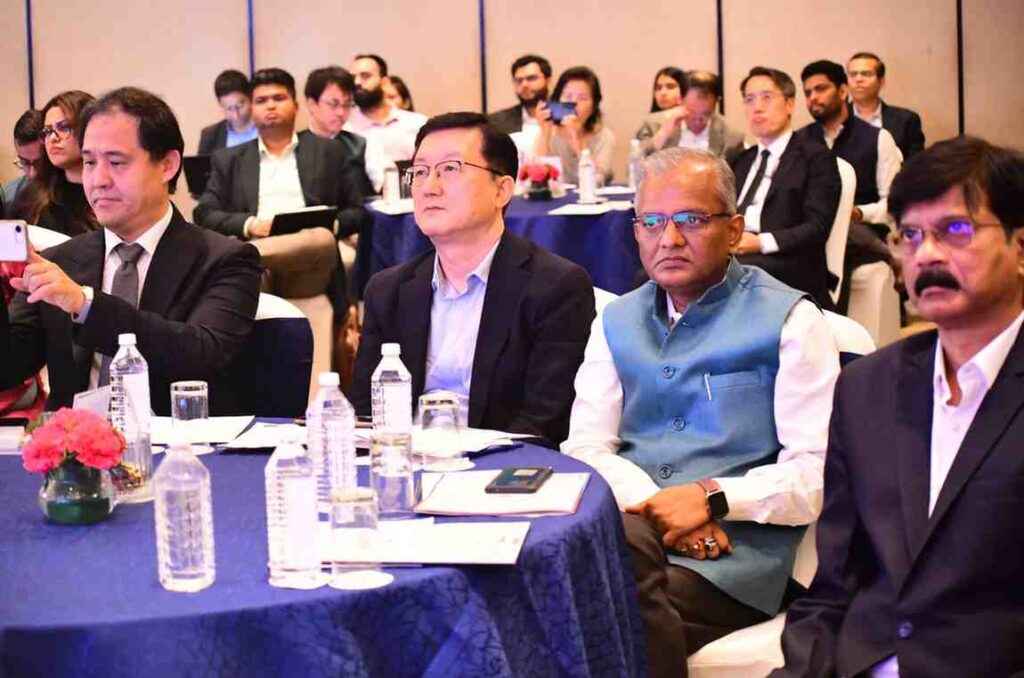 The second session shifted the focus to the business environment, regulatory incentives and Korea–India corporate collaboration in shipbuilding. The session explored issues such as subsidies, tax incentives, financing mechanisms, FDI policies, joint ventures, technology transfer, digital shipyard solutions and workforce development. Speakers included Dr Yang Jongseo of the Export-Import Bank of Korea’s Overseas Economic Research Institute, Cmdre.
Anil Jai Singh of the Indian Maritime Foundation, Dr Kim Kyunghoon of KIEP, and Sanjay Krishna A., Manager, Policy, Guidance, Tamil Nadu. The panel discussion for this session was moderated by Commodore Jai Bedi, Executive Director, National Maritime Foundation.
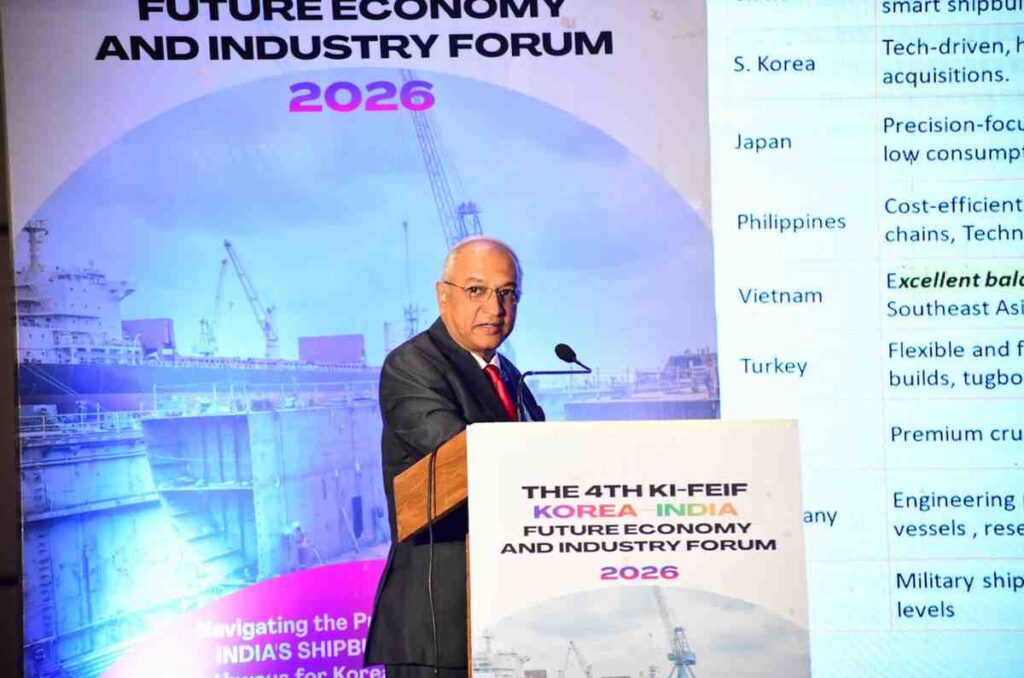 The concept note had underlined that the forum was designed to identify actionable pathways for bilateral cooperation by combining Korea’s strengths in advanced shipbuilding technologies, smart shipyards and green vessels with India’s growing demand, workforce advantage and expanding industrial base. It also listed future collaboration opportunities in areas such as green ships, alternative fuels, including LNG, methanol, and hydrogen, smart vessels, offshore wind support vessels, and global supply-chain integration.
The forum concluded with closing remarks by Dr Cho Choongjae, followed by a networking session. In its concluding note, the document stated that shipbuilding and maritime manufacturing were emerging as key pillars of India’s industrial and strategic growth, and that closer Korea–India cooperation could help build a more globally competitive and future-ready shipbuilding ecosystem delivering long-term value for both countries.