

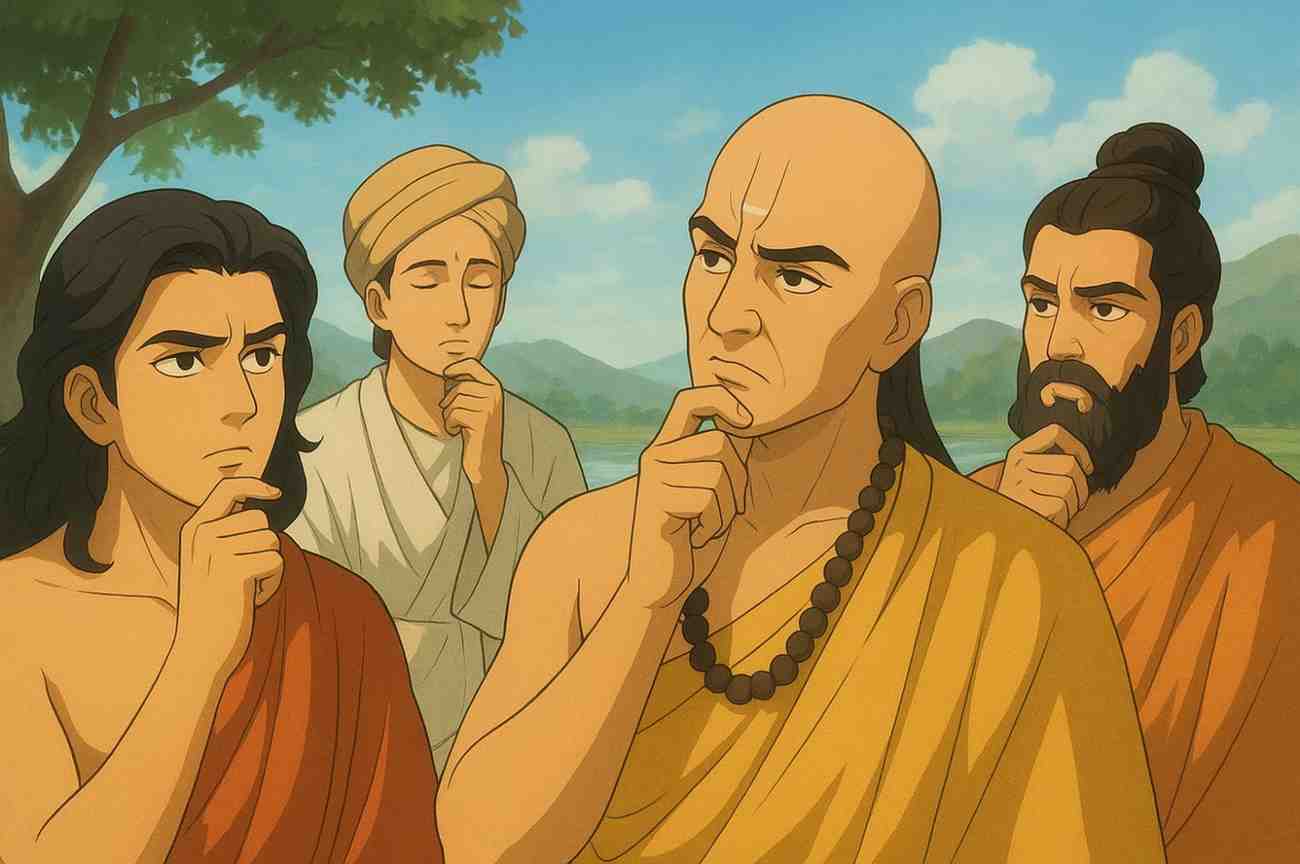
New Delhi, India, August 14, 2025 — Anime, often perceived globally as an entertainment medium filled with colorful visuals and fantastical battles, has a deeper layer that resonates strongly with philosophical thought. For Indian thinkers—who are accustomed to a long tradition of introspection, metaphysical inquiry, and moral storytelling—certain anime series offer a surprisingly rich intellectual experience. They explore existentialism, the nature of reality, moral dilemmas, and human destiny in ways that align with and challenge Indian philosophical traditions.
One of the most striking aspects of philosophical anime is its ability to blend narrative entertainment with profound questions. Indian philosophy has long explored the concepts of dharma (righteous duty), karma (action and consequence), and moksha (liberation from the cycle of life and death). Many anime, such as Death Note, delve into similar moral gray areas, forcing viewers to question the nature of justice and the ethical use of power. Light Yagami’s journey is not just a crime thriller—it’s a meditation on how ideals can be corrupted when unchecked by humility.
Another rich philosophical parallel emerges in series like Neon Genesis Evangelion. While it is often classified as a mecha anime, at its core, it is an exploration of human loneliness, identity, and the search for meaning in a chaotic universe. Indian thinkers familiar with the Upanishads might find its introspective tone reminiscent of the ancient inquiries into self (Atman) and universal consciousness (Brahman). The anime uses symbolism and psychological complexity to depict inner struggles in a way that can be compared to spiritual self-examination in Indian mysticism.
Anime such as Fullmetal Alchemist: Brotherhood also carries philosophical weight by exploring the principle of equivalent exchange—nothing can be gained without giving something of equal value. This mirrors Indian ideas about karma-phala, the inevitable results of one’s actions. Beyond the moral lessons, the series questions the ethics of human experimentation, the limits of ambition, and the role of sacrifice for the greater good—topics that align with both ancient epics and modern Indian ethical debates.
For Indian thinkers intrigued by existentialism, Serial Experiments Lain offers a deep dive into the intersection of consciousness and technology. The anime’s dreamlike narrative questions whether reality is physical, digital, or purely a mental construct. This is strikingly similar to Advaita Vedanta’s assertion that the world is maya (illusion) and that ultimate truth lies beyond sensory perception. Lain’s journey can be seen as a modern, cyberpunk interpretation of the search for the self.
Similarly, Ghost in the Shell brings forward the pressing question of identity in an age of artificial intelligence and cybernetic enhancements. It asks: What makes us human—our bodies, our memories, or our consciousness? Indian philosophy has long wrestled with the difference between the transient body and the eternal soul. The anime’s contemplation of “ghosts” (souls) within “shells” (bodies) could easily be the subject of a Vedantic debate.
Anime like Mushishi approaches philosophy from a quieter, almost meditative perspective. Each episode is a standalone parable about the unseen forces of life and nature, much like Indian folk tales and spiritual fables. Its emphasis on harmony with nature recalls the environmental wisdom in ancient Indian texts and the holistic worldview of thinkers who see humanity as part of a greater living cosmos.
Even the popular Attack on Titan is more than just action. Beneath its thrilling battles lie reflections on the nature of freedom, cycles of revenge, and the cost of survival—ideas that parallel Indian historical narratives where kingdoms, power struggles, and moral compromises shaped the destiny of civilizations. The show’s questioning of who the “real enemy” is mirrors Indian epics’ portrayal of moral ambiguity in war.
For Indian thinkers, anime with philosophical depth is not merely a genre—it is a bridge between cultures of thought. These stories do not impose a single moral truth but invite debate, much like the Indian tradition of shastrartha (philosophical discourse). By engaging with these narratives, one doesn’t just watch characters struggle; one participates in an intellectual journey that traverses ethics, metaphysics, and the human condition.
Ultimately, anime offers Indian audiences a modern, visually dynamic way to revisit timeless questions. In the hands of a reflective viewer, it becomes less about fantasy and more about understanding life’s profound mysteries. For those who seek meaning beyond entertainment, philosophical anime is a mirror—sometimes clear, sometimes distorted—reflecting the endless search for truth.