

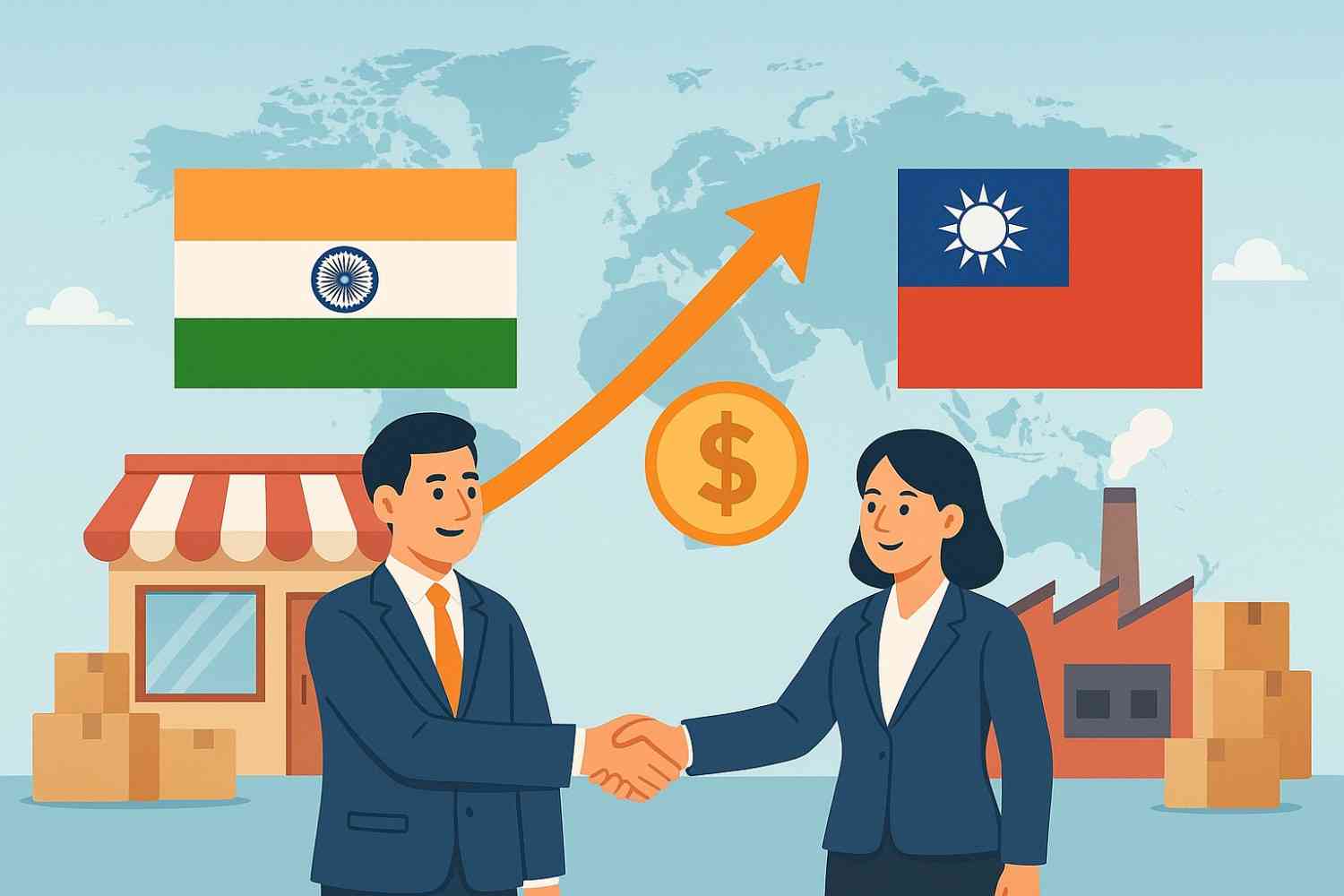
New Delhi, India, August 16, 2025 — In recent years, the economic relationship between India and Taiwan has steadily matured, reaching a stage where trade volumes are touching unprecedented highs. This growing engagement has not only strengthened diplomatic goodwill but has also opened up promising opportunities for small and medium enterprises (SMEs) in both countries. The momentum is being driven by complementary strengths: Taiwan’s advanced technology and manufacturing expertise and India’s vast consumer base, skilled workforce, and growing entrepreneurial ecosystem.
One of the key reasons behind the trade surge is the global supply chain realignment. With multinational corporations seeking alternatives beyond China, Taiwan has been keen on expanding its trade and investment presence in India. For India, this shift represents an opportunity to attract Taiwanese capital and know-how into critical sectors such as semiconductors, electronics, renewable energy, and precision manufacturing. SMEs in India can play an instrumental role as partners, vendors, and collaborators for Taiwanese firms, thereby finding a place in global value chains.
The trade growth also highlights India’s rising profile as a hub for innovation and production. Taiwan’s SMEs, which form the backbone of its economy, see India as an emerging market with enormous demand for affordable yet high-quality products. By collaborating with Indian partners, Taiwanese companies can localize their products, reduce costs, and reach wider audiences. At the same time, Indian SMEs gain access to advanced Taiwanese technologies, which can enhance their productivity and competitiveness in both domestic and export markets.
Sectors such as electronics, automotive components, information technology, and green energy are particularly ripe for SME-level cooperation. For example, Indian SMEs engaged in assembly and distribution can tie up with Taiwanese suppliers of high-tech components, enabling them to offer better products at competitive prices. Similarly, in renewable energy, Taiwanese expertise in solar panels and battery technologies can help Indian firms scale up their operations to meet the country’s ambitious green energy targets. These collaborations not only boost profitability but also encourage knowledge transfer and skill development.
Another factor driving the SME advantage is government-to-government support. Both New Delhi and Taipei have been encouraging trade facilitation, business delegations, and industry collaborations. Trade fairs, investment forums, and technology expos have become platforms where SME entrepreneurs can explore partnerships, pitch products, and form alliances. This kind of ecosystem support is vital, as SMEs often lack the global networks and capital resources enjoyed by larger corporations. By providing structured opportunities for connection, governments are helping bridge the gap.
However, the rise in trade also comes with challenges. SMEs often face hurdles such as regulatory complexities, cultural differences, and logistical bottlenecks. Language barriers and limited awareness of each other’s business environments can slow down collaboration. Financing remains another constraint, as smaller firms may find it difficult to secure funding for international ventures. To overcome these challenges, both sides will need to create SME-focused credit lines, simplify procedures, and encourage business mentorship programs.
On the brighter side, the digital economy offers SMEs a fresh path to global integration. E-commerce platforms, cross-border B2B marketplaces, and digital payment systems are reducing barriers to entry for small firms. Taiwanese and Indian SMEs can now connect virtually, negotiate deals, and even manage supply chains digitally. This digital layer strengthens the India-Taiwan trade relationship, ensuring that even resource-constrained SMEs can participate meaningfully in global trade.
The human capital aspect also cannot be overlooked. India’s skilled youth population provides an attractive base for Taiwanese companies looking to expand operations. Training programs and joint vocational courses can ensure that Indian workers are equipped with Taiwanese technical expertise, benefiting both nations. SMEs, often nimble and adaptive, can leverage this talent pool more effectively than larger organizations bound by rigid structures.
Ultimately, the record highs in India-Taiwan trade represent more than just numbers on a balance sheet. They signal a deeper, more sustainable economic partnership that can reshape the SME landscape. If supported with the right policies, infrastructure, and cultural understanding, SMEs from both nations can become engines of innovation, competitiveness, and job creation. For India, this means accelerated industrial growth and global integration; for Taiwan, it ensures diversification of markets and stronger strategic ties.
In conclusion, the surge in India-Taiwan trade marks a turning point where SMEs stand to gain the most. By building on complementary strengths, embracing technology, and overcoming barriers, small and medium enterprises can transform bilateral trade into a model of inclusive and sustainable growth. The journey ahead will demand resilience and creativity, but the potential rewards for SMEs are immense, making this partnership one of the most promising in Asia’s evolving trade landscape.