Korea-India Peaceful Unification Forum explores paths towards peace & cooperation
Experts from both nations maintained that amidst the rapidly changing international landscape, Korea and India must strengthen the spirit of mutual trust and cooperation for regional stability.

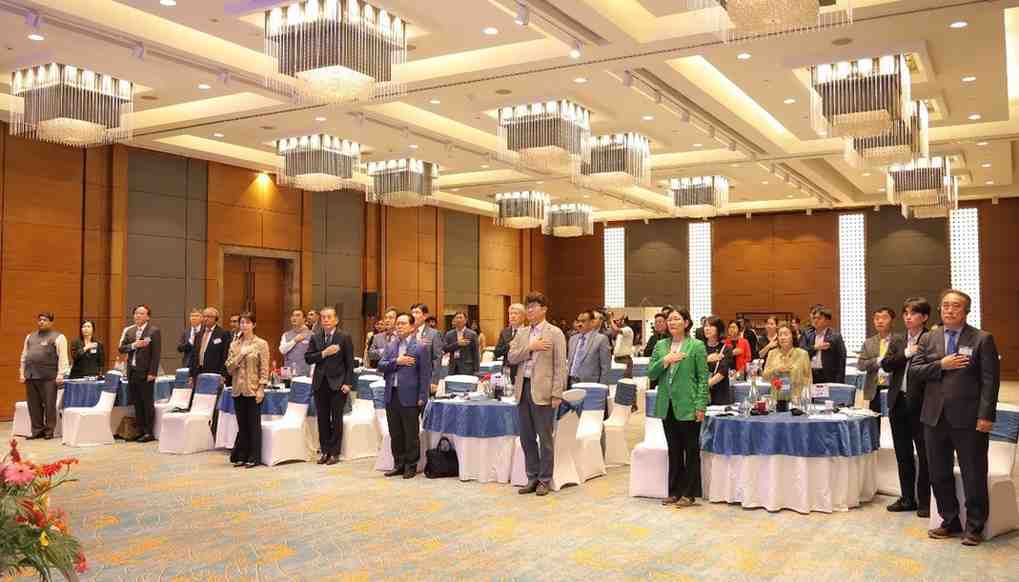
Gurugram, India – As they commit to deepening their partnership for peace, prosperity, and stability in the Indo-Pacific region and beyond, Korea and India have underscored that the peace and unification of the Korean Peninsula are not only matters of regional significance but also essential to the stability of the global order.
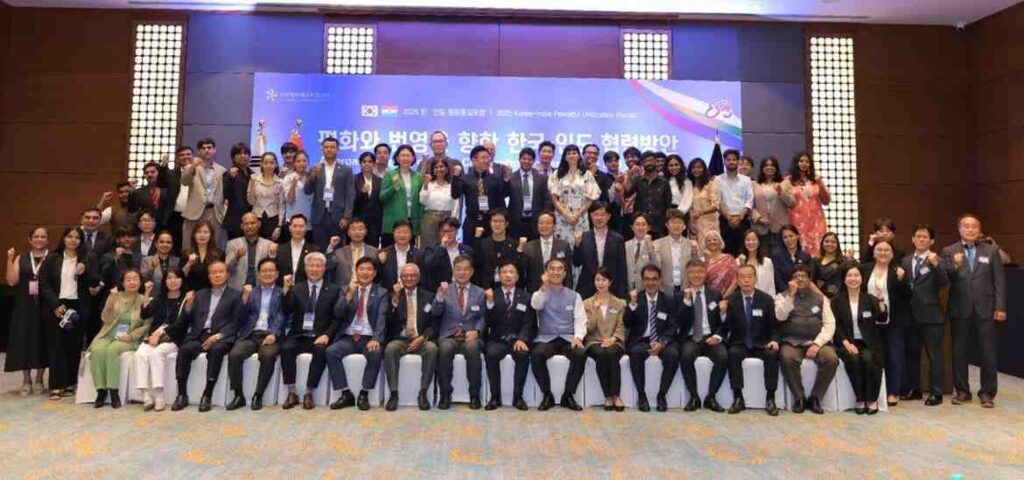
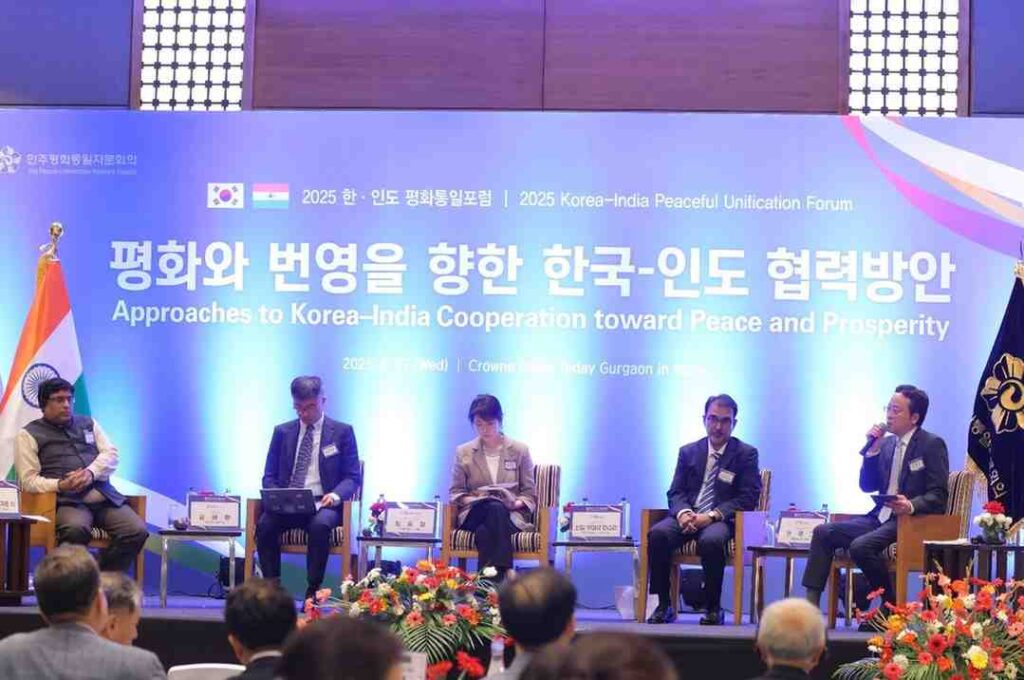
Both sides recognised India’s growing strategic role and Korea’s commitment to democratic values as key pillars for advancing shared objectives at the 2025 Korea-India Peaceful Unification Forum, held in Gurugram. Organised by the Peaceful Unification Advisory Council (PUAC), Southwest Asia Chapter, the event carried the theme “Approaches to Korea-India Cooperation toward Peace and Prosperity.” It served as a significant platform for diplomats, academics, and policy experts to discuss future strategies for bilateral cooperation.
Lee Kwang-il, Head of the PUAC Southwest Asia Chapter, emphasised the growing importance of India, the world’s most populous country and largest democracy, as a strategic partner for South Korea in promoting peace on the Korean Peninsula and the broader Indo-Pacific region.
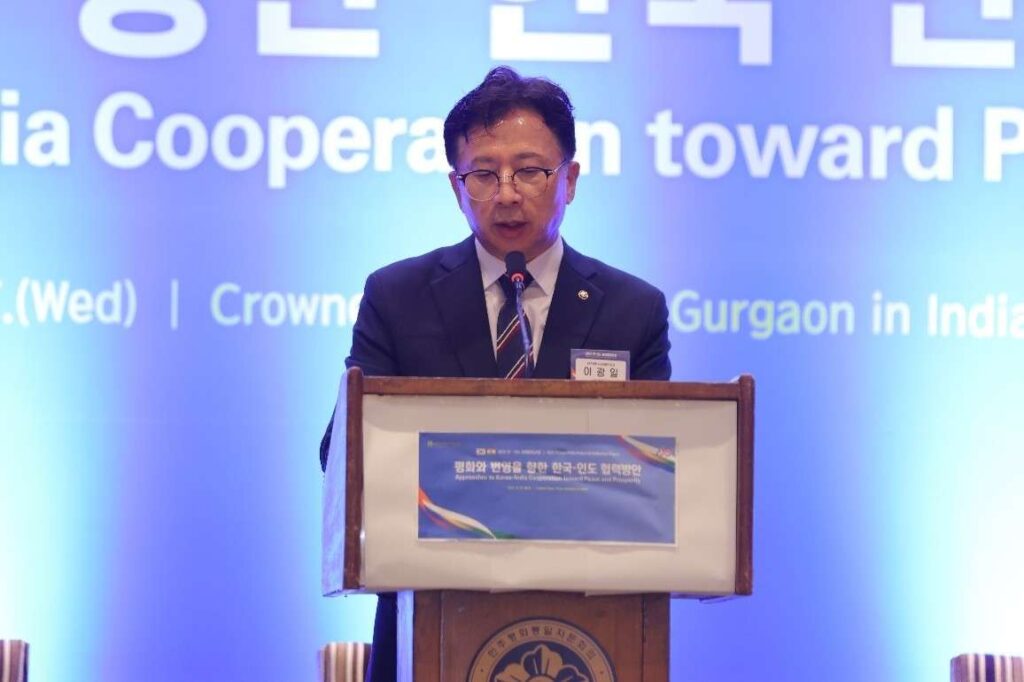
“India’s remarkable rise is not only about economic growth but also about advancing values of democracy and diversity that deeply resonate with Korea. In particular, the Indo-Pacific region has emerged as a vital axis of global peace and prosperity. More than half of the world’s trade passes through this region, making it a central hub for global supply chains and security cooperation. The peace of the Korean Peninsula is closely tied to the stability of the Indo-Pacific. Therefore, close collaboration between Korea and India in this region is significant not only for the future of our two nations but also for the stability of the international order,” said Lee Kwang-il, who also happens to be the Chairman of the Korean Association in India.
While emphasising that the forum was not merely a gathering for discussions but a space to share wisdom for the common peace and prosperity of the entire world, extending beyond the Korean Peninsula, he said, “Amidst the rapidly changing international landscape, we must further strengthen the spirit of mutual trust and cooperation. This is the very path that will bring lasting peace and eventual unification to the Korean Peninsula while also contributing to the stability of the Indo-Pacific and global peace.”
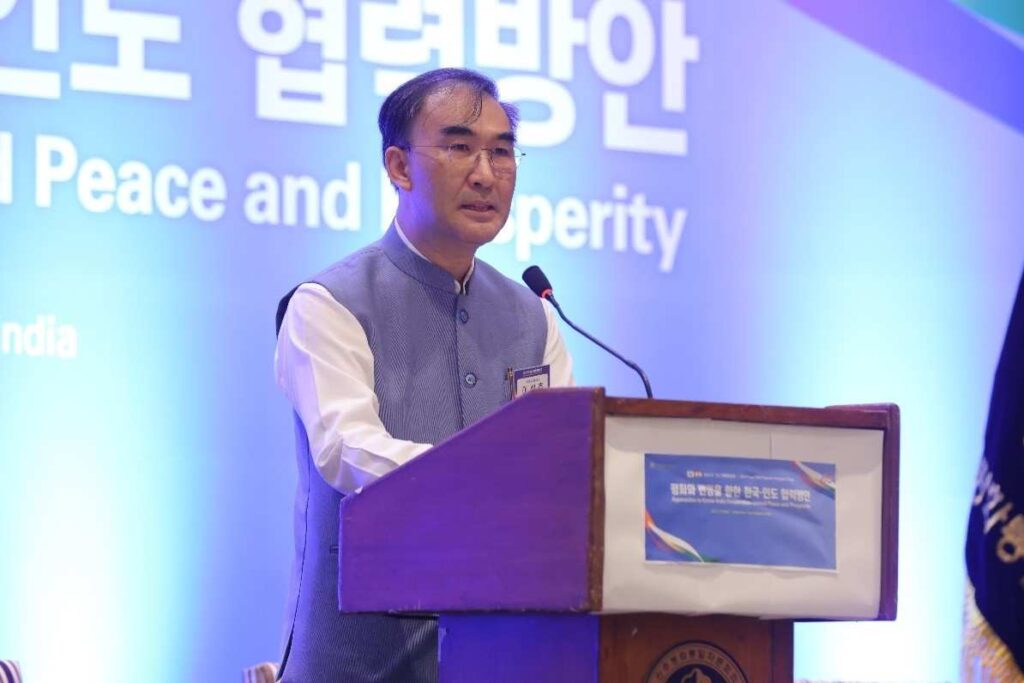
Lee Seong-ho, the Ambassador of the Republic of Korea to India, emphasised the democratic values shared by the two nations and their common vision for a stable and prosperous regional order. He stated that peace and unification on the Korean Peninsula were not merely local issues; they were also a critical matter that could significantly impact the stability and prosperity of the Indo-Pacific region and, by extension, the entire world.
The Ambassador also noted that since the Lee Jae-myung administration took office, exchanges between Korea and India have increased, including the meeting between the leaders of Korea and India on the occasion of the G7 Summit in June and the visit of a special presidential delegation to India in July. “This month, Minister of Foreign Affairs Cho Hyun met with Minister of External Affairs Jaishankar in New Delhi and engaged in in-depth discussions on a variety of topics, including high-level exchanges between Korea and India, economic cooperation, economic security, and regional affairs,” he added.
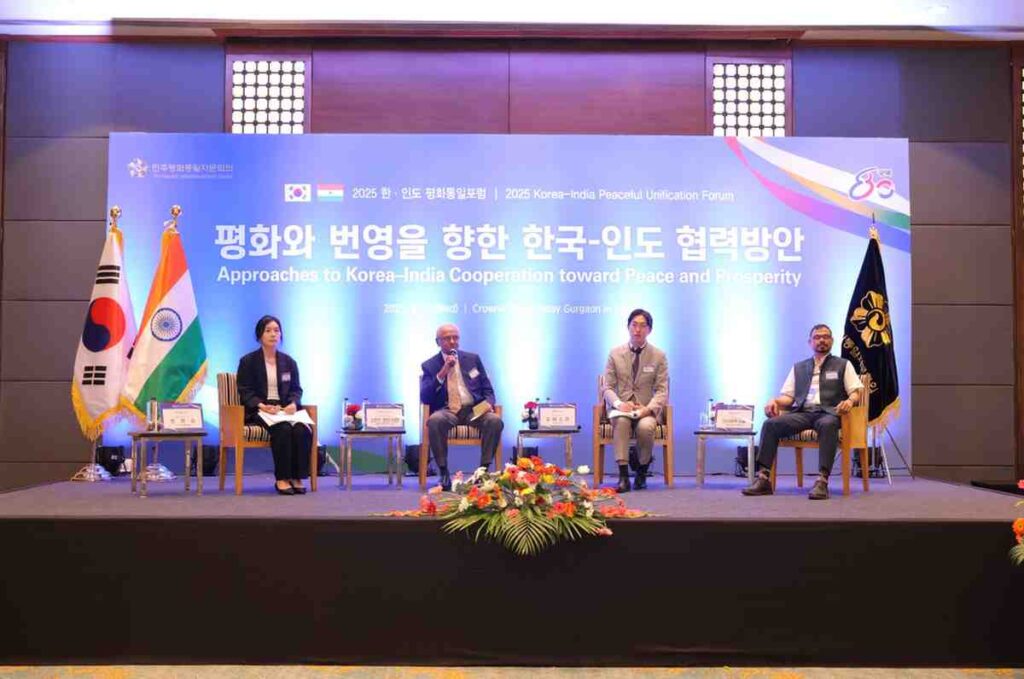 The 2025 Korea-India Peaceful Unification Forum, designed to discuss ways for Korea-India cooperation to continue and develop the New Southern Policy, as well as expand diplomatic horizons to the Global South, was marked by two crucial interactive sessions followed by a Q&A session.
The first session of the forum focused on the theme “Expanding Peace in the Indo-Pacific Era and Strategies for Korea-India Cooperation.” Chaired and moderated by Choi Yoon-jung, a Senior Research Fellow at the Sejong Institute, the session examined the evolving dynamics of security and diplomacy in the Indo-Pacific region. Kim Tae-hyung, Professor of Political Science and International Relations at Soongsil University, discussed the geopolitical implications in the region and emphasised the importance of joint efforts by Korea and India in securing maritime stability and upholding a rules-based order.
 Kim Tae-hyung, a professor of political science and international relations at Soongsil University who attended as a presenter, said, “The international situation is unstable due to the deteriorating global security environment and the Trump administration’s America First policy. However, if Korea and India establish a close strategic cooperative system, they can contribute to peace, prosperity, and stability in the Indo-Pacific region and play a pivotal role in global governance.”
Sandip Kumar Mishra, a professor of international studies at Jawaharlal Nehru University, stated, “Korea and India have significant complementarity in their substantive relationship and share nearly identical positions on normative and ideological issues. They should present a more progressive agenda and forward-looking issues to achieve peace and prosperity.”
 Jang Jae-won, CEO of Birdtree Management (Advisory Committee Member of the Southwest Asia Council), who participated as a panelist, stated, “Peace on the Korean Peninsula is a key axis that determines the stability of the Indo-Pacific region. Through cooperation in various areas, including security and the economy, Korea and India can make a substantial contribution to realising a peaceful and prosperous Indo-Pacific.”
Prashant Kumar Singh, Research Fellow at Manohar Parrikar’s Institute for Defence Studies and Analysis, said, “Going forward, India should actively participate in discussions on security issues on the Korean Peninsula and can serve as a mediator to help North Korea end its self-inflicted isolation and return to being a normal member of the international community.”
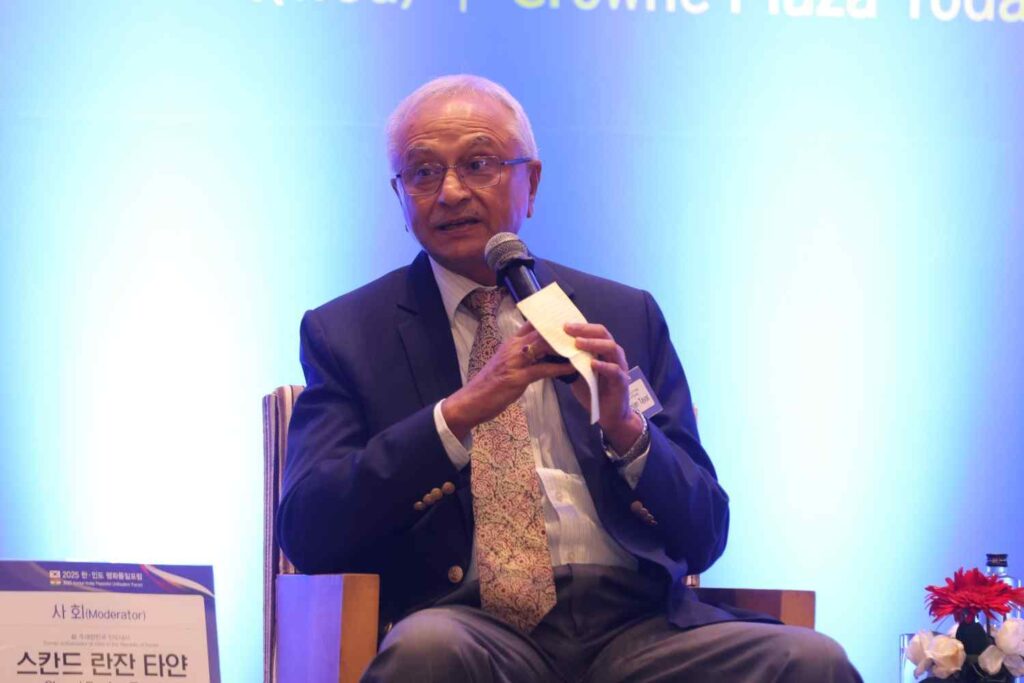
Next, Session 2, titled “Opening the Path to Peace Together: The Future of Korea-India Cooperation,” was moderated by Skand Ranjan Tayal, former Indian Ambassador to the Republic of Korea. Kim Esra, a policy research fellow at the National Unification Advisory Council who participated in the social and cultural panel, stated, “The revitalisation of social and cultural exchanges and cooperation is a key driving force behind deepening the special strategic partnership between Korea and India. The trust and mutual understanding fostered through this can contribute directly and substantively not only to diplomatic, security, and economic cooperation, but also to establishing peace in the Indo-Pacific region and on the Korean Peninsula.”
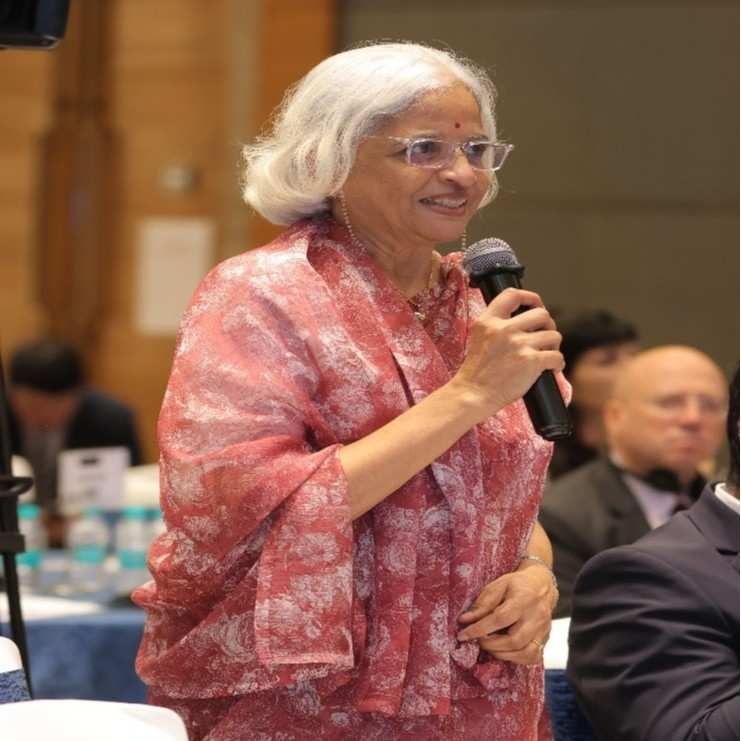
 Pravakar Sahoo, a professor at the Institute for Economic Growth at the University of Delhi who participated in the economic panel, stated, “The Korea-India relationship has evolved into a multidimensional strategic partnership encompassing economic, technological, cultural, and geopolitical dimensions.” He added, “By aligning strategic priorities and expanding cooperation across diverse sectors, the two countries can secure shared prosperity while also contributing to the establishment of a rules-based, open Indo-Pacific order.”
Choi Hyun-ah, a senior researcher at the Hanns Seidel Foundation Korea, who participated in the climate and environment panel, said, “For inter-Korean cooperation between South Korea and India based on ecological solidarity, maintaining relationships through regular dialogue channels and institutionalising 1.5/2-track diplomacy should be pursued rather than short-term approaches. Tailored multilateral cooperation strategies are also necessary.”
Key Highlights of the Forum
| Theme | Insights & Discussions |
| Peace & Security | Indo-Pacific cooperation, maritime security, defence collaboration, rules-based regional order. |
| Society & Culture | Stronger people-to-people exchanges, cultural ties, and academic collaborations. |
| Economy | Boosting trade, investment, infrastructure, and technology partnerships. |
| Climate & Environment | Joint strategies for sustainable development, green energy, and climate resilience. |
Ends