Korea and India: Building Practical Partnership for Tangible Outcomes in the Global
By Jisun Song, Associate Professor, Korea National Diplomatic Academy

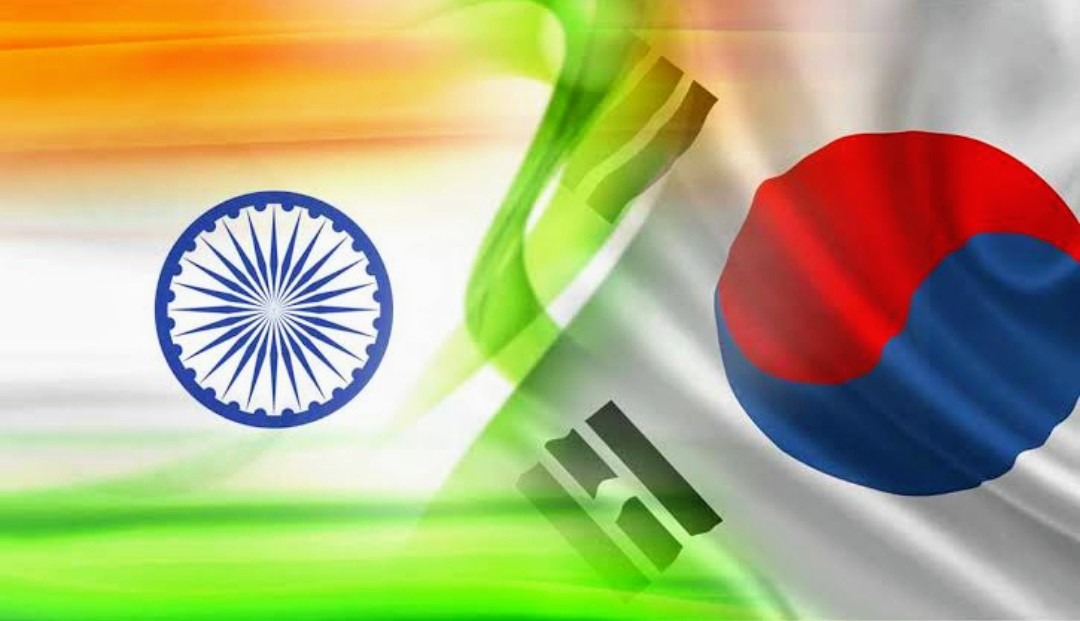
 At a time when the world is going through a profound change, the expansion of collaboration among like-minded countries across strategic domains is becoming more crucial than ever. This is particularly the case for global sustainable development. With worsening international conflicts, exacerbating cross-border challenges of climate change, food and energy insecurity and inequality, the international community is at a serious risk of failing to reach the Sustainable Development Goals (SDGs) by 2030. And this calls for a stronger cooperation for global peace, security and prosperity, particularly in the Global South.
And this is where the joint strategic interests of the Republic of Korea (Korea) and India lie.
First, both Korea and India place diplomatic priority on partnership with the Global South. For Korea, President Lee Jae Myung included “emerging as a G7+ diplomatic power through contributions and active engagement with the international community” as one of the 123 National Policy Tasks. Specifically, he called for stronger regional diplomacy, expanded relations with Global South partners, and proactive responses to global challenges like digital transformation, artificial intelligence, and climate issues.
India, on the other hand, has a long history of solidarity with the Global South through non-alignment and South-South cooperation. It further strengthened this through the “Global Development Compact” launched in 2023.
Second, both countries have demonstrated commitment by institutionalizing regional and global dialogues. India has hosted the Voice of the Global South Summits (VOGSS) since 2023, while Korea has organized the Busan Global Partnership Forum since 2014. These platforms bring Global South countries together to share development experiences and solutions.
Third, both nations have highlighted development issues in major global platforms such as the G20 and the United Nations (UN). Korea led the adoption of the “G20 Seoul Development Consensus for Shared Growth” in 2010. Under India’s G20 presidency in 2023, the African Union (AU) became a permanent member and the “G20 Action Plan on Accelerating Progress on the SDGs” was adopted. Both countries are also members of the UNICEF Executive Board.
These efforts show strong potential for cooperation to promote sustainable development and amplify Global South voices.