Korean Lawmakers Take Stock of India Opportunity After Presidential Summit
National Assembly delegation led by Kim Seok-ki discusses parliamentary exchanges, business concerns and Korean community expectations after President Lee Jae-myung’s India visit.

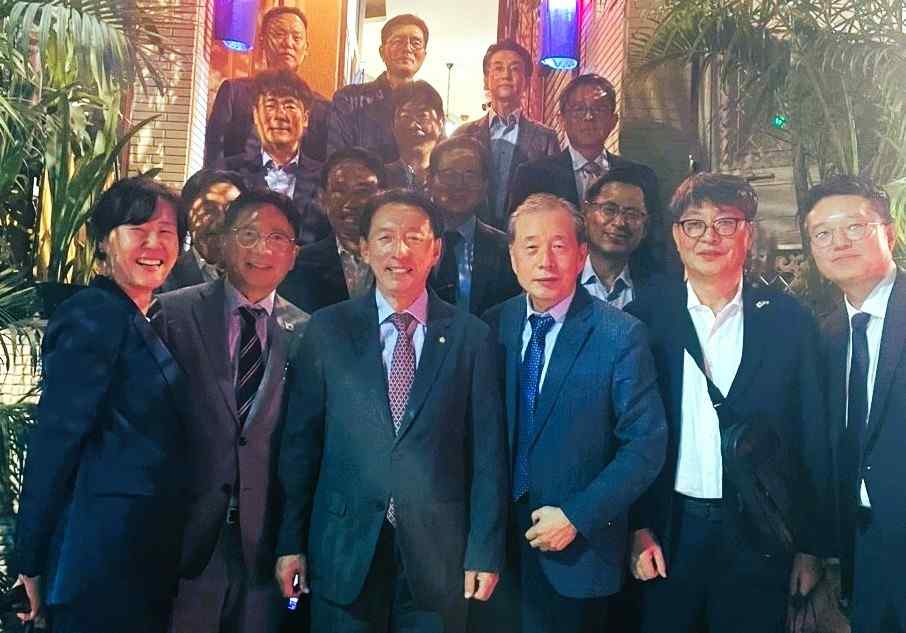
New Delhi, India: Barely a month after South Korean President Lee Jae-myung’s state visit to India injected fresh momentum into the bilateral partnership, a delegation of lawmakers from the Republic of Korea has used its New Delhi visit to test how summit-level commitments can be translated into practical gains for businesses, parliamentary exchanges and the Korean community in India.
Led by Kim Seok-ki, Chairman of the Foreign Affairs and Unification Committee of the National Assembly of the Republic of Korea, along with National Assembly member Lee Chun-seok, the delegation met the Indian chairperson of the Korea-India Parliamentary Friendship Association and discussed a range of pending issues, including ways to expand bilateral exchanges between the two democracies.
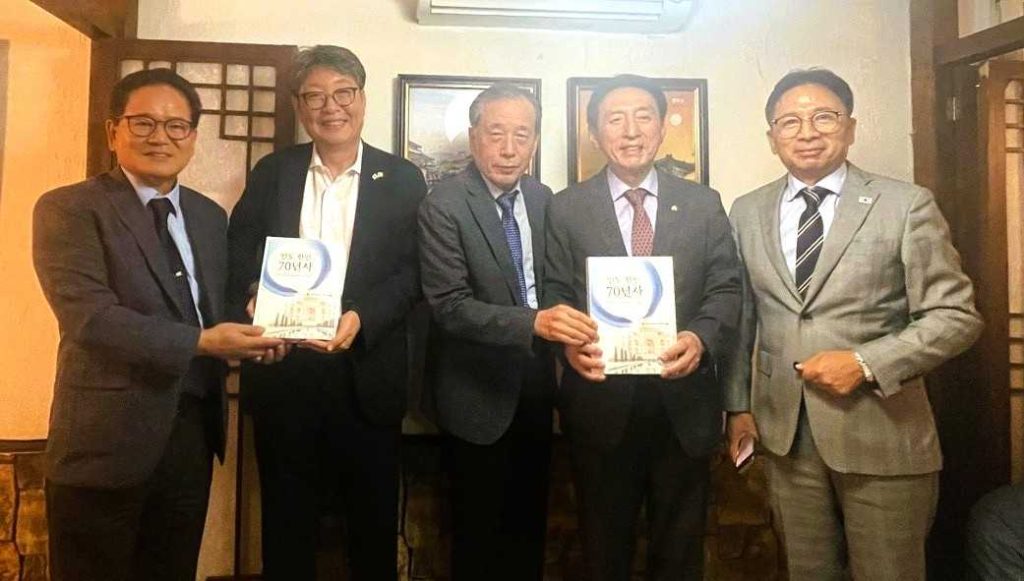 The visit assumed added significance as it came soon after President Lee’s April 19–21, 2026, State Visit to India, during which India and Korea placed renewed emphasis on cooperation in trade, investment, technology, people-to-people ties and strategic sectors. India’s Ministry of External Affairs had earlier described the visit as President Lee’s first visit to India, accompanied by First Lady Kim Hea Kyung and a high-level delegation of ministers, officials and business leaders.
A key message from the Korean parliamentary delegation’s engagement in Delhi was that the relationship now needs stronger follow-up mechanisms beyond formal diplomacy. This was reflected not only in its parliamentary discussions, but also in its outreach to representatives of the Korean diaspora and business community in India.
During the meeting with Korean residents and business representatives, participants shared their concerns and suggestions on the challenges faced by Korean companies operating in India. The discussions covered issues related to smoother business operations, stronger institutional support, and improved conditions for Korean enterprises, especially small and medium-sized companies seeking to enter or expand in the Indian market.
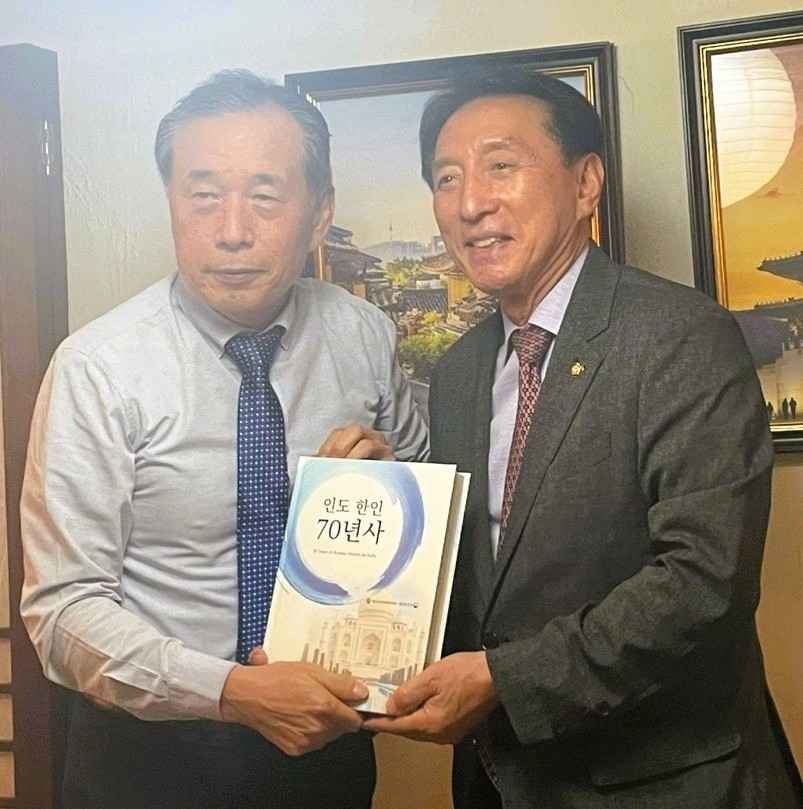 The attendees conveyed that the Korean community in India has high expectations for the cooperative agenda emerging from President Lee Jae-myung’s recent visit to India and summit-level engagement. They also expressed strong support for the proposed follow-up measures, noting that it was encouraging to see the Korean government making practical efforts to ensure that the outcomes of the visit are implemented with urgency and seriousness.
Among the areas that drew the greatest interest were increasing bilateral trade, expanding human exchanges, and creating dedicated industrial complexes or Korean-style techno-parks in India. Such platforms, participants felt, could help Korean SMEs navigate India’s vast but complex market more effectively, while also creating a stronger ecosystem for manufacturing, innovation and technology collaboration.
The timing of the visit also underlined the growing role of parliamentary diplomacy in India-Korea ties. During President Lee’s visit, President Droupadi Murmu welcomed the recently established India–Korea Parliamentary Friendship Group in the Indian Parliament, observing that it would promote dialogue and exchanges between the Indian Parliament and Korea’s National Assembly, and strengthen mutual understanding and trust.
For the Korean community in India, the interaction offered an opportunity to directly place its views before senior lawmakers from Seoul. The presence of major Korean community and corporate representatives also highlighted how the bilateral relationship is increasingly being shaped not only by governments, but by industry bodies, expatriate networks and Korean companies already invested in India’s growth story.
Those who attended the meeting included Cheon Ui-jin, Minister-Counsellor at the Embassy of the Republic of Korea; Euy Don Park, Chairperson of the Peaceful Unification Advisory Council (PUAC), Southwest Asia; Lee Kwang-il, President of the Korean Association in India; Park Sung-heum, President of the Korean Small and Medium Enterprises Association in India (KOSMA); Lee Si-yeon, President of the Korea-India Chamber of Commerce (KOCHAM); Park Jong-bum, Managing Director of Samsung Electronics; and Lee Kwang-koo, Managing Director of Kia.
The visit reflected a broader shift in India-Korea engagement: from high-level declarations to constituency-level and industry-level follow-through. For Korean businesses and residents in India, the expectation is that the momentum generated by the summit will now move into concrete action—through expanded trade, more structured human exchanges, stronger SME support, and institutional platforms that can anchor Korean participation in India’s next phase of economic growth.