

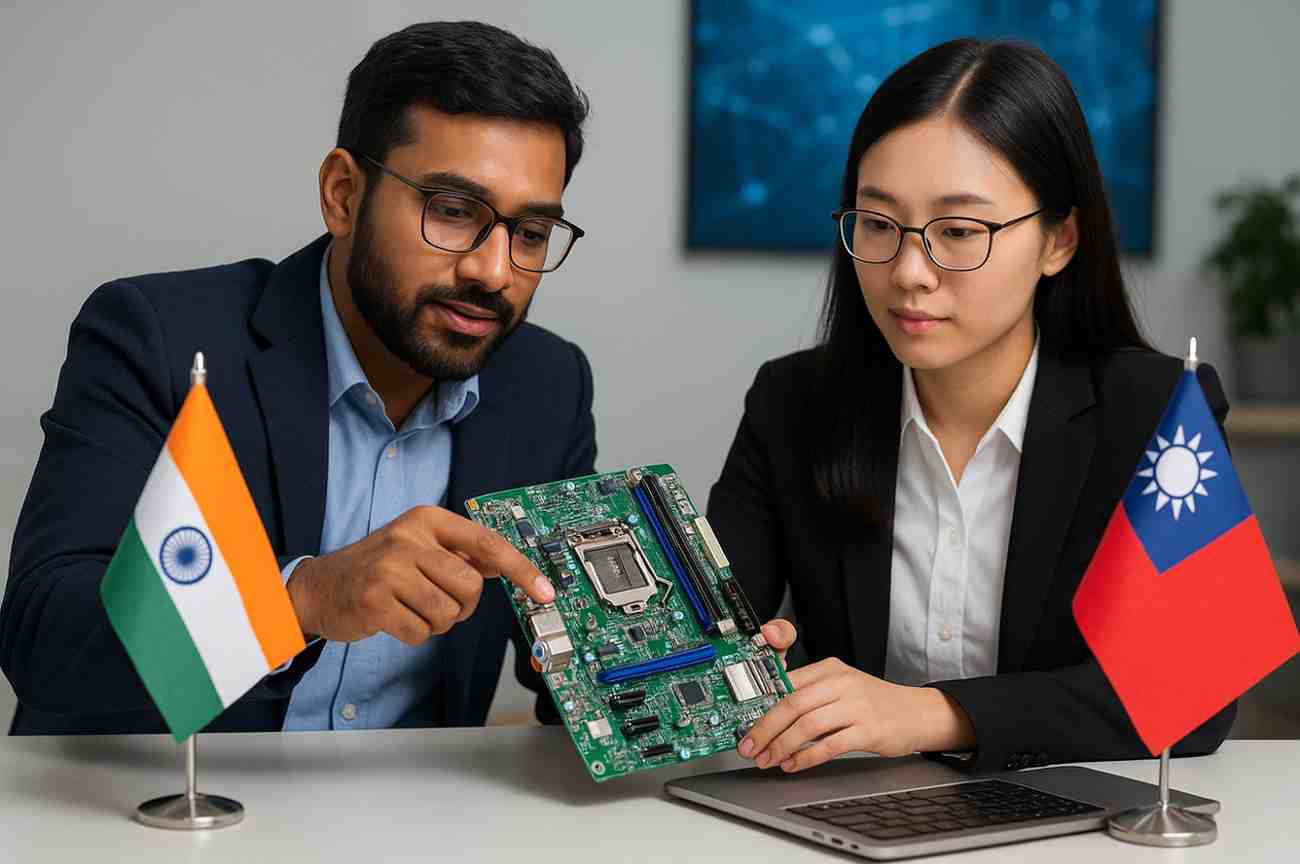
New Delhi, India, August 29, 2025 — In the global technology landscape, collaborations often become the cornerstone of innovation and progress. Over the past decade, India and Taiwan have emerged as natural partners in the field of hardware development. Taiwan, with its unmatched expertise in semiconductor manufacturing and hardware design, complements India’s growing strength in software, engineering talent, and market potential. Together, the two countries are shaping a new era of technological excellence that goes beyond bilateral trade to foster long-term innovation.
Taiwan has long been a global hub for hardware production, particularly in semiconductors, electronic components, and precision engineering. Companies from Taiwan are among the leading suppliers to the world’s biggest technology brands. India, on the other hand, has historically been recognized for its prowess in IT services, software solutions, and a large, skilled workforce. When these strengths combine, the result is a partnership that bridges hardware and software seamlessly, ensuring products that are both cutting-edge and adaptable to global needs.
One of the most significant aspects of this partnership lies in semiconductor technology. As the demand for chips grows worldwide, India is keen to establish itself as a reliable hub for semiconductor manufacturing and design. Taiwan’s expertise in chip fabrication provides the knowledge and experience India needs to build its own domestic capacity. Joint ventures and collaborations in this field not only aim to reduce India’s dependence on imports but also contribute to creating a resilient global supply chain in a sector dominated by only a few countries.
The hardware ecosystem is incomplete without advanced manufacturing processes, and here too, Taiwan plays a critical role. Taiwanese firms bring precision, efficiency, and decades of manufacturing experience, while India contributes cost advantages, abundant talent, and a growing domestic market. This synergy allows both nations to develop hardware solutions that are not only high in quality but also competitively priced for the global market. Such partnerships are already visible in electronics hubs across Indian states, where Taiwanese companies are setting up operations and training local talent.
Beyond manufacturing, research and development (R&D) is becoming a crucial component of India-Taiwan collaboration. Hardware excellence cannot be achieved without constant innovation, and Taiwan’s strong R&D culture aligns well with India’s large pool of engineers and scientists. Together, the two countries are working on areas such as next-generation displays, 5G hardware, and Internet of Things (IoT) devices. These cooperative efforts ensure that both partners remain ahead in a world where technology cycles are becoming shorter and competition fiercer.
Another dimension of this partnership is the rise of startups and small enterprises. While large corporations drive most of the global hardware market, startups often bring disruptive ideas and niche innovations. Indian startups focusing on hardware innovation, from consumer electronics to clean energy devices, are increasingly finding Taiwanese partners for prototyping, design support, and component supply. This not only accelerates the product development cycle but also creates opportunities for new players to compete in a global arena.
Education and skill development also form a vital link in the India-Taiwan tech equation. For India to achieve true hardware excellence, its workforce must acquire skills in semiconductor engineering, circuit design, and hardware manufacturing. Taiwan’s experience in nurturing highly skilled technicians offers valuable lessons. Exchange programs, training initiatives, and academic collaborations between the two nations are ensuring that the next generation of Indian engineers is equipped to contribute meaningfully to the hardware revolution.
Equally important is the strategic value of this partnership. In a world where technology is increasingly linked to economic security and global competitiveness, India and Taiwan’s cooperation strengthens both nations. For India, it means reducing dependency on a small group of global suppliers and boosting its “Make in India” ambitions. For Taiwan, it provides access to a vast and rapidly expanding market while diversifying its partnerships beyond traditional allies. This alignment of interests creates a partnership that is not just commercial, but also strategic in nature.
At the core of these collaborations lies a shared vision of innovation-led growth. By combining Taiwan’s mastery of hardware with India’s expertise in software and systems integration, both countries are driving forward a new model of excellence that the world is watching closely. From semiconductors to consumer electronics, and from R&D to startups, the India-Taiwan tech partnership is steadily creating a global reputation for quality and reliability.
Ultimately, the story of India-Taiwan hardware collaboration is one of complementarity. Each nation brings strengths that the other lacks, and together they form a partnership that is greater than the sum of its parts. As this relationship deepens, it holds the potential to redefine how technology is developed, manufactured, and consumed—not just in Asia, but across the globe.