
1st batch of Indian labor may reach Taiwan later this year
More than two years after Taiwan and India signed a labor cooperation pact, Taipei says final administrative checks are under way and the first batch of Indian workers could arrive before the end of 2026.

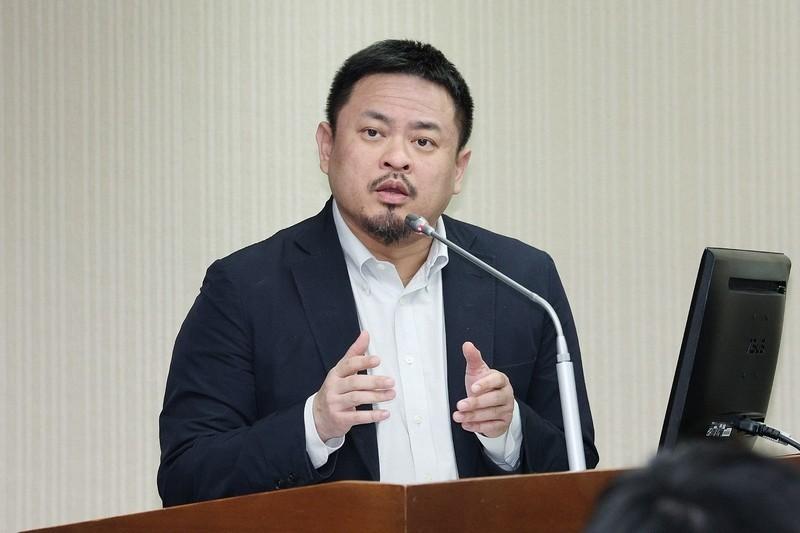
New Delhi, India: Taiwan moved a step closer on Thursday to opening its labor market to Indian migrant workers, with Labor Minister Hung Shen-han saying the first batch could be brought in later this year as the government completes the final round of administrative confirmation. The remarks marked the clearest official indication yet that the long-discussed Taiwan-India labor mobility arrangement may finally move from policy to implementation.
According to Taiwan’s Central News Agency, Hung said the Ministry of Labor had already led a delegation in January to visit Taiwanese businesses operating in India and study how Indian labor was being used there. He said the process was now in its final administrative stage, adding that the first group of Indian migrant workers could be introduced as early as this year. His comments came during a legislative committee session focused on forced-labor prevention, fair recruitment and Taiwan’s efforts to align its migrant worker system with international human rights and supply-chain standards.
The planned move has its roots in a memorandum of understanding signed by Taiwan and India on February 16, 2024, through their respective representative offices. At the time, Taiwan said the accord would help ease labor shortages across sectors such as manufacturing, construction and agriculture, where local manpower had increasingly fallen short. Reuters reported then that Taiwan, facing an ageing society and chronic labor shortages, was seeking to expand its foreign workforce beyond its traditional source countries in Southeast Asia.
Taiwan currently hosts around 700,000 migrant workers, most of them from Vietnam, Indonesia, the Philippines and Thailand. Many are employed either in factories or in caregiving roles, and authorities have argued that new labor-source countries are needed as demand rises year after year. Taiwan’s government has said Indian workers who meet recruitment conditions and industry needs would be treated fairly and protected under Taiwanese law.
Implementation, however, has taken time. While the MOU was signed in early 2024, both sides still had to negotiate the operational details, including worker numbers, eligible industries, recruitment channels and oversight mechanisms. Taiwan’s Ministry of Foreign Affairs said after the signing that the government would continue detailed planning on the number of Indian workers, their professional skills and the sectors in which they would be recruited in order to build a comprehensive framework.
A major breakthrough came in November 2024, when Taiwan and India held their first labor cooperation meeting and reached a preliminary consensus on the initial phase. Taiwan later disclosed that the first wave would involve 1,000 Indian workers, all for the traditional manufacturing sector. Officials also said 5 percent of them would be brought in through direct hiring rather than the often-criticized brokerage system, an arrangement seen as an attempt to reduce recruitment costs and improve transparency.
Taiwanese officials said at the time that the program would be reviewed periodically, with room to expand both the number of workers and the sectors open to them if the initial rollout proceeded smoothly. The longer-term objective, according to the Workforce Development Agency, is to eventually open to Indian workers the same range of industries already available to migrant workers from Taiwan’s existing partner countries. Dedicated units on both sides were also designated to handle direct hiring, including Taiwan’s Direct Hiring Service Center and India’s Overseas Employment Division.
The labor initiative has unfolded against a wider debate in Taiwan over migrant worker rights and international supply-chain scrutiny. On the same day Hung spoke about Indian workers, Taiwan’s Executive Yuan approved draft amendments to the Employment Service Act that would bar employers and brokers from holding workers’ passports, identity cards or residence permits, and would require certain employers to shoulder overseas recruitment costs during the contract period. The proposed changes are part of Taiwan’s broader effort to reduce forced-labor risks and align its labor regime with international norms.
That broader context is important because the recruitment of Indian workers has never been only about filling vacancies. It also carries diplomatic and strategic weight. Although India and Taiwan do not have formal diplomatic ties, they have steadily expanded practical cooperation in trade, technology, education and labor. Taiwan’s government has described the labor pact as a reciprocal arrangement that strengthens people-to-people links while supporting economic needs on both sides.
The proposed labor corridor had also stirred political and social debate in Taiwan after the 2024 agreement was signed, including concerns over numbers, social integration and recruitment practices. Taiwanese authorities pushed back against speculation that as many as 100,000 Indian workers would immediately be allowed in, saying any rollout would begin on a limited pilot basis and that Taiwan would retain the final say over the scale and sectors involved. That gradual approach now appears to be guiding the rollout as Taipei inches toward implementation.
Hung’s latest remarks therefore signal both continuity and caution. They suggest Taiwan is still committed to the deal struck with India, but is determined to proceed in a controlled manner, with administrative safeguards and sector-specific planning in place. If the first group does arrive later this year, it would mark a significant step in Taiwan’s labor policy and a new chapter in India-Taiwan practical engagement, especially at a time when both sides are looking to deepen economic cooperation amid shifting regional dynamics.