
From Teaching Hindi to Japanese Friend Yume to Helping Expats: Shashank’s ‘Achha’ Journey
An Indian entrepreneur’s effort to teach Hindi to his Japanese friend inspires ‘Achha’, an innovative app bridging language and cultural barriers for Japanese expats in India.

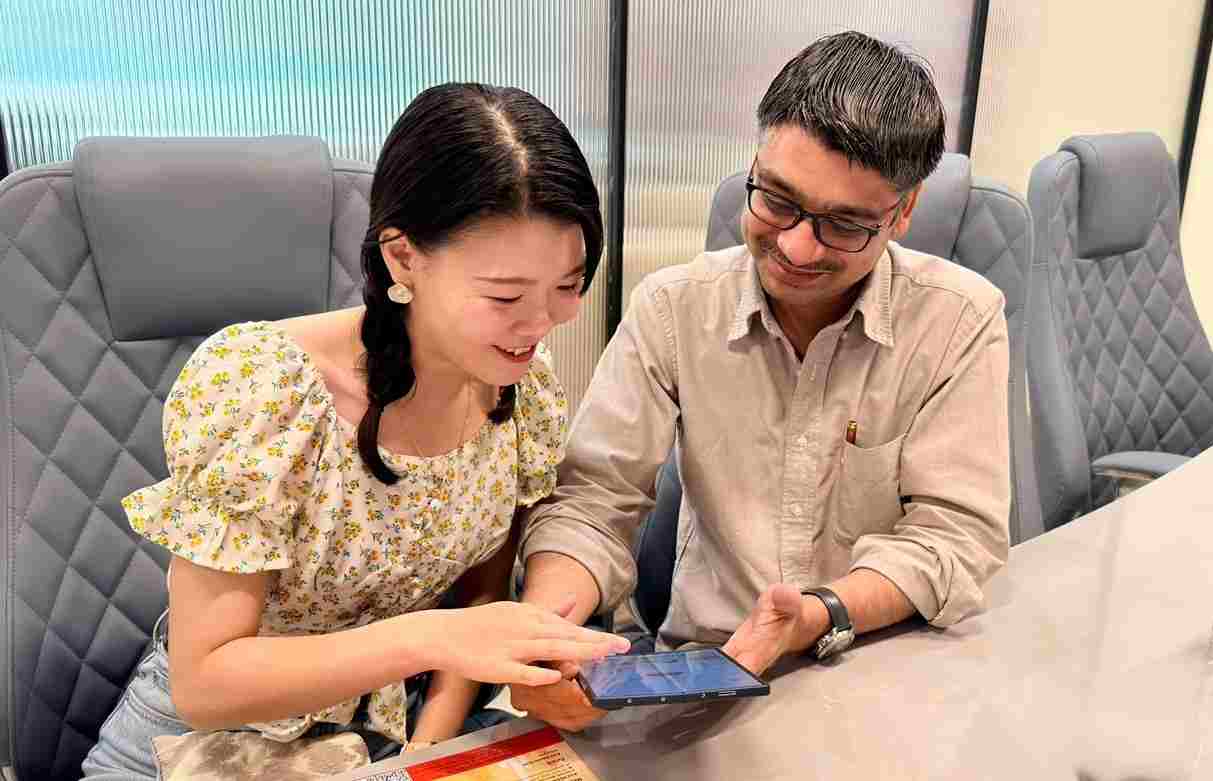
NEW DELHI: A simple attempt by an Indian entrepreneur to teach conversational Hindi to his Japanese friend has led to the launch of ‘Achha’, a digital platform designed to help Japanese expatriates overcome language barriers and navigate everyday life in India with greater confidence.
Launched in August 2026, the interactive web application combines practical spoken Hindi lessons with cultural guidance, helping Japanese professionals and their families communicate with local people—from autorickshaw drivers and shopkeepers to domestic staff and neighbours—without first having to master complicated Hindi grammar or the Devanagari script.
 The idea emerged when Shashank Tyagi, an India–Japan business specialist and former researcher who spent over seven years in Japan, began teaching Hindi to his Japanese friend Yume Okada, a Hyogo-born international business professional currently advising Japanese companies on their India operations.
As Shashank tried to make everyday Hindi understandable to Yume, he realised that conventional textbooks rarely addressed the language people actually use in daily situations. What began as an informal exchange between two friends gradually evolved into a business idea with the potential to help thousands of Japanese residents and newcomers feel more at home in India.
The result was Achha (achha.live), developed under Shashank’s company, Multividya Labs Pvt. Ltd.—a venture illustrating how an ordinary cross-cultural friendship can inspire a practical solution to a much wider challenge.
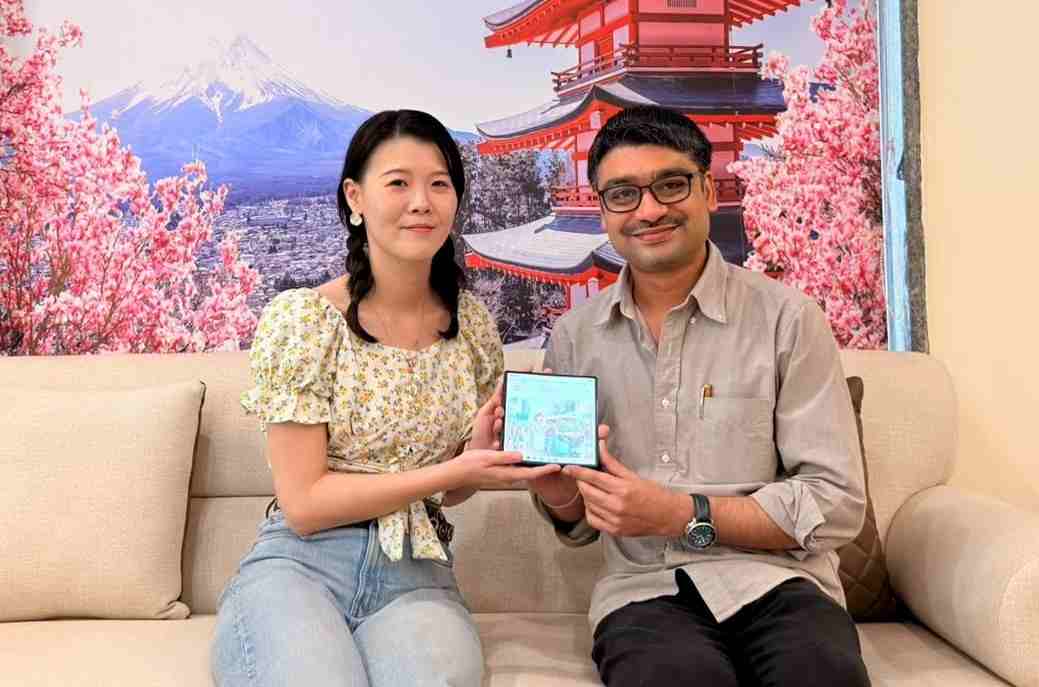 When Yume Became the Inspiration: Yume was particularly well placed to understand the challenges of communicating across cultures.
Originally from Japan’s Hyogo Prefecture, she graduated from Osaka Jogakuin University in March 2024 with a degree in International Studies and English, specialising in Women’s Global Leadership.
She also studied international business at Shih Chien University in Taiwan, gaining exposure to different Asian cultures and business environments.
 Currently working in strategy and business development at InfoBRIDGE India, Yume advises Japanese corporations exploring business expansion and market-entry opportunities in India.
Despite her international education and professional experience, conversational Hindi presented an unfamiliar challenge.
For Shashank, helping her understand common expressions and everyday situations revealed a significant gap in existing learning resources.
“While teaching practical Hindi to Yume, I saw that expats don’t need to recite formal poetry or memorize complex scripts right away. They need practical survival phrases for daily interactions and an intuitive understanding of the cultural logic behind daily actions,” he recalls.
Watching her navigate these situations encouraged him to develop a structured learning programme tailored specifically to Japanese speakers.
Yume’s learning experience thus became the inspiration for a platform intended to help many others facing similar difficulties.
Why ‘Achha’? One Word, Many Meanings: Interestingly, Shashank chose one of India’s most familiar expressions as the name of his venture: Achha (अच्छा / アッチャ).
Depending on tone, facial expression and context, the word can mean “Good”, “Okay”, “I understand”, “Really?” or “Is that so?”
For Japanese learners, understanding this seemingly simple word offers an introduction to the fascinating nuances of everyday Hindi.
It also captures Shashank’s philosophy that language learning should begin with practical expressions rather than intimidating grammar lessons.
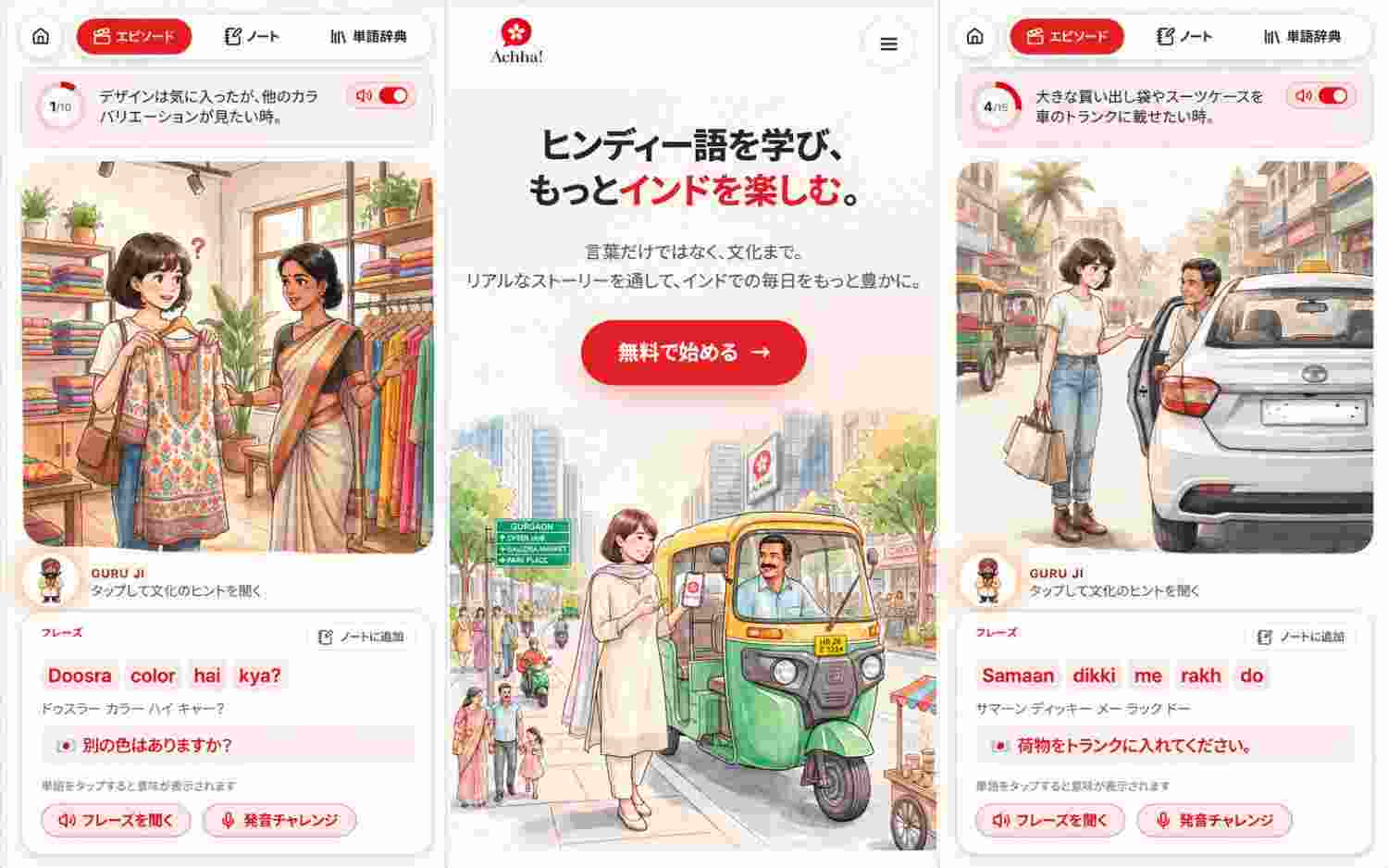
Achha introduces users to realistic situations, such as explaining destinations to autorickshaw drivers, requesting less-spicy food or communicating with household staff.
The platform uses Japanese-friendly pronunciation guides, native Hindi audio and short illustrated conversations to build confidence without requiring immediate mastery of the Hindi script.
Its visual stories draw inspiration from Studio Ghibli’s aesthetics, while interactive speaking exercises allow users to practise conversations before attempting them in real-life situations.
A cheerful illustrated mascot, Guruji, explains Indian etiquette, festivals, social gestures and cultural customs. Travel-planning features also help Japanese residents explore India while learning useful regional expressions.
Shashank’s Own Japan Journey Shaped the Idea: Behind the venture lies Shashank’s experience of adapting to a foreign language and culture.
An India–Japan business specialist, entrepreneur and former deep-tech researcher, he spent more than seven years studying and working in Japan.
A Japanese Government MEXT scholar at the Kyushu Institute of Technology, he pursued advanced research in semiconductor physics and nanoelectronics before leaving academia for entrepreneurship.
He earlier completed an M.Tech with honours in Nanoscience and Technology from GGSIP University, New Delhi, securing All India Rank 2.
In Tokyo, Shashank founded GoToPitch, a venture-backed investment-matching platform connecting more than 100 Japanese venture capital and corporate funds with over 5,000 Indian startups.
He continues advising Japanese corporations and financial institutions on Indian market-entry strategies, strategic partnerships and venture investments.
Education has also remained close to his heart. He has taught and mentored thousands of students preparing for competitive examinations, including IIT-JEE.
This combination of teaching experience, technology entrepreneurship and firsthand exposure to Japanese society helped him recognise the need for a different approach to language learning.
From Corporate English to Everyday Friendships: Shashank believes language barriers extend well beyond professional communication.
Many Japanese executives communicate effectively in English during business meetings but struggle to connect with local people outside the workplace.
A simple Hindi greeting or a few friendly words can transform interactions with a driver, shopkeeper or neighbour.
The challenge is particularly relevant in cities such as Gurugram, Bengaluru and Neemrana, which host substantial Japanese expatriate communities.
Through Achha, Shashank hopes to replace linguistic hesitation with confidence and encourage greater engagement with Indian society.
Giving Back to a Country That Welcomed Him: For Shashank, Achha is more than another technology venture.
His years in Fukuoka and Tokyo left lasting memories of the support, hospitality and encouragement he received from Japanese friends, colleagues and mentors.
“Japan gave me an incredible foundation to grow, as a researcher, as an entrepreneur, and as a person,” he says.
He sees the venture as an opportunity to reciprocate that kindness by making life easier for Japanese people adjusting to India.
“I wanted to give back by ensuring that when Japanese professionals and their families step foot in India, they experience that exact same feeling of safety, hospitality, and belonging that I was fortunate to experience in Japan.”
What makes the story of Shashank, Yume and Achha particularly meaningful is its humble beginning.
An everyday language-learning exchange between two friends from different countries became the inspiration for a platform seeking to help an entire expatriate community.
At a time when India–Japan relations are increasingly measured through investment, trade and strategic partnerships, Achha offers a reminder that lasting international friendships are also built through simple conversations, shared experiences and a willingness to understand one another.
Sometimes, all it takes to begin is one small word: Achha!