
Korean Entrepreneur Builds Got Tea from ₹5 Lakh Investment, Eyes ₹100-Crore Milestone in India
From a small room in South Delhi to a growing beverage brand, EO Yu Sung's journey reflects the power of friendship, cultural adaptability and India–Korea entrepreneurial collaboration.

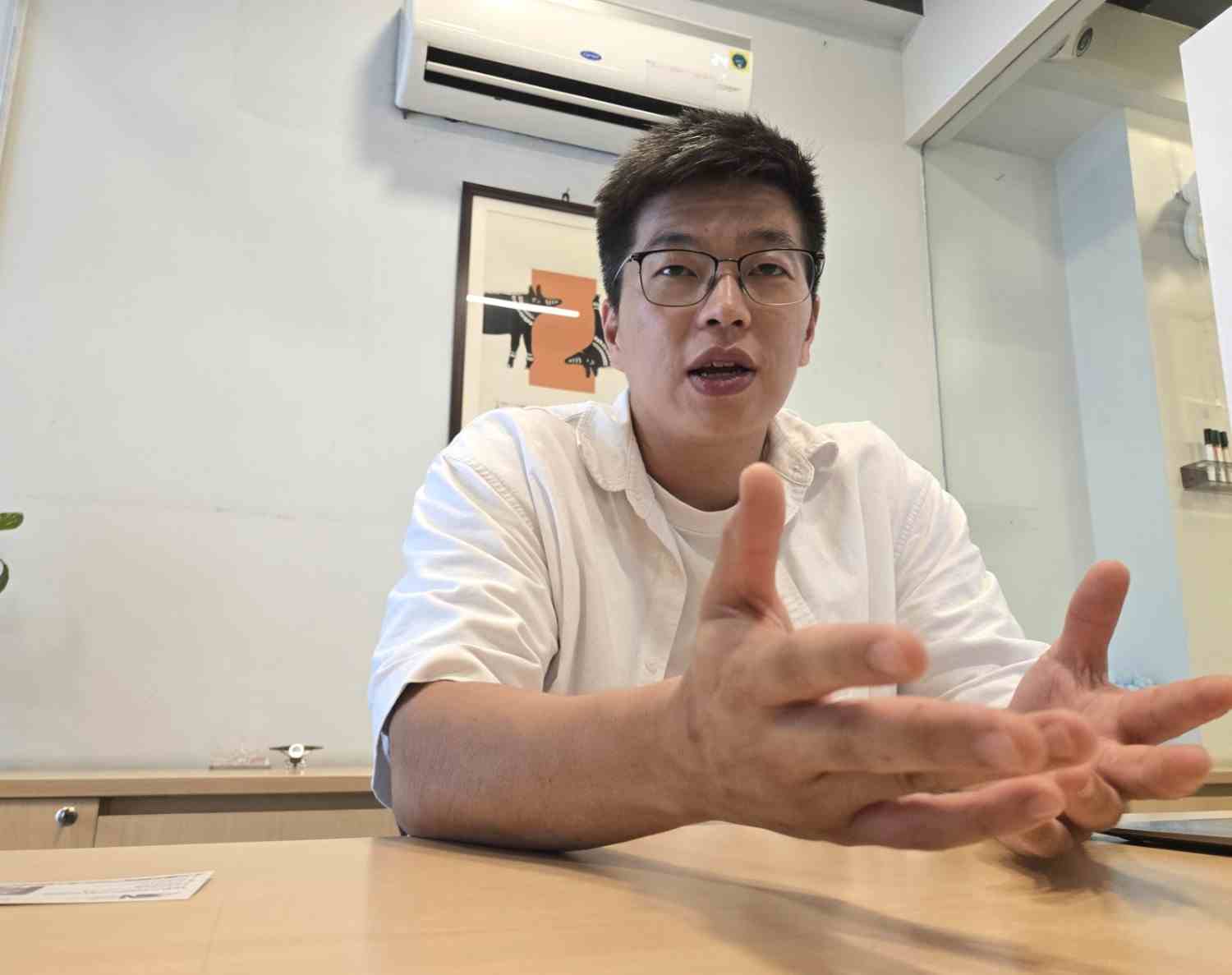
NEW DELHI: A small room in South Delhi’s Safdarjung Enclave, a few refrigerators, a computer and an investment of less than ₹5 lakh marked the beginning of an entrepreneurial journey that would eventually develop into Got Tea, a Korean-influenced beverage brand with ambitious expansion plans in India.
For Korean entrepreneur EO Yu Sung, the journey was not simply about building a business. It was also about returning to a country that had shaped his formative years, embracing unfamiliar challenges and transforming longstanding friendships into a business partnership. In an exclusive conversation with Asian Community News (ACN) Network, Yu Sung shared how he moved from a corporate career in South Korea to establishing a beverage venture in India, which later joined forces with Indian specialty coffee company Blue Tokai in 2023. During the interview, he reported monthly business of approximately ₹3.8 crore and expressed ambitions of reaching ₹100 crore in annual revenue in the following financial year.
Yu Sung’s association with India began during his school years at the prestigious Woodstock School, where he experienced a multicultural environment and developed friendships that would eventually influence his professional journey. After leaving India in 2011, he moved to the United States for higher education, studied in New York and completed his compulsory military service in South Korea before graduating from New York University. He subsequently joined the corporate workforce in South Korea, working in human resources in Pohang for approximately two and a half years. However, a visit to India in January 2019 with close friends changed his perspective. Revisiting his former school and witnessing the country’s development, particularly the transformation of Gurugram’s Cyber Hub, renewed his interest in returning. By April 2019, he had begun researching the Indian market and experimenting with beverage recipes before eventually making the move.
An interesting aspect of Got Tea’s founding story is that none of its original founders came from the food and beverage industry. Yu Sung had an HR background, one co-founder had experience in coding and technology in the United States, while another had worked in wedding photography and videography before taking up operational responsibilities. Their common connection was their friendship, which had developed during their school years. The founders identified growing interest in Korean culture and bubble tea among Indian consumers and decided to introduce a Korean-influenced beverage concept. Even the brand name reflected this cultural connection. Yu Sung drew inspiration from the traditional Korean hat called gat, worn during the Joseon Dynasty and featured in the Netflix historical series Kingdom. The name eventually evolved into Got Tea, which the founders found contemporary and memorable.
Before formally establishing the business, the founders tested their concept at events at Gargi College and Sunder Nursery in December 2019. Their initial menu featured just four beverages: Strawberry Blossom, Matcha, Caramel Brown and an orange-based refresher. Encouraged by the response, they moved towards establishing the business, which took shape around November 2020. Their first operating space was a small room inside a friend’s restaurant in Safdarjung Enclave, South Delhi, with a monthly rent of approximately ₹15,000. With less than ₹5 lakh in initial investment, a few refrigerators and a sealing machine, they began operations. The founders handled almost everything themselves, from product development and sourcing to customer service and daily operations. For Yu Sung, the experience demonstrated that a lack of formal industry experience need not prevent someone from pursuing an entrepreneurial idea, provided there is a willingness to learn and experiment.
Although Got Tea carries a Korean cultural identity, Yu Sung wanted the brand to reflect an international approach rather than simply replicate a foreign concept in India. The company began sourcing Assam tea directly from India, importing matcha from Japan and tapioca pearls from Taiwan, while procuring fruits and most other ingredients locally. Its approach was to combine international product influences with Indian sourcing and consumer preferences. Matcha became one of the important categories in its product development. Yu Sung experimented with preparation methods and flavour profiles after recognising that Indian consumers often preferred stronger flavours than those associated with traditional Japanese and Korean preparations. The menu also incorporated Korean-inspired food, including sogeum-ppang, the Korean salt bread also known as shio pan in Japan, prepared using locally sourced flour. For Yu Sung, maintaining authenticity did not mean refusing to adapt. Instead, it meant respecting a product’s origins while understanding the preferences of local consumers.
Yu Sung believes that consumer trends can change quickly and that businesses dependent on a single fashionable product category may face difficulties over time. Having observed the evolution of bubble tea markets in East Asia, he wanted Got Tea to develop into a broader beverage company rather than remain exclusively associated with bubble tea. The brand’s principal audience comprises Generation Z consumers, particularly those aged between 18 and 26, who are receptive to international flavours, digital trends and new cultural experiences. His approach is to continually experiment with products and respond to changing customer expectations. He believes that a brand can retain its Korean identity while incorporating influences from other countries.
A significant milestone in Got Tea’s journey came in 2023, when it joined forces with Blue Tokai, India’s specialty coffee company. As the business expanded, the founders recognised that scaling operations independently would require considerable investment, infrastructure and specialised expertise. According to Yu Sung, Blue Tokai’s established operating network, which then comprised approximately 250 outlets, offered opportunities that would have been difficult for Got Tea to develop independently. The partnership also created opportunities for Yu Sung to participate in new-product development for Blue Tokai. The two brands attracted somewhat different consumer groups, with Got Tea focusing particularly on younger customers and Blue Tokai appealing to a relatively older coffee audience. Yu Sung described the decision as a strategic move to prioritise long-term growth over complete independence.
During the interview, Yu Sung reported monthly business of approximately ₹3.8 crore and projected annual revenue of around ₹60 crore by the end of the financial year, with an ambition to approach ₹100 crore the following year. The company also has a longer-term vision of operating more than 100 outlets. However, he emphasised that expansion must be supported by strong operational systems. The company had temporarily slowed new-store openings to address operational challenges, review underperforming outlets and improve existing business processes. For Yu Sung, building a sustainable business is more important than increasing the number of stores simply to demonstrate expansion.
Having studied in India and the United States, worked in South Korea and established a business in New Delhi, Yu Sung has developed a distinctive understanding of different professional environments. He sees India as a market offering considerable opportunities for entrepreneurs, particularly in consumer categories where innovative concepts still have room to grow. However, he cautioned that doing business in India requires patience and adaptability. He explained that Korean entrepreneurs cannot simply transfer their established working methods to India and expect identical results. Processes, timelines and operational practices can differ considerably. According to him, managing expectations and maintaining emotional balance are essential qualities for international entrepreneurs. At the same time, he appreciates India’s strengths, particularly its digital payment ecosystem through UPI and rapid-delivery services such as Blinkit.
Throughout the conversation, Yu Sung repeatedly acknowledged the contribution of friends, mentors, colleagues and people who supported the business during difficult periods. He recalled the initial three years as particularly challenging, with limited resources, uncertain progress and several operational hurdles. He believes that enthusiasm, hard work and a willingness to learn can help entrepreneurs attract support and discover opportunities. However, he strongly rejects the idea that business success is achieved individually. “You cannot build a business by yourself,” he emphasised, highlighting the importance of relationships and teamwork.
Yu Sung encouraged young Koreans interested in studying, working or establishing businesses in India to move beyond familiar communities and actively engage with Indian society. He believes that developing friendships, understanding local culture and being willing to experiment are important steps towards making the most of opportunities in the country. His own experience across India, South Korea and the United States helped him develop a broader perspective, which eventually became central to Got Tea’s business philosophy.
Reflecting on his entrepreneurial experience, Yu Sung said that personal development has been among the most valuable outcomes of building Got Tea. He believes entrepreneurship has made him more self-aware, helped him manage expectations and encouraged him to surround himself with people committed to continuous improvement. From his school years at Woodstock to graduating from New York University, working in South Korea and eventually starting a business in a small room in South Delhi, his journey has come full circle in India.
For Yu Sung, the country’s significance extends beyond its commercial opportunities. It is a place connected to his childhood, friendships and personal growth. As Got Tea prepares for its next phase of expansion, his journey offers an example of how international exposure, cultural understanding and strong partnerships can create entrepreneurial opportunities across borders. What began as a small venture with less than ₹5 lakh has grown into an ambitious beverage business. For the Korean entrepreneur who returned to India in search of a new beginning, the country has become much more than a business destination—it is where an unlikely dream continues to brew.