AI-Driven Korean Language Teaching Tools introduced at KEC
Under its Korean Language Teachers Training Program, the Korean Education Centre India held a special workshop on AI-integrated teaching, where JNU’s Dr. Satyanshu Srivastava demonstrated two classroom-ready apps for Korean language learners and trainee teachers.

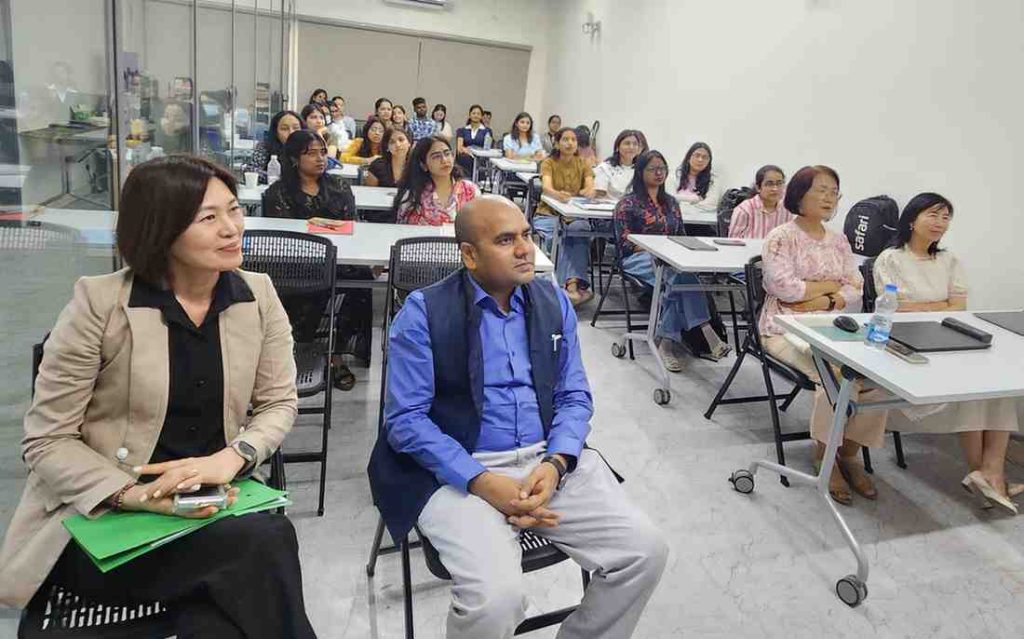
New Delhi: The Korean Education Centre India (KEC) launched a special workshop as part of its Korean Language Teachers Training Program (KLTTP), bringing artificial intelligence into Korean language teacher training in a practical, future-focused way. The March 27, 2026, session introduced trainee teachers to AI-based teaching methodologies aimed at strengthening Korean language education across India.
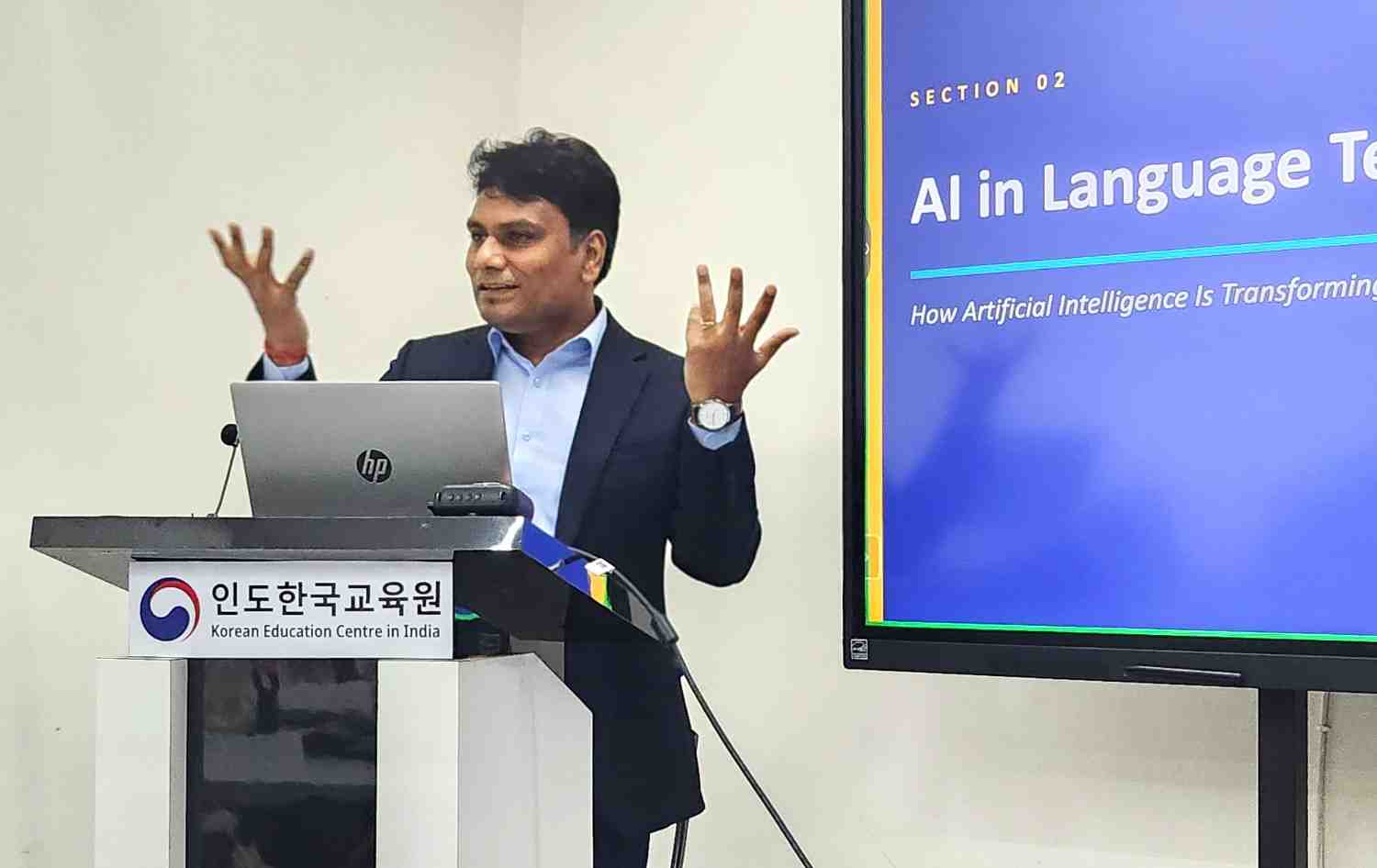
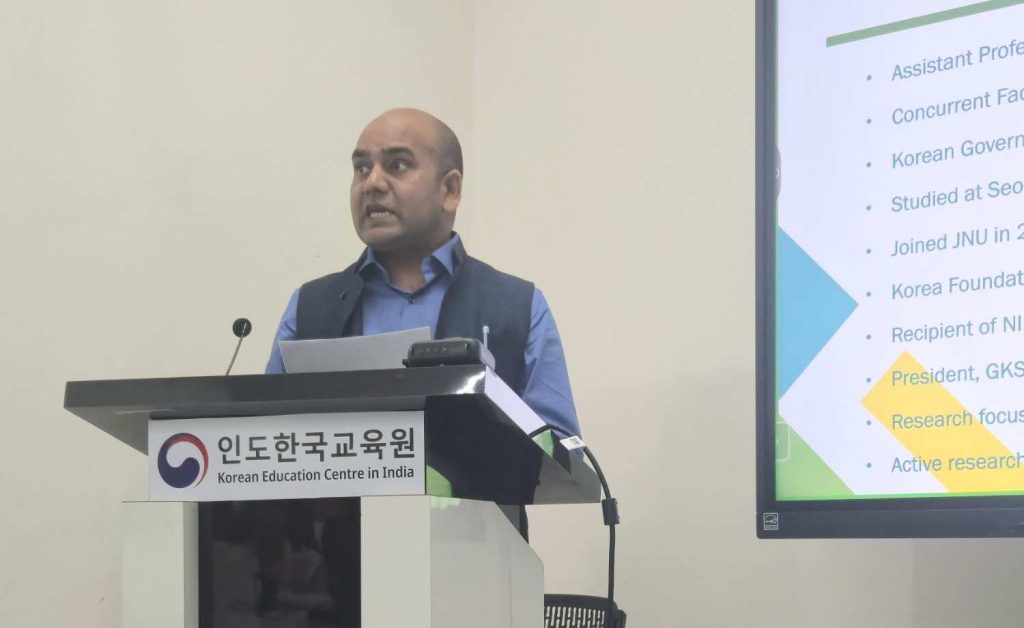
 The workshop’s key session was led by Dr. Satyanshu Srivastava, Professor of Korean at Jawaharlal Nehru University (JNU). He presented an AI-powered approach to Korean language teaching and introduced participants to two tools he has developed — KoreanFix and K-GrammarPro. He explained their effective use in supporting learners beyond the classroom and demonstrated how they can be integrated into actual teaching practice.
Dr. Srivastava, is also President of the GKS India Alumni Association and an alumnus of Seoul National University (SNU), Kyung Hee University (KHU), and Chung-Ang University (CAU), Korea. KEC Director KO HO-JEONG, and Chairperson of the Centre for Korean Studies, Dr. Kaushal Kumar, were also present on the occasion.
Dr. Srivastava’s presentation highlighted the fast growth of Korean language education in India, noting that more than seven universities offer Korean and that there are over 5,000 active learners in the country. At the same time, he pointed to major challenges, including a shortage of trained teachers, limited personalised grammar instruction, time-consuming error correction, and a lack of adaptive tools suited to Indian learners.
Against this backdrop, the workshop positioned AI as an aid to pedagogy rather than a replacement for it. One of the central messages of the session was that AI extends teaching capacity by enabling instant feedback, personalised learning pathways, learning analytics and round-the-clock support for students.
A major highlight was KoreanFix, a GPT-powered correction and feedback tool for learners of Korean as a second language. Dr. Srivastava showed how it identifies and explains errors in learner-produced Korean text, including grammar and particle misuse, tense errors, honorific confusion, word-order issues and Romanization-to-Hangul mistakes. He also demonstrated K-GrammarPro, a structured grammar-support tool that provides explanations at different difficulty levels, generates exercises and helps track recurring learner problem areas.
The session also focused on classroom application. Participants were shown how the tools could be used for lesson preparation, live error correction, homework support, feedback and self-study. The discussion became highly interactive, with trainee teachers candidly raising questions and concerns about practical use, mixed proficiency levels, teacher roles and AI-supported learning in areas with fewer Korean language instructors.
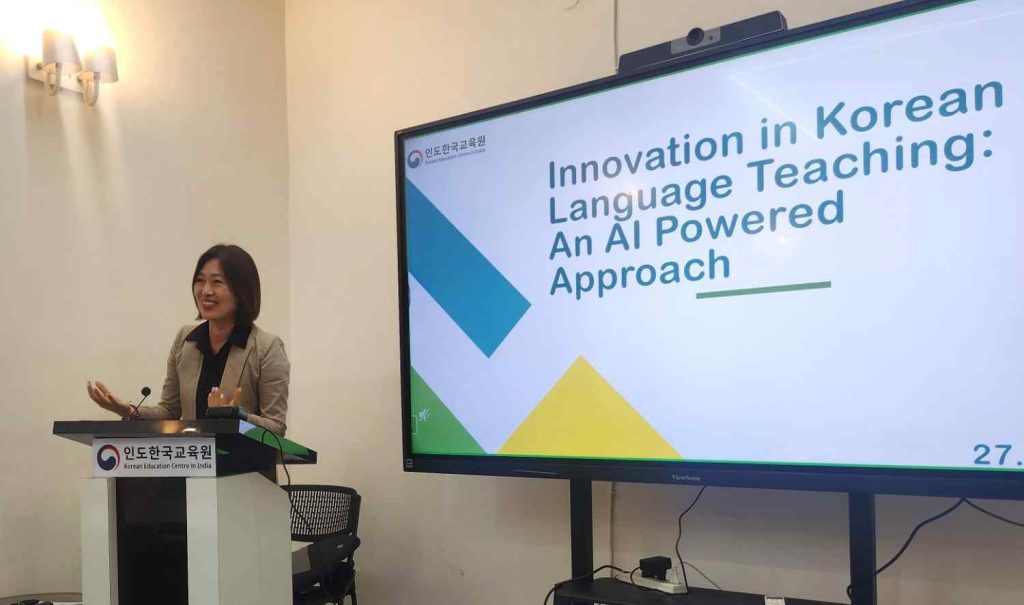
The presentation further stressed responsible AI use, including data privacy, avoiding over-reliance and keeping teacher judgment central. It concluded with the message that the future of Korean language education is hybrid, intelligent and learner-centred, and that both KoreanFix and K-GrammarPro are free and ready for classroom use. For KEC, the workshop marked an important step towards building a more scalable and technology-enabled Korean language teaching ecosystem in India.
According to KEC, the integration of AI into teacher training represents a forward-looking step in strengthening language education systems. By equipping educators with practical, technology-enabled methodologies, the initiative seeks to improve both the quality and accessibility of Korean language education nationwide.
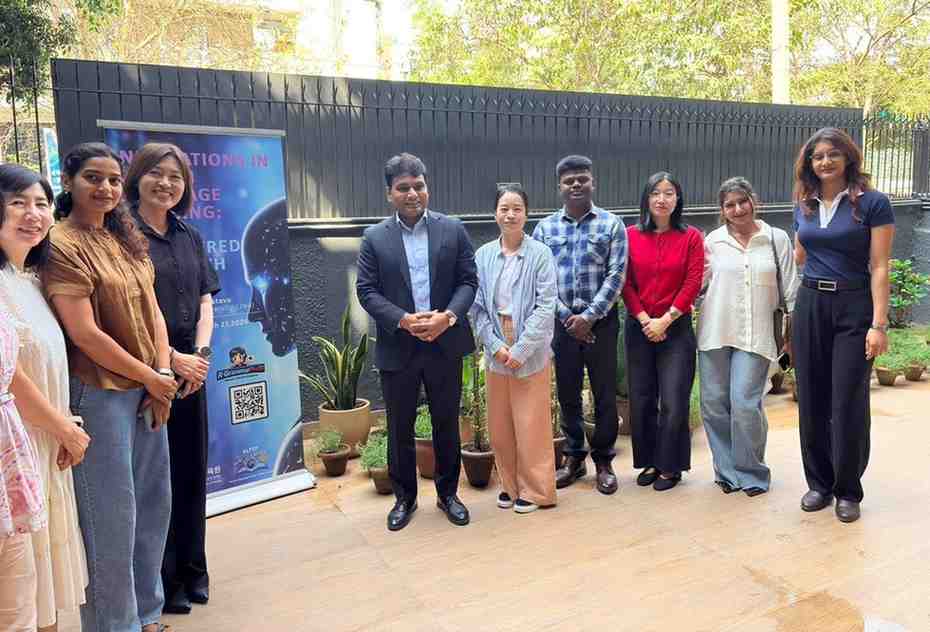 “This initiative represents an important step toward building a future-ready model for Korean language education in India, KEC Director KO HO-JEONG said. “By supporting teachers with AI-assisted approaches, we aim to create a more effective and sustainable learning environment.”