Civilizational Links to Future Partnerships: GKS Symposium Maps New Pathways for India–Korea Ties

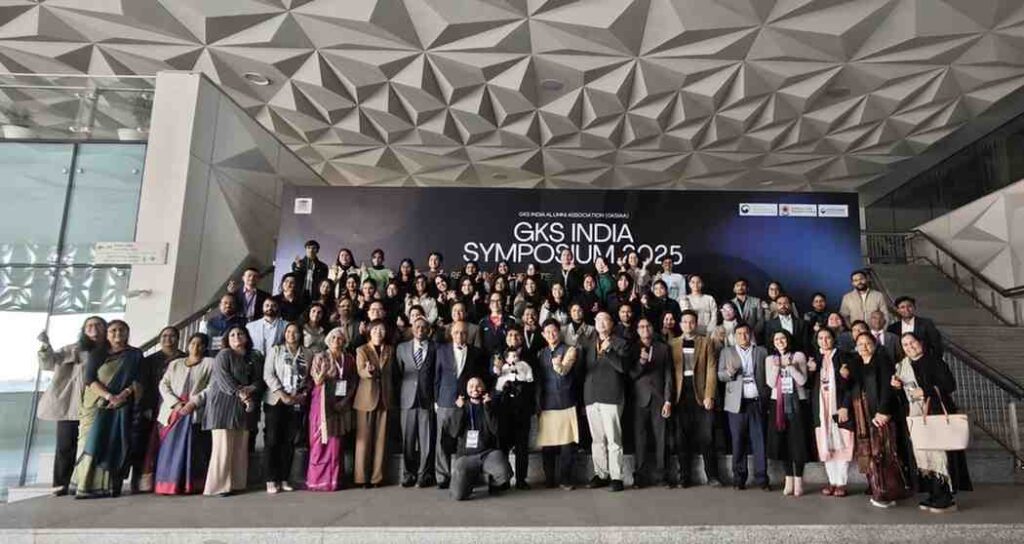
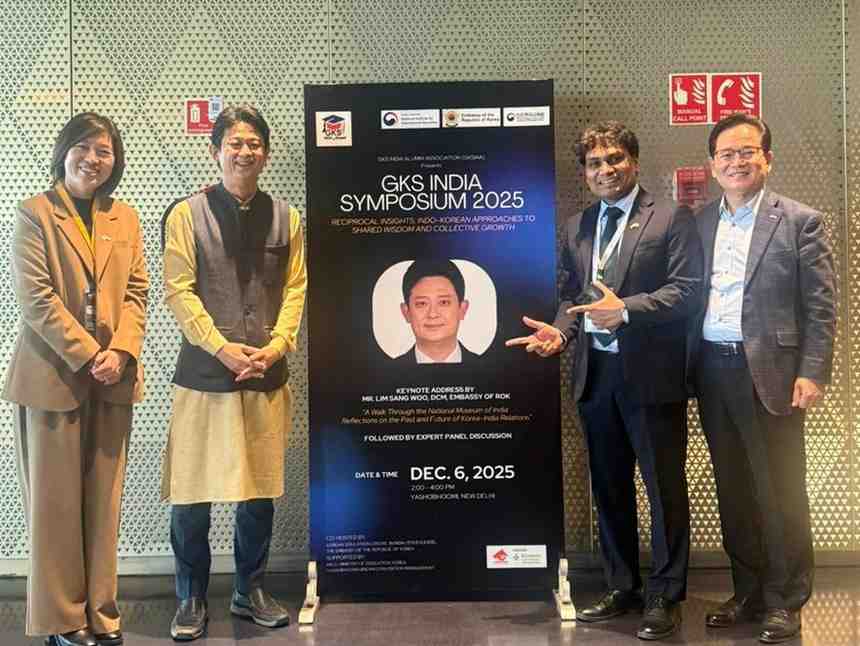
New Delhi, India – The GKS India Alumni Association (GKSIAA), in collaboration with the Korean Education Centre (KEC) India and supported by NIIED, Ministry of Education, Republic of Korea, and Yashobhoomi Kinexin India, successfully hosted the GKS India Symposium 2025 at the Yashobhoomi Convention Centre, New Delhi, on 6th of December 2025. The symposium, built around the theme “Reciprocal Insights: Indo–Korean Approaches to Shared Wisdom and Collective Growth,” brought together diplomats, scholars, alumni, and industry leaders for a day of reflection, dialogue, and collaboration.
The formal inauguration began with the national anthems of Korea and India, followed by an introduction to GKSIAA and NIIED’s role in strengthening alumni networks.
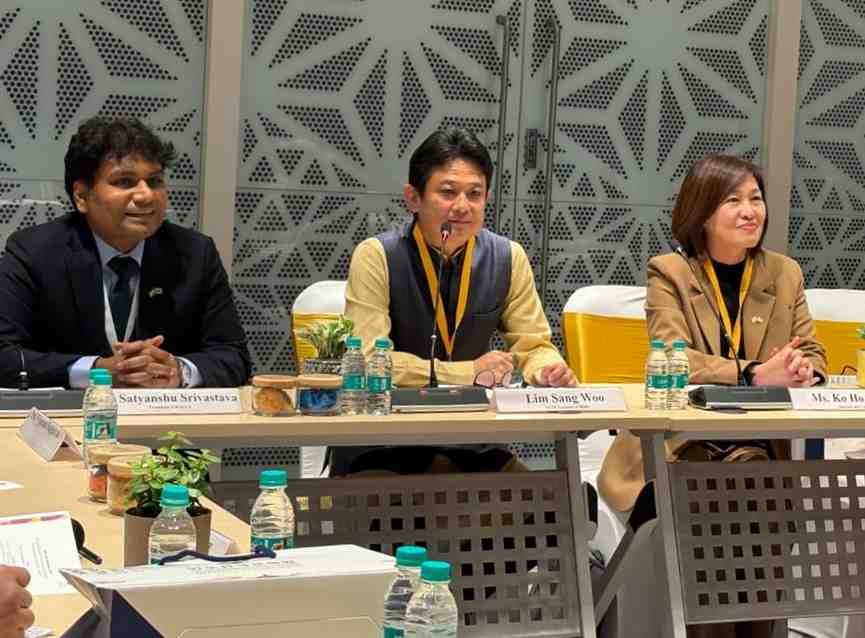
In his Welcome Address, Dr. Satyanshu Srivastava, President of GKSIAA, highlighted the significance of alumni-led knowledge communities in deepening bilateral ties. Dr. Srivastava appreciated Mr. Lim’s contribution as a diplomat and the lesson of ‘lifelong learning and passion for new’ that he embodies. The Congratulatory Address by Ms. Ko Ho Jeong, Director of KEC India, reaffirmed the Ministry of Education’s commitment to expanding Korean studies, cultural outreach, and scholarship engagement in India while addressing the growing demand in the best possible way.
The highlight of the event was the keynote address by H.E. Mr Lim Sang Woo, Deputy Chief of Mission, Embassy of the Republic of Korea, titled “A Walk Through the National Museum of India: Reflections on the Past and Future of Korea–India Relations,” which connected historical narratives to contemporary diplomacy.
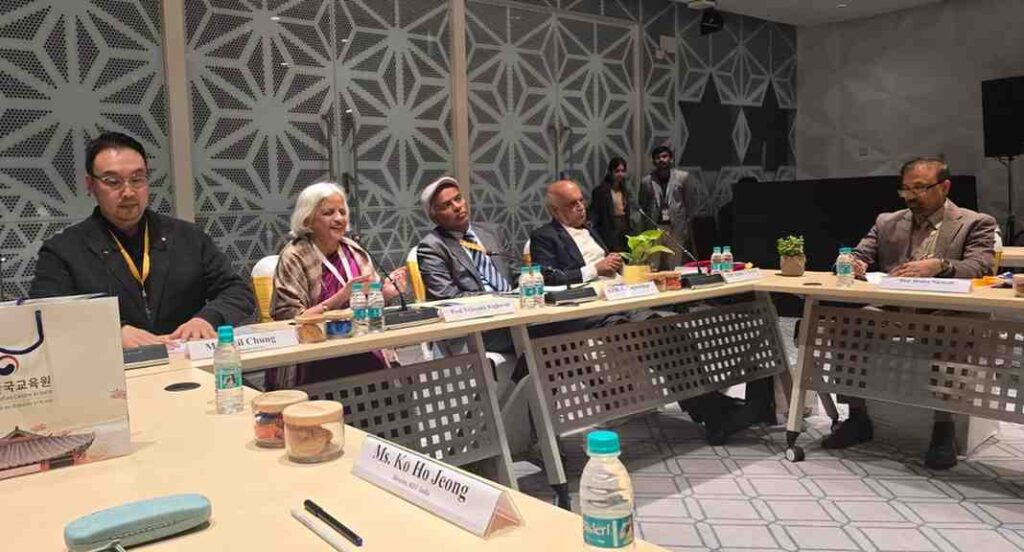
Drawing on his experience as a volunteer guide at the National Museum of India, he traced civilizational links through:
- Buddhist networks, particularly Nalanda University and the travel writings of Korean monk Hyecho (Hyech’o).
- Visual motifs from Harappan seals and Gupta-era sculpture that resonate with early Korean iconography.
- Mythological parallels, including the Tangun legend, Pashupati imagery, and the Princess Suriratna–King Kim Suro narrative.
Mr. Lim emphasized that these deep-rooted cultural frameworks provide the philosophical basis for today’s expanding academic, technological, and cultural partnerships. This was Mr Lim’s one of the last public addresses before he returned to headquarters to assume the position of Deputy Minister (secretary) of Public Diplomacy.
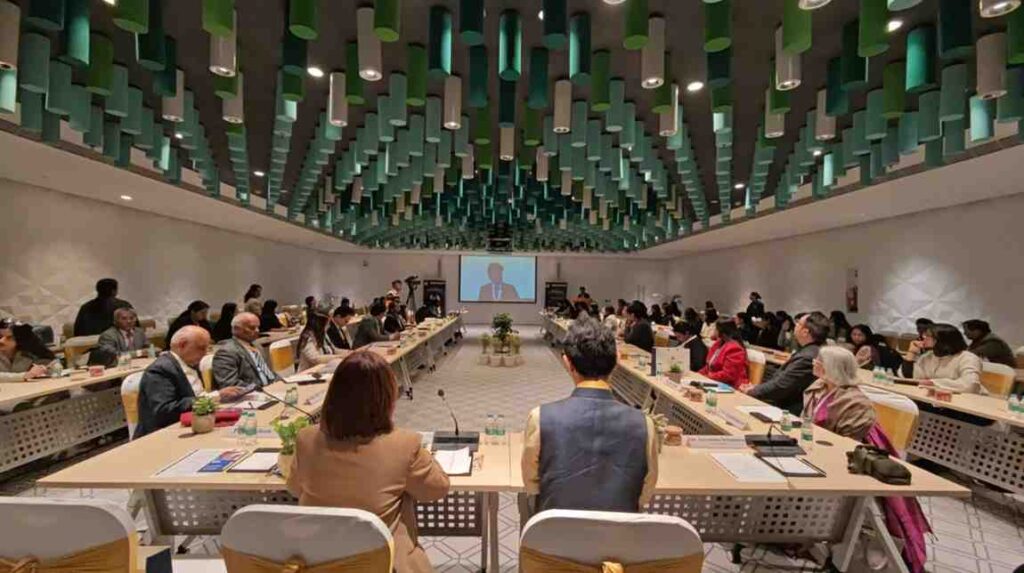
An expert panel discussion followed this. The Expert Panel Discussion, moderated by Prof. Vyjayanti Raghavan, featured Amb. C. Rajasekhar, Amb. Sudhir Devare and Mr Phil Chung (CEO of Yashobhoomi, Kinexin).
Ambassador Rajasekhar highlighted that India is entering a “golden era” of ties with Korea, stressing the importance of institutional discipline, citizen responsibility, and innovation-driven growth.
Ambassador Devare underscored Korea’s developmental trajectory as a model of adaptability and emphasized maritime cooperation, technology, and higher education as growth pillars.
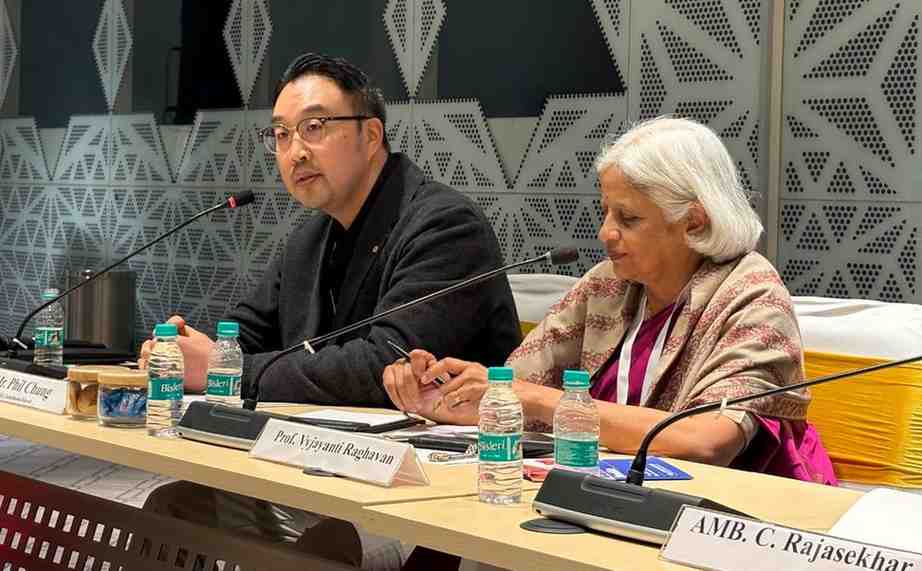
Mr Phil Chung reversed the usual narrative, suggesting that Korea has much to learn from India, particularly India’s demographic vitality, multicultural confidence, and strong family structures.
Collectively, the panel asserted that the future of Indo-Korean cooperation will rely heavily on academic partnerships, cultural diplomacy, and shared Asian values.
Earlier, the event opened with the GKS India Alumni Roundtable, with welcoming remarks from Dr. Satyanshu Srivastava, President GKSIAA and Ms. Ko Ho Jeong, Director, KEC. The roundtable was moderated by Dr. Neerja Samajdar (GKS-2002), showcasing the expanding global impact of the Global Korea Scholarship. Five distinguished alumni shared their academic and professional journeys, each illustrating how the scholarship has catalyzed international careers across science, policy, corporate sectors, and education.
Among the speakers:
Dr. Shambhavi Pandey (GKS-2010), Senior Scientist at IQS, Spain, highlighted how Korea’s rigorous research ecosystem strengthened her scientific discipline and global research profile.
Dr. Yogendra Bordiya (GKS-2009), Senior Scientist at Pattern Bioscience, USA, described Korea as an “emotional anchor,” tracing his academic transformation from Yonsei and Seoul National University to leading work in pneumonia diagnostics and antibiotic resistance.
Ms. Swarnim Singh (GKS-2016), a Brand Marketer for D’Alba, Korea, shared insights into the Korean corporate sector, overcoming cultural shocks, cold weather, and dietary challenges while gaining administrative experience through Seoul-Delhi MOUs. She has promoted cultural diplomacy by teaching Indian culture and continues to give back through GKS alumni initiatives and personal projects.
Ms. Shreya Mishra (GKS-2022) discussed how her Yonsei GSIS education and internships with DGFT, MEA, and ORF shaped her research career in India–Korea policy.
Ms. Kritika (GKS-2022) recounted her academic journey through Nonsan and Sogang University, navigating cultural and dietary challenges during rural and urban experiences. She now contributes to educational and cultural initiatives at the Korean Education Centre India.
Collectively, the roundtable emphasized the scholarship’s unique role in cultivating a new generation of India–Korea connectors.
The symposium was conducted in a hybrid format, with around 200 participants joining the event. The symposium concluded with a Vote of Thanks by Ms. Juhi Mendiratta, Secretary of GKSIAA, followed by a networking High Tea. The event reaffirmed the pivotal role of alumni networks in advancing bilateral relations and showcased how shared civilizational wisdom continues to shape modern India–Korea engagement.