

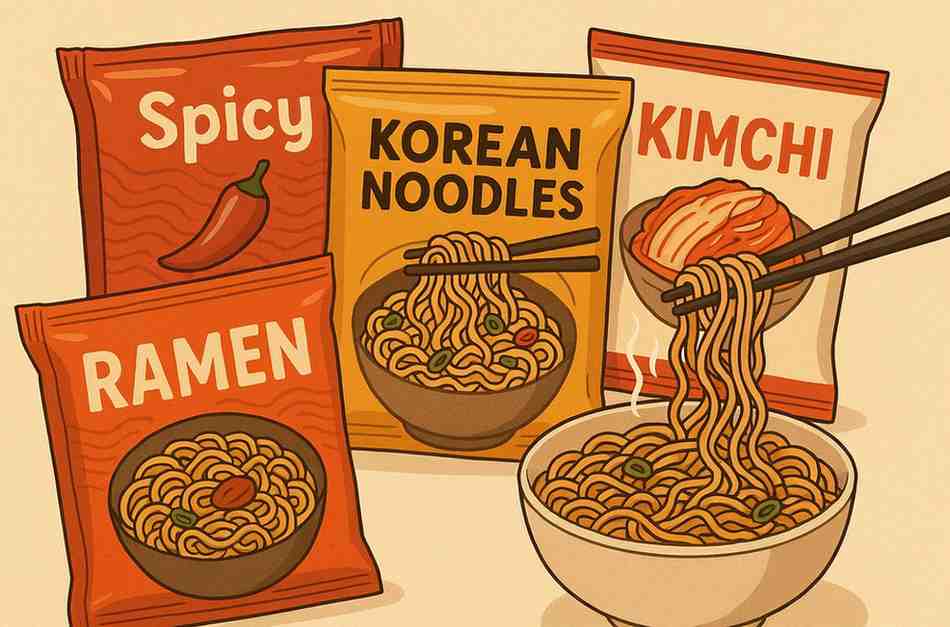
New Delhi, India, August 4, 2025 — In recent years, Korean instant noodles—often referred to as “ramyeon”—have carved out a significant niche in the Indian food market, even outselling some homegrown brands in certain urban areas. What began as a niche indulgence among K-pop and K-drama fans has now turned into a full-blown culinary craze. The appeal lies not just in the novelty, but in the bold, spicy flavors, premium ingredients, and the overall eating experience that Korean noodles offer.
Unlike traditional Indian instant noodles, which are usually milder and designed for quick snacking, Korean noodles offer a more substantial, flavorful meal. Brands like Samyang, Nongshim, and Ottogi have become household names among young Indian consumers, especially in metropolitan cities. Their iconic products—like Samyang’s fiery Buldak Hot Chicken series or Nongshim’s Shin Ramyun—offer a spicy kick and chewy noodle texture that stands out in a saturated market.
Another key factor is the cultural influence of Korean media. As K-dramas and K-pop continue to dominate the Indian digital space, fans are eager to try the food they see on screen. Slurping spicy noodles from a metal bowl while watching their favorite stars has become more than just a trend—it’s now a shared experience. Many Indian consumers also appreciate the portion size, quality of packaging, and the variety of flavors, from seafood and kimchi to carbonara and cheese.
While Indian noodle brands still dominate in rural and budget-conscious markets, Korean noodles are steadily gaining ground among the urban youth and college-going crowd who are willing to spend more for taste and trend. Supermarkets, online platforms, and even street kiosks now stock these Korean options regularly.
In a land where Maggi once ruled unchallenged, Korean instant noodles have added spice and global flair to India’s fast-food culture. Their success story isn’t just about food—it’s about how global culture, taste exploration, and youthful curiosity have reshaped consumer preferences in a rapidly changing India.