

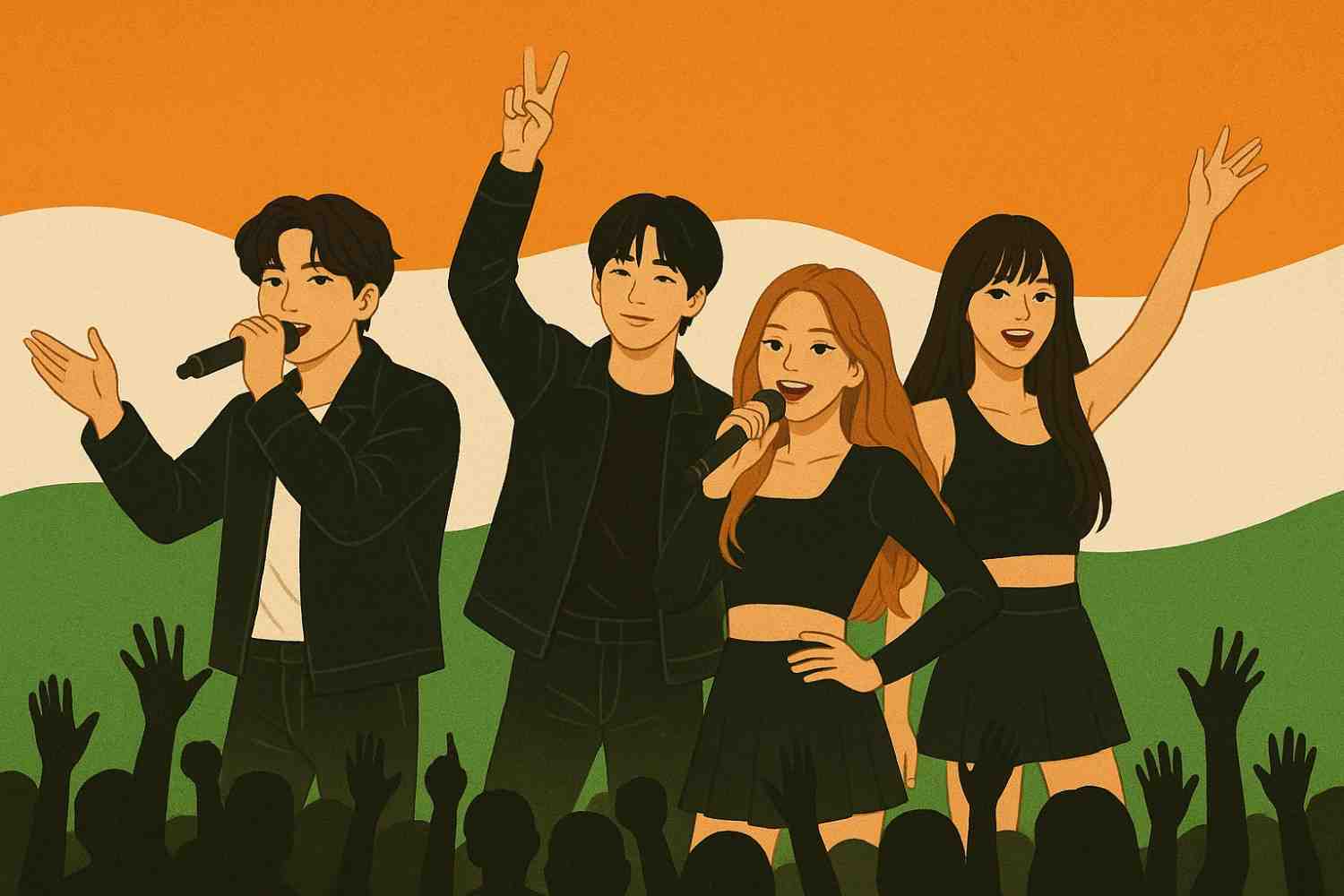
New Delhi, India, August 27, 2025 — Over the last decade, India’s music landscape has undergone a remarkable transformation, thanks to the rising popularity of Korean pop music, popularly known as K-pop. Once limited to niche fan communities, K-pop has now become a mainstream cultural phenomenon, with groups like BTS and Blackpink leading the charge. Their music, style, and global reach have not only redefined the way Indian youth consume music but have also opened up new spaces for cross-cultural exchange between India and South Korea.
The arrival of K-pop in India was fueled by the explosion of social media platforms like YouTube, Instagram, and TikTok. Indian fans discovered BTS’s powerful performances and heartfelt lyrics as well as Blackpink’s fierce charisma and stylish visuals online. What made these groups stand out was their ability to combine catchy beats, dazzling choreography, and relatable themes of love, struggle, and self-discovery. Unlike traditional pop music in India, K-pop offered a visually immersive experience where music videos, fashion, and storytelling were equally important as the sound itself.
BTS, often referred to as the world’s biggest boy band, struck a deep chord with Indian audiences. Their message of self-love, mental health awareness, and resilience resonated strongly with young Indians navigating the pressures of academics, career expectations, and identity struggles. Songs like “Love Yourself” and “Dynamite” became anthems of empowerment, while their energetic performances on global stages made fans feel connected to a larger, borderless community. BTS proved that language is no barrier in music, as Indian fans passionately memorized Korean lyrics and sang along at fan meets and online events.
On the other hand, Blackpink introduced a new dimension of female power and glamour to India’s music scene. Known for their bold fashion, electrifying stage presence, and chart-topping hits like “Kill This Love” and “How You Like That,” the group inspired countless Indian youngsters, especially girls, to embrace confidence and individuality. Their collaboration with global artists such as Selena Gomez and Lady Gaga further boosted their international appeal, making them style icons as much as musical superstars. In India, their fandom grew rapidly, blending admiration for their artistry with a fascination for Korean culture.
One of the biggest impacts of BTS and Blackpink in India has been the creation of vibrant fan communities. Indian ARMYs (BTS fans) and BLINKs (Blackpink fans) organize streaming parties, dance covers, art exhibitions, and charity events in the name of their idols. These fan-driven movements reflect not just admiration for the artists but also solidarity and collective passion. In fact, Indian fans have raised funds for social causes, planted trees, and supported education initiatives, showcasing how K-pop fandom is more than just about music—it is about building a positive community.
The influence of K-pop has also changed the way Indian audiences consume global music. Earlier, Bollywood and regional music dominated playlists, with Western pop as a secondary choice. But now, K-pop stands shoulder to shoulder with international artists, and Indian streaming platforms report rising demand for Korean tracks. This shift has encouraged more Indian listeners to explore international genres, expanding their musical horizons beyond language and borders.
Additionally, K-pop’s emphasis on performance and visuals has influenced India’s independent music scene. Young Indian artists are now experimenting with synchronized choreography, vibrant music videos, and digital fan engagement, inspired by the K-pop model. Dance academies in cities like Delhi, Mumbai, and Bengaluru are offering K-pop dance workshops, while Korean language classes are seeing higher enrollments, showing how music has sparked interest in culture and education.
Economically, the K-pop wave has given a boost to merchandise sales, concert streaming, and cultural exchanges. Although live K-pop concerts in India are still limited, the demand is growing rapidly. Indian fans stay up late to watch live performances broadcasted from Seoul, proving their dedication and enthusiasm. This enthusiasm signals potential opportunities for future collaborations between Indian and Korean entertainment industries.
In conclusion, the rise of BTS and Blackpink in India has changed the music scene in more ways than one. They have introduced Indian audiences to a new global sound, reshaped fan culture, and inspired young people to embrace diversity, creativity, and confidence. The K-pop wave has blurred boundaries between nations, showing that music truly is a universal language. As K-pop continues to grow in India, it is not just redefining the way people listen to music—it is shaping a new cultural movement that celebrates connection across borders.