Beyond Clicks, Towards Credibility: WJAI Conclave Charts a Future for India’s Web Journalism
At WJAI’s 7th Foundation Day, political leaders, media scholars, and senior editors call for ethics, balance, and public trust to guide the digital news ecosystem.

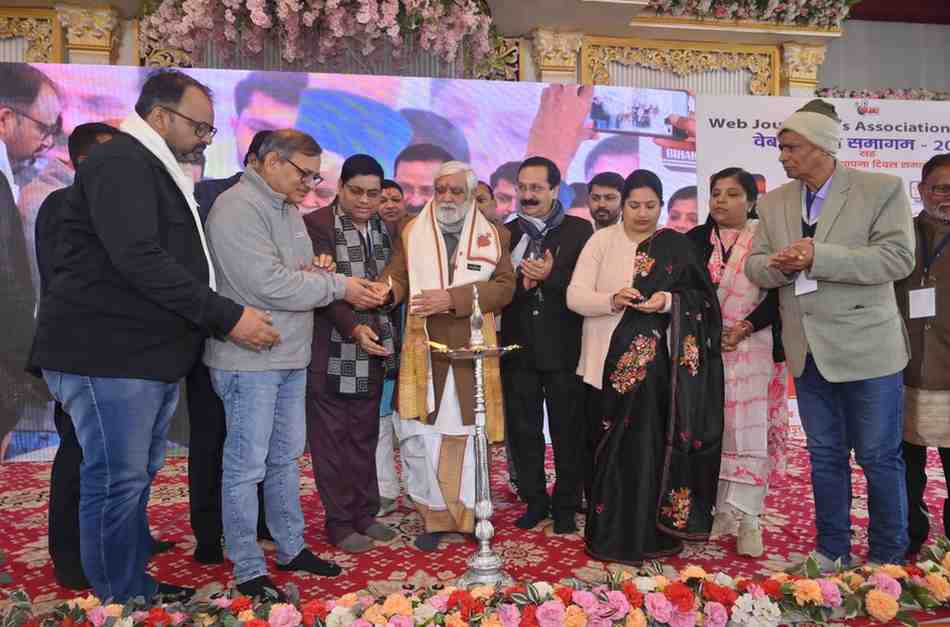
Bhagalpur, Bihar — The holy land of Bhagalpur witnessed a moment of rare introspection and resolve as the Web Media Sammelan-cum-7th Foundation Day of the Web Journalists Association of India (WJAI) unfolded as a landmark forum for redefining the direction and responsibility of Indian web journalism. Hosted at Anand Utsav Palace, Anandgarh, the gathering went far beyond ceremony, emerging as a serious national conversation on how digital media must evolve—anchored not in speed alone, but in credibility, conscience, and public service.
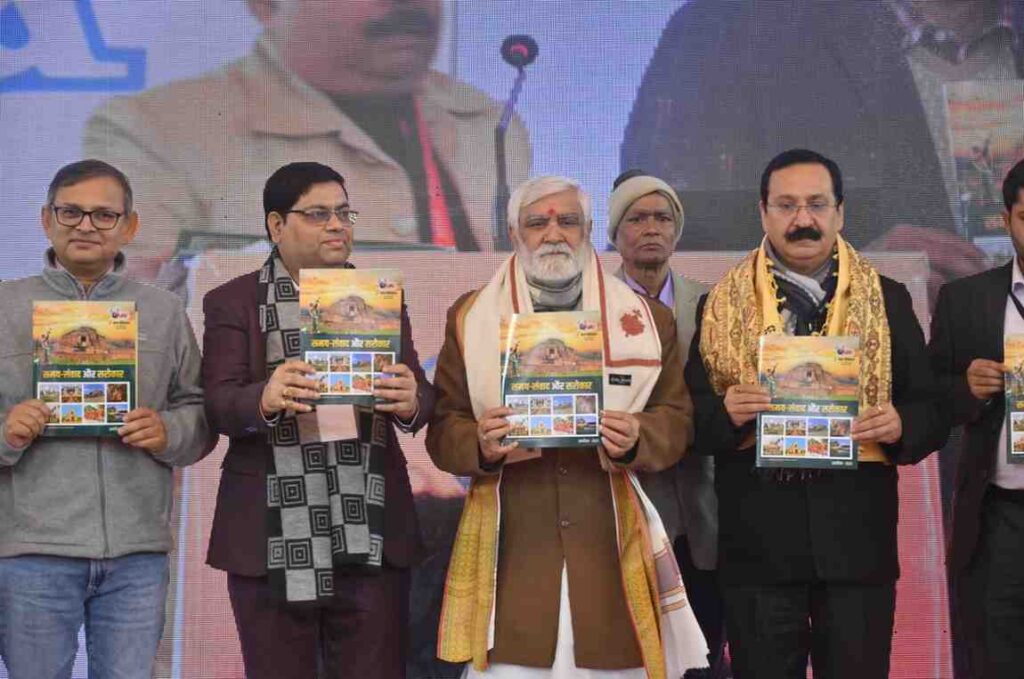 The opening session drew intellectual heft and moral clarity from an eminent panel that included Ashwini Kumar Choubey, former Union Minister; Sanjay Dwivedi, noted media academic and former Director General of IIMC; and Brajesh Kumar Singh, Group Editor of News18. Their presence set the tone for a conclave that repeatedly returned to one central idea: web media today is the backbone of democracy, but its real strength lies not in virality, but in veracity.
In his address, Prof. Dwivedi offered a candid assessment of the digital news environment. He warned that the relentless race to be “first” often risks diluting journalistic values, pushing content toward trends rather than truth. Urging digital journalists to rise above the metrics-driven mindset, he famously remarked that the hour demands “content reformers, not merely content creators.”
Every word, image, and idea that reaches millions online, he stressed, carries social impact and moral responsibility. Journalism of the future, he asserted, can stand tall only on three pillars—facts, balance, and sensitivity.
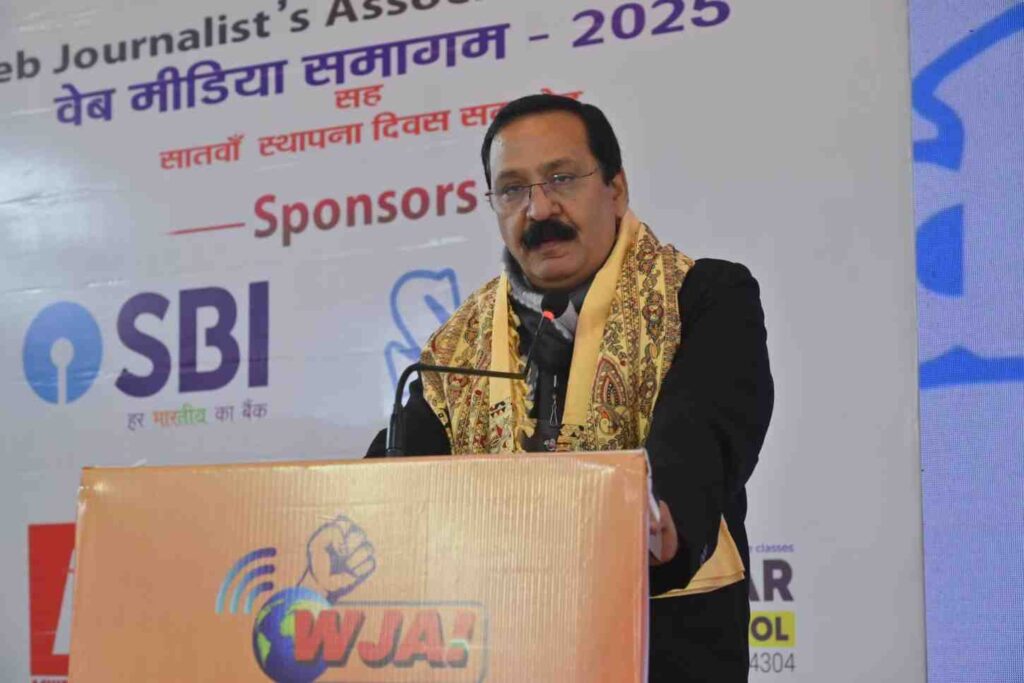
Former Union Minister Ashwini Kumar Choubey underlined the democratic significance of web media, particularly its ability to amplify local voices and reach communities often ignored by mainstream platforms. He noted that technology has opened unprecedented opportunities for communication and participation, but cautioned that this freedom must be matched with discipline and accountability to prevent misinformation from weakening social trust.
The organisational vision of WJAI was articulated in the welcome address by National President Anand Kaushal, who described the association not merely as an institution, but as a collective voice for thousands of web journalists working across India’s towns and districts. Despite limited resources, he said, these journalists continue to pursue the truth with courage. WJAI’s core objectives—training, protection, and recognition—aim to organise and empower this vast but often vulnerable digital workforce, ensuring professional dignity and ethical grounding.
National General Secretary Dr. Amit Ranjan, delivering the vote of thanks, highlighted the conclave as a product of collective effort and shared resolve. The participation of web journalists from across the country, he observed, reflected both the challenges and promise of digital journalism. The future, he said, is bright if the community remains steadfast on the path of ethics and truth.
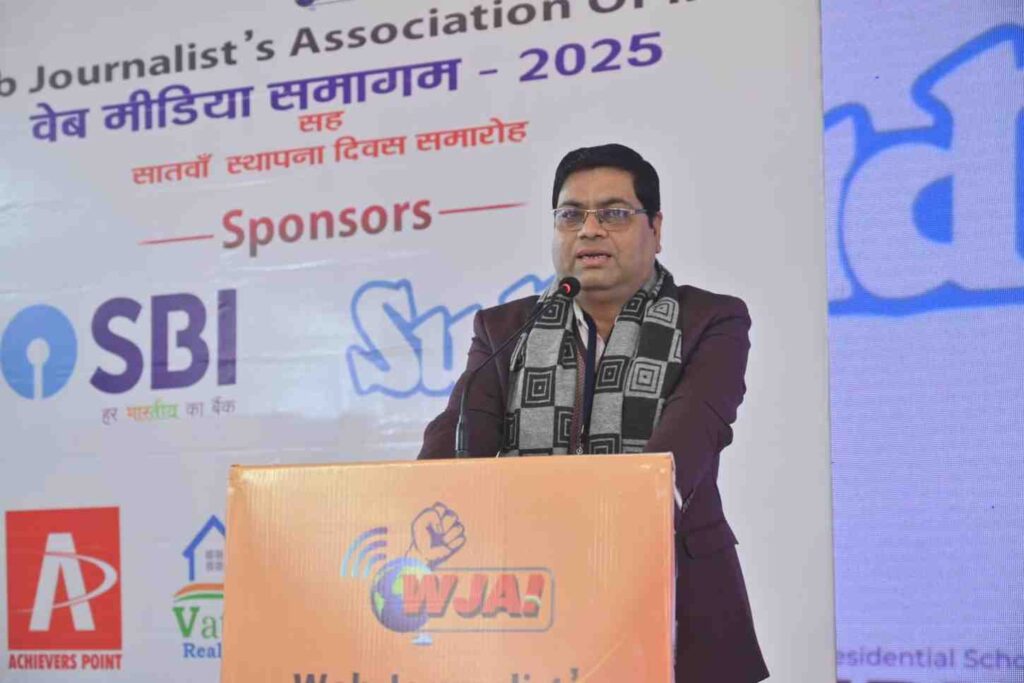
A major highlight of the day was the intellectual session on “The Limits and Frontiers of Web Media,” which brought ground realities to the fore. Open deliberations addressed pressing concerns such as the spread of fake news, journalist safety, accreditation, and the urgent need for a stronger professional organisation. Speakers agreed that these issues can no longer be postponed. Web media, they asserted, must continue to question power and society alike—but always in the light of verified facts and transparent practices.
As the first day drew to a close, the Bhagalpur conclave concluded with a clear collective pledge: to make web journalism stronger, fearless yet fair, fast yet factual, and deeply people-centric. Participants expressed hope that if the ideas articulated in Bhagalpur resonate nationwide, India’s web media will not only safeguard democratic values but also actively contribute to strengthening them in the digital era.
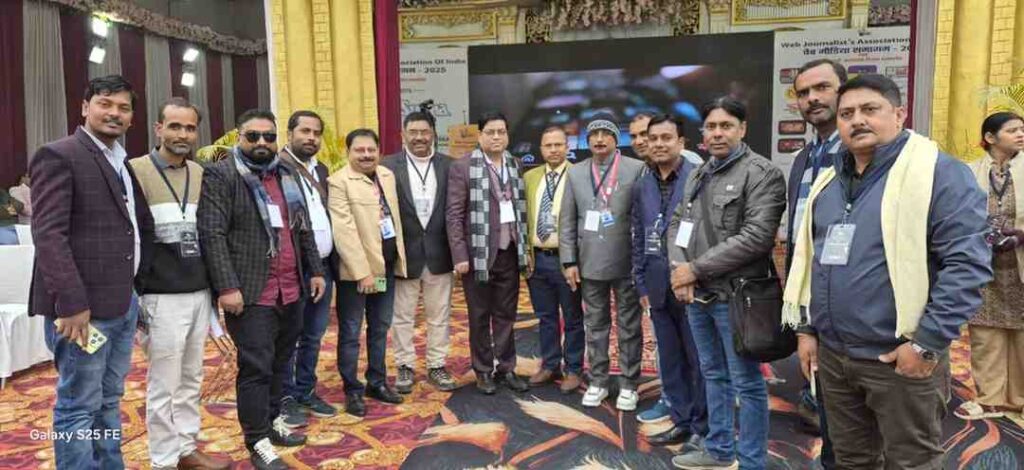
New WJAI Executive Committee formed: The highlight was the seamless election process, overseen by the chief election in-charge and Senior Journalist & Photographers Association President Manoj Kumar Gupta. In a display of unity, Anand Kaushal was re-elected as National President for a record fourth consecutive term. Dr. Amit Ranjan secured the General Secretary position for the fourth time, while Madhup Mani Pikku was chosen as General Secretary (Organization), and Manjesh Kumar as Treasurer for his second term. Amitabh Ojha and Dr. Leena became Vice Presidents, Mithilesh Mishra and Vivek Kumar as Secretaries, Ravishankar Sharma and Anamika Mandal as Joint Secretaries, and Ram Balak Rai as Office Secretary.
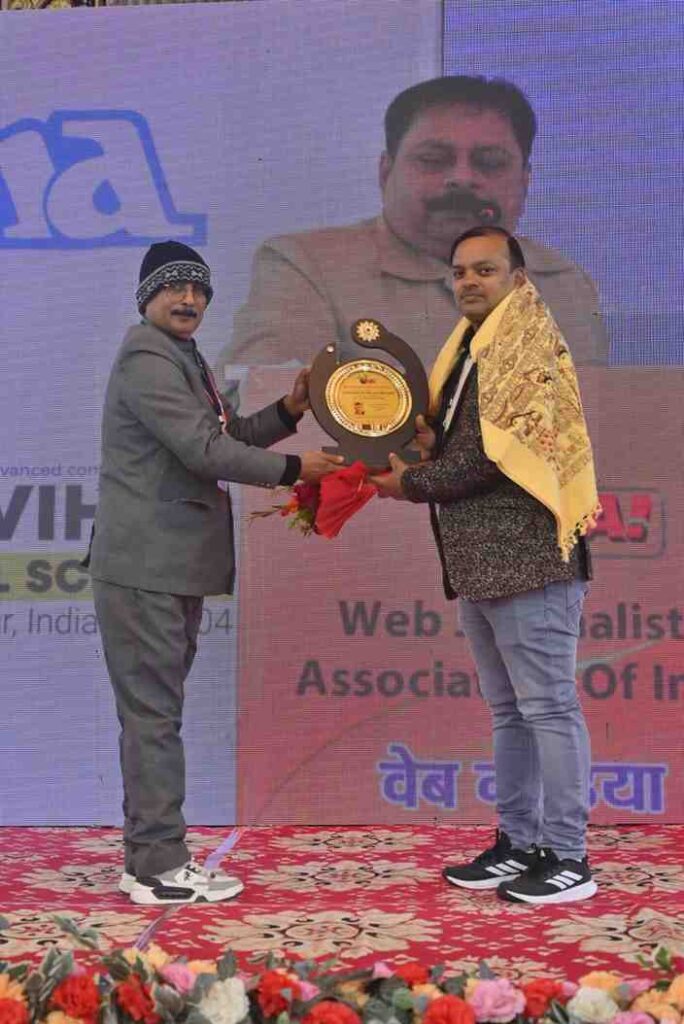 The applause thundered louder during the WJAI Excellence Awards ceremony, where ten trailblazers were honored for their outstanding contributions to web journalism. Recipients included Manjesh Kumar, Vivek Kumar, Shailendra Jha, Santosh Jha, Vijay Sinha, Kumar Aditya, Shyamnandan Singh, Dr. Chandrachud Goswami, Manoj Kumar, and Sumit Sharma. As each name was called, the hall erupted in cheers, with speakers recounting tales of their relentless pursuit of truth amid digital challenges—from breaking exclusives to battling misinformation.
Members present voiced resounding confidence in the new structure. “This is a game-changer,” said one delegate from eastern India. “The departmental framework and fresh leadership will amplify web journalists’ voices nationwide, from metros to smaller towns.” As confetti fell and resolutions were passed, the summit closed on a high note, signalling WJAI’s evolution into a more robust force for ethical, impactful web journalism in India. With 2026 on the horizon, the association stands poised to navigate the evolving media terrain with renewed vigor.