
Indo-Japan Investors Conclave to Open New Investment Corridors in Tokyo This February
Feb 26-28: K-KCCS Founder Karunanidhi Kasinathan leads India-origin initiative to connect Japanese capital with Indian projects.

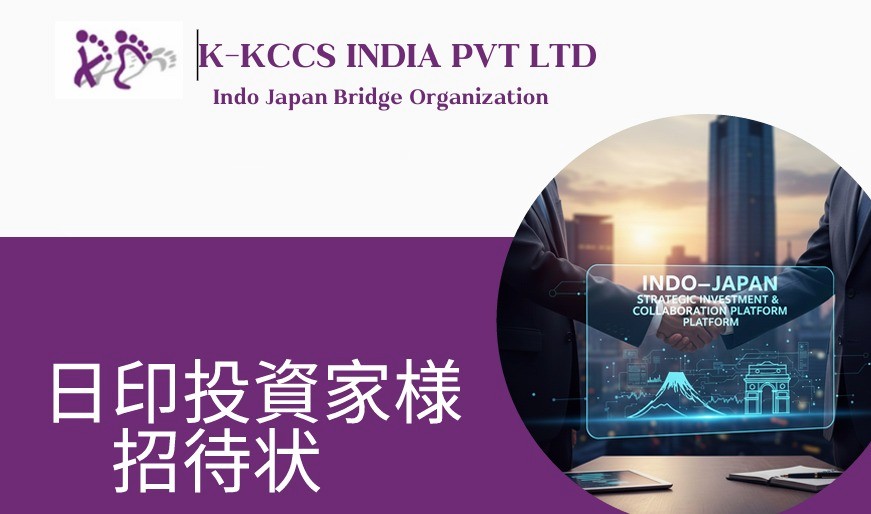
Tokyo / New Delhi – A first-of-its-kind, India-origin Indo-Japan Investors Conclave is set to take place from February 26 to 28, 2026, at Funabori Tower Hall, Edogawa Ward, Tokyo, aiming to create a structured, results-oriented platform for direct investment engagement between Indian entrepreneurs and Japanese investors.
The three-day conclave is being convened under an initiative led by Karunanidhi Kasinathan (KK), Founder and Chairman of K-KCCS India Pvt Ltd, through its Indo-Japan Bridge Organization. The initiative builds on KK’s sustained engagement over the past eight years in facilitating institutional, business and people-to-people linkages between India and Japan.
Envisioned as a practical investment-matching forum rather than a conventional conference, the conclave will bring together delegates from India and Japan, including project owners, SMEs, strategic investors and institutional stakeholders. Invitations have already been extended to several hundred Indian companies and a significant number of Japanese enterprises, with organisers reporting a strong and encouraging response.
The organisers have invited a distinguished line-up of senior dignitaries and institutional leaders to address the conclave. H.E. Mrs. Nagma Mohamed Mallick, Ambassador of India to Japan, has been invited to grace the inaugural session as Chief Guest, underlining the diplomatic and strategic importance of the initiative.
Senior representatives from Japan External Trade Organization (JETRO) and Japan International Cooperation Agency (JICA) have also been invited to speak during the morning sessions across the three days, alongside leaders from Japanese industry and investment circles. The Japan-India Association is among the key institutions approached for participation and guidance.
The conclave will focus on SDG-aligned, high-growth sectors, including IT and semiconductors; renewable and green energy; waste management and recycling; healthcare and health tech; agriculture and agri tech; infrastructure; real estate; manufacturing; and cross-border trade. The programme structure features policy-oriented keynote sessions in the mornings and pre-curated, one-to-one business-matching meetings in the afternoons, supported by project–investor mapping prepared in advance by K-KCCS.
According to the organisers, the objective is to move beyond exploratory dialogue and enable clear entry pathways into the Indian market, access to vetted projects, and a deeper understanding of regulatory, funding and partnership mechanisms available to Japanese investors.
For Indian participants, the conclave offers direct exposure to Japanese capital, institutions and long-term strategic partners under a trusted, professionally moderated framework.
Kasinathan has positioned the Tokyo conclave as the culmination of multiple investor meetings previously held in India and other regions, and as the starting point for a repeatable, institutionalised investment bridge between the two countries. The organisers say the February event is expected to lay the groundwork for sustained deal flow, sector-specific collaborations, and long-term economic cooperation between India and Japan.