Korean Edn Center (KEC) churns out 1st batch of 19 Korean-Language Teachers
Six-month, 182-hour Korean Language Teachers Training Program (KLTTP) 2026 programme combines academic training, school practicum, microteaching and international faculty expertise

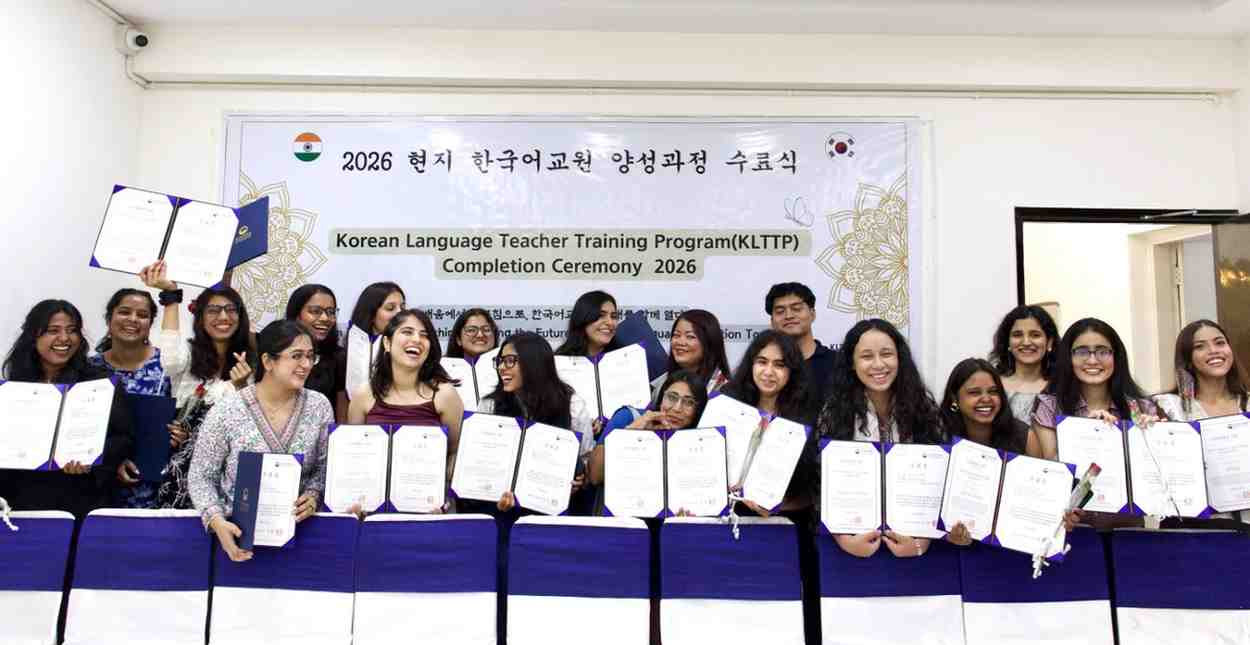
New Delhi, India: Nineteen prospective Korean-language teachers have completed the Korean Language Teachers Training Program (KLTTP) 2026, organised by the Korean Education Centre (KEC), Embassy of the Republic of Korea in India in New Delhi. The nearly six-month programme concluded with a certificate award ceremony in New Delhi on 6 August 2026, marking an important step towards building a stronger and more sustainable pool of locally trained Korean-language educators in India.
The 182-hour programme was designed not as a conventional language course, but as professional preparation for future educators. It combined 150 hours of academic instruction with 32 hours of school-based practicum, enabling participants to connect Korean-language knowledge with the realities of Indian classrooms.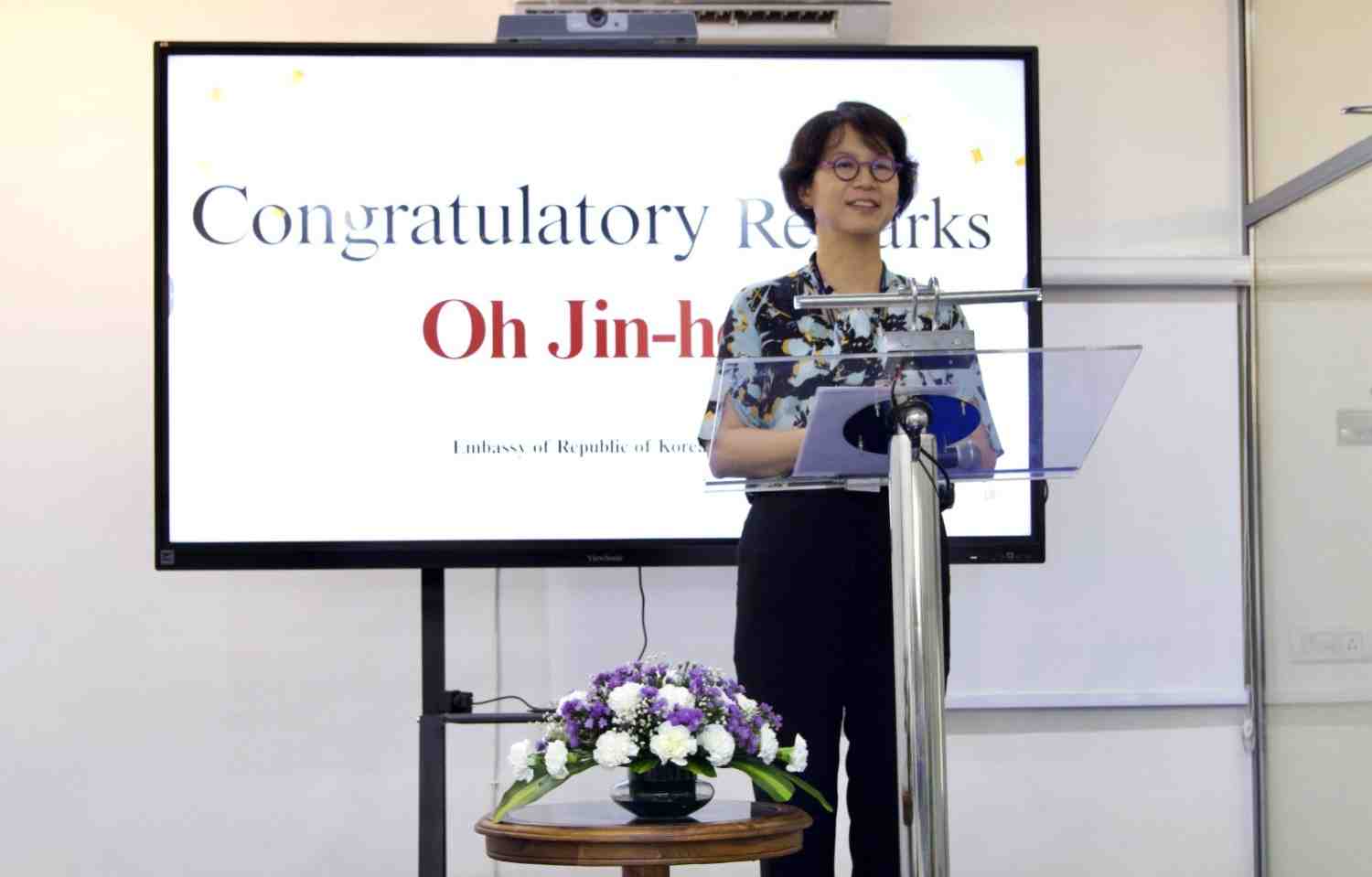
Oh Jin-hee, Deputy Chief of Mission at the Embassy of the Republic of Korea in India, joined the ceremony and congratulated the graduates as they began their journey as educators.
“A teacher does much more than impart knowledge. Teachers awaken curiosity, nurture confidence, and sometimes even change the course of a student’s life,” said Deputy Chief of Mission Oh. “As Korean language teachers, you will also serve as valuable bridges between Korea and India.”
Responding to India’s growing need for qualified teachers: Interest in Korean-language learning is expanding across Indian schools, universities and professional sectors. At the same time, the shortage of trained teachers remains one of the principal challenges to sustainable growth. KLTTP addresses this gap by preparing locally based educators who understand Korean language and culture as well as the linguistic diversity, learning needs and classroom contexts of Indian students.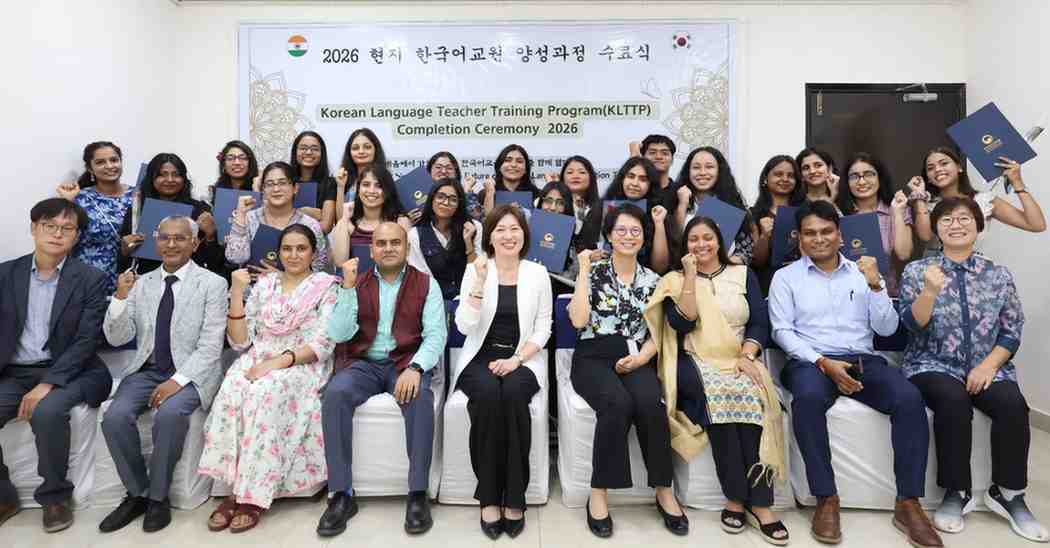
“The future of Korean-language education in India depends not only on growing student interest, but on developing qualified teachers who understand both the Korean language and the realities of Indian classrooms,” said Hojeong Ko, Director of the Korean Education Centre India.
“These 19 graduates will become an important foundation for expanding sustainable Korean-language education across the country. Our goal is not simply to open more classes, but to develop capable teachers who can inspire learners and build lasting connections between India and Korea.”
Academic depth combined with classroom experience: The academic component was delivered over 15 weeks from 2 March to 11 June 2026. Participants completed six specialised subjects: Introduction to Korean Language Education; Korean Vocabulary and Grammar; Korean Language Teaching Methodology; Korean Language Assessment; Korean Culture Education; and Korean Lesson Plan Development.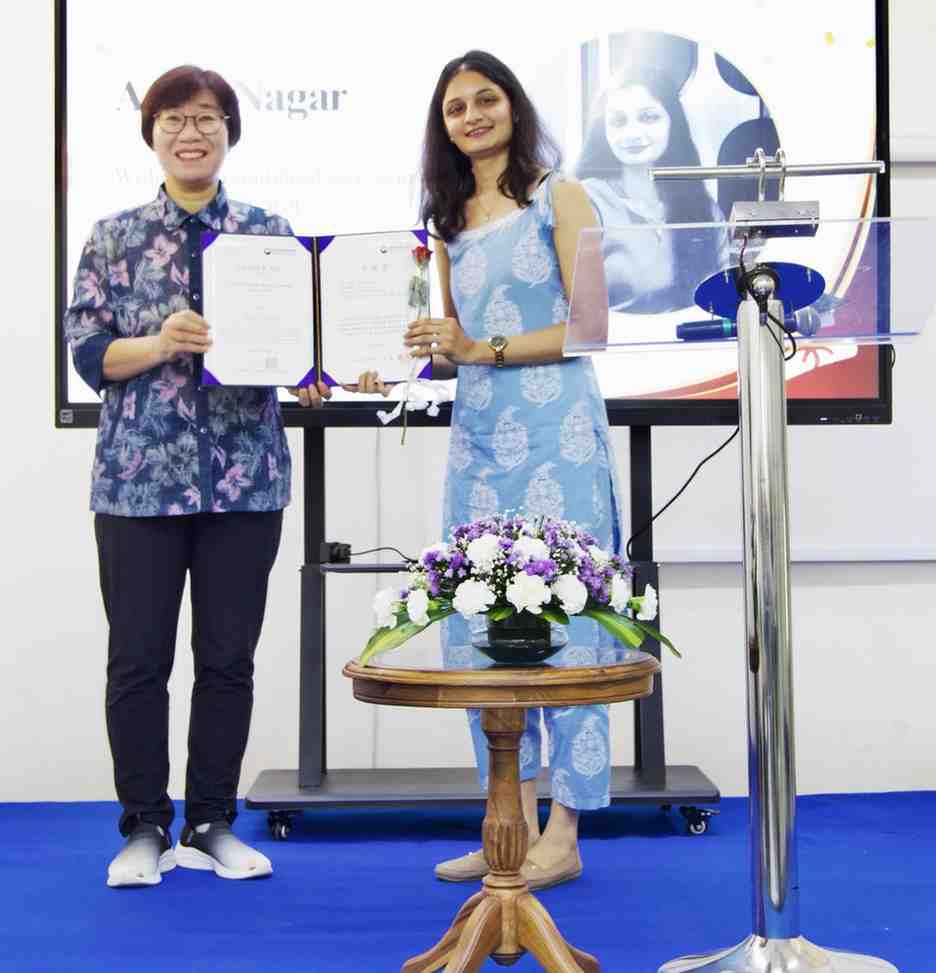
The programme brought together eight faculty members from leading Indian and Korean universities: Prof. Kaushal Kumar, Prof. Neerja Samajdar, Prof. Satyanshu Srivastava, Prof. Santosh Kumar Ranjan and Dr. Myung E. Lee of Jawaharlal Nehru University; and Dr. Hema of the University of Delhi; Two specialised subjects were delivered online from the Republic of Korea, providing trainees with direct access to Korean academic expertise. The classes were conducted by Prof. Jang Mi-kyung of Sungshin Women’s University and Prof. Kang Hyun-joo of Honam University, who taught their respective specialised subjects. This arrangement complemented the in-person instruction provided in India.
During July, the 19 trainees were placed across 10 local schools, where they observed Korean-language classes and examined lesson planning, student engagement, classroom interaction and teaching strategies under the guidance of experienced educators. They subsequently demonstrated their developing competencies through microteaching sessions, preparing and delivering their own lessons and receiving professional feedback.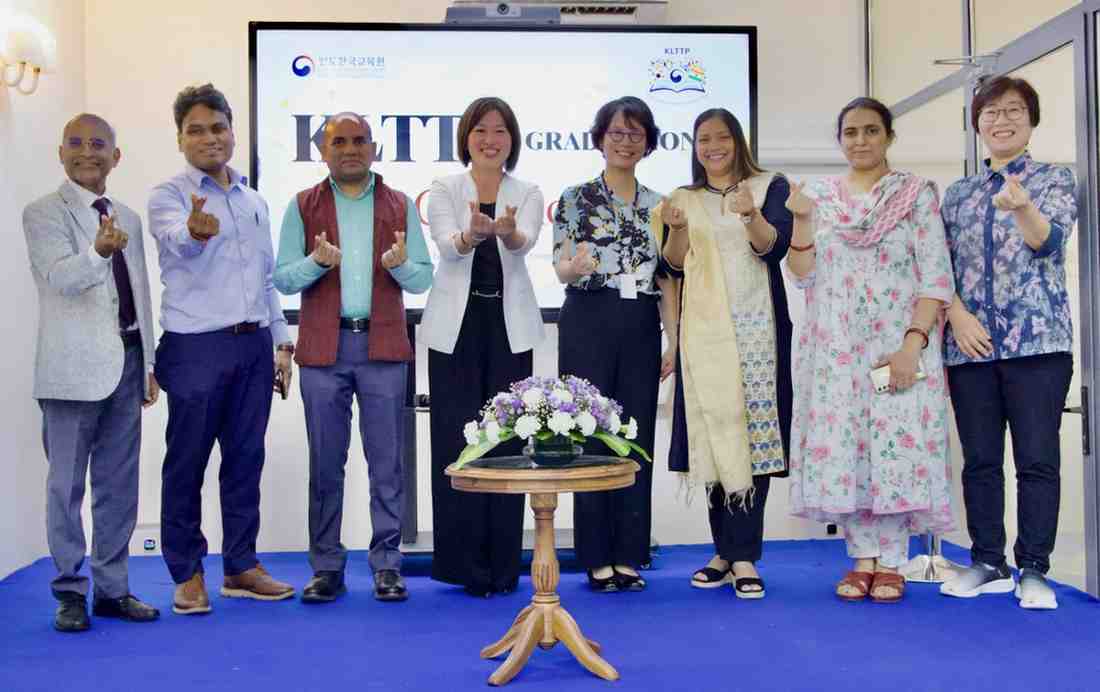
Beyond the Classroom: KLTTP places equal importance on practical exposure and professional development. During the program, participants attended a specialised Artificial Intelligence (AI) Workshop, conducted jointly by current KLTTP faculty and prospective instructors. The workshop introduced AI tools and innovative approaches that can support Korean language teaching, lesson planning, and classroom engagement.
As part of the Korean Culture Education, experiential cultural learning session outside the classroom was arranged. Participants experienced cultural elements first-hand, helping them understand how culture influences language, communication, and everyday life. The session highlighted the importance of integrating cultural understanding into Korean language education.
The programme through the trainees’ eyes: KLTTP participants Shreya and Hansfred Vaiphei shared their personal reflections on the programme, highlighting how the intensive training, teaching practice, and interaction with fellow participants helped strengthen their confidence and professional identity as future Korean-language educators. Their experiences reflected the broader transformation seen among the trainees throughout KLTTP 2026.
“It has been a truly enriching and enabling experience. We have had the opportunity to learn from professors from different universities, including professors from Korean universities who conduct classes for us online. Our class is also quite diverse, which makes the learning experience even more valuable. We are not only learning from our professors, but also from one another by sharing our experiences, perspectives, and knowledge,” said Shreya.
The upbeat Hansfred Vaiphei said, “If I were to describe the KLTTP in one word, I would call it a wholesome experience. As a PhD scholar, I have knowledge of specialised subjects, but this course has taught me how to effectively communicate and teach that knowledge, particularly to young learners in schools. KLTTP has enriched me not only through theory but also through practical experiences and activities, helping me understand different teaching methodologies and pedagogy.”
Celebrating achievement and the values of learning: After the completion of theory and practicum class there was a small event, Chaekgeori (책거리), a Korean tradition celebrating the completion of an important stage of study. Faculty members, guests and participants reflected on the trainees’ journey and celebrated the values of learning, gratitude and respect for teachers.
The KLTTP 2026 program concluded with a formal Certificate Award Ceremony, attended by distinguished guests from the Embassy of the Republic of Korea, professors, faculty members, program coordinators, and all KLTTP participants. The ceremony was particularly significant as it marked the first official engagement of the newly appointed Deputy Chief of Mission (DCM), Ms.Oh Jin-hee, following her arrival in India. Her first official visit to the Korean Education Centre (KEC) underscored the importance placed on Korean language education and the development of local Korean language teachers as a foundation for expanding educational cooperation between Korea and India. In her congratulatory remarks, the DCM recognized the dedication and achievements of the KLTTP participants and encouraged them as they take their next steps as Korean language educators in India.
A highlight of the ceremony was the recognition of academic excellence, with Harshita Pandey and Ritu Kohli announced as the first- and second-place trainees.
As a special recognition of their outstanding performance, both trainees were awarded a five-day educational and cultural visit to the Republic of Korea, offered in cooperation with the Korea Tourism Organization. The visit will provide them with first-hand exposure to Korean society, culture, and educational institutions, while offering valuable experiences that they can share with their future students.
The graduates are expected to contribute to Korean-language education in schools and other learning institutions across India, strengthening educational and cultural ties between India and the Republic of Korea.
About the Korean Education Centre India
The Korean Education Centre India, under the Embassy of the Republic of Korea, supports Korean-language education, teacher development, the Test of Proficiency in Korean (TOPIK), Study in Korea initiatives and educational cooperation between India and the Republic of Korea.