
KIJS Forum Brings Lesser-Known India–Japan Connections into Academic Spotlight
Established as MOSAI’s academic and research wing, the forum has examined 93 subjects through conferences and monthly lectures while building an international network of more than 100 scholars.

New Delhi: Centuries before India and Japan established formal diplomatic relations, ideas, religious traditions, art, literature, people and goods were already travelling between the two civilisations. Many of these exchanges took place through complex maritime and overland networks spanning South and Southeast Asia. Yet, a large part of this shared history remains scattered across archives, monuments, paintings, travel accounts and memories that have received limited academic attention.
The Kizuna India-Japan Study Forum (KIJS Forum) has set out to recover, document and communicate these lesser-known connections. Established in September 2022 as the academic and research wing of the Mombushō Scholars’ Association of India (MOSAI), the forum provides an interdisciplinary platform for research on the historical and cultural foundations of India–Japan relations.
Its work extends beyond the familiar narratives of Buddhism, Rabindranath Tagore, Okakura Tenshin and modern diplomatic engagement. KIJS Forum examines how intellectual exchanges, maritime routes, artistic transmission, trade, migration and encounters between individuals shaped relations between India and Japan over several centuries.
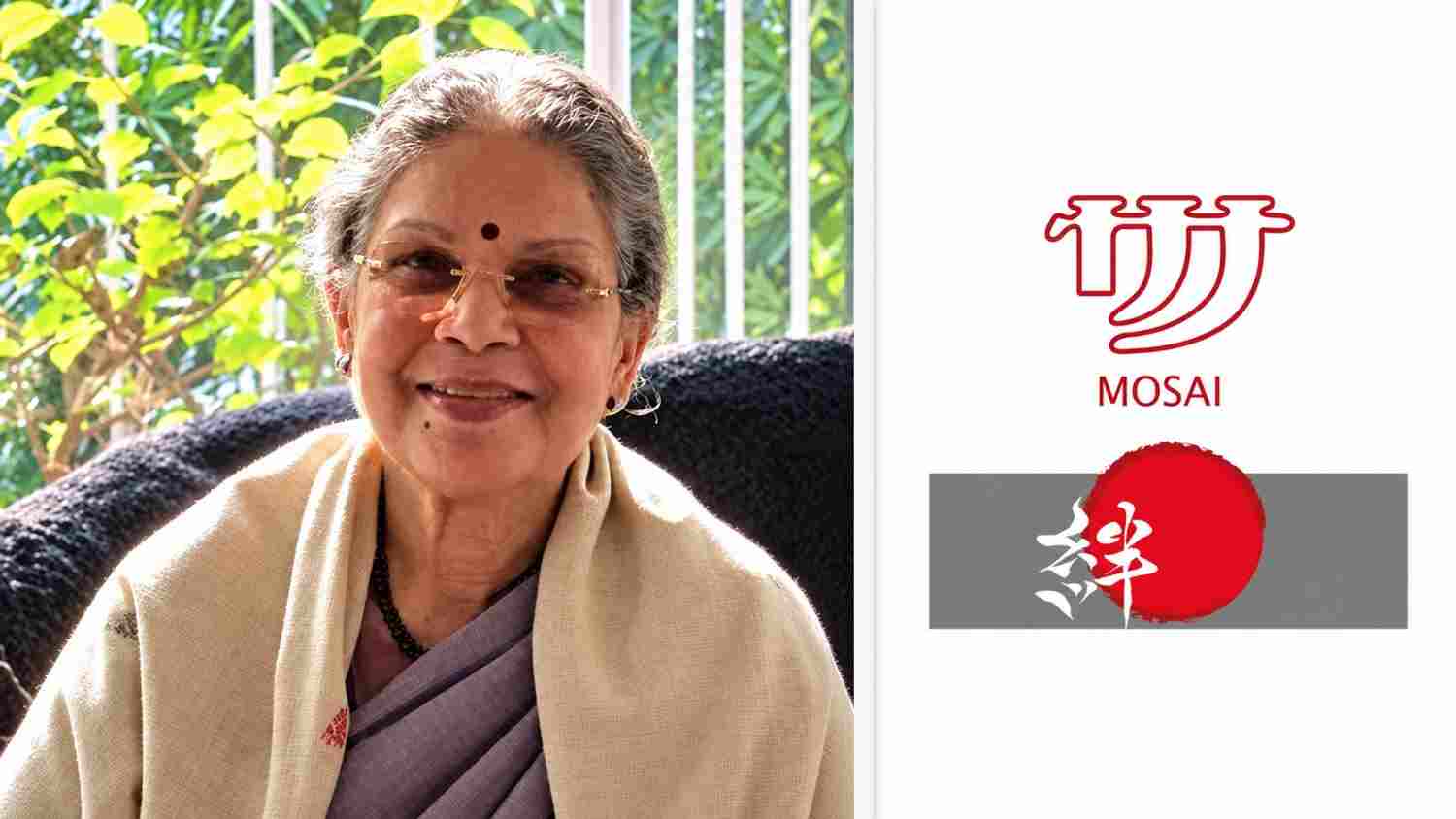
“Today, KIJSF has evolved into a vibrant interdisciplinary platform that brings together scholars, artists and educators from across the world to advance research, foster dialogue and deepen public understanding of the enduring and multifaceted connections between the two countries and beyond,” said Prof. Sushila Narsimhan, a member of the Executive Team of KIJS Forum and head of Japanese Studies.
 Prof. Narsimhan formerly taught in the Department of East Asian Studies at the University of Delhi. A scholar of the history of Meiji Japan, she received Japan Foundation fellowships in 1987–88 and 2001 and was affiliated with the University of Tokyo for her doctoral and postdoctoral research. She was also a visiting research scholar at Stanford University in 2002. Her academic background has played an important role in shaping the forum’s research-centred approach.
Although KIJS Forum formally came into existence in 2022, its intellectual journey began earlier. An international conference titled “India and Japan: Unearthing Lesser Known Historical and Cultural Linkages”, organised in New Delhi in November 2018, generated extensive discussion on neglected dimensions of the relationship. The deliberations eventually contributed to the creation of a continuing platform dedicated to such research.
The forum now conducts thematic conferences in hybrid format, bringing together scholars from different disciplines to examine historical, maritime, intellectual, artistic and civilisational links. It also organises online lectures every month, featuring speakers from India, Japan and other countries. These lectures are made publicly accessible through YouTube, widening their reach among students, young researchers and members of the general public.
KIJS Forum has organised 34 monthly lectures and, together with its conferences and other academic programmes, has covered 93 subjects. Its international network has expanded to more than 100 scholars, including 45 from India and 40 from Japan. Other participating scholars come from the United States, the United Kingdom, Singapore, Bangladesh, Nepal, Indonesia, Australia, Spain, Portugal, France, Russia, Czechia, Israel, Egypt and the Netherlands.
The subjects addressed through its programmes demonstrate the breadth of India–Japan studies. They have included Bengali women’s accounts of twentieth-century Japan, Indian educators at a major Tokyo conference in 1937, the history of Hindi teaching in Japan, Japanese interpretations of the Ramayana, Indian deities in Japanese religious culture, Gujarat’s connections with Japan and the experiences of Indians living in Japanese society. The forum has also examined disaster management through the experiences of the 2001 Gujarat earthquake and the 2011 Fukushima disaster.
Its research has reached readers through publications as well. The first major volume, “India–Japan Narratives: Lesser Known Historical and Cultural Interactions,” edited by Prof. Narsimhan, appeared in 2021. It was followed in 2024 by “Geographies of Exchange between India and Japan,” edited by Prof. Narsimhan and Parul Bakshi. A third volume, “Lived Encounters: India and Japan,” edited by Prof. Narsimhan and Dr. Amita Kini-Singh, is in progress for publication in 2027. The forum also publishes occasional papers on focused subjects ranging from Indian culture in Japanese literature to the lost Japanese painting Rama’s Parting. KIJS Forum publications are intended to create a lasting scholarly record beyond individual lectures and conferences.
The Executive Team brings together complementary areas of expertise. Dr. Amita Kini-Singh, an art historian and cross-cultural theorist, specialises in artistic connections between India and Japan. Her research also examines historical trade, political developments and religious interactions. Dr. Mitsuko Takahashi of Haa Baht Inc., Japan, contributes experience in India–Japan business relations and research on Gujarati family businesses and migration. She has supported Japanese small and medium-sized enterprises entering India and is pursuing doctoral research on family-business succession in Gujarat and Japan. Dr. Kini-Singh and Dr. Takahashi strengthen the forum’s interdisciplinary character.
At a time when India and Japan are expanding cooperation in technology, investment, security and education, KIJS Forum draws attention to the deeper human and cultural history beneath the contemporary partnership. By bringing neglected narratives into academic and public discussion, the forum seeks to ensure that future cooperation rests on a fuller understanding of the long relationship connecting the two societies.
Sciences, India, and founding member of the Forum for Global Knowledge Sharing; Dr. Masumi Igarashi, Senior Assistant Professor, Center for Liberal Arts and Language Education, Okayama University; Ambassador Deepa Gopalan Wadhwa, President, India-Japan Friendship Forum; Ms. Sifra Lentin, Author and Bombay History Fellow, Gateway House: Indian Council on Global Relations; Dr. Donna Brunero, Senior Lecturer, Department of History, National University of Singapore; Prof. Sushila Narsimhan, former Professor, Department of East Asian Studies, University of Delhi; and Dr. Timon Screech, Professor, International Research Center for Japanese Studies (Nichibunken), Kyoto.
 About Prof Narsimhan: She was a professor in the Department of East Asian Studies, University of Delhi, Delhi, India. Her research interest is the history of Meiji Japan. Recipient of the Japan Foundation Fellowships (1987-88 and 2001), she was affiliated with the University of Tokyo for her doctoral and postdoctoral research. She was also a visiting research scholar at Stanford University, CA, USA, in 2002.