JNU’s Hangeul Day Turns a Script into a Month-Long Party
Competitions, kimchi-making, a Samyang ramyeon festival, a sports day and a stage show of dance and song: how JNU is celebrating the Korean alphabet, and why next year's edition is already worth waiting for.

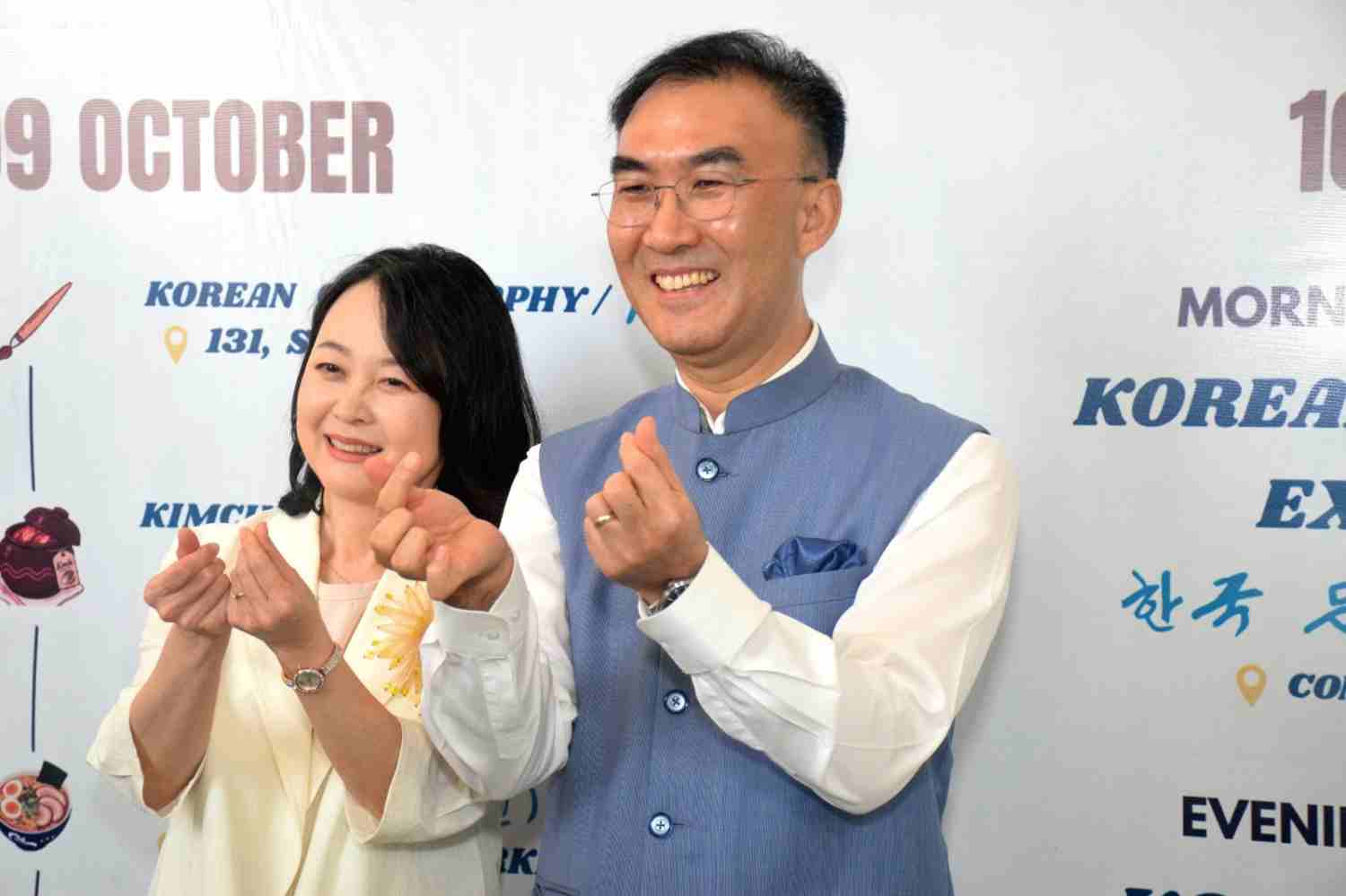
NEW DELHI – Take the Korean script, Hangeul, and add essays, poetry, pop songs, calligraphy, kimchi, instant noodles, a stadium of games and a stage that swings from fan dances to Kathak meeting K-pop, and you get Hangeul Day 2026 at Jawaharlal Nehru University (JNU).
Organized by the Centre for Korean Studies (CKS), School of Language, Literature and Culture Studies, Jawaharlal Nehru University, and supported by the Embassy of the Republic of Korea in India, the celebration is running through October, drawing students and Korean-language enthusiasts from across the country into competitions, workshops and performances. Hangeul Day marks King Sejong the Great’s creation of the Korean script, and this year’s edition made sure it was used, not just admired. The year 2026 marked a double milestone: the 580th anniversary of the 1446 promulgation of Hunminjeongeum by King Sejong the Great, and the 100th anniversary of Hangeul Day (first celebrated in 1926 as “Gagya Day”). It was also the 100th anniversary of Korean braille (Hunmaengjeongeum). And the Centre made sure to incorporate the specialness of this year into the festivities.
 Pens, poems and songs: The festivities opened on 3 October with the 22nd All India Korean Essay Competition (백일장), contested at beginner, intermediate and advanced levels, and the 6th All India Korean Handwriting Competition for beginners. A Korean movie screening of Smugglers (2023) and discussion rounded off the day. On 4 October, the 2nd All India Korean Poetry Recitation Competition and the 14th All India Korean Singing Competition took over the Convention Centre, giving the language a voice as well as a pen.
The contests went digital too, with entries invited by 7 October for the 7th All India Di-Ca Poetry Competition (short poems paired with photographs), the 3rd All India Instagram Reels Competition in Korean, the 1st All India YouTube Shorts Competition in English and the 1st All India Sijo Competition, built on the classic Korean poetic form.
Brushes, Kimchi and a Ramyeon feast: The Korean Cultural Extravaganza began on 9 October with a calligraphy session (서예), followed by a hands-on kimchi-making event. Then came the part of the day that needed no promotion: the Korean food festival, where Samyang Ramyeon was served and participants ate it with the kimchi they had made earlier. With a little chill creeping into Delhi’s air, a hot bowl of spicy noodles with homemade kimchi was the perfect pairing.
 The same day, the 1st All India Korean Quiz Competition, held in Korean, put participants’ knowledge to the test. On 10 October, an exhibition of Korean culture and hands-on experiences ran at the Convention Centre from 10 am to 4 pm, setting the stage for the main event.
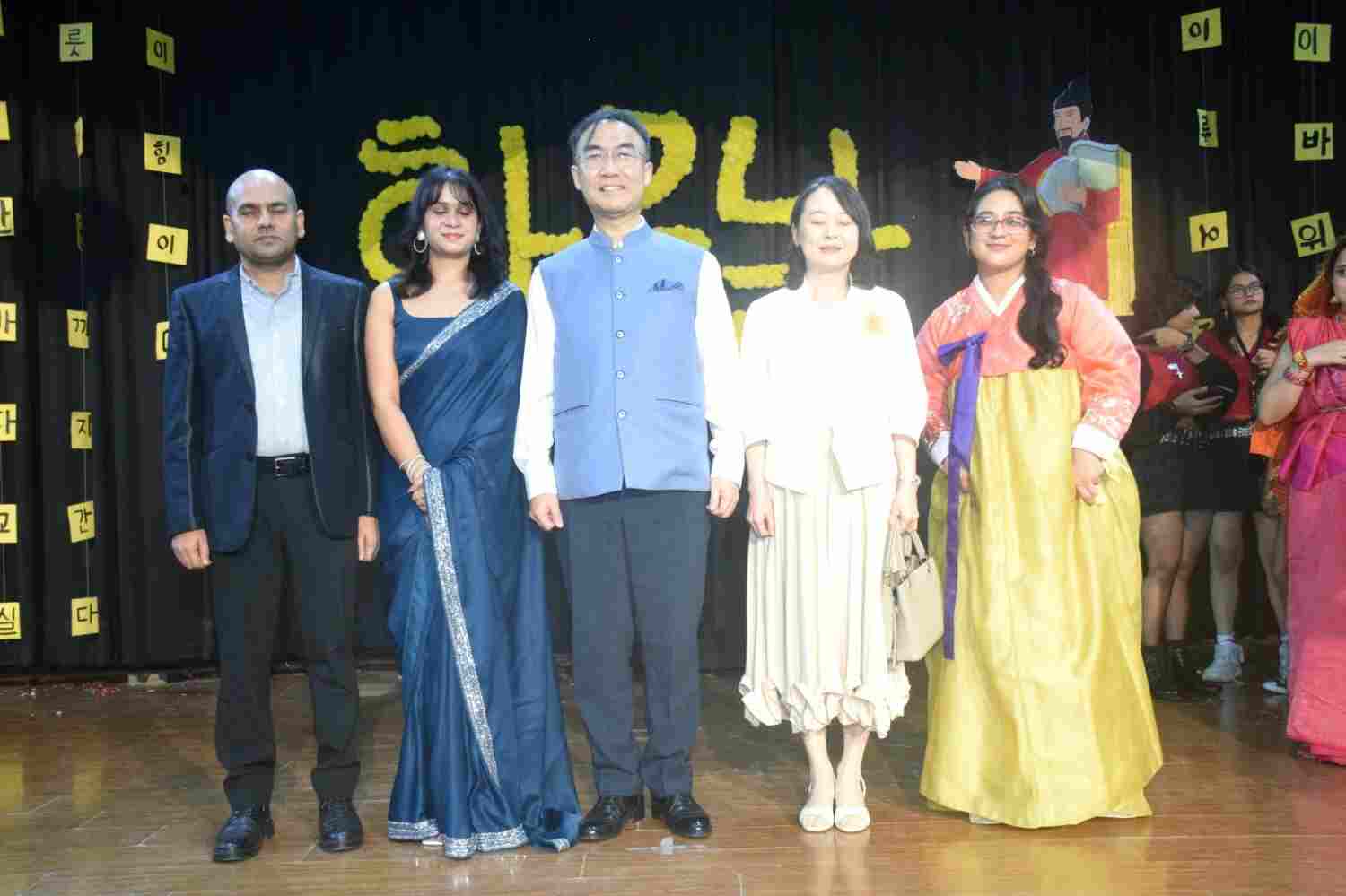
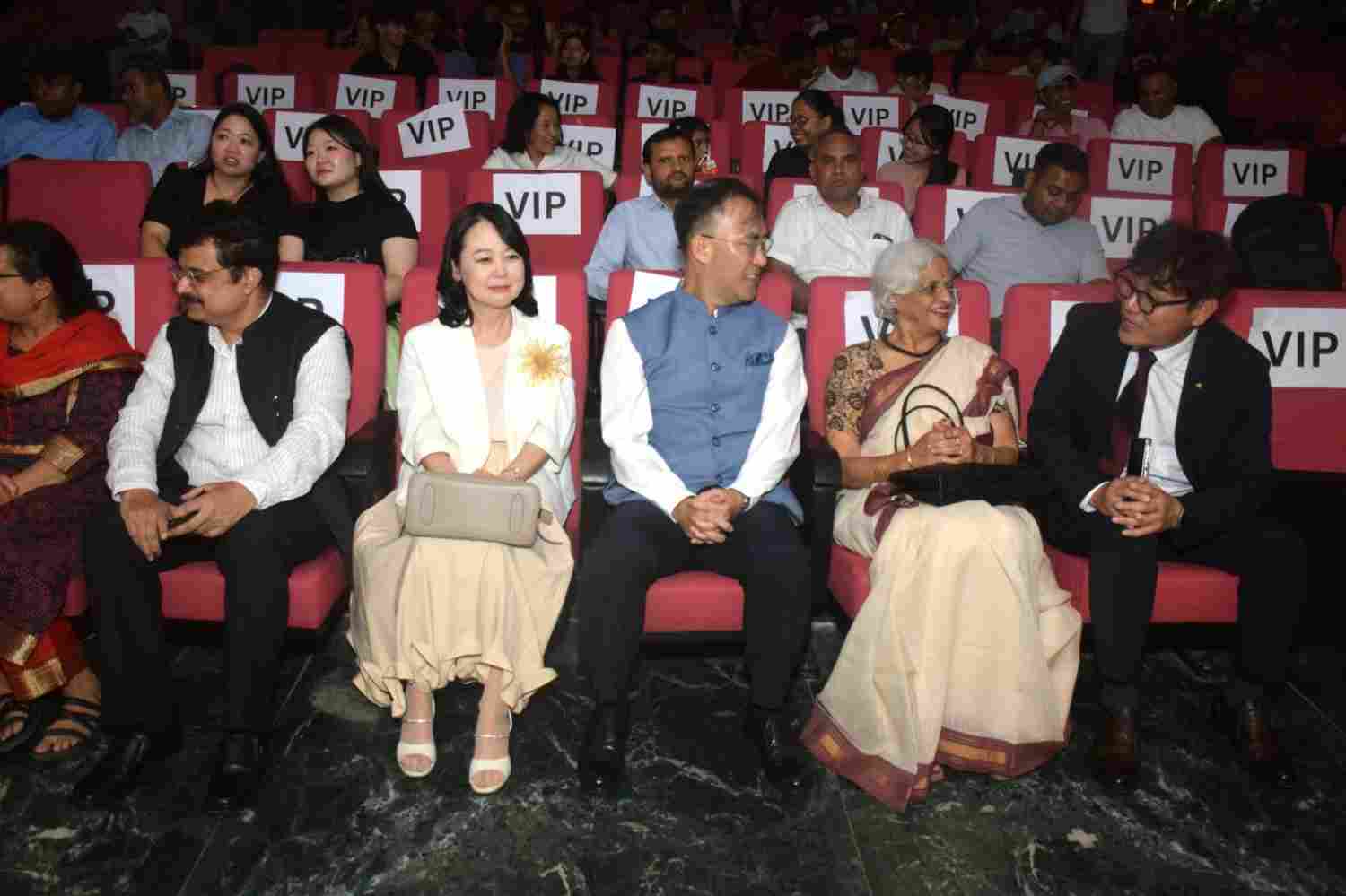
Lamps, fans and flags: The main cultural programme began at 4 pm, and much of it was conducted in Korean, a deliberate way of honouring the script at the heart of the day. A lamp lighting ceremony (점등식), symbolising wisdom, hope and unity, opened proceedings, followed by a Prayer Dance and the felicitation of guests. Dr. Kaushal Kumar, Chairperson of CKS, introduced the programme, Prof. Shoba Sivasankaran, Dean of SLL&CS, welcomed the gathering, and H.E. Lee Seong-ho, Ambassador of the Republic of Korea, and Prof. Ravikesh, Registrar of JNU, offered their congratulations.
Business had a say too. Mr. Young Kang Son, Secretary General of KOSMA, an association of 75 Korean small and medium-sized enterprises in India, told the students that Korean speakers who understand Korean culture are the most vital assets for Korea–India cooperation, and hoped their language skills would become “a strong bridge connecting Korea and India”.
Then the stage took off. A fan dance (부채춤) bloomed first, a 16-strong choir followed with Korean songs, and the afternoon turned delightfully cross-cultural: Kathak met K-pop, I-pop met K-pop, and BLUSH group sang and danced at once. A Korean gag act and a skit brought the laughs, and the sogo dance (소고춤), performed with a small hand drum, brought tradition back to the stage.
From there, the energy only climbed. A 14-strong fusion dance blended styles and music, and a K-pop set had the audience shouting for more. The flag dance (깃발춤) closed the programme in bold movement and vivid colour. More than 80 performers took part in the ten group acts alone. That alone tells how much the students are passionate about learning as well as putting effort into celebrating the script and this day.
Games, prizes and what’s next: The fun then moved outdoors. On 11 October, the JNU Stadium hosted the Korean Sports Festival, with traditional and modern Korean sports from 11 am to 4 pm, followed by the 9th All India Korean Quiz Competition in English and a prize distribution ceremony at CKS.
The academic finale is still ahead. On 30 and 31 October, CKS hosts the 10th Interdisciplinary International Conference (IIC) commemorating Hangeul Day 2026, themed “India–Korea Relations: Language, Culture and New Horizons of Future Cooperation”.
Read, write, sing, cook, play and cheer: this year’s celebration left little untried, which is exactly what makes the next one so tantalising. Hangeul Day falls on 9 October, so mark your calendars now. Sharpen your handwriting, brush up on your quiz facts and save room for the Ramyeon or maybe it’ll be some other Korean dish to expand your palate, because 2027 has a lot to live up to.