
Quiet Revolution in Gujarat’s Becharaji: From Barren Tracks to an Industrial Powerhouse グジャラート州ベチャラジにおける静かな革命――荒れ地から産業拠点へ
Powered by partnerships and people, the once-forgotten village emerges as a model of responsible growth and rural resurgence. 官民連携と地域住民の力によって、かつて忘れ去られた村が、持続可能な成長と農村再生の模範として浮上した。

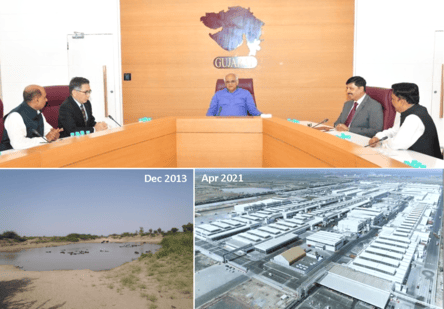
Ahmedabad, Gujarat (INDIA) – “For over 35 years, I walked the dusty paths of Becharaji — my ancestral land — not just in devotion, but often with a heavy heart. The wells were dry, the roads led nowhere, and the youth were steadily migrating in search of hope,” recalls a local resident Dinesh Patel(name changed on request), representing the sentiments of thousands of other locals who have prospered riding the development wave brought in by a car plant decades before here. アーメダバード(グジャラート州)――「35年以上、祖先の地であるベチャラジの埃っぽい道を歩いてきました。信仰のためでもありましたが、心に重さを感じながら歩くこともしばしばでした。井戸は枯れ、道路はどこにも通じず、若者たちは希望を求めて次々に出稼ぎで外へ出ていったのです」と語るのは地元住民のディネーシュ・パテル氏(仮名)。彼の言葉は、かつてこの地に建てられた自動車工場の成長の波に乗って繁栄を手にした多くの住民の思いを代弁している。
That legacy now finds itself reflected in a broader, remarkable transformation. Once a symbol of economic stagnation, Becharaji-Mandal in Gujarat has undergone a stunning metamorphosis, driven by the catalytic presence of the Japanese automotive giant Suzuki Motors Gujarat (SMG) and TDS Lithium-Ion Battery Gujarat Private Limited (TDSG) battery plant. This shift, captured through two in-depth studies conducted by the Indian Institute of Management Ahmedabad (IIM-A) and the Institute of Rural Management Anand (IRMA), provides statistics and a powerful human story of rebirth. そのレガシーは今、より大きな、そして驚くべき変化となって現れている。かつて経済停滞の象徴だったグジャラート州のベチャラジ・マンダル地域は、日本の自動車大手スズキ・モーター・グジャラート(SMG)およびTDSリチウムイオンバッテリー(TDSG)の存在によって劇的な変貌を遂げた。この転換は、インド経営大学院アーメダバード校(IIM-A)アーナンド農業ビジネススクール(IRMA)による二つの詳細な調査を通じて記録されており、統計のみならず人間的な再生の物語をも浮き彫りにしている。
“A blend of deep primary fieldwork and structured secondary research helped us move beyond anecdotes to evidence,” said the research team. It added, “Insightful data collection. Thoughtful interpretation. And above all, an ability to separate signal from noise.”「現地での徹底した一次調査と体系的な二次資料の分析を融合することで、単なる主観的な話から、客観的な根拠へと踏み込むことができました」と調査チームは述べている。「鋭い観察眼によるデータ収集、緻密な分析、そして何より求められるのは、ノイズに埋もれた“真のシグナル”を見抜く力が重要だったです。」
The signal, indeed, was loud and clear. その「本質的なシグナル」は、確かに明確かつ強烈であった。
According to the study findings, the staggering ₹61,355 crore was pumped into the region through SMG, TDSG, and their ecosystem of vendors. This investment translated into an economic impact worth ₹2.05 lakh crore and generated over 7.5 lakh cumulative direct job opportunities in 10 years since its inception. Becharaji’s economy surged as new commercial units mushroomed across the belt, sparking a seven-fold rise in business activity over a 30-km radius around the plant.「調査によると、SMGおよびTDSG、さらにそれぞれの関連部品メーカーによって、過去10年間で総額6,135億インドルピーもの投資がこの地域にもたらされました。」この投資は、約2兆500億ルピー相当の経済効果を生み、設立から10年で累計75万人以上の直接雇用を創出した。工場周辺30キロ圏内では商業施設が急増し、ベチャラジの経済活動は7倍に跳ね上がった。
The ripple effects were visible in nearly every household. Jignesh (name changed on request), once a scrap dealer earning ₹5,000 per month, now brings home ₹45,000. In another village, a local homemaker who sold snacks saw her income jump fourfold. From renting out dormitories to hosting small enterprises, villagers are rewriting their fortunes.波及効果は、ほぼすべての家庭に及んでいる。かつて月収5,000ルピーのスクラップビジネスを行っていたジグネーシュ氏(仮名)は、現在では4万5,000ルピーを稼ぐようになった。別の村では、軽食を販売していた主婦の収入が4倍に跳ね上がった。宿泊施設や小規模事業の運営を通じて、村人たちは自らの運命を書き換えている。
Before SMG’s entry, there were barely 622 shops in the area. Today, that number has skyrocketed to 2,541 across surrounding villages, complemented by over 3,000 new rickshaws driven by locals. “The overall economic impact, touching not just manufacturing but education, healthcare, and public infrastructure, has elevated Becharaji into a benchmark model for inclusive growth,” said IRMA’s Professor Hippu Salk Kristle Nathan during the workshop. SMG進出前、この地域にあった店舗はわずか622件だった。現在では周辺村を含め2,541件にまで急増し、地元住民が運転する新たなリキシャも3,000台以上導入された。「この地域の経済効果は製造業にとどまらず、教育、医療、公共インフラにも及び、ベチャラジを包摂的成長の模範モデルへと押し上げた」とIRMAのヒップ・サルク・クリストル・ナサン教授はワークショップで語った。
Indicators across the board affirm this resurgence. There has been an 87% improvement in the standard of living, 77% in access to healthcare, as well as livelihoods, and 67% reported an improvement in Education opportunities. Family incomes, too, reflect the story, with the number of households earning over ₹3 lakh annually rising from 3,616 in 2017 to 4,205 by 2024. Meanwhile, the number of people earning below ₹50,000 has declined from 13,372 to 12,531, signifying an upward economic mobility of the lowest segments as well. あらゆる指標が、この再生を裏付けている。生活水準の改善は87%、医療と生計手段へのアクセスは77%、教育機会の向上は67%の住民が実感している。世帯収入の面でも、年収30万ルピー以上の世帯数は2017年の3,616世帯から2024年には4,205世帯に増加。一方、年収5万ルピー未満の世帯は13,372から12,531に減少し、末端層の経済的上昇移動が明確に示された。
The study deployed the ‘HEALS’ framework — health, education, assets, livelihood, and standard of living — to provide a holistic picture. 本調査では、健康(Health)、教育(Education)、資産(Assets)、生計(Livelihood)、生活水準(Standard of Living)を軸とする「HEALS」フレームワークが用いられ、地域の全体像が包括的に描き出された。
The workshop “Transforming Landscapes: The Socio Economic Impact of Japanese FDI in Gujarat’s Industrial Ecosystem,” held on 27 April 2025 at IIMA Ventures, Sunil Mehta Hall, gathered more than 50 participants—faculty, researchers, Government of Gujarat officials, diplomats, JETRO representatives, and executives from Suzuki Motor Corporation, Suzuki Motor Gujarat and TDSG—alongside local entrepreneurs and media to unveil two comprehensive studies. 2025年4月27日、IIMAベンチャーズのスニル・メータ・ホールで開催されたワークショップ「風景の変革:グジャラート産業エコシステムにおける日本のFDIの社会経済的影響」には、学者・研究者、グジャラート州政府関係者、外交官、JETRO現地代表、スズキ株式会社、スズキ・モーター・グジャラート、TDSGの経営陣、さらに地元起業家やメディア関係者など50名以上が参加し、2つの包括的な調査結果が発表された。
Addressing the gathering, Mr. Maheswar Sahu, Former Additional Chief Secretary, Government of Gujarat, recalled how the 2012 invitation from then Chief Minister, now Prime Minister, Narendra Modi, and Suzuki’s bold decision to accept it, forged a trust based Japan Gujarat partnership that has since revitalized the area’s industrial landscape, boosted livelihoods and deepened people to people ties. He credited Suzuki’s enduring commitment to delivering substantial socioeconomic returns to citizens across the region. 集会で挨拶したグジャラート州元首席補佐官のマヘーシュワル・サフ氏は、2012年に当時の州首相(現・首相)ナレンドラ・モディ氏がスズキを招致し、スズキがそれを果敢に受け入れたことで、信頼に基づく日本―グジャラートのパートナーシップが築かれたことを振り返った。この関係は、地域の産業構造を刷新し、人々の生計を向上させ、住民同士の絆を深める原動力となった。サフ氏は、地域住民に実質的な社会経済的利益をもたらしてきたスズキの一貫した取り組みを高く評価した。
“The car plant metamorphosed the sleepy region into an industrial hub, fuelling the growth fulcrum. It stands as a testament to how responsible industrialization can be achieved when government, industry, and communities work in true harmony,” said Dr. Amit Karna of IIM-A while speaking at the workshop.
「自動車工場は、静まり返っていた地域を産業の拠点へと変貌させ、成長の軸を築きました。政府、企業、そして地域社会が真の協調関係を築くことで、責任ある産業化が実現できるという証です」とIIM-Aのアミット・カルナ博士はワークショップで述べた。According to the local populace, this transformation has lit up once-dark roads, given rise to lively hotels on former farmlands, and created new aspirations among youth. And while much of the credit goes to infrastructure and corporate investment, it is the determination of the local people that held the soil firm when the winds of change began to blow. 地域住民によれば、この変化により、かつて暗かった道には明かりが灯り、農地にはにぎやかなホテルが建ち、若者たちに新たな夢が芽生えたという。インフラや企業投資の力も大きいが、変革の風が吹き始めたときに大地を支え続けたのは、地元住民たちの揺るがぬ決意だった。
Toshihiro Suzuki, President of Suzuki Motor Corporation, told ToI, “This transformation around our manufacturing hub, serving both domestic and export markets, was made possible not only through our efforts but also thanks to state government support, our supplier ecosystem, and the determined communities of Becharaji and Hansalpur.” スズキ株式会社社長・鈴木俊宏氏はTimes of Indiaの取材に対し、「国内外市場を支える製造拠点周辺のこの変革は、当社の努力だけでなく、州政府の支援、サプライヤーのエコシステム、そしてベチャラジおよびハンサルプルの意志ある地域社会の皆さまのおかげで実現したものです。
Today, the dusty paths lead somewhere. And for the people of Becharaji, that path is paved with dignity, opportunity, and hope. 今や、あの埃っぽい道は、確かな未来へと続いている。ベチャラジの人々にとって、それは誇りと機会、そして希望に満ちた道でもある。