
Japan Woman PM’ Gamble Pays off: Ruling LDP Claims Landslide Victory in Snap Polls
Resounding victory in the lower house elections gives the Liberal Democratic Party a strong mandate, marking a historic breakthrough in Japanese politics and setting the stage for assertive leadership at home and abroad.

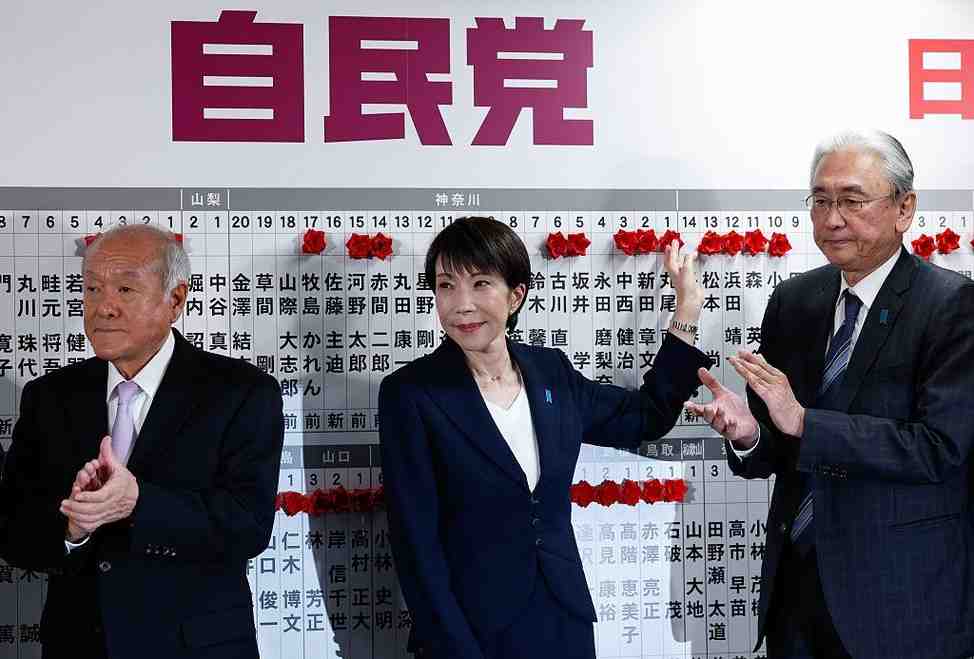
New Delhi/Tokyo — Japan entered a new political era as Sanae Takaichi secured a decisive mandate in the country’s snap general elections, emerging as Japan’s first woman Prime Minister after leading the ruling Liberal Democratic Party to a resounding victory.
The landslide result, confirmed early Monday morning after overnight counting, delivered the LDP–Komeito coalition a commanding majority in the House of Representatives, far exceeding pre-election expectations and silencing doubts over the political gamble of dissolving the lower house. The outcome cements Takaichi’s authority both within her party and across the national political landscape.
Ms. Takaichi’s Liberal Democratic Party won in a landslide, securing a rare supermajority in the 465-member House of Representatives, the lower house of Japan’s bicameral Parliament, according to NHK, the public broadcaster. The party won 316 seats, up from 198, NHK said — the first time since World War II that a Japanese political party has won more than two-thirds of the seats.
A bold gamble that paid off: Takaichi called the snap polls just weeks after assuming party leadership, framing the election as a referendum on decisive governance amid economic uncertainty, demographic pressures, and a volatile regional security environment. Her message—“strong leadership, economic revival, and a confident Japan”—resonated powerfully with voters across urban and rural constituencies alike.
With voter turnout higher than in recent elections, the LDP posted significant gains in key battleground prefectures, while opposition parties struggled to convert dissatisfaction into a unified alternative. Analysts noted that the clarity of leadership and policy messaging helped the ruling bloc consolidate floating voters who typically swing in snap elections.
Breaking a political glass ceiling: Takaichi’s elevation marks a historic moment for Japan, a nation where women have long been underrepresented at the highest levels of political power. While Japan has seen prominent female governors and ministers, the prime ministership had remained elusive—until now.
In her victory address at party headquarters in Tokyo, Takaichi acknowledged the symbolism of the moment while stressing continuity and responsibility. “This victory is not about gender,” she said. “It is about trust. The people of Japan have entrusted us with the future of this nation, and we will govern with resolve and humility.”
Policy agenda: economy, security, stability: Central to Takaichi’s campaign was an assertive economic platform focused on revitalising growth through technological innovation, defence-linked manufacturing, and strategic industrial policy. She pledged targeted support for small and medium-sized enterprises, wage growth tied to productivity, and stronger economic security measures to protect critical supply chains.
On foreign and security policy, Takaichi reaffirmed Japan’s commitment to a robust alliance with the United States, deeper coordination with Indo-Pacific partners, and an enhanced defence posture. Her long-held reputation as a security hawk reassured conservative voters while raising expectations of a more forthright Japanese role on regional issues.
Opposition setback and political recalibration: For the opposition, the election proved sobering. Fragmentation among opposition parties, coupled with the absence of a compelling prime-ministerial face, limited their ability to capitalise on voter fatigue. Several senior opposition figures lost their seats, prompting immediate calls for leadership reviews and strategic realignment.
Political commentators described the result as one of the LDP’s strongest performances in a snap election in over a decade, noting that Takaichi’s personal approval ratings outpaced those of the party itself in many constituencies.
A strong mandate, high expectations: With a clear majority and a renewed public mandate, Prime Minister Takaichi now faces the challenge of translating electoral momentum into effective governance. Expectations are high—not only to stabilise the economy and navigate complex regional geopolitics, but also to inspire broader participation of women in Japan’s political and professional life.
As dawn broke over Tokyo following election night, banners outside LDP headquarters proclaimed “A New Era Begins.” For Japan, the message carried both historical weight and forward-looking promise: a decisive victory, a first-ever woman prime minister, and a leadership era that now begins with unmistakable authority.