
South Korea, Taiwan, and Japan Unite in Bengaluru: Launch of a Massive Industrial & Cultural Alliance

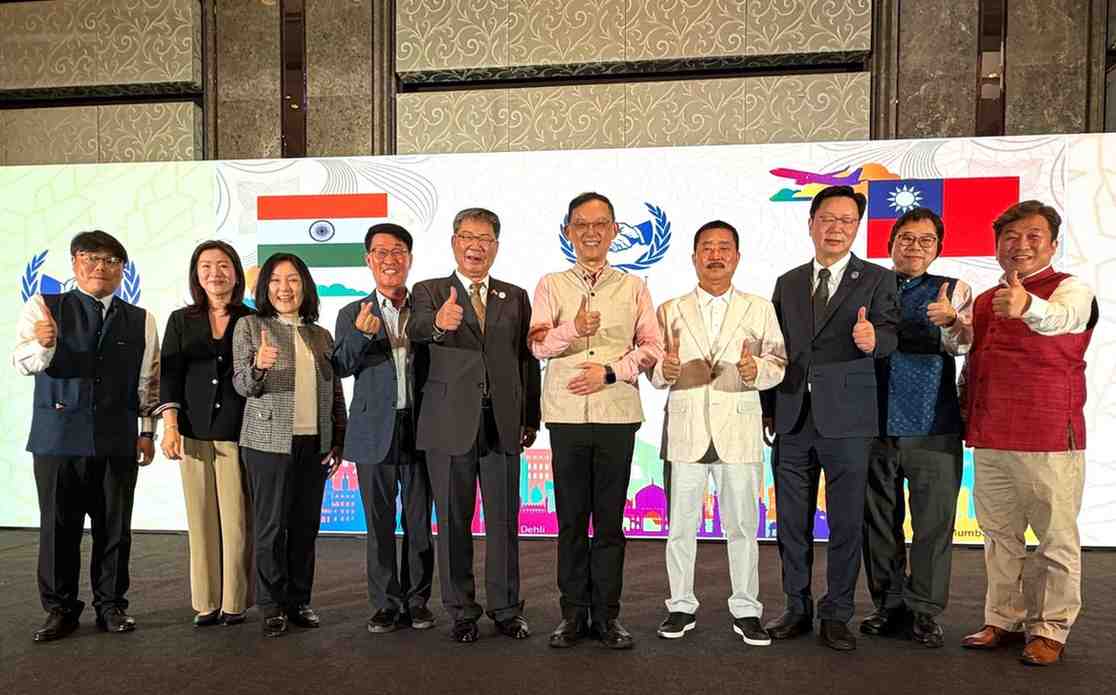
Bengaluru: In Bengaluru—the capital of India’s Karnataka state and widely known as the “Silicon Valley of India”—a massive alliance is poised to emerge, encompassing economic and cultural exchanges among three East Asian nations: South Korea, Taiwan, and Japan.
On April 12, 2026, the inauguration ceremony for Fred Chen, the newly appointed President of the Taiwan Chamber of Commerce in India (TCCIN), was held at the Shangri-La Hotel in Bengaluru. This event transcended the scope of a mere inauguration; it served as a significant platform where representatives from these three East Asian nations—each wielding substantial economic and cultural influence within India—gathered to foster future-oriented cooperation.
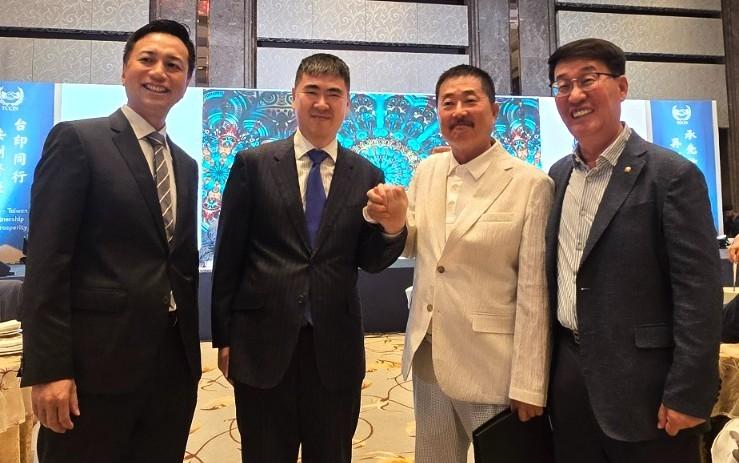 Representing South Korea at the event were Jung Young-ho, President of the Korean Association in Bengaluru and Andhra Pradesh (KABA); Advisor Ra Byeong-gi; Director of Education Seo Gyeong-nam; Jung Jun-tae, Vice President of the Korean Chamber of Commerce in India (KOCHAM) Bengaluru; and Lee Seung-won (Calvin Yi), the India and U.S. Ambassador for the Korea Federation of SMEs (K-Biz).
Representing Japan were Tomotoka Yoshimura, Deputy Consul at the Consulate General of Japan in Bengaluru, and Atsushi Suzuki, President of the Bangalore Nihonjinkai (Japanese Association). Representing Taiwan were Fred Chen, the newly appointed President of TCCIN; Jason Ho, President of the Taiwan Chamber of Commerce in New Delhi (TCCD); and Dr. Mumin Chen, Deputy Representative of the Taipei Economic and Cultural Center (TECC).
During the meeting, representatives from the three nations reached a unanimous agreement to establish a “broad-based alliance” centered in Bengaluru, aimed at uniting the industries and cultures of South Korea, Taiwan, and Japan.
Based on close cooperative ties among the key organizations leading the economic and cultural sectors of each country, they pledged to officially launch a framework for regular discussions and to plan specific joint events within this year.
This alliance among the three East Asian nations holds profound significance for both the local community in Bengaluru and the broader Indian economy. Currently, Koreans, Taiwanese, and Japanese nationals constitute the overwhelming majority of the expatriate population residing in Bengaluru.
These three nations not only spearhead India’s industrial development through large-scale local investments but also play a pivotal role in actively organizing major events that introduce their respective cultures to the local Indian population.
Experts predict that once this newly agreed-upon alliance among South Korea, Taiwan, and Japan becomes fully operational, it will generate tremendous synergy, significantly amplifying the impact of business and cultural exchanges that have previously been conducted on an individual national basis. All eyes are now fixed on how the steadfast solidarity forged in Bengaluru among the three East Asian nations will stir up fresh winds of change across the industrial and cultural landscape of the Indian market.