Korea eager to drive second wave of investment in India: Amb Lee
Focus will be on collaboration in shipbuilding, semiconductors, advanced manufacturing and MSMEs, nuclear energy, space, artificial intelligence and defense.

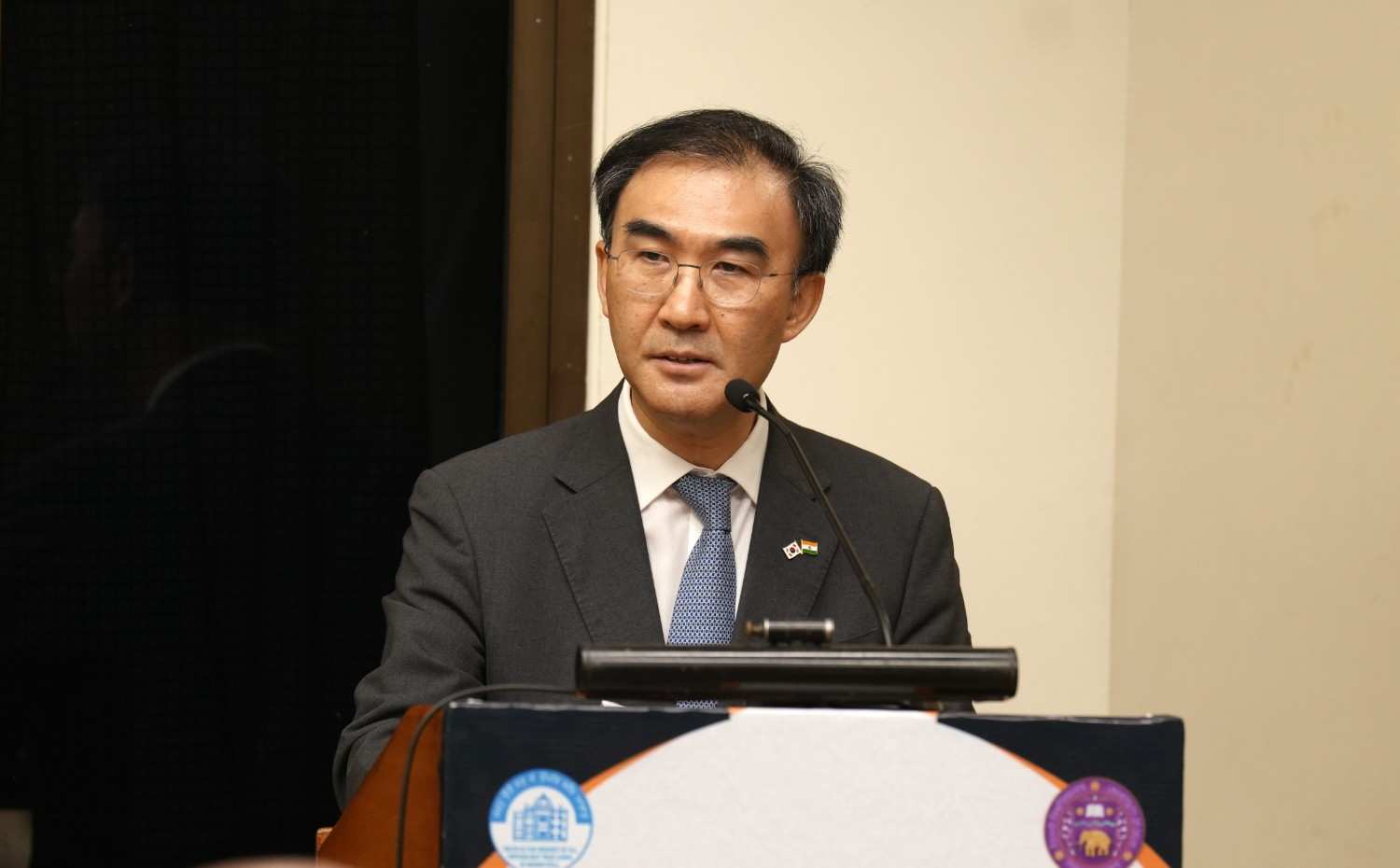
New Delhi. While acknowledging the fact that the fast-changing geopolitical and geo-economic situation calls for a deeper strategic partnership between Korea and India, particularly in strengthening supply chain resilience, the ambassador of the Republic of Korea to India, Lee Seong-ho, has said that Korea is eager to drive the second wave of investment in India in the non-conventional sectors of strategic importance for both nations.
“While the first wave was led by companies like Hyundai and LG, which have become household names across the country. The next phase will focus on shipbuilding, semiconductors, advanced manufacturing and MSMEs,” said the Korean Ambassador while addressing an international seminar.
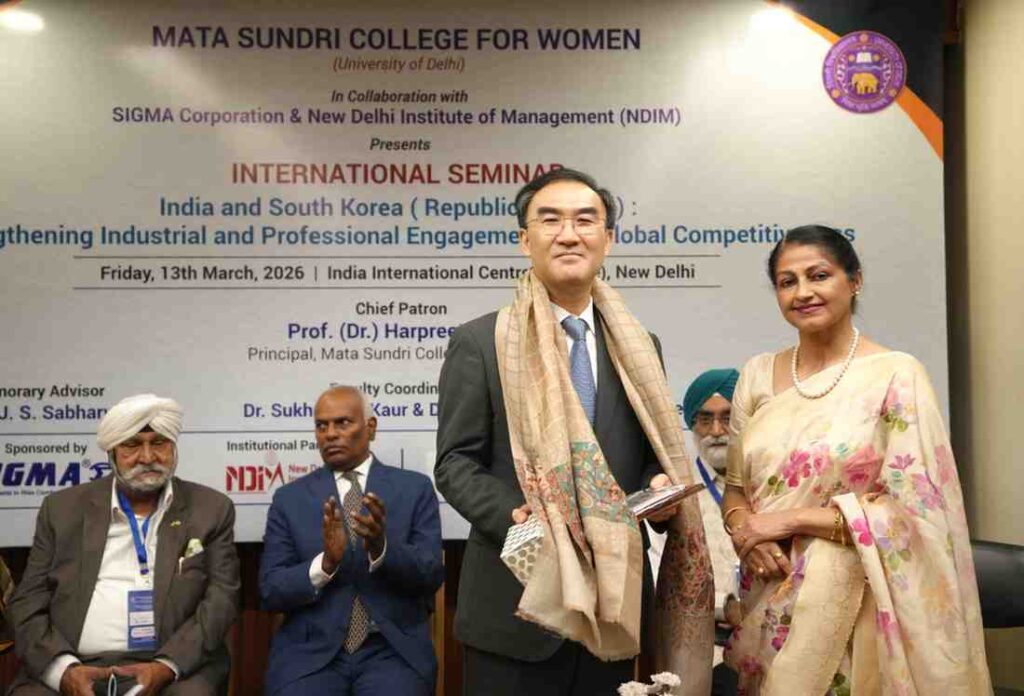
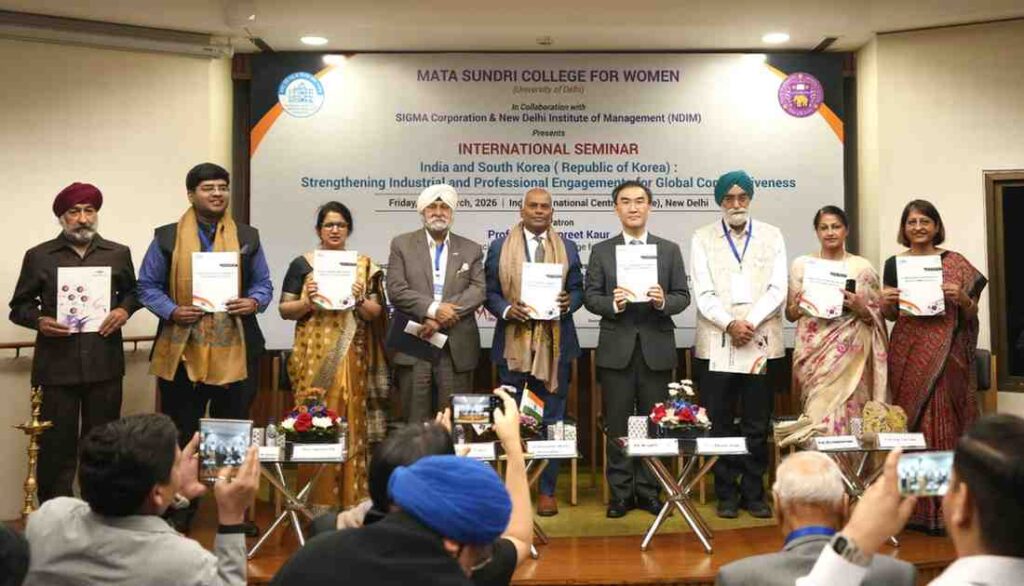
This seminar, titled “India and South Korea: Strengthening Industrial and Professional Engagement for Global Competitiveness”, was organised by Mata Sundri College for Women in New Delhi on Friday.
“Looking ahead, I would like to share four key directions that will take our partnership to the next level. First, Korea is eager to drive the second wave of investment in India. Korea stands ready to partner with India in advancing Prime Minister Modi’s vision of Atamnirbhar Bharat (Self-reliant India) and Viksit Bharat (Developed India),” said Ambassador Lee.
While suggesting the second direction, the ambassador said, “We are keen to expand our cooperation in strategic industries, which will drive the next phase of growth and shape the future global order. Nuclear energy, space, artificial intelligence and defence have immense potential for collaboration. Some recent progress includes the MOU between the Korean Aerospace Administration and ISRA on shared use of scientific infrastructure and joint operation of ground stations in defence. The second phase of the K9 Hwitzer project has been a visible success.”
“Third, we are committed to further expanding institutionalised high-level exchanges and strengthening people-to-people ties. Since the inauguration of the Korean president last year, President Lee Jae-myung and Prime Minister Narendra Modi have met twice, first on the sidelines of the G7 summit in Canada in June 2025, and again during the Johannesburg G20 summit in November 2025.”
“In the first two months of this year alone, we welcomed two high-level Korean delegations led by our deputy speaker and the Deputy Prime Minister to India.”
 Ambassador Lee suggested that Korea-India engagement must be sustained and structured, not episodic. “Beyond government-to-government level contact, we must deepen academic cooperation to expand student exchanges, facilitate workforce mobility and promote tourism. Institutionalising these exchanges will lay a strong foundation for our partnership.”
The ROK Ambassador said that both nations must also seek to broaden our cooperation at the regional and global levels.
“India’s ACT East policy and Korea’s pragmatic diplomacy share a common emphasis on building technical partnership and delivering tangible results across the Indo-Pacific and beyond. This strategic alignment will create new engines of economic growth, enhance regional stability and enable Korea and India to contribute more meaningfully to regional and global common goods as trusted partners armed by democratic values, complementary strength, strategic convergence, and a shared vision for the future.”