
Future of Folk Culture May Be Mobile in India: Shen Chao-Liang
In an interview with Sanjeev K Ahuja of ACN Network, the Taiwanese photographer explains how his long-running STAGE series captures Taiwan’s mobile performance culture, grassroots memories and spectacular roadside imagination. He said that India has immense potential for this technology.

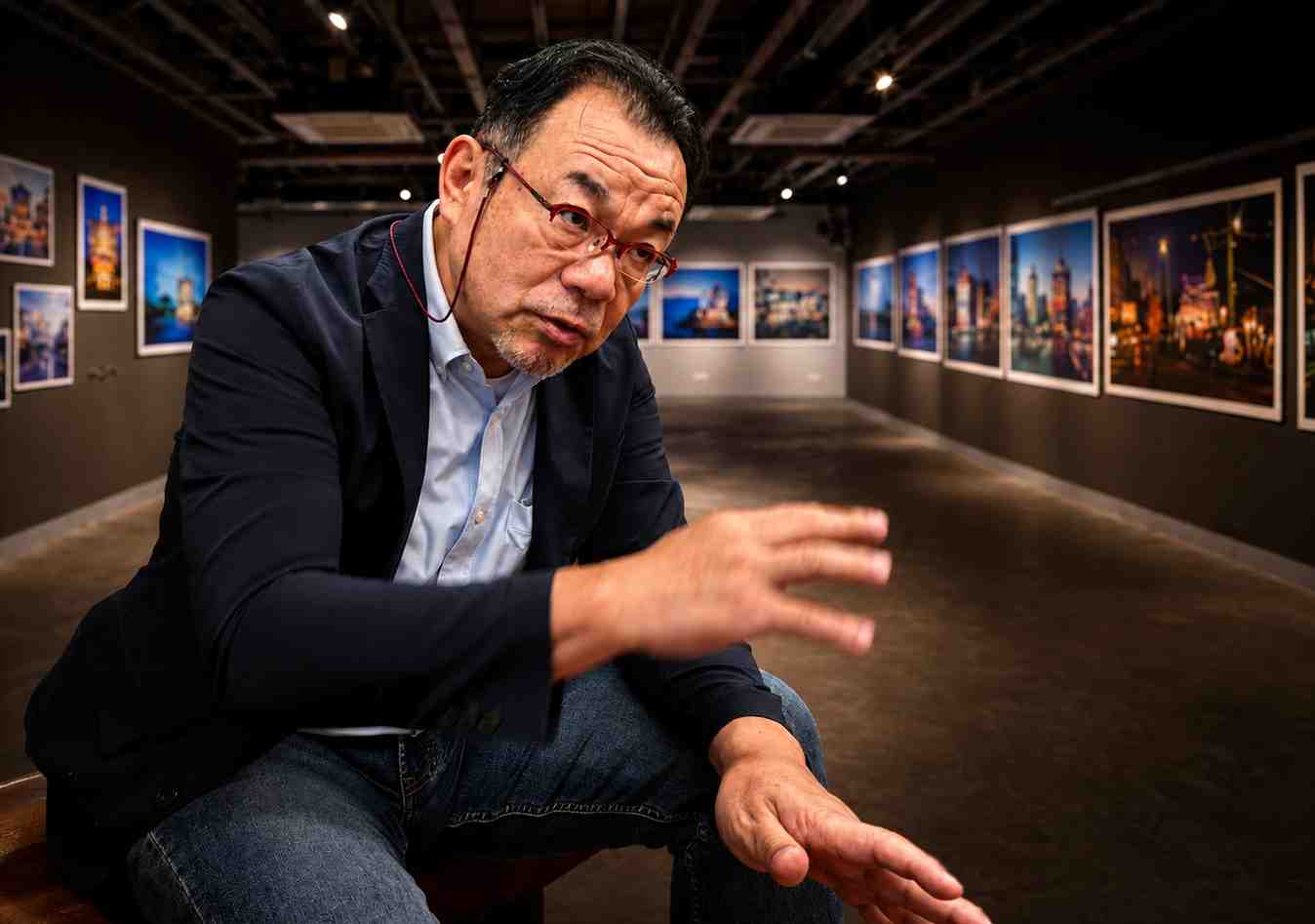
Sanjeev K Ahuja: Prof. Shen, your STAGE series has come to India as a solo exhibition. For Indian audiences who may be seeing this kind of Taiwanese visual culture for the first time, how would you describe the idea behind this series?
Prof. Shen Chao-Liang: The STAGE series that has been to over 30 countries worldwide before coming to India, is about Taiwan’s mobile stage trucks and the cultural life around them. These trucks are part of Taiwan’s grassroots entertainment culture. They travel to different places and unfold into performance stages for local events, religious activities and community celebrations.
The photographs are not staged inside a studio. They are taken in real locations across Taiwan. The idea is to show how these mobile stages appear in ordinary surroundings and how, for a short time, they transform those spaces into places of performance and gathering.
Ahuja: When one looks at these photographs, the trucks appear almost like magical structures. They are vehicles, but they also become theatres. What attracted you to them as a photographer?
Prof. Shen: The first attraction was visual. These stages are very colourful, dramatic and powerful. A truck can suddenly become a stage with lights, decoration and a strong theatrical presence.
But later, the project became more than a visual attraction. These stages are connected with people’s memories, local culture and public life. They are part of Taiwan’s community celebrations and religious traditions. That is why I continued photographing them for many years.
Ahuja: The series covers a very long period, from 2005 to 2023. Why did you decide to continue this work for almost two decades?
Prof. Shen: This subject could not be fully understood in a short time. The mobile stages are seen in different regions, different situations and different environments. Over the years, the photographer could observe many variations in their form, design and surroundings.
The long duration also helped record changes in Taiwan’s popular culture. The project became a long-term visual archive of a cultural practice that has existed for decades and continues to remain important in local society.
Ahuja: These mobile stages are used for different occasions. Could you explain their role in Taiwanese society?
Prof. Shen: In Taiwan, such stages are connected with local entertainment, temple festivals, weddings, funerals and other community events. They are not limited to big cities or formal cultural spaces. They appear in towns, villages, roadside areas and public spaces.
They reflect the creativity of ordinary people and the way communities create their own performance culture. They also show the link between religion, entertainment and daily life in Taiwan.
Ahuja: For Indian viewers, there may be a familiar connection because India also has temporary stages, public celebrations, religious processions, community events and street performances. Do you feel the Indian audience may relate to this work?
Prof. Shen: Yes, Indian audiences may find some connection. Taiwan and India are different, but both societies have rich public culture and community celebrations. In both places, performance can come into public space and become part of everyday life.
In India, I have brought 27 photographs, mostly of large sizes. India, which is a country of very highly diverse cultures and is a venue for countless performances in the realm of art and culture, carries huge potential for adapting to this technology. We hope that the performers in India would like to know more about the mobile stage technology and embrace it fondly.
The STAGE series introduces a Taiwanese subject, but it can also create a dialogue with Indian viewers because they may recognise the importance of festivals, gatherings, religious events and public performance.
Ahuja: The photographs have a strong cinematic quality. How important were light, timing and location in creating this visual effect?
Prof. Shen: Light is very important in this series. The stages have their own artificial lights and colours, but they are also photographed within real environments. The balance between the natural surroundings and the illuminated stage creates a special atmosphere.
The timing of the photograph matters because the stage must appear neither fully ordinary nor completely theatrical. It exists somewhere between daily life and performance. That feeling is central to the work.
Ahuja: Did you see these trucks simply as cultural objects, or also as a kind of social document?
Prof. Shen: They are both. They are visually fascinating objects, but they also carry social meaning. They represent the memories of local communities, the development of roadside entertainment, and the relationship between performance and people’s lives.
The photographs document a cultural practice, but they also invite viewers to think about how public spaces are transformed through performance.
Ahuja: What does the series say about Taiwan beyond its image as a modern, technology-driven society?
Prof. Shen: Taiwan is often known internationally for technology and industry, but Taiwan also has a very rich grassroots culture. These mobile stage trucks show a different side of Taiwan—colourful, creative, local and closely connected with people’s lives.
The series presents Taiwan through its popular culture, not only through its modern cities or industries. It shows how creativity exists in ordinary places.
Ahuja: How do you feel about bringing this work to India?
Prof. Shen: Bringing the series to India is meaningful because Indian audiences can see Taiwan through a different lens. The exhibition allows cultural exchange through photography.
Each country has its own way of looking at images. In India, viewers may understand the work through their own experience of public events and community culture. That makes the exhibition more than a display of photographs; it becomes a conversation between cultures.
Prof. Ahuja: What would you like visitors in India to take away from the STAGE exhibition?
Shen: Visitors may first be attracted by the colour, scale and unusual form of the stage trucks. But beyond that, they should also see the cultural life behind them.
The photographs show how ordinary spaces can become extraordinary through performance. They also show how people create memory, identity and community through public celebrations. The hope is that Indian viewers will feel curiosity about Taiwan and also find points of connection with their own cultural experiences.