
When Nizam’s Hyderabad Looked to Japan for a Non-Western Model of Modern Education
Sushila Narsimhan’s study on Syed Ross Masood’s 1922 Japan visit brings to light a little-known chapter of India-Japan educational history

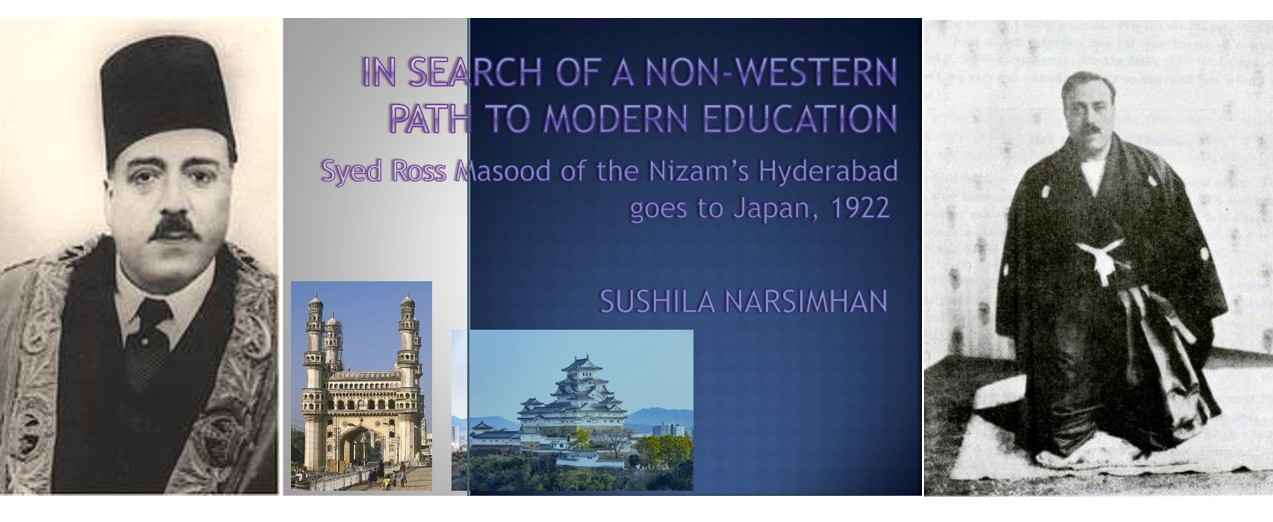
New Delhi, India: In a fascinating but little-discussed chapter of India-Japan relations, Nizam’s Hyderabad looked towards Japan more than a century ago for inspiration to build a modern education system without surrendering completely to English-medium learning.
This remarkable historical episode is brought to light by scholar Sushila Narsimhan in her work “In Search of a Non-Western Path to Modern Education: Syed Ross Masood of the Nizam’s Hyderabad Goes to Japan, 1922.” The study focuses on the 1922 journey of Syed Ross Masood, then Director of Public Instruction in Hyderabad State, who travelled to Japan to examine how the Asian nation had modernised its education system while retaining its own language and cultural identity.
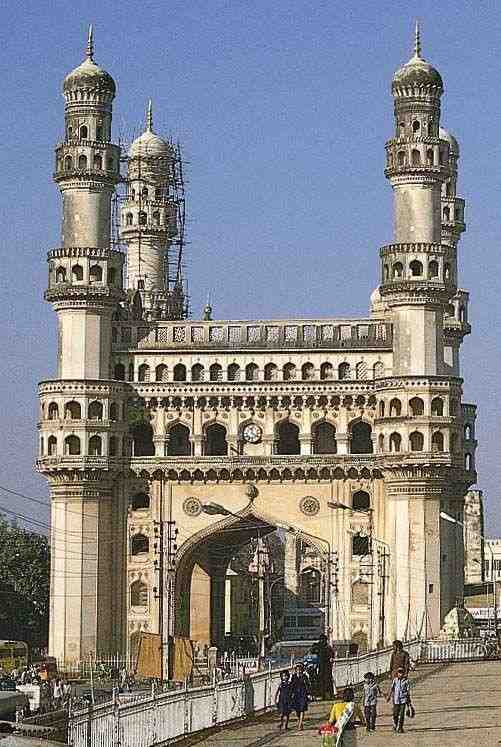
 At the heart of Narsimhan’s research is a powerful historical question: could India, especially its princely states, find a non-Western route to modernity by learning from Japan?
Narsimhan notes that during British colonial rule, the Indian subcontinent had two parallel administrative worlds. Around two-thirds of the region was British-ruled India, while about one-third consisted of nearly 600 semi-autonomous princely states ruled by hereditary monarchs. It was among these princely states that the search for alternative models of modern education became particularly significant.
“Under the constant pressure of British encroachment,” Narsimhan observes, “the rulers of several states realised the need to empower themselves through educational reforms.” She points out that while some Hindu-ruled states adopted English-style institutions on the model of Eton and Harrow, several other princely states, especially Muslim-ruled polities such as Hyderabad and Rampur, were uncomfortable with English-language dominance and looked for an alternative non-Western model.
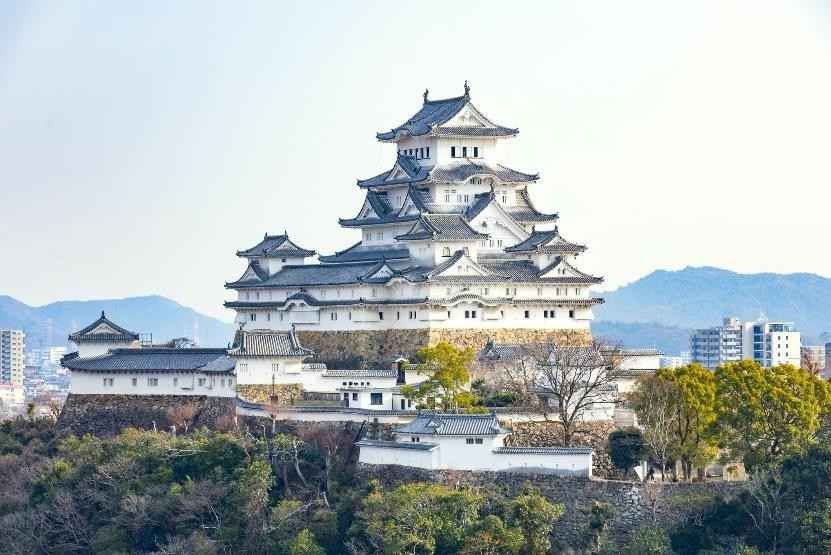
 Japan became that model: According to Narsimhan, Japan’s rise deeply impressed Indian intellectuals and princely rulers because it had preserved its independence, modernised rapidly and competed with the West without losing its national-cultural foundation. “Japan’s ability to preserve its independence, modernise, and compete with the West encouraged Indian thinkers to reflect on what they could learn from the Japanese experience,” she writes.
The appeal of Japan grew even stronger after its victory over Russia in 1905. The event, Narsimhan notes, sparked “a wave of euphoria and anti-imperialist sentiments” across the non-Western world. For colonised societies, Japan’s success showed that an Asian country could challenge a major European power and still retain its civilisational identity.
In India, this coincided with the rise of swadeshi sentiment, revolutionary nationalism and a renewed debate over education. The question was no longer whether India needed modern knowledge. The deeper question was whether such knowledge had to come through English alone.
The debate had already engaged thinkers such as Bhudev Mukhopadhyay, who noticed that Japan had adopted a Western system of education but conducted it in its own language. Narsimhan describes Japan’s approach as a pragmatic synthesis of “Japanese spirit, Western skill” — a selective strategy that allowed Japan to absorb Western knowledge while retaining its national character.
This was the intellectual and political atmosphere in which Hyderabad sent Syed Ross Masood to Japan in 1922. As Director of Public Instruction, Masood’s mission was to study Japan’s educational system and derive lessons for the Nizam’s dominions.
Narsimhan records that Masood boarded the Wakasa Maru of the NYK Line from Bombay in March 1922, travelling to Japan on what she describes as a fact-finding mission. Before his departure, M. Visvesvaraya, who had himself visited Japan earlier and admired its technical education, came to Bombay to meet him.
Masood’s visit was significant because he did not merely observe Japan; he tried to understand how its model could be adapted in Hyderabad. “Masood became the first who not only studied Japan’s system in great details but also tried to implement it in Nizam’s State of Hyderabad,” Narsimhan states.
What impressed Masood most was Japan’s use of its own language for modern education. He believed that if Japanese, a highly complex language, could become a vehicle for scientific and technical knowledge, then Urdu could also serve as a medium of higher education in Hyderabad.
Narsimhan quotes Masood’s striking observation: “Japanese is far more complex than Urdu. If the Japanese could do it, we could do it with Urdu as well.”
Masood also admired how Japan had set up literary societies to translate Western works, create equivalent terms for modern scientific concepts and bring advanced knowledge within the reach of ordinary people. He believed Hyderabad needed similar institutional efforts to develop knowledge in Urdu and send students and officials to Japan for training.
This line of thinking fed into the larger experiment of Jamia Usmania, or Osmania University, which became one of India’s boldest attempts at vernacular-medium higher education. The university conducted a European-style curriculum through Urdu medium, making it a pioneering institution in the history of Indian education.
Narsimhan describes Jamia Usmania as a “bold experiment” and notes that it became the first vernacular university and the first to conduct a European curriculum in Urdu medium. The experiment also had a wider social ambition: to make education accessible beyond the narrow English-educated elite.
Rabindranath Tagore, too, welcomed the idea of education freed from the “shackle of a foreign language”. In a letter quoted in Narsimhan’s work, Tagore wrote that he had long waited for the day when education would become naturally accessible to all Indians through their own languages.
However, the Hyderabad experiment also revealed the limits of directly copying Japan. Narsimhan underlines the sharp differences between Japan and Hyderabad. Japan was relatively homogeneous and unilingual; Hyderabad was heterogeneous and multilingual. In 1911, Hyderabad had large Telugu, Marathi, Kannada and Urdu-speaking populations, making the adoption of one language as the medium of education politically and socially difficult.
Masood himself was aware of this challenge. Narsimhan records that while presenting his report, he cautioned that what worked in Japan might not work in Hyderabad because “India is not homogenous like Japan” and Hyderabad itself was a multilingual society. His broader recommendation was not merely Urdu-medium education, but vernacular-medium education in all major Indian languages up to the university level, with English as a compulsory second language.
The attempt to make Urdu the medium of education across the Nizam’s dominions triggered resistance, particularly among non-Urdu-speaking communities. The “Urduisation” of education, Narsimhan notes, evoked protests from many Hindus, some of whom migrated to colleges in British India.
Yet, despite these contradictions, Syed Ross Masood’s 1922 journey remains a landmark episode in India-Japan history. It shows that Japan influenced India not only through Buddhism, art, trade or diplomacy, but also through debates on language, education, identity and modernity.
Narsimhan’s study is especially relevant today as India and Japan expand cooperation in education, skill development, language learning and academic exchanges. It reminds us that more than 100 years ago, Indian reformers were already looking at Japan not merely as a foreign country, but as a fellow Asian civilisation that had created its own path to modern progress.
The story also broadens the canvas of India-Japan relations. It shows that the relationship was shaped not only by governments and diplomats, but also by educators, students, princely states, reformers and thinkers searching for dignity through knowledge.
In that sense, Syed Ross Masood’s journey to Japan was more than a study tour. It was part of India’s larger search for a modernity rooted in its own languages, institutions and civilisational confidence — a search in which Japan appeared as both inspiration and cautionary example.
About the Author:
 Prof. Sushila Narsimhan is a distinguished Indian scholar of Japanese Studies and a former Professor at the Department of East Asian Studies, University of Delhi. She began her academic career in 1964 at Daulat Ram College, University of Delhi, and later taught in the Department of East Asian Studies until her retirement in 2007.
Her academic work focuses especially on Japan’s Meiji period, India-Japan intellectual exchanges, and lesser-known historical and cultural linkages between the two countries. Her major publications include the authored book Nineteenth Century Japanese Perceptions of China: Influence of Fukuzawa Yukichi and several research papers. She has also edited or co-edited more than 15 books on India and East Asia, including India-Japan and India-Korea themes.
Prof. Narsimhan’s edited volume India-Japan Narratives: Lesser Known Historical & Cultural Interactions is particularly relevant to the KIJS Forum/MOSAI initiative, as it brings forward under-researched episodes in India-Japan history. Her study on Syed Ross Masood of Hyderabad’s 1922 visit to Japan examines how Japan inspired Indian princely states in their search for a non-Western model of modern education.