
SAFJUAA to Return to Its Kathmandu Roots for Key Japan–South Asia Education Dialogue
November 6–7 gathering in Nepal will bring together Japanese university alumni from across South Asia for a symposium focused on education, regional cooperation and enduring ties with Japan.

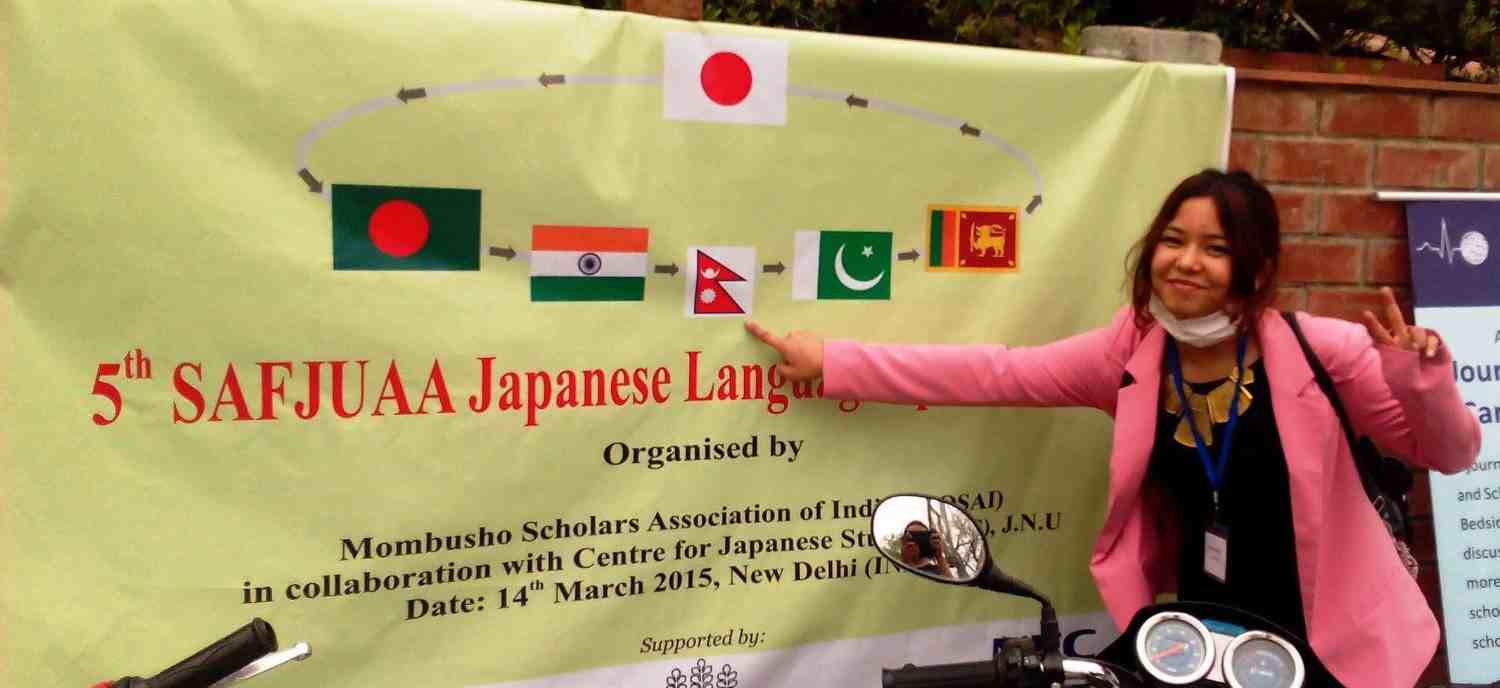
Kathmandu: More than two decades after Kathmandu became the birthplace of a regional network connecting South Asian graduates of Japanese universities, alumni leaders from across the region will return to Nepal on November 6 and 7 for an important dialogue on the future of education-led cooperation with Japan.
The 2026 meeting of the South Asian Federation of the Japanese Universities Alumni Associations (SAFJUAA) will be organised by the Japanese Universities Alumni Association, Nepal, and will feature a symposium titled “South Asia and Japan: Co-travellers on Education Path.”
The gathering assumes particular significance because it takes SAFJUAA back to the city where representatives of Japanese university alumni associations first met on March 29, 2005, and unanimously decided to establish the regional federation.
That history gives the forthcoming meeting a meaning extending well beyond the organisation’s routine annual proceedings. It represents a 21-year return to the federation’s roots and offers its members an opportunity to assess how education, research and alumni networks can contribute more effectively to relations between Japan and South Asia.
SAFJUAA was established to maintain links among Japanese university alumni associations in South Asian countries and to undertake projects of common interest and mutual benefit. Its founding members represented Bangladesh, India, Nepal, Pakistan and Sri Lanka. The Japan Alumni Association of Bhutan subsequently joined the federation after its membership was approved at a virtual SAFJUAA meeting in August 2023.
The 2026 symposium’s focus on education is especially relevant at a time when countries across South Asia are seeking greater access to advanced research, technology, skills and international academic partnerships. Japan, with its universities, research institutions and scholarship programmes, has played a significant role in educating generations of students and professionals from the region.
Many of these graduates have returned home to become academics, scientists, administrators, business leaders and professionals. Their experience gives alumni organisations the potential to serve not simply as social networks of former students but as active channels for educational diplomacy, knowledge exchange and regional collaboration.
The Nepal meeting is expected to create a platform for member associations to share experiences, consider joint activities and discuss ways to strengthen cooperation both among South Asian countries and with Japanese institutions.
This regional character is central to SAFJUAA’s purpose. Its charter calls for conferences, seminars, workshops and symposia on scientific, social and cultural subjects of common interest. It also envisages joint publications, research and technical exchanges, cultural programmes and regular interaction with Japanese embassies and institutions.
Importantly, the federation follows the principles of consensus and equality, giving each member association equal standing. In a region where political tensions and visa difficulties can sometimes obstruct cross-border interaction, such an alumni platform can preserve professional and personal connections even when formal regional cooperation encounters challenges.
SAFJUAA’s own history reflects both the possibilities and difficulties of sustaining a South Asian network. Meetings have been held in Kathmandu, Dhaka, New Delhi, Islamabad and Colombo. At different times, however, participants were unable to attend because of visa problems, while internal unrest prevented Sri Lanka from organising the 2019 gathering. Meetings were also disrupted during the Covid-19 pandemic.
The continuation of the federation despite these interruptions demonstrates the value its members place on preserving regional links established through their common educational experience in Japan.
According to SAFJUAA’s historical summary, its rules were formally adopted at a meeting in Dhaka and announced through the Dhaka Declaration. Over the years, annual gatherings have been combined with seminars and symposia addressing themes such as capacity-building for a knowledge society, studying in Japan, environmental sustainability, Japan’s emerging role in South Asia and climate-resilient development.
The federation also expanded its activities beyond meetings and policy discussions. A proposal by the Mombusho Scholars Association of India (MOSAI) to organise a regional Japanese-language speech contest for national winners from member countries was accepted at the SAFJUAA meeting in New Delhi in March 2009.
The first such regional contest was held in New Delhi in 2010. Subsequent contests gave accomplished Japanese-language learners from participating South Asian countries an opportunity to demonstrate their skills while engaging with peers from across the region.
These initiatives illustrate how alumni associations can carry the benefits of overseas education beyond their immediate membership. Through language learning, academic exchange, cultural activities, research cooperation and professional networking, they can help build a wider community of people capable of strengthening relations with Japan.
The forthcoming Kathmandu symposium is therefore timely. While universities increasingly discuss internationalisation, the role of alumni in sustaining educational relationships after graduation is often underestimated. Former students possess first-hand knowledge of Japanese academic and social life, as well as a practical understanding of the institutions and needs of their home countries.
By connecting these two worlds, alumni can help prospective students make informed choices, support institutional partnerships, encourage collaborative research and guide younger scholars adjusting to life and study in Japan.
The meeting may also provide an opportunity to examine how SAFJUAA can become more active and visible through regular programmes, stronger digital communication, joint publications and initiatives involving younger alumni. The federation’s future relevance will depend on converting the goodwill accumulated over two decades into practical and continuous cooperation.
The theme describing South Asia and Japan as “co-travellers” on the path of education captures this need for a relationship based on sustained learning rather than one-way assistance. It acknowledges that Japan and South Asian countries can learn from one another while addressing common concerns ranging from technological change and sustainable development to ageing societies, employment, disaster preparedness and human-resource development.
For Nepal, hosting the meeting carries symbolic importance. Kathmandu was not merely the location of SAFJUAA’s first regional gathering; it was where the idea of an organised South Asian community of Japanese university alumni took institutional form.
Twenty-one years later, the federation’s return to Nepal offers an opportunity to reconnect with that founding vision while adapting it to a very different educational and geopolitical environment.
The success of the November gathering will ultimately be judged not only by the discussions held during the two-day event, but by whether those discussions lead to sustained exchanges, new academic opportunities and stronger working relationships among the member associations and their partners in Japan.
At a time when South Asia needs more platforms capable of working across national boundaries, SAFJUAA’s shared educational connection with Japan provides valuable common ground. The Kathmandu meeting can help turn that common experience into a renewed regional agenda for cooperation.