
Another Paradox of AI Era: A New Opportunity for Exhibition and Convention Industry
By Phil (H.P.) Chung, CEO, KINEXIN Convention Management, Operator of Yashobhoomi (India International Convention & Expo Centre), New Delhi, India.

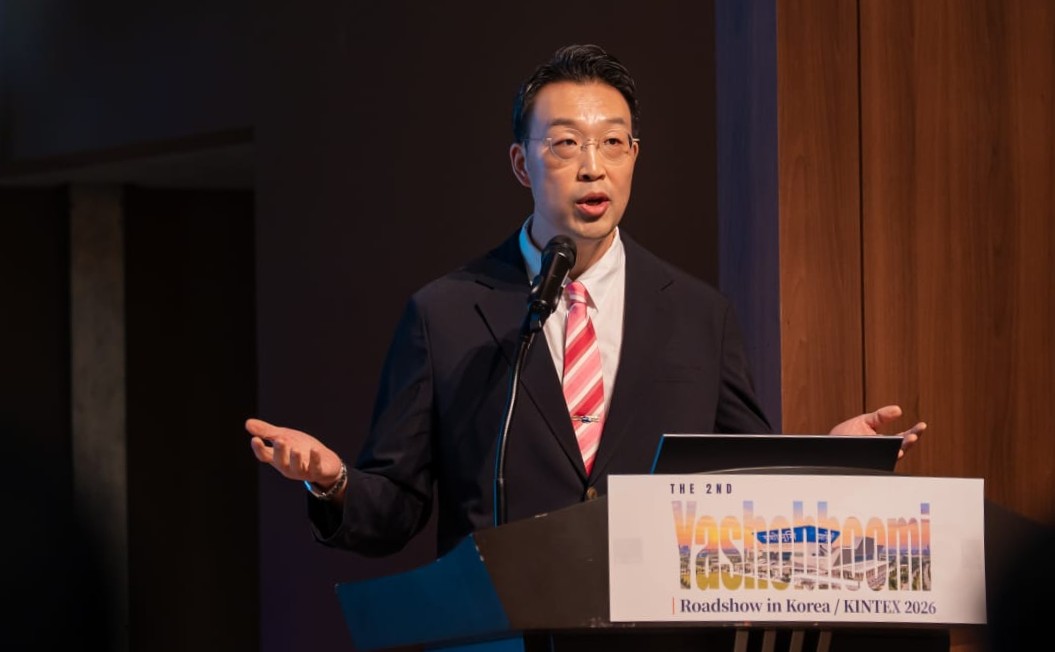
The rapid advancement of artificial intelligence (AI) is raising fundamental questions about the future of education, knowledge, and human intelligence.
We have entered an era in which AI can search for information, conduct analyses, produce written content, and even propose solutions to complex problems. Some argue that acquiring extensive knowledge is becoming unnecessary and that traditional education, including universities, will inevitably lose much of its relevance.
I believe the opposite may be true.
In the AI era, the importance of education will not necessarily diminish. Instead, the gap between those who possess deep knowledge and those who do not may become increasingly evident in their ability to leverage AI effectively.
More importantly, this transformation presents an extraordinary opportunity for an industry whose fundamental purpose has always been to bring knowledge, industries, and people together: the exhibition and convention industry.
This is what I consider another great paradox of the AI era.
1. The More Knowledge AI Provides, the More Valuable Deep Understanding Becomes: AI dramatically reduces the time and cost required to access information. Knowledge that once demanded extensive research and analysis can now be summarized through a few carefully constructed questions.
However, accessing information and understanding its implications are fundamentally different intellectual activities.
An expert with extensive knowledge of a particular industry can identify flawed assumptions in AI-generated analyses, recognize missing variables, challenge conclusions, and determine whether proposed solutions are applicable in the real world.
Someone without sufficient domain knowledge may find it difficult to distinguish between a convincing answer and a genuinely reliable one.
Consequently, even when two individuals use exactly the same AI system, the quality and practical value of their results may differ significantly.
One particularly important capability in this context is the ability to structure complex thoughts through precise language.
Effective prompting is not simply about writing longer or more elaborate instructions. It requires the ability to define problems accurately, formulate hypotheses, identify relationships among variables, establish analytical frameworks, and challenge assumptions from multiple perspectives.
These capabilities emerge from sustained learning, research, logical reasoning, and linguistic proficiency.
AI can generate answers, but determining which questions are worth asking remains a profoundly important human intellectual capability.
2. From Specialized Knowledge to Multidisciplinary Intelligence: Education in the AI era must evolve beyond the accumulation of information toward the integration of knowledge across disciplines and industries.
Understanding economics while appreciating technological developments, interpreting regulatory frameworks alongside business strategies, and connecting scientific innovation with human behavior and social transformation will become increasingly valuable.
This is precisely why multidisciplinary study matters.
However, multidisciplinary education should not mean acquiring superficial knowledge across numerous fields.
Rather, individuals should develop in-depth expertise in at least one discipline while cultivating the ability to understand and connect the fundamental principles of other fields.
Interdisciplinary thinking without intellectual depth can become little more than a collection of loosely connected information. Conversely, expertise confined to a single discipline may limit the ability to identify emerging opportunities beyond established boundaries.
AI can serve as a powerful instrument for connecting these different areas of knowledge.
It is also becoming possible to assign competing roles to multiple AI systems, allowing them to develop opposing arguments, challenge each other’s assumptions, and evaluate alternative scenarios.
Yet even when AI systems debate one another, human judgment remains essential in establishing evaluation criteria, verifying evidence, interpreting competing conclusions, and making final decisions.
The most valuable intellectual capabilities of the future may therefore depend not merely on how much one knows, but on how deeply one understands, how broadly one connects ideas, and how precisely one formulates questions.
This is not an argument for less education.
It is an argument for more sophisticated education.
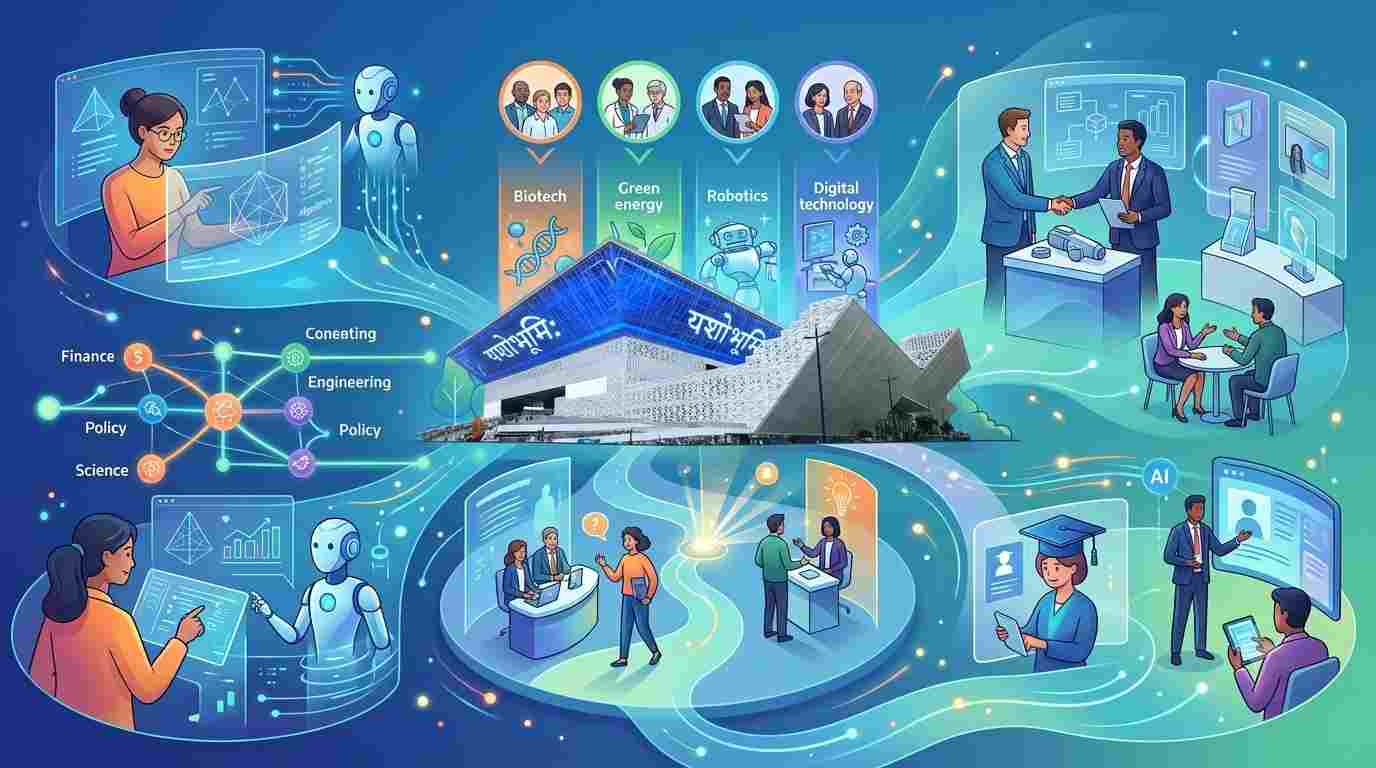
3. The Exhibition and Convention Industry Is Already a Platform for Multidisciplinary Knowledge Exchange:
This brings us to the fundamental nature of the exhibition and convention industry.
An exhibition is far more than a marketplace where products are displayed and buyers meet sellers.
The exhibition industry organizes individual economic sectors into identifiable ecosystems and brings their diverse stakeholders together within a concentrated physical environment.
Semiconductors, biotechnology, energy, mobility, artificial intelligence, finance, healthcare, and cultural industries are among the countless sectors represented through specialized exhibitions and conventions.
Within these events, manufacturers, technology developers, buyers, sellers, academic researchers, investors, policymakers, industry associations, government agencies, and entrepreneurs gather around shared industrial interests.
Each participant arrives with different objectives, experiences, and areas of expertise.
Yet all become connected through a common industrial context.
This is one of the exhibition industry’s most distinctive strengths.
An exhibition is a living knowledge ecosystem in which an entire industry is physically represented, and multidisciplinary learning intersects directly with economic activity.
While universities traditionally organize knowledge around academic disciplines, exhibitions organize knowledge around industries, technologies, markets, and their practical applications.
And industries, by their very nature, are multidisciplinary.
Commercializing a technological innovation requires far more than scientific expertise. It demands an understanding of finance, regulation, manufacturing, logistics, marketing, consumer behavior, and international markets.
In this respect, the exhibition and convention industry has long been facilitating the kind of multidisciplinary knowledge exchange that the AI era increasingly demands.
4. Intentional Serendipity: Creating the Conditions for Unexpected Innovation: Another defining characteristic of the exhibition and convention industry is what I would describe as Intentional Serendipity.
Participants attend exhibitions with specific objectives.
They may seek new customers, identify suppliers, explore emerging technologies, attract investment, or understand market trends.
However, some of the most valuable outcomes of an exhibition arise from encounters that were never anticipated.
A visitor may discover an unexpected technological solution at a booth they had not planned to visit.
A discussion during a conference session may reveal an entirely new opportunity for collaboration.
A brief conversation between professionals from different industries may become the starting point for a new business model.
These encounters are not entirely accidental.
They occur because exhibition organizers deliberately assemble relevant stakeholders, design appropriate programs, create networking opportunities, and establish environments where individuals with different expertise can interact.
In other words, the exhibition and convention industry systematically creates conditions in which valuable unexpected discoveries become more likely.
AI is increasingly capable of analyzing existing knowledge and identifying connections within vast amounts of information.
However, physical interaction offers dimensions of experience that are not easily replicated through digital interfaces alone.
Trust develops through personal engagement. Tacit knowledge is exchanged through observation and conversation. New ideas emerge through spontaneous discussion, disagreement, and shared experience.
In many industries, valuable knowledge cannot be fully captured in documents or databases.
Observing a product demonstration, questioning an engineer directly, examining a prototype, or interpreting the reactions of other industry professionals can produce insights that extend beyond formal information.
If AI maximizes our ability to access existing knowledge, exhibitions and conventions can maximize opportunities to generate new knowledge, relationships, and possibilities.
This distinction may become one of the industry’s most important competitive advantages.
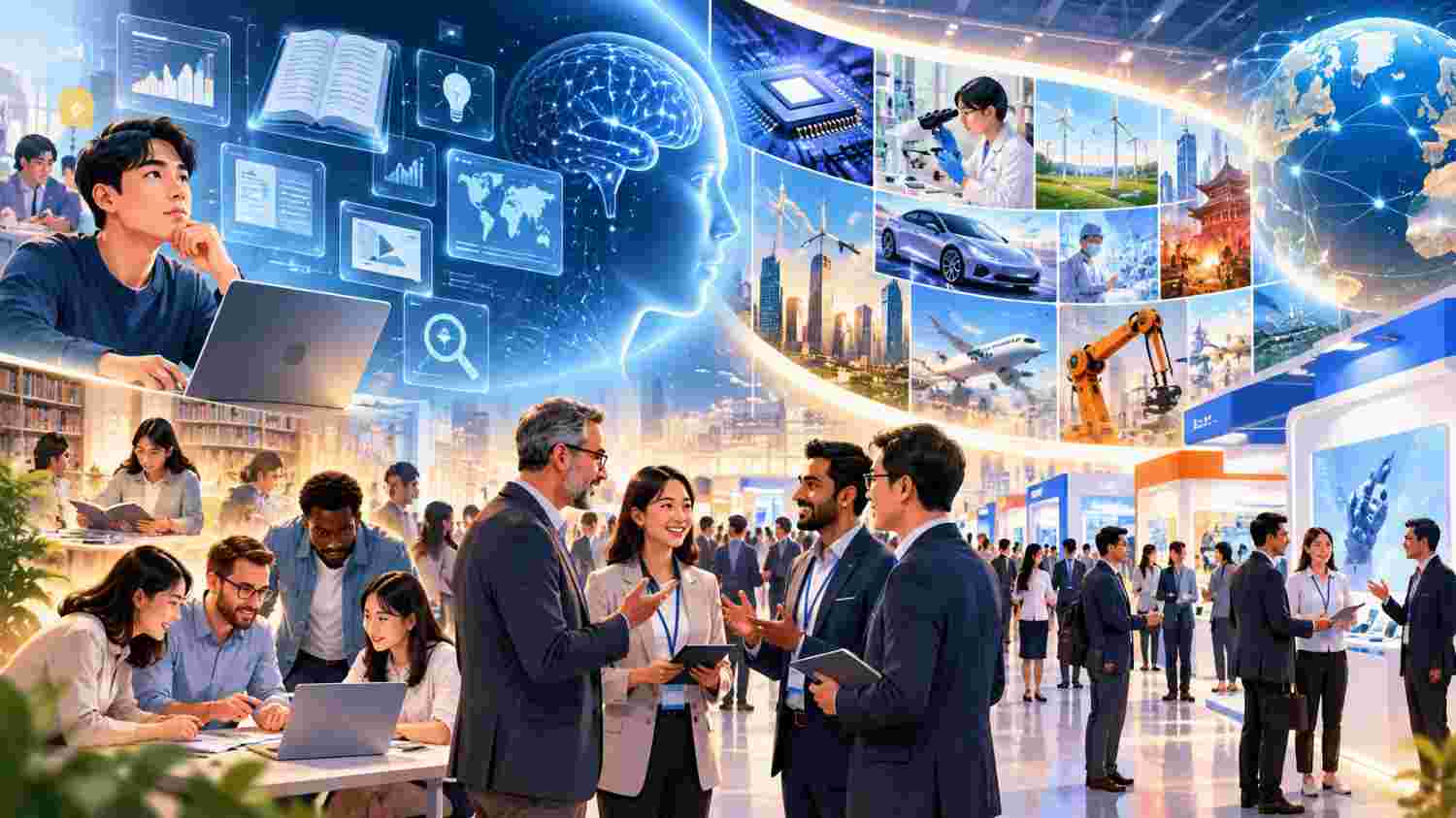 5. The Paradox of the AI Era: The More Digital Knowledge Becomes, the More Valuable Physical Interaction May Be: As AI advances, people will increasingly acquire information through digital environments.
They will analyze markets, compare competitors, evaluate technologies, and even engage in simulated discussions with AI-generated experts without leaving their offices.
Does this mean that people will have fewer reasons to travel to exhibitions and conferences?
I believe this is precisely where a new opportunity emerges.
The need to attend physical events merely to obtain information may decline.
However, the value of meeting people to verify information, experience technologies firsthand, build trust, exchange practical insights, and develop new ideas collaboratively may increase.
When information becomes widely accessible, experiences and relationships that cannot easily be replicated online may acquire greater relative value.
Furthermore, as AI-generated content proliferates, the importance of authenticity, credibility, and contextual understanding is likely to grow.
Direct engagement with industry experts can provide opportunities to challenge assumptions, verify claims, and evaluate knowledge through real-world experience.
This is where meaningful Physical Interaction becomes strategically important.
Of course, this does not mean that every exhibition or convention will automatically benefit from AI-driven transformation.
Events that depend primarily on distributing information or displaying products without offering distinctive experiences may face increasing competition from digital platforms.
By contrast, events that emphasize specialized knowledge exchange, hands-on experiences, high-value networking, and trust-building may strengthen their competitive position.
The critical measure of success will not simply be the number of visitors or the size of an exhibition.
It will increasingly be the intellectual, commercial, and relational value that participants gain from attending.
6. Exhibitions and Conventions as Lifelong Learning Platforms: This transformation suggests a broader mission for the exhibition and convention industry.
Traditionally, exhibitions have focused on product promotion, business matching, market development, and commercial transactions.
In the AI era, they have the potential to become comprehensive platforms for knowledge creation, professional education, technological convergence, and industrial innovation.
As technological change accelerates, businesses and professionals will need to update their knowledge continuously.
A university degree or professional qualification obtained early in one’s career will no longer be sufficient to sustain expertise throughout an entire working life.
Lifelong learning will become an essential component of professional competitiveness.
Industry-specific exhibitions and conventions are particularly well positioned to support this transformation.
A semiconductor exhibition, for example, can go beyond showcasing manufacturing equipment and components.
It can become a multidisciplinary educational platform addressing AI chips, energy efficiency, global supply chains, geopolitical risks, industrial policy, and workforce development.
Similarly, a healthcare exhibition can connect medical technology with AI diagnostics, data ethics, insurance systems, regulatory frameworks, and the future of healthcare delivery.
Such events create opportunities for researchers, industry professionals, executives, policymakers, and investors to learn from one another.
AI can further enhance these experiences by analyzing participants’ interests, recommending personalized educational sessions, identifying relevant experts, and facilitating meaningful professional connections.
After an event concludes, AI-powered knowledge platforms can help participants continue discussions, access educational content, and develop collaborative projects.
In this way, exhibitions and conventions can evolve beyond events lasting only a few days.
They can become year-round industry-specific knowledge networks and lifelong learning ecosystems.
This is fundamentally different from simply increasing the number of conference sessions.
It represents a transformation of the exhibition industry’s value proposition—from a primarily transaction-oriented model toward an integrated ecosystem of knowledge, education, innovation, and commerce.
7. Redefining the Roles of Exhibition Organizers and Venue Operators: This evolution will require exhibition organizers and venue operators to reconsider their traditional roles.
Exhibition organizers must increasingly become curators of industrial knowledge ecosystems.
Their responsibilities should extend beyond selling exhibition space, attracting exhibitors, and managing visitor numbers.
They must identify critical industry issues, connect complementary disciplines, engage thought leaders, and design environments in which valuable encounters and intellectual exchanges can occur.
Venue operators must also move beyond their conventional roles as providers of exhibition halls, meeting rooms, and supporting infrastructure.
The venues of the future should facilitate knowledge exchange, professional education, collaborative innovation, technological demonstrations, investment discussions, and meaningful networking.
AI-powered participant matching, real-time multilingual interpretation, personalized learning programs, hybrid knowledge platforms, and data-driven event performance analysis can support this transformation.
Equally important is the ability to sustain relationships after an event ends.
Participants should be able to remain connected, continue exchanging knowledge, and pursue collaborative opportunities throughout the year.
Naturally, these developments require careful consideration of data privacy, information reliability, operational costs, and return on investment.
Nevertheless, if implemented effectively, they could enable the exhibition and convention industry to expand beyond venue rental and event management into higher-value services that support industrial knowledge exchange and innovation.
8. A New Purpose for the Exhibition and Convention Industry in the AI Era: As artificial intelligence increasingly supports and automates intellectual activities, individuals and organizations will need to think more carefully about what they should learn, which questions they should ask, and whom they should engage with to create new value.
Deep expertise, multidisciplinary thinking, linguistic precision, and critical judgment will remain important capabilities.
Yet these capabilities are not developed exclusively through textbooks, classrooms, or digital information.
They also emerge through discussions with experts from different disciplines, exposure to unfamiliar technologies, direct observation, constructive disagreement, and unexpected encounters.
This is where the future opportunity for the exhibition and convention industry lies.
Exhibitions physically represent industries.
Conventions facilitate the exchange of accumulated knowledge.
Human encounters create opportunities for collaboration, innovation, and new economic activity.
AI can make these processes more intelligent, efficient, and productive rather than simply replacing them.
If AI democratizes access to knowledge, the exhibition and convention industry should provide the environments in which that knowledge is transformed into new value through human interaction.
Just as the advancement of AI may increase rather than eliminate the importance of sophisticated education, the expansion of digital interaction may strengthen the relative value of purposeful and meaningful physical encounters.
This is the paradox we should recognize.
And within this paradox lies an opportunity for the exhibition and convention industry to evolve beyond its traditional role in promoting industries and facilitating transactions.
It can become a vital platform for activating Collective Intelligence, accelerating multidisciplinary learning, and shaping the future of industries.
Ultimately, the most important question for our industry should no longer be limited to:
“How can we attract more people to our events?”
Instead, we should ask:
“How can we bring together people with different knowledge and expertise, connect them with purpose, and enable them to create new value collectively?”
Finding the answer to this question may define the next great transformation of the exhibition and convention industry.
AI does not eliminate the need for education; it amplifies the value of deep knowledge, multidisciplinary thinking, and intellectual precision.
And as artificial intelligence transforms how we access knowledge, exhibitions and conventions can transform how we connect, exchange, and create it.
The more digital our knowledge becomes, the more valuable meaningful human interaction may become.
 About the Author: Phil Chung is the CEO and Managing Director of KINEXIN Convention Management, the operating company for India’s Yashobhoomi (IICC) in New Delhi. With over 20 years of experience at Korea’s KINTEX, he specializes in MICE industry management, international trade show development, and venue operations. He is also the General Director of KINTEX. His focus has been to establish Yashobhoomi as a major global hub for trade shows and investment in India. Phil has been involved with the MICE industry, creating, managing, and operating large-scale venues, and fostering international partnerships. He has been instrumental in securing major international events at the Yashobhoomi venue, including Semicon, Power Gen, and other trade shows.