A Historic Crescendo: Korean Community’s 70th Anniversary Concert Marks a Cultural Milestone in India
A year-end musical celebration in New Delhi becomes the most significant cultural milestone in seven decades of Korean presence in India.

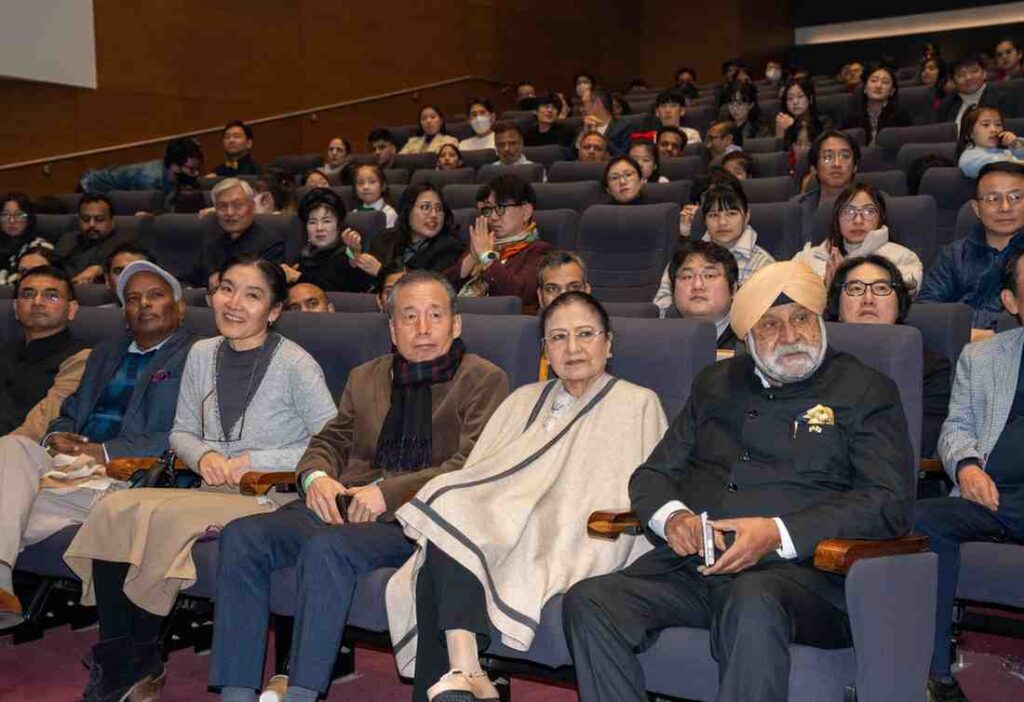
Gurugram / New Delhi — The Korean community in India marked a defining chapter in its seven-decade journey with a series of cultural performances that culminated in what many described as the most historically significant Korean classical music event ever staged in India. The 70th Anniversary Year-End Celebrations unfolded across Gurugram and New Delhi, transforming public spaces and a prestigious concert hall into living stages of memory, artistry, and cultural continuity. Interestingly, the audience from Delhi and NCR included large numbers of Koreans and Indians.
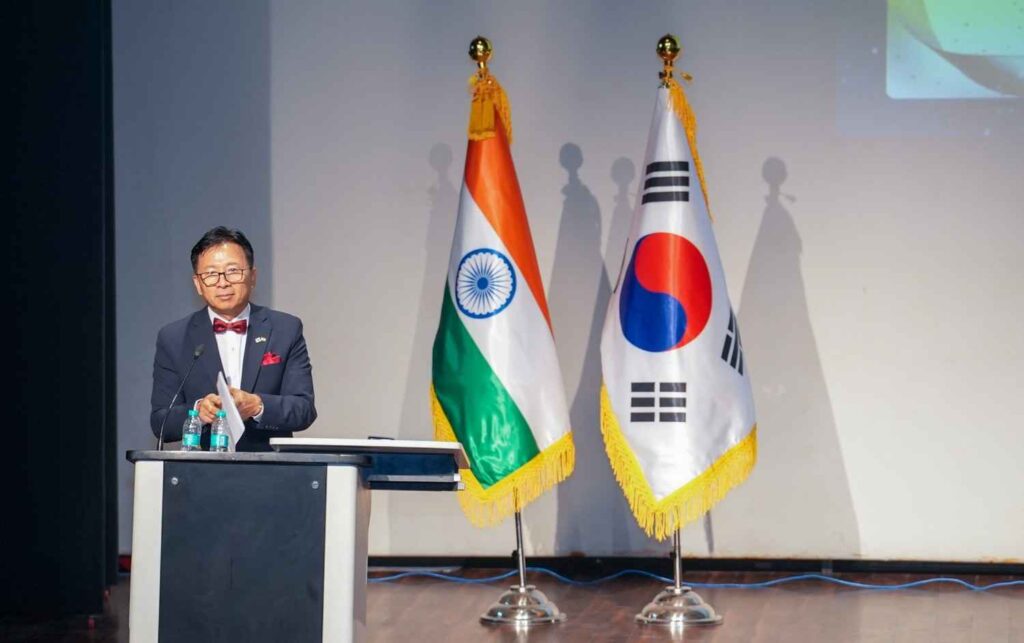
The event was organised by the Korean Association in India, led by its visionary Chairman Lee Kwang-il, with the support of the Korean Overseas Agency and the Embassy of the Republic of India
The celebrations commenced at Ardee Mall, Gurugram, where a public performance introduced audiences to the elegance of Korean classical music and contemporary movement. Shoppers and passers-by paused as violin melodies and expressive dance transformed the commercial space into an impromptu cultural arena, symbolising how Korean culture has seamlessly woven itself into India’s urban and social fabric over the decades.
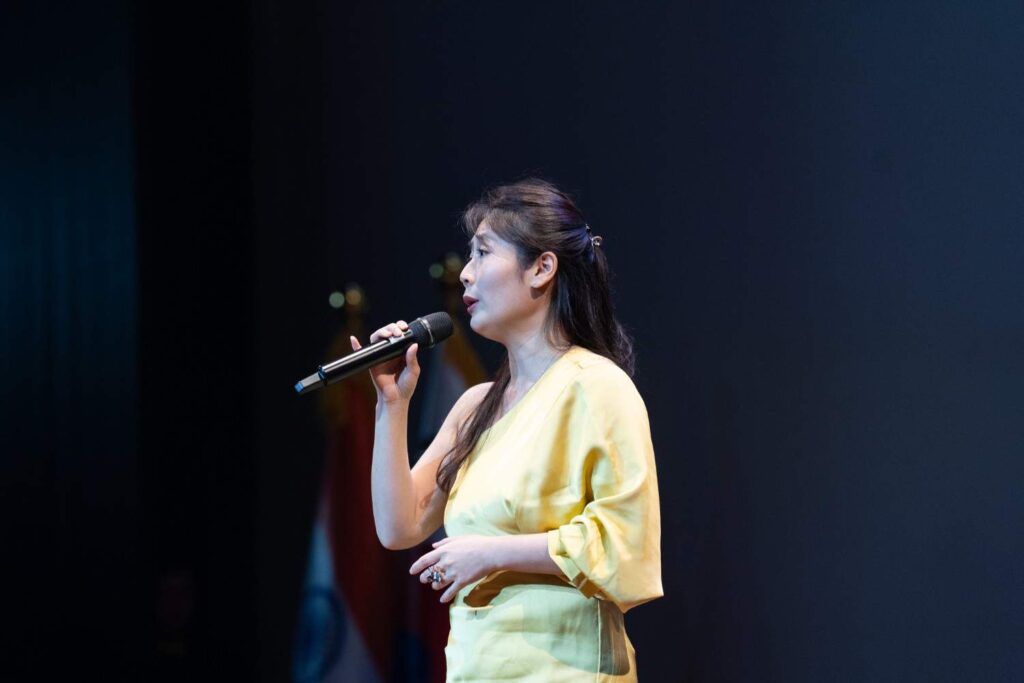
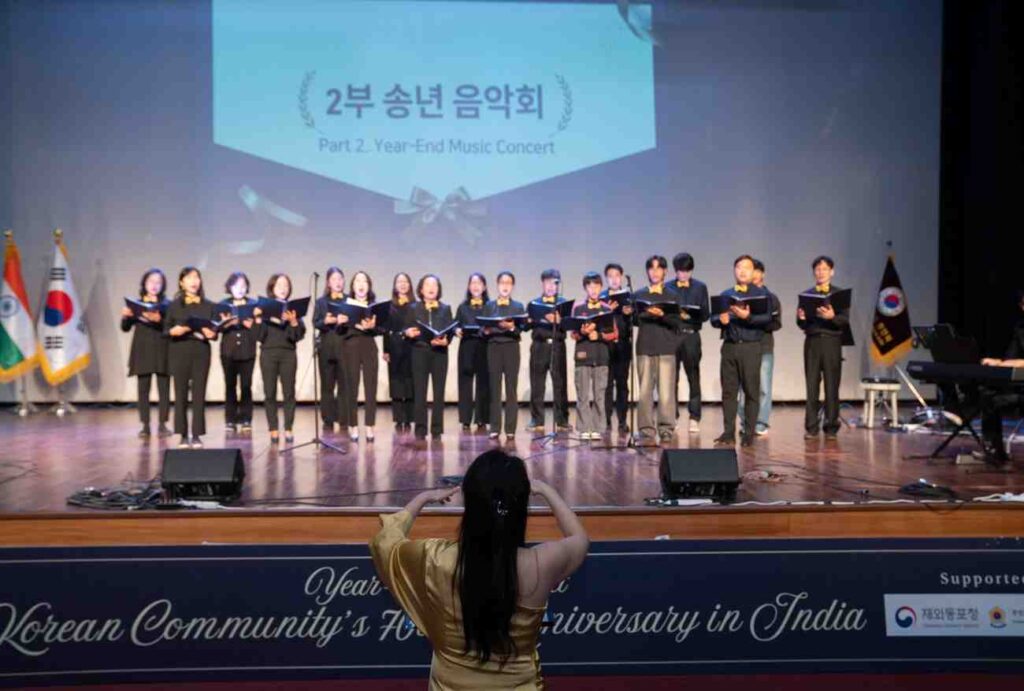
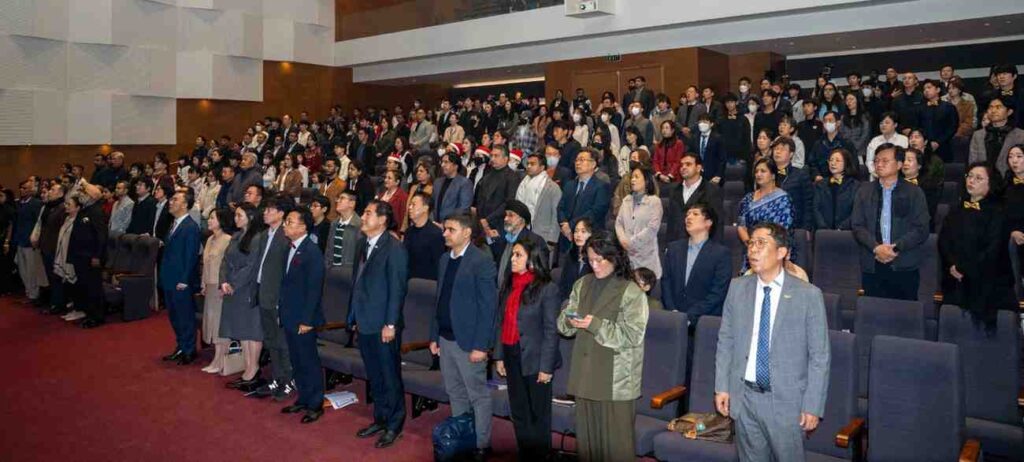
The cultural caravan then reached its ceremonial high point on Saturday, December 20, at the O.P. Jindal Auditorium, National Trust for the Handicapped, New Delhi. The evening unfolded not merely as a concert, but as a historic commemoration of seventy years of Korean settlement, contribution, and cultural exchange in India.
The formal ceremony opened with addresses by Lee Kwang-il, President of the Korean Association in India, followed by Ambassador Rajasekhar Chinthapally of India’s Ministry of External Affairs, Ambassador Lee Seong-ho, and Ambassador of the Republic of Korea to India, and Jagdip Singh, Honorary Consul General of the Republic of Korea. Their reflections traced the Korean community’s journey from its early days in post-independence India to its present role as a vital bridge in India–Korea relations.
 Adding further gravitas, congratulatory messages from Koh Sang-koo, President of the World Federation of Overseas Koreans, and Park Euy Don, Chairperson of the South Asia Council of the National Unification Advisory Council, reinforced the global significance of the moment. The ceremony was smoothly and engagingly led by Dr. Abraham Lee, MD & CEO of Atomy India, alongside Edward Seo, Zoey’s Metal and Trade, whose bilingual anchoring connected Korean and Indian audiences with ease.
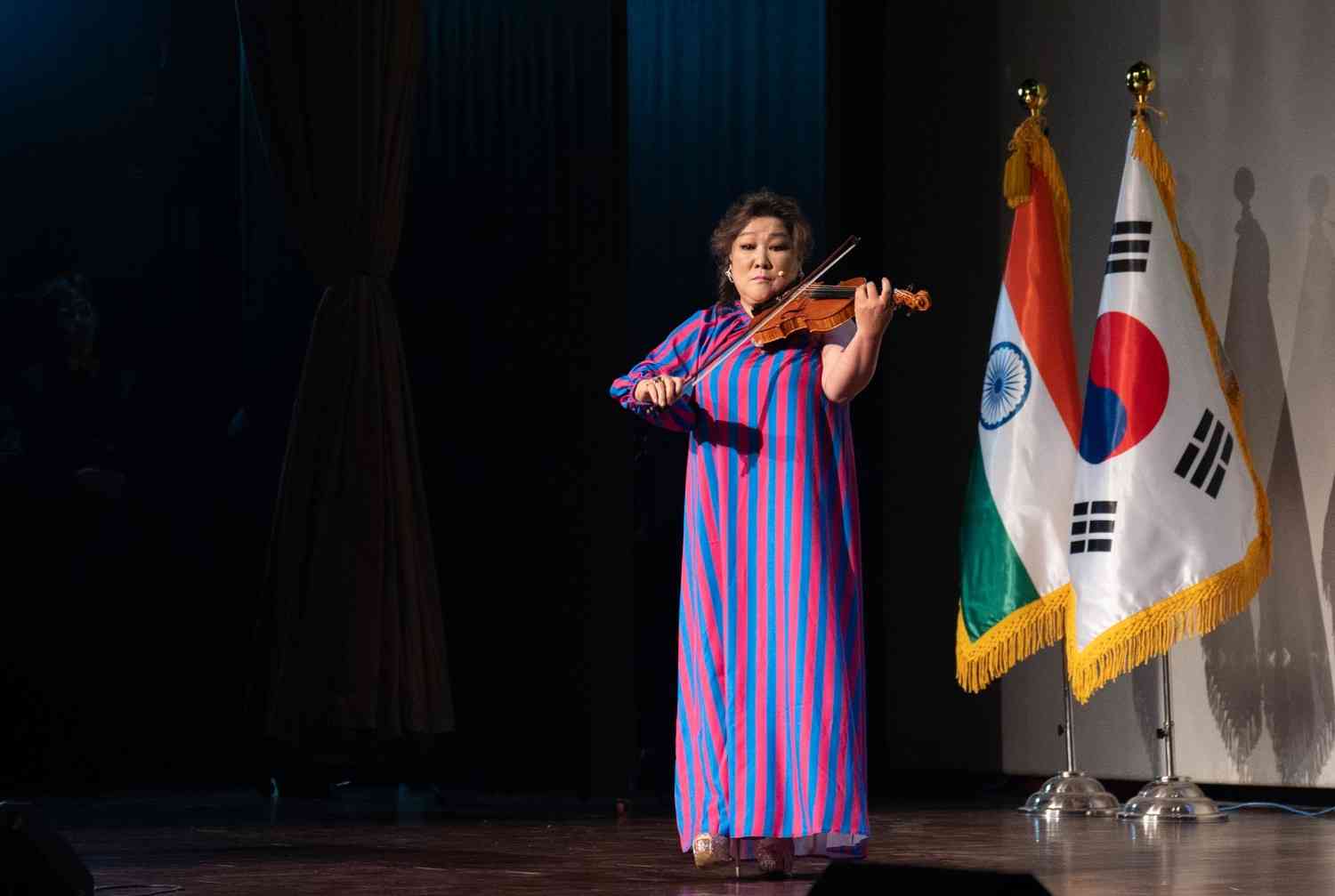
What followed was a concert that entered the annals of community history. Violinist Baek Jin-joo’s nuanced performance drew listeners into the emotional depth of Korean classical traditions, while soprano Yoo Kyungjin delivered a powerful vocal recital that transcended language, resonating with audiences across cultures. The evening reached a visual and emotional crescendo through contemporary dancer Im Jongkyung, whose movements embodied the evolution of Korean identity—from tradition to modern global expression.
 The event stood out not only for its artistic excellence but also for the breadth of community and corporate support that enabled it. Leading Korean and Indian enterprises, including Atomy, Korean Air, HSBC, MET City, Hyosung, Buddtree Management, Paldo, Shinhan Bank, Mirae C&A, Korikart, Spigen, SEELA, Alveo Dental Clinic, Hong Kong Restaurant & Bar, Lehem, IBS, ACN and others, played a pivotal role in supporting the celebration—reflecting the strong economic and people-to-people ties that now underpin India–Korea relations.
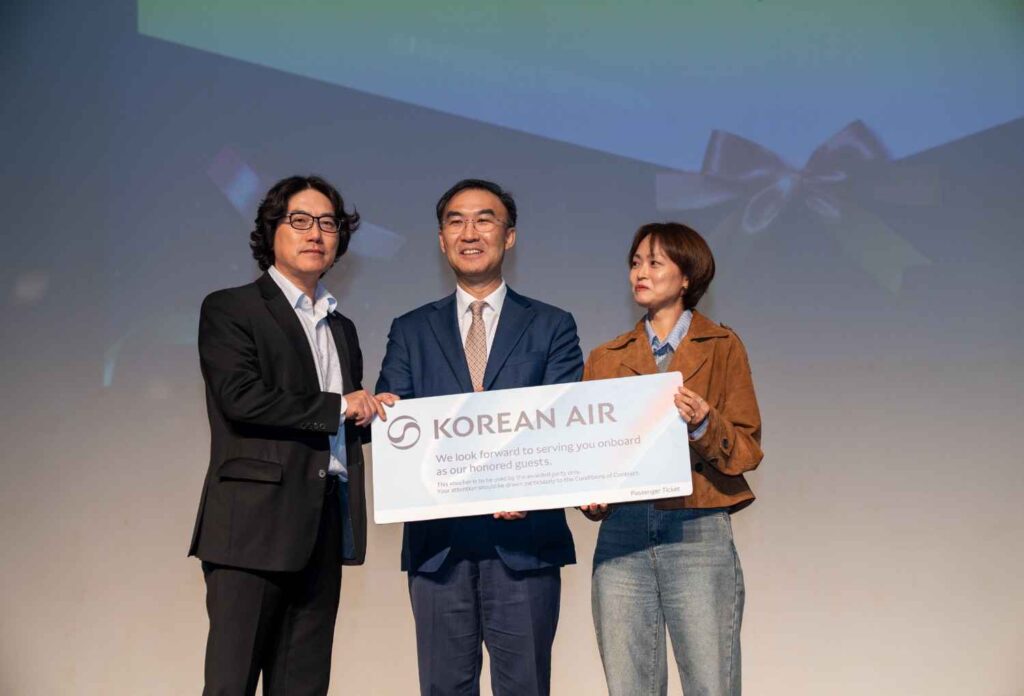
The third segment of the evening added a celebratory community touch, as a lucky draw session led by Yeon Du Seo, President of OCTA South West Asia, delighted attendees. The highlights included return air tickets supported by Korean Air, alongside numerous gifts contributed by Korean and Indian companies—underscoring the shared joy and collective ownership of the milestone.
 The celebrations continued on December 21 at Ambience Mall, Gurugram, where a specially curated public programme brought together violin, soprano vocals, contemporary dance, guitar, drum pad, and singers. Nearly 20 Korean expatriates—adults and children alike—participated in a coordinated flash mob, offering a moving visual of inter-generational continuity and the living future of the Korean community in India.
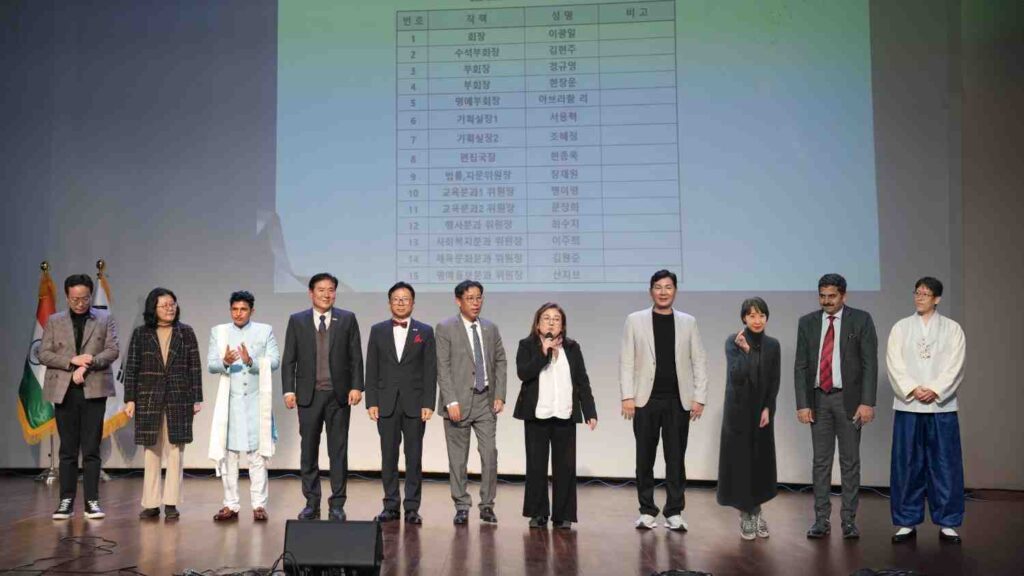 Taken together, the three-day celebrations were more than commemorative events. They represented a historic cultural affirmation—a reminder that Korean classical music and artistic expression have not merely arrived in India, but have matured, evolved, and found a lasting home here.
As the final notes faded, the Year-End Concert stood as a moment of collective gratitude for the past seventy years—and a confident, harmonious overture for the decades to come.