
East Meets East: How Indian Craftsmanship Embraces Japanese Minimalism at Crosby Project
Tamil Nadu-based luxury design firm bridges Asian design traditions to create globally relevant interiors

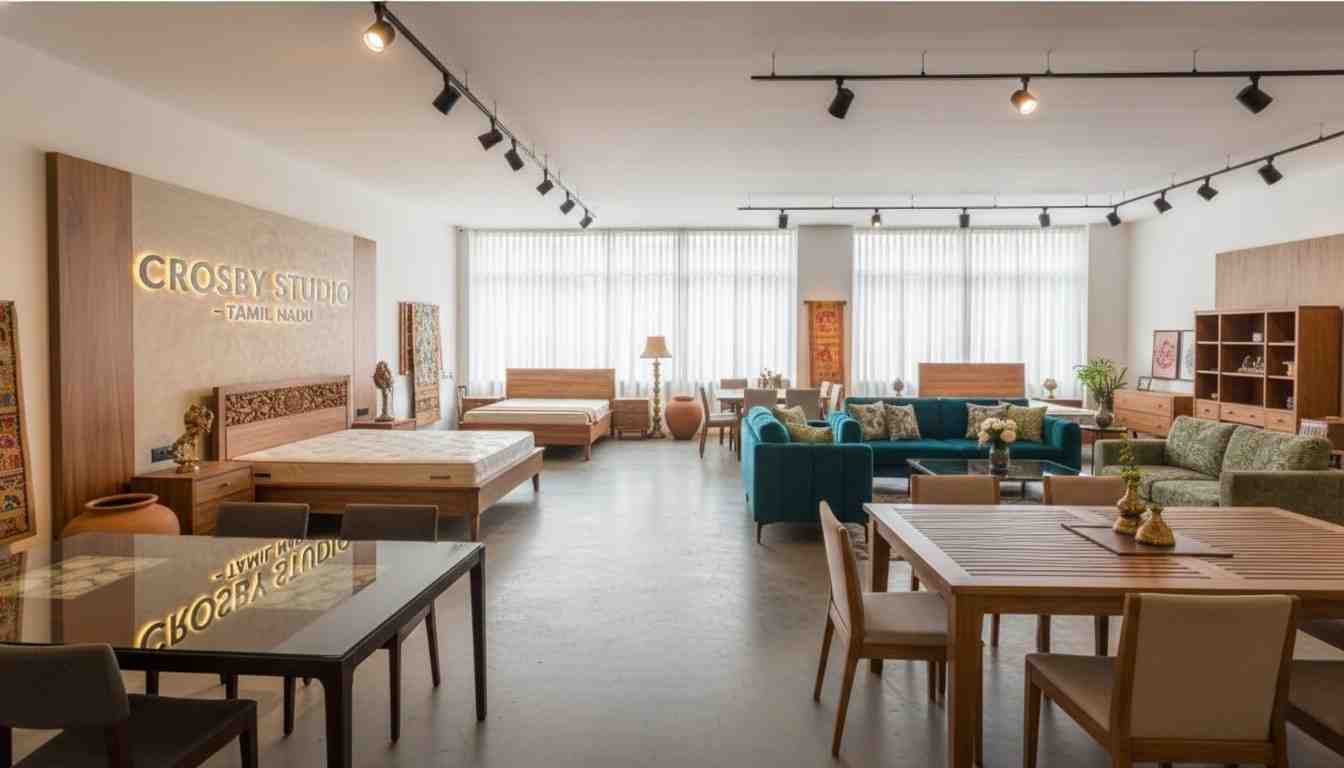
In Tamil Nadu’s artisan quarter, where traditional Indian woodworking tools meet the philosophical silence of Japanese-inspired design principles, Crosby Project is pioneering a revolutionary approach to luxury interiors—one that proves Asian design traditions can enhance rather than compete with each other.
The Philosophy of Less: The Japanese concept of ma—meaningful empty space—has transformed how Crosby approaches traditional Indian craftsmanship. Rather than filling every surface with intricate detail, their designs now breathe with purposeful restraint. “When we give traditional brass inlay work space to be appreciated, it becomes more powerful,” explains the design philosophy driving this cross-cultural synthesis.
This marriage of Japanese minimalism with Indian artisanal mastery creates what Crosby terms “conscious luxury”—spaces where every element earns its place through beauty, function, or cultural meaning.
Wabi-Sabi Meets Master Craftsmanship: The Japanese aesthetic of wabi-sabi—finding beauty in imperfection—has revolutionized Crosby’s approach to handcrafted furniture. Their Tamil Nadu workshop artisans now celebrate the natural variations that emerge from human touch: the subtle asymmetries in hand-carved details, the unique character marks in sustainably sourced wood, the gentle irregularities that distinguish handmade from machine-made.
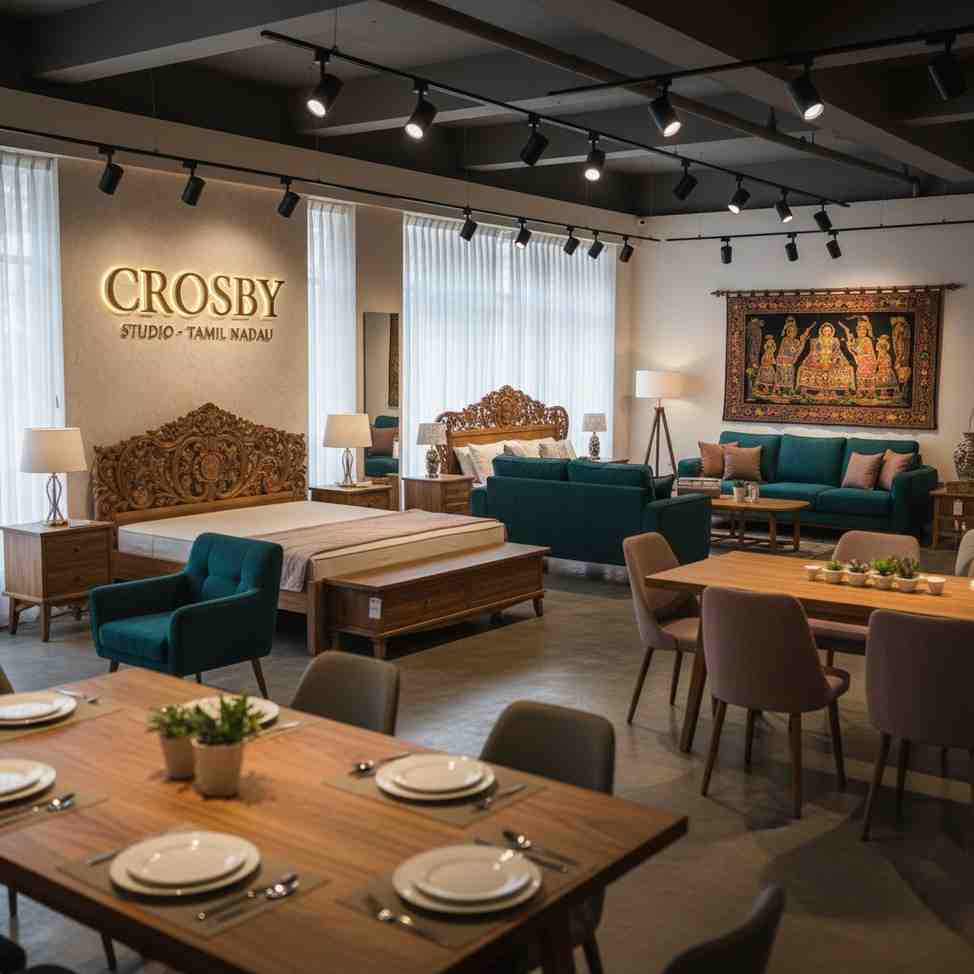
These “imperfections” align perfectly with Japanese appreciation for authentic human creation while honoring India’s centuries-old craft traditions. The result is furniture that ages gracefully, developing patina and character that machine production cannot replicate.
Sustainable Luxury Through Asian Wisdom: Japanese environmental consciousness—reflected in concepts like mottainai (regret over waste)—has deeply influenced Crosby’s sustainable manufacturing practices. Their workshop implements Japanese-inspired efficiency: utilizing every precious wood fragment, recycling metal shavings from brass work, and designing furniture for generational longevity rather than planned obsolescence.
This approach reflects the Japanese tradition of shokunin—master craftsmen who dedicate lifetimes to perfecting their art. Crosby’s artisan partnerships honor this philosophy, valuing accumulated wisdom and encouraging knowledge transfer between generations.
Tea Ceremony Principles in Daily Design: Japanese tea ceremony traditions—emphasizing mindful interaction with objects—influence every piece Crosby creates. Dining tables incorporate ichigo ichie (one time, one meeting) proportions that encourage intimate conversation. Custom seating adapts Japanese ergonomic principles developed through floor-sitting culture for contemporary lifestyles while maintaining essential human-furniture harmony.
Global Impact of Asian Design Synthesis: Crosby’s international projects demonstrate this East-meets-East philosophy’s global relevance. Manhattan apartments feature traditional Indian metalwork given Japanese spatial treatment. London penthouses showcase hand-carved screens with Zen-inspired placement creating contemplative focal points.
Western clients increasingly seek meaning beyond mere aesthetics, finding deep satisfaction in pieces embodying both artistic mastery and philosophical depth—something this Asian design synthesis delivers uniquely.

Beyond Cultural Boundaries: This cross-cultural approach represents broader Asian design leadership emerging globally. While Western luxury brands have long dominated international markets, Crosby’s success suggests Asian design philosophies can compete through authenticity and innovation rather than exotic imitation of European aesthetics.
Their work points toward luxury design’s future: inherently cross-cultural synthesis where Japanese restraint enhances Indian craftsmanship mastery, creating experiences satisfying both aesthetic desires and deeper human needs for meaning and connection.
A New Asian Luxury Language: In Crosby’s Tamil Nadu workshop, traditional Indian woodworking sounds blend with Japanese-inspired contemplative silence, writing a new luxury language that honors multiple pasts while speaking to global futures. This synthesis represents authentic cultural dialogue’s potential in our connected world—where Asian perspectives increasingly shape global luxury markets through wisdom rather than mere economic influence.
As Asia’s design confidence grows, brands like Crosby Project demonstrate that the future of luxury lies not in cultural dominance but in thoughtful synthesis, creating beauty that transcends geographical boundaries while honoring distinct traditions.
 Authored by: Parulh G Mahajan, Chief Designer, Corporate Strategy & Legal Professional, UCD | Ireland India Business Association