Trend Korea 2026 Lecture Examines Human–AI Synergy at the Korean Embassy in New Delhi
Organized by IBS at the Korean embassy, the special talk by Prof Kim Nan-do highlights 'Centaur talent' and human -in-the-loop- future in AI era.

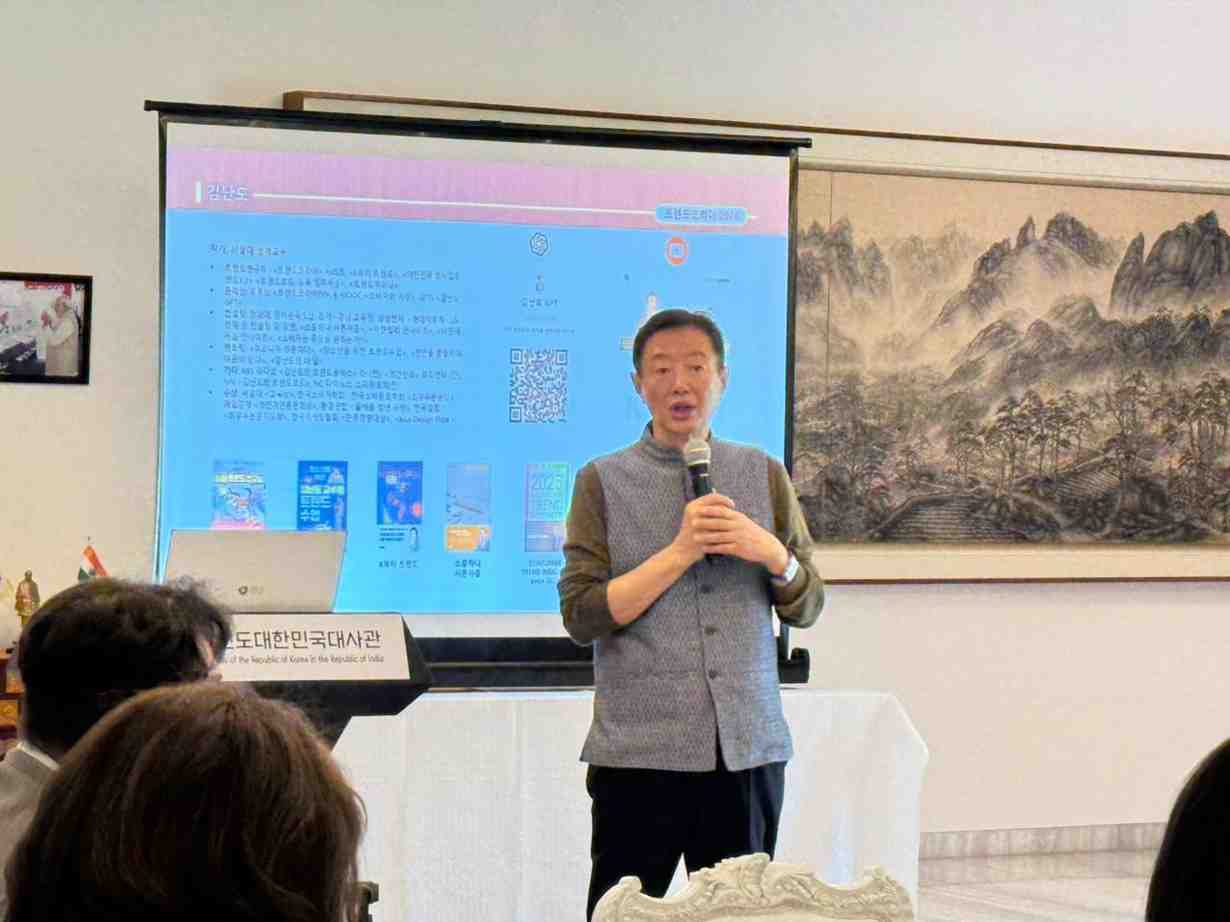
New Delhi, India — As artificial intelligence continues to reshape societies, economies, and everyday life, a special lecture at the Embassy of the Republic of Korea offered timely insights into how humans and technology can grow together rather than in opposition.
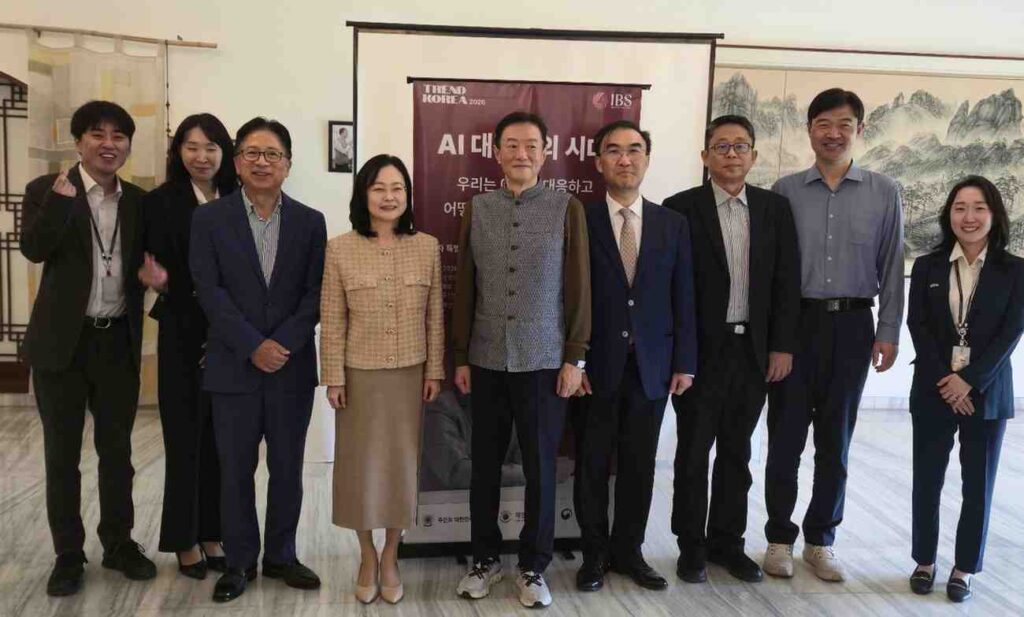
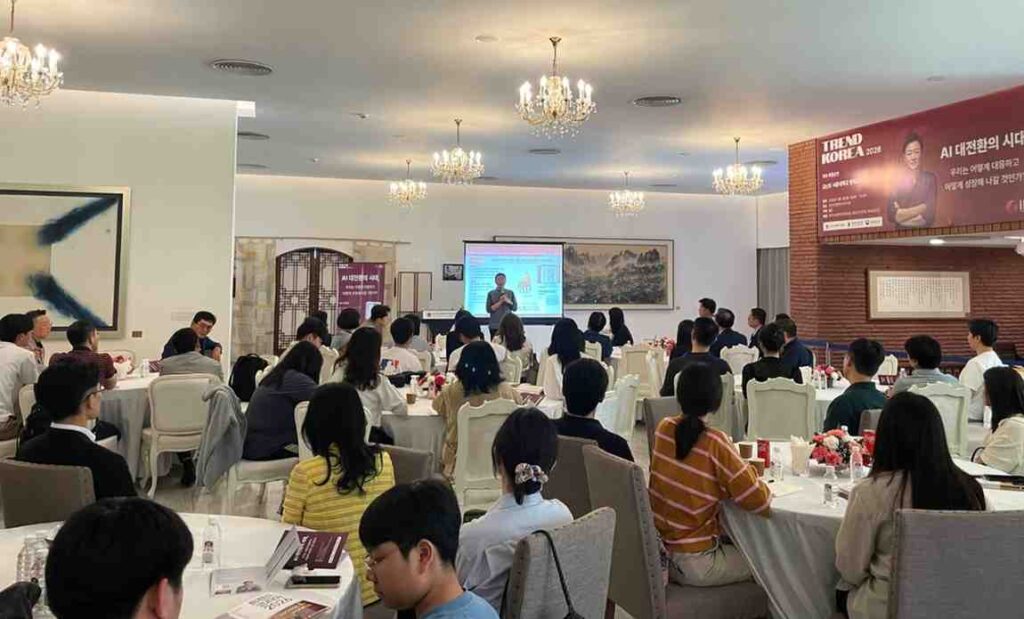 The event, titled “Trend Korea 2026: Special Author Lecture,” was held on Sunday and attended by Lee Seong-ho, Ambassador of ROK to India, Lee Kwang-il, President of Korean Association in India, Kim Dong-hyun, Director of KOTRA, New Delhi, Lee Jae-kyung, Head of GBC at KOSME, New Delhi. The event also brought together a large number of members of the Korean community, business leaders, academics, and observers of India–Korea relations for an in-depth discussion on the future of human–AI collaboration.
The lecture was organised by IBS – India Biz Solution, with the support of the Korean Association in India and the Overseas Koreans Agency. The gathering reflected growing interest in future-oriented discourse that goes beyond technological advancement to address human values, ethics, and adaptability in the age of artificial intelligence.
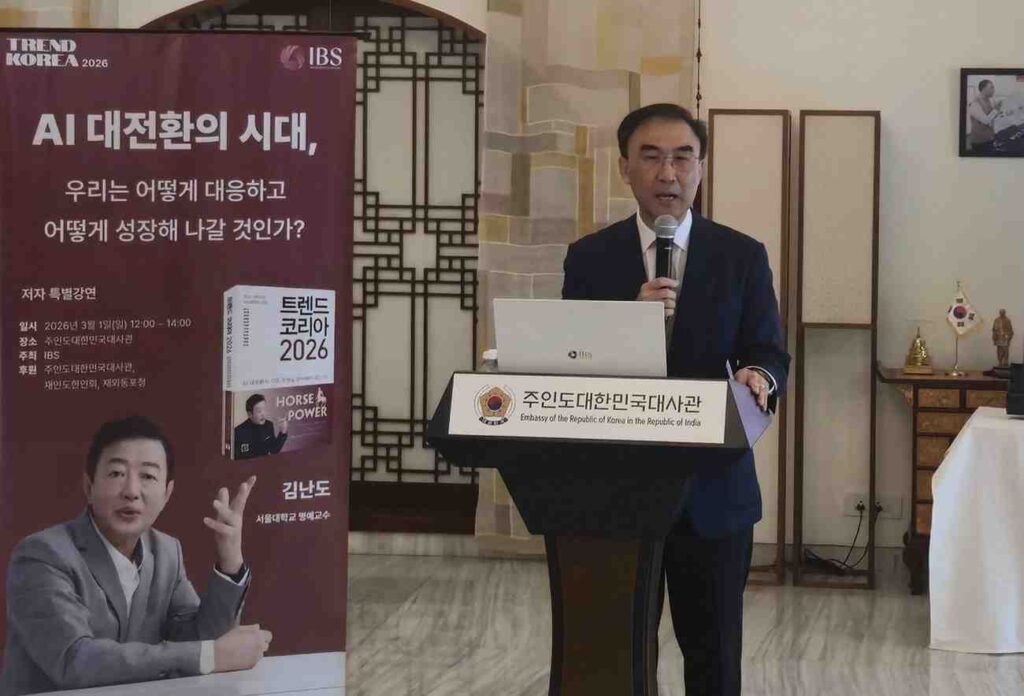
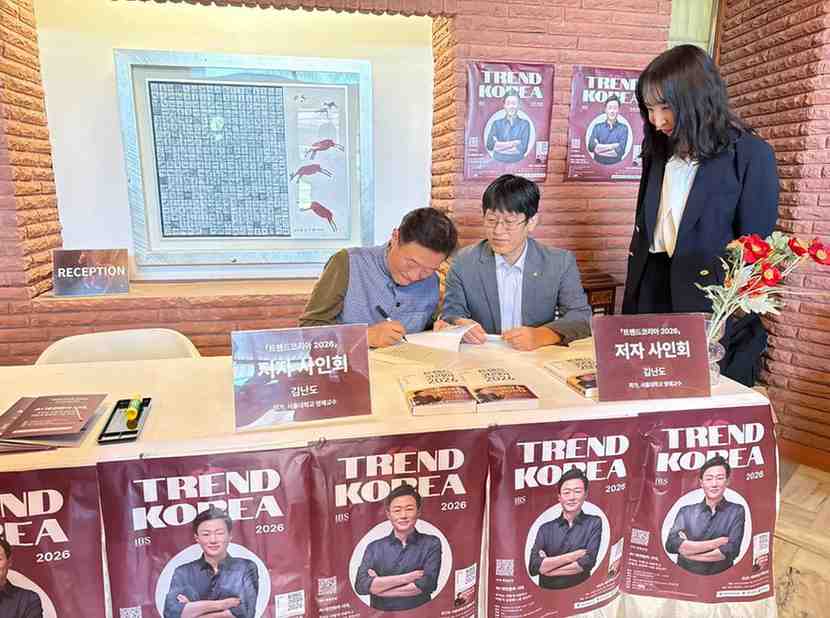
The keynote address was delivered by Kim Nan-do, one of South Korea’s most respected consumer trends experts and Professor Emeritus at Seoul National University. Prof. Kim is widely known as the leading author of the Trend Korea series, which has shaped public and business understanding of social and consumer trends in Korea for nearly two decades.
Understanding the “Great Transition Era of AI”: At the heart of the lecture was a fundamental question: “In the era of great AI transformation, how should we respond, and how will we grow?”
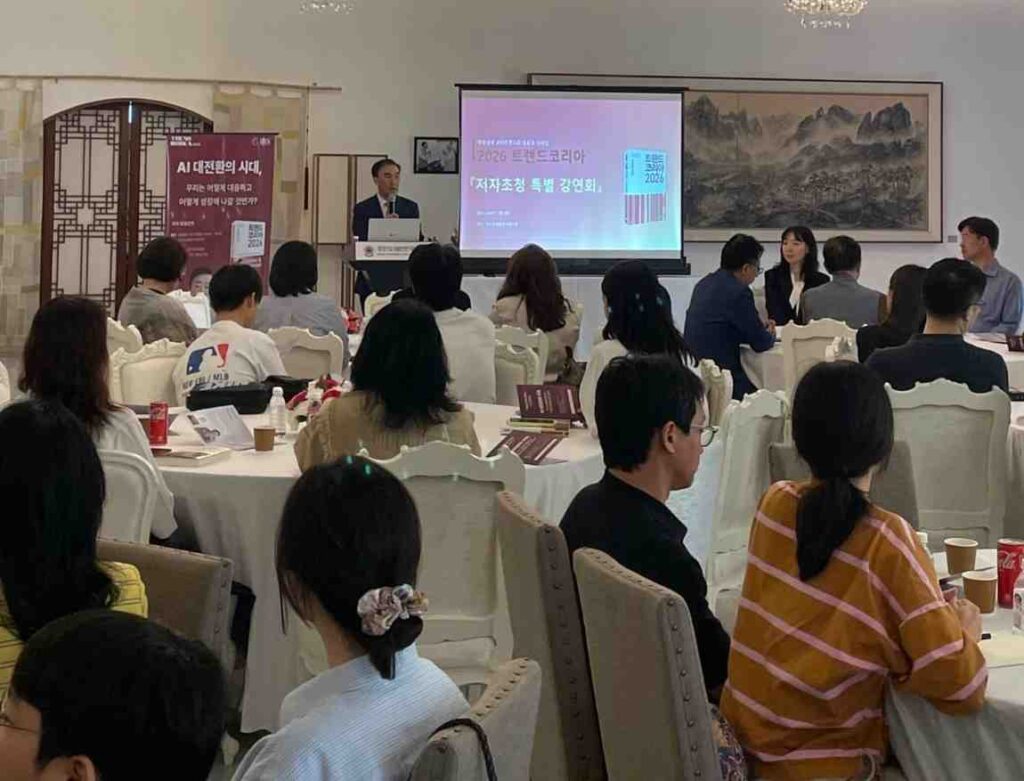 Prof. Kim explained that artificial intelligence represents not merely a technological shift, but a profound societal transition. While AI is rapidly changing the way people work, communicate, and make decisions, he cautioned against viewing the future solely through the lens of efficiency or automation. Instead, he encouraged participants to see this period as an opportunity to renew their focus on human strengths—judgment, creativity, empathy, and responsibility.
Drawing from insights in Trend Korea 2026, he outlined how upcoming societal trends reflect growing public awareness of the need to balance innovation with human-centered values. According to Prof. Kim, the most successful individuals and organisations in the coming years will be those that understand how to integrate AI as a partner rather than treat it as either a threat or a replacement for human capability.
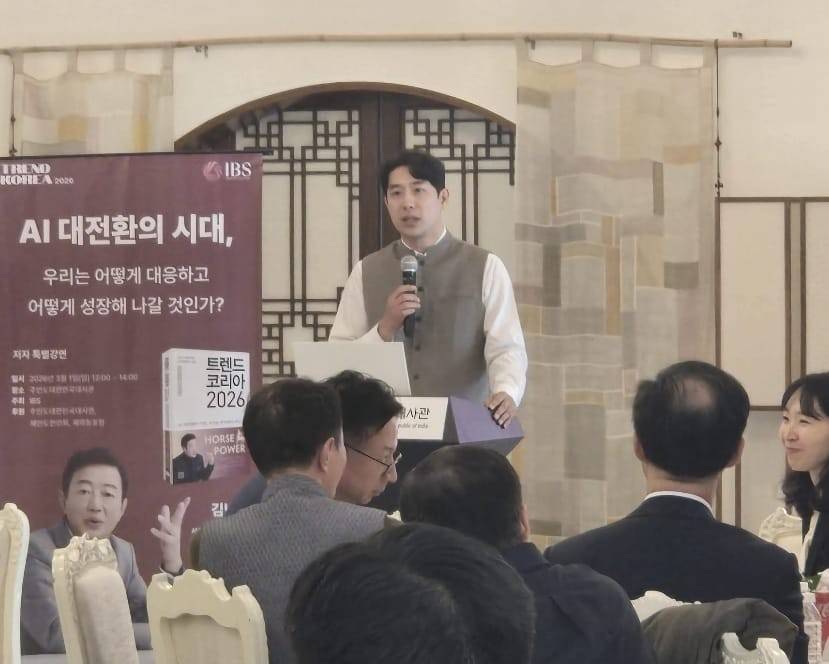 The Centaur Concept: Humans and AI Running Together: One of the most memorable frameworks introduced during the lecture was the concept of centaur talent. Prof. Kim used the centaur—half human, half horse—as a metaphor for the ideal relationship between people and artificial intelligence. Rather than humans competing against machines, the future, he argued, belongs to those who can combine human insight with technological power.
Using “Horse Power” as a symbolic theme for 2026 and referring to the Year of the Red Horse, Prof. Kim described the horse as a symbol of strength that remains responsive to human direction. In this metaphor, AI represents power and speed, while humans provide purpose, ethics, and meaning.
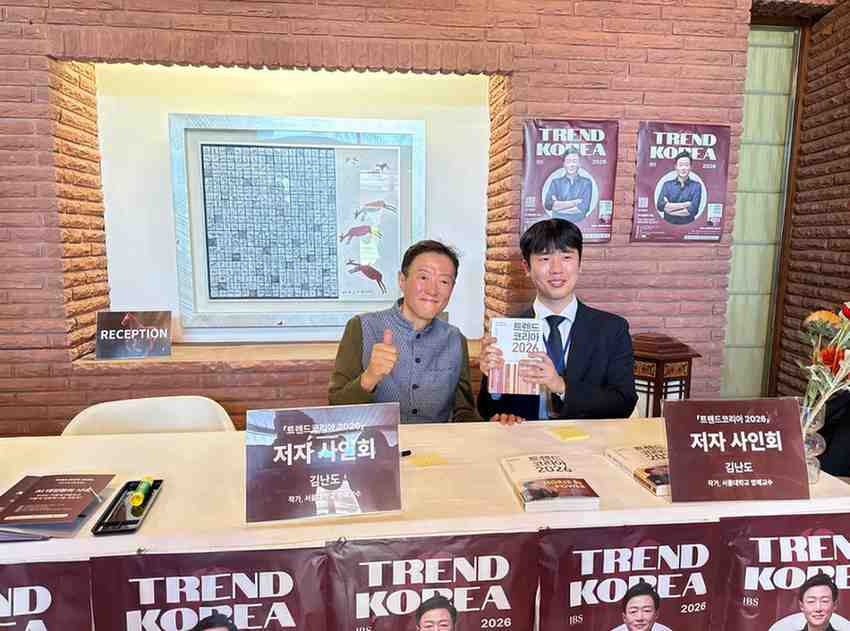 “Let us run through the AI era like a centaur,” he remarked, emphasizing the importance of harnessing both human wisdom and machine capability. This hybrid approach, he suggested, will define leadership, creativity, and productivity across industries—from business and education to policy-making and cultural production.
Human-in-the-Loop: Preserving Accountability and Ethics: Another central theme of the lecture was the growing relevance of the Human-in-the-Loop model in AI systems. Prof. Kim stressed that while automation can enhance efficiency, removing humans entirely from decision-making processes poses serious ethical and social risks.
He argued that human oversight is essential to ensure accountability, fairness, and adaptability, particularly in areas where AI systems influence critical outcomes. Rather than allowing algorithms to operate independently, Prof. Kim advocated for systems in which humans continuously monitor, guide, and refine AI outputs.
 This balanced approach, he explained, helps prevent over-dependence on technology while preserving innovation. It also reinforces the idea that AI should remain a tool guided by human values rather than an authority that dictates outcomes without context or moral consideration.
Speaker Profile and Global Influence: Prof. Kim Nando’s influence extends well beyond academia. During his tenure at Seoul National University’s College of Human Ecology, he led the Consumer Trend Analysis Center and played a key role in shaping public understanding of evolving consumer behaviour in Korea.
He has advised government institutions, global corporations, and major conglomerates, including Samsung Electronics and Hyundai Motor Company. In recent years, he has also expanded his engagement with the public through digital platforms such as Trend Korea TV, where he explores future trends, social change, and the evolving role of AI in forecasting and analysis.
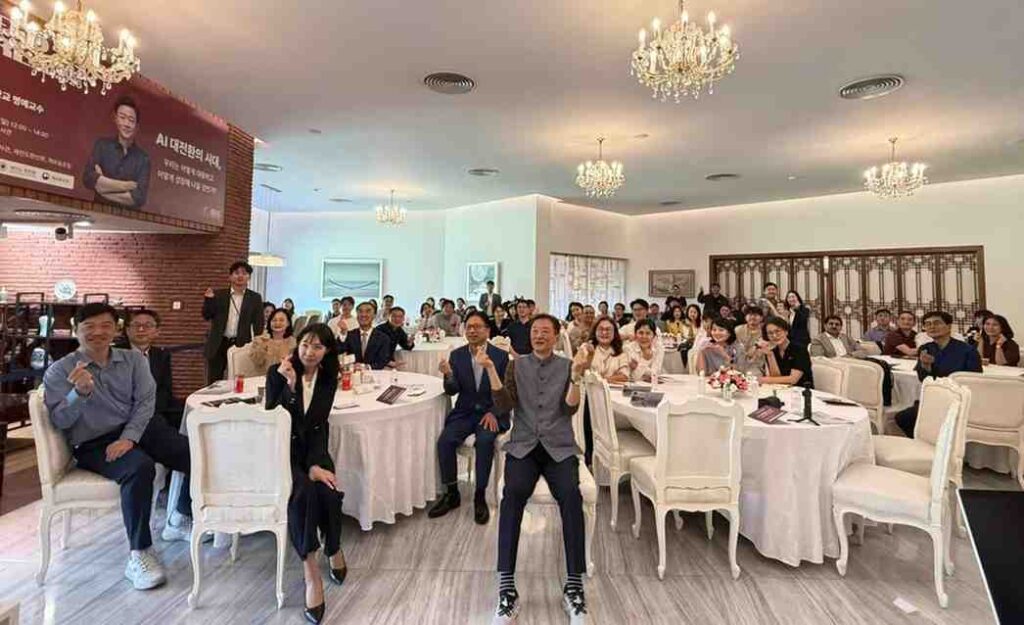 Korea–India Dialogue in the Age of AI: The lecture also underscored the strengthening intellectual and cultural exchange between Korea and India. As India rapidly emerges as a global hub for artificial intelligence, software development, and digital innovation, conversations around ethical AI and human-centric design are becoming increasingly relevant for bilateral cooperation.
The event highlighted the role of Korean institutions and the Korean community in India in fostering dialogue that goes beyond business and trade. By creating platforms for thought leadership and future-focused discussion, such initiatives contribute to deeper mutual understanding between the two countries.
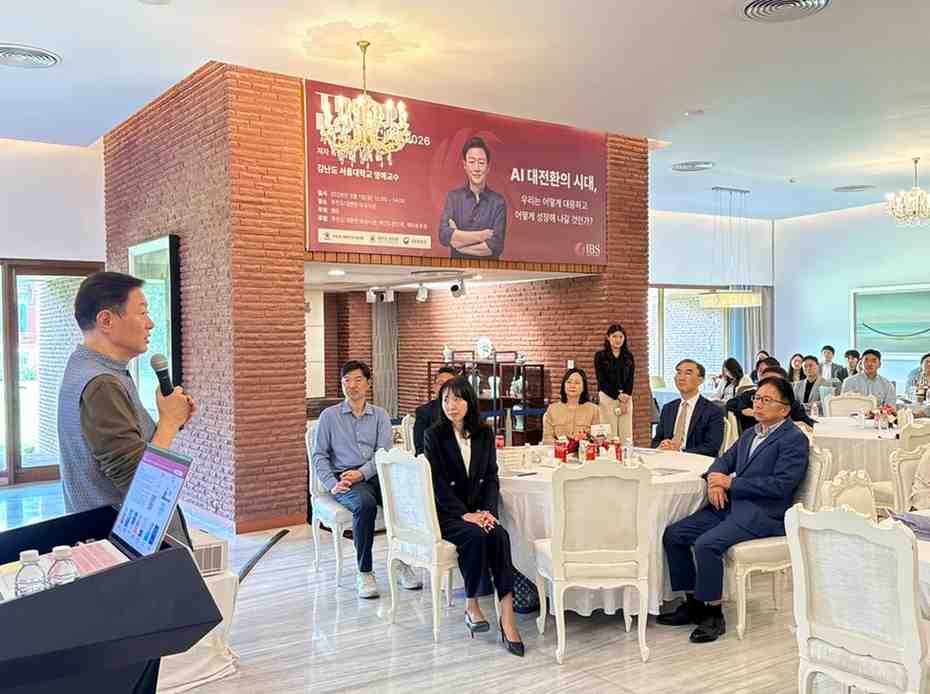 Participants noted that discussions on human–AI collaboration resonate strongly in both societies, particularly as governments, businesses, and educational institutions seek sustainable and inclusive models of technological growth.
Looking Ahead: The Trend Korea 2026 lecture concluded with a clear message: the future of AI will not be determined by technology alone, but by how humans choose to engage with it. By embracing centaur-type talent and preserving the human-in-the-loop principle, societies can ensure that innovation remains aligned with human dignity, ethics, and long-term well-being.
As Korea and India continue to deepen cooperation in technology and knowledge exchange, such conversations are expected to play an increasingly important role in shaping a shared, human-centered digital future.