EXCLUSIVE: Korean Corporate Presence in India Pegged at 678 Firms After Fresh Survey
It’s official now: While business estimates have often suggested that over 1,000 Korean firms in India, when subsidiaries and supplier units are included, the new survey offers a more conservative and verified baseline.

New Delhi, India: The number of Korean companies operating in India has now been officially established at 678, putting to rest long-standing speculation about the actual size of Korea’s corporate footprint in the country. Addressing a public gathering, Lee Seong-ho, Ambassador of the Republic of Korea to India, said that a recent comprehensive survey confirmed the presence of 678 Korean companies currently operating across India.
“The number could be slightly higher, as some companies have yet to formally report their operations to relevant agencies such as the Korea Trade and Investment Promotion Agency (KOTRA) and the Korea International Trade Association (KITA). However, based on verified data so far, we have confirmed 678 Korean companies in India,” the Ambassador said.
In 2025, KOTRA and KITA, with the support of the Embassy of the Republic of Korea and other related agencies, conducted a large-scale survey to map Korean business activity across India. The exercise aimed to improve the clarity and accuracy of official estimates, which have varied widely in recent years.
Despite this effort, officials acknowledge that the exact number of micro-businesses and small ventures—including Korean restaurants, grocery stores, beauty and cosmetics outlets, educational services, and travel-related businesses—remains difficult to quantify, as many operate on a small or informal scale.
South Korea’s Expanding Corporate Footprint
South Korea’s corporate and community presence in India has expanded dramatically over the past seven decades, evolving from almost no presence in the 1950s to a dense network of companies and a visible diaspora today. From automobiles and smartphones to steel and consumer electronics, Korean firms now rank among the most influential foreign investors in India’s consumer and industrial economy.
Early Links and Diplomatic Backdrop
Although formal diplomatic relations between India and the Republic of Korea consolidated after the Korean War, the 1950s and 1960s were largely characterised by political engagement rather than commercial activity. India’s role in Korean War diplomacy and its participation in the 1953–54 peace and repatriation processes laid the political foundation for a relationship that would only translate into substantial economic and people-to-people exchanges decades later.
Take-off of Korean Corporates in India
The real expansion of Korean corporate activity began in the late 1980s and 1990s, when South Korean conglomerates started viewing India as a strategic market alongside Southeast Asia. Flagship investors such as Samsung, Hyundai, LG, and POSCO leveraged India’s economic liberalisation to establish manufacturing bases, research and development centres, and extensive retail networks. Their success created a template for later Korean entrants in sectors ranging from logistics and finance to heavy industry.
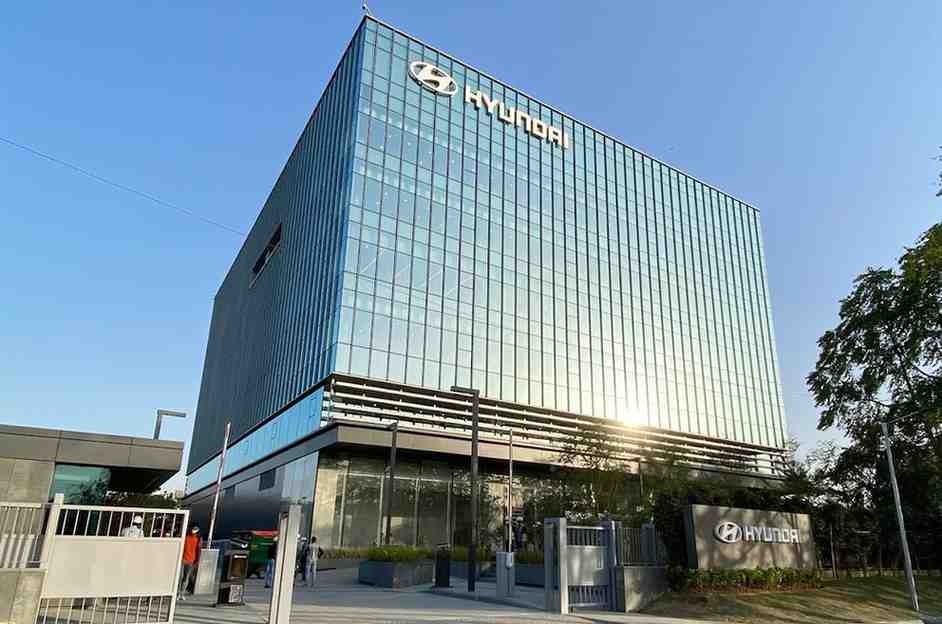
Samsung today operates major manufacturing facilities in Noida and Chennai and sells through more than 200,000 retail outlets nationwide, with smartphones forming its largest revenue segment in India. Hyundai Motor India has developed one of its most important overseas hubs in the country, positioning India as a major export base for small and mid-sized vehicles. LG and other electronics manufacturers entrenched themselves early in home appliances and consumer electronics, helping build the perception of “Korean quality” among Indian consumers.
Scale, Competition and New Investment Push
Over time, Korea’s corporate presence in India has grown from a handful of large firms into a broad ecosystem of multinational corporations, small and medium enterprises, suppliers, and service providers embedded in India’s industrial clusters. While business estimates have often suggested that more than 1,000 Korean companies operate in India when subsidiaries and supplier units are included, the new survey offers a more conservative and verified baseline.
India has also created a dedicated “Korea Plus” investment facilitation desk, underscoring the strategic importance New Delhi places on Korean capital, technology, and expertise in sectors such as manufacturing, infrastructure, electric vehicles, and electronics.
Sectoral Spread Across the Indian Economy
Korean firms today are active across almost every major segment of India’s urban and industrial economy. In automobiles, Hyundai Motor India and Kia India anchor a strong Korean presence, using Chennai and Anantapur as key production and export hubs. In electronics, Samsung and LG continue to dominate several product categories, while steel and heavy industry players such as POSCO operate multiple processing and distribution centres across major Indian cities.
Alongside these flagship corporations, Korean financial services companies, logistics providers, auto component manufacturers, gaming firms, and technology investors are increasingly visible across industrial parks and commercial hubs from Delhi–NCR and Maharashtra to Tamil Nadu and Gujarat.
Growing Korean Diaspora in India
Parallel to corporate expansion, the Korean community in India has grown steadily from a small expatriate population into a more established diaspora concentrated in major metropolitan and industrial centres. Korean nationals primarily reside in Delhi–NCR, Chennai and Tamil Nadu’s industrial belt, Maharashtra, Goa, and Karnataka. Official estimates place the Korean population in India at over 15,000.
Over the past 70 years, the community has diversified beyond diplomats and senior executives to include engineers, middle-management professionals, entrepreneurs, students, small business owners, and long-term residents with families. Korean associations, churches, and community organisations in cities such as Delhi, Chennai, Pune, and Bengaluru play an active role in cultural preservation, language education, welfare activities, and business networking.
From Political Solidarity to Economic Interdependence
Seven decades after the Korean War and the 1954 Geneva processes, India–Korea relations have evolved far beyond diplomatic symbolism. The presence of hundreds of Korean companies and a thriving diaspora now represents a complex web of manufacturing bases, value chains, cultural exchanges, and long-term migration—binding the two Asian democracies in ways that would have been unimaginable in the mid-20th century.