From K-Drama Fandom to Business Deals, KOCCA Builds a Long-Term India Entry Pipeline
A sequence of buyer briefings, business conventions, consultations and MoUs suggests that Korean content engagement with India is moving from cultural popularity towards structured commercial partnerships

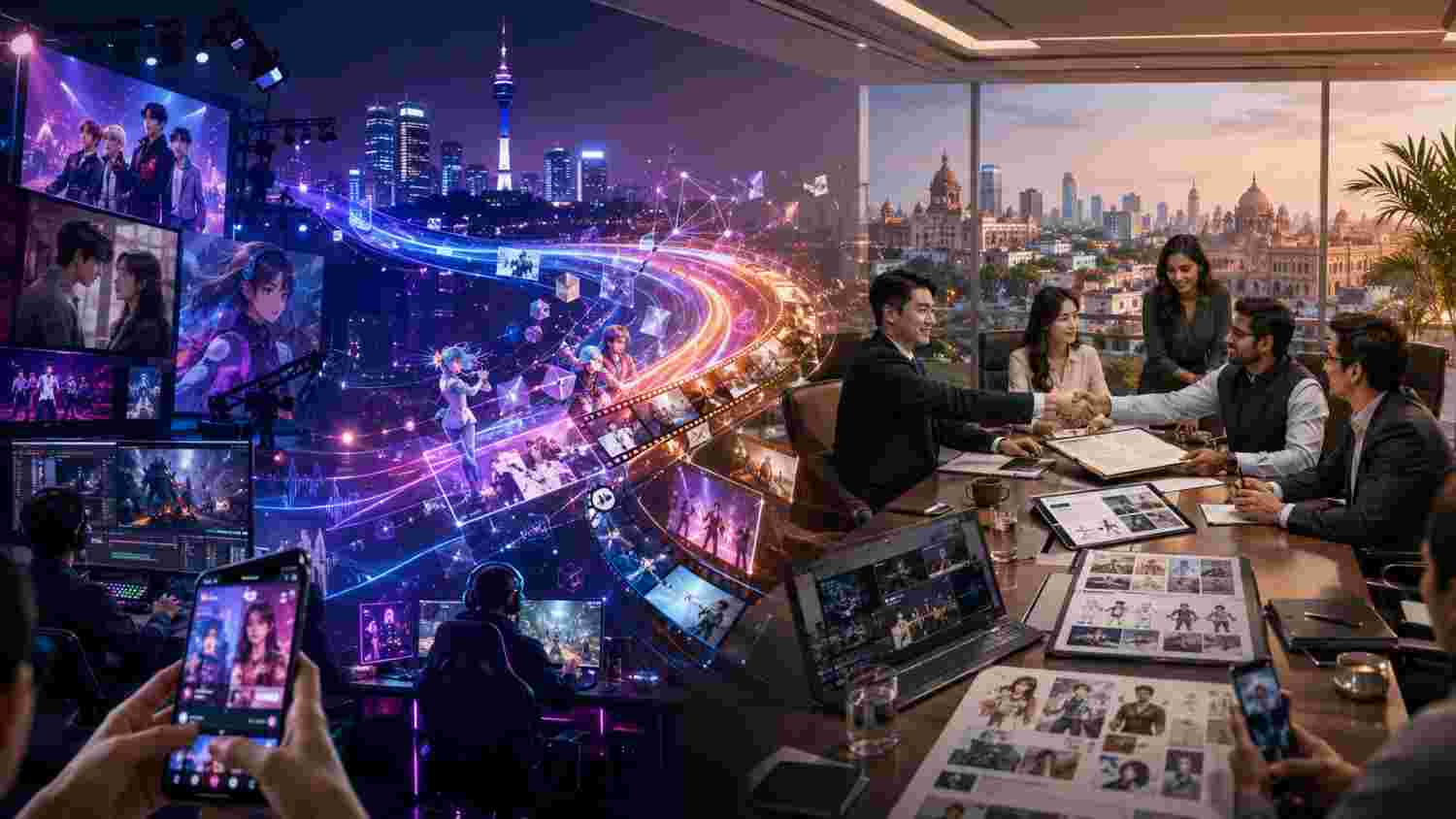
New Delhi: Korean dramas, music and digital entertainment have already won a sizeable audience in India. The next challenge for South Korea’s content industry is to convert that cultural popularity into distribution agreements, licensed intellectual properties, co-productions and businesses designed specifically for the Indian market.
The Korea Creative Content Agency, or KOCCA in India, led by its director Kim Young Soo, is now laying the foundation for that transition through a phased market-development strategy connecting Korean creators with Indian buyers, producers, platforms, investors and distributors.
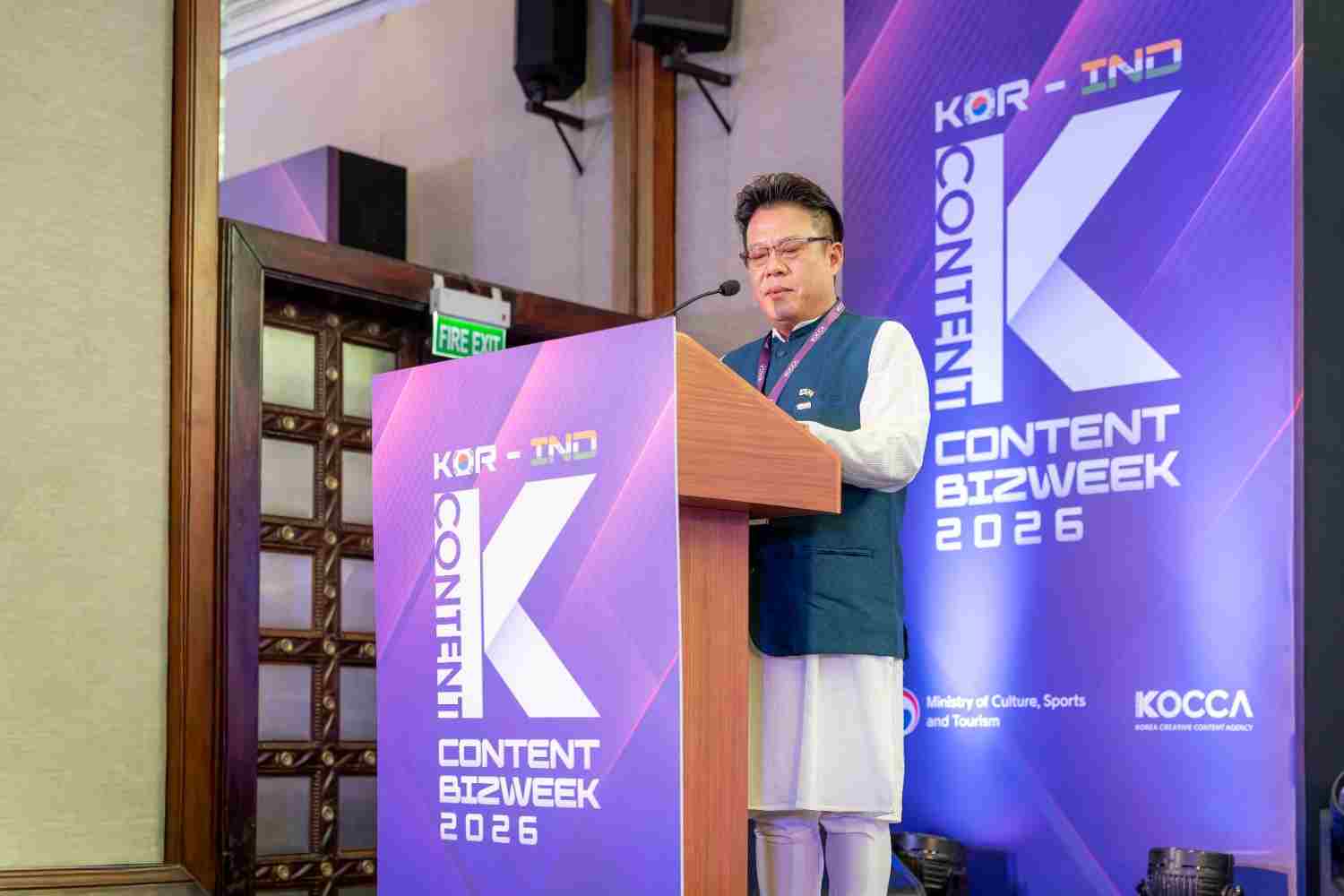 The conclusion of the 2026 Korea–India K-Content BizWeek in New Delhi marked the most advanced stage of this effort so far. Held from August 31 to September 2 at Hyatt Regency Delhi, the programme brought together 20 Korean and 73 Indian content companies and generated 320 one-to-one export consultation meetings. The business-matching system could accommodate up to 360 meetings, with each Korean participant eligible for up to 18 discussions.
More important than the volume of meetings was the continuity behind them. BizWeek was not organised as an isolated showcase but as part of an emerging pipeline through which KOCCA identifies Indian partners, facilitates initial conversations and then supports negotiations until they produce contracts and market entry.
That model could prove critical in India, where an enormous audience of 1.47 billion people offers opportunity but also demands substantial localisation, pricing flexibility, regulatory understanding and reliable distribution.
 Building the market in stages: KOCCA India began the year by holding a business briefing for Indian buyers in February. The programme introduced KOCCA India Business Center’s initiatives to the country’s animation, visual effects, gaming, comics and extended-reality—or AVGC-XR—industry while identifying companies capable of working with Korean content owners.
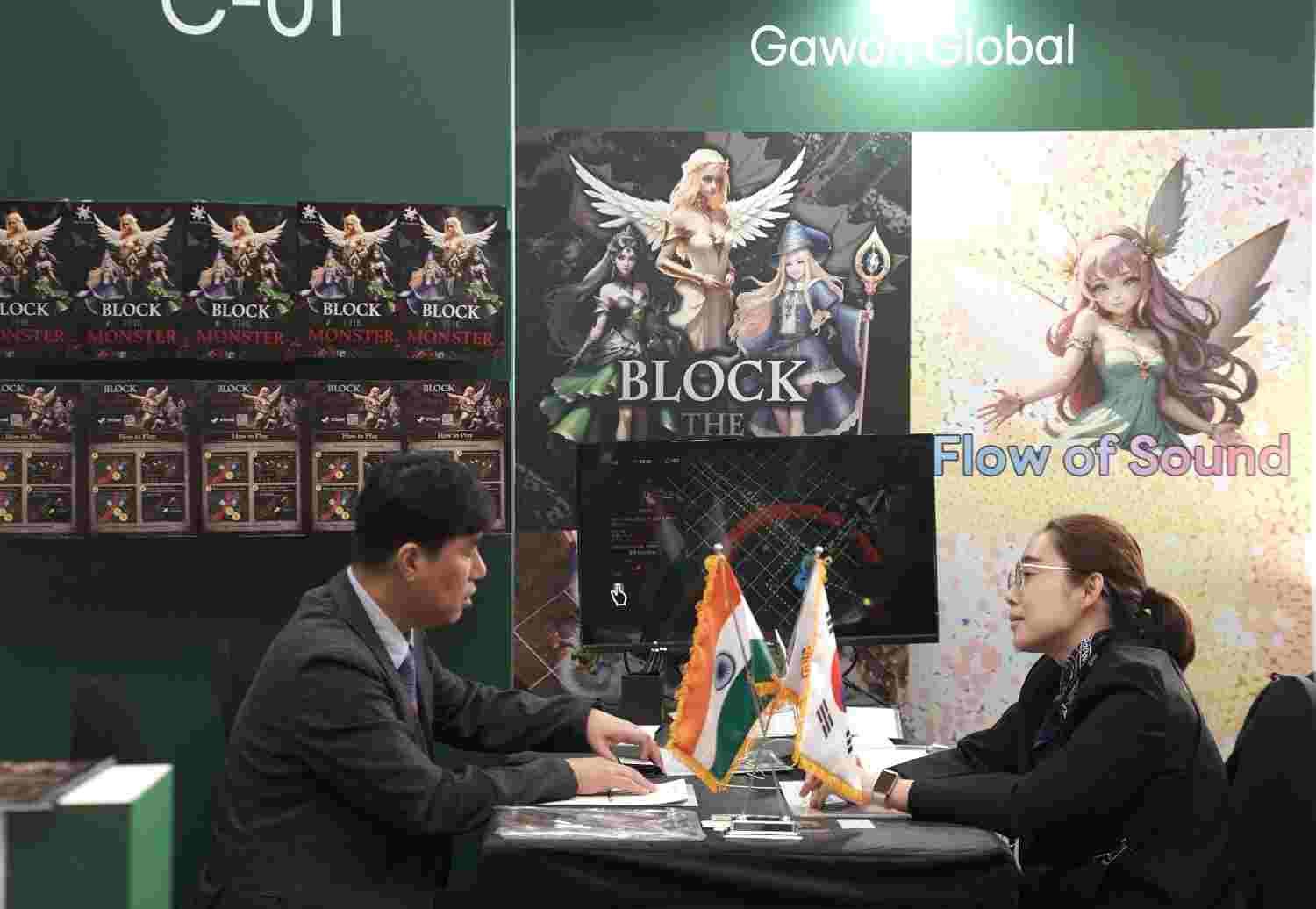
The next stage came in May with the 2026 Korea–India K-Content BizCon in Mumbai. It assembled 46 Korean and Indian companies, generated 94 export consultations valued at an estimated US$11.41 million, and resulted in five MoUs covering intellectual-property licensing and infrastructure cooperation.
BizWeek subsequently brought Korean companies back into detailed negotiations with Indian businesses identified through those earlier exercises. Further MoUs involving Indian counterparts, including PINK-BOX Entertainment and Star Entertainment, indicated that some discussions were already moving beyond introductions.
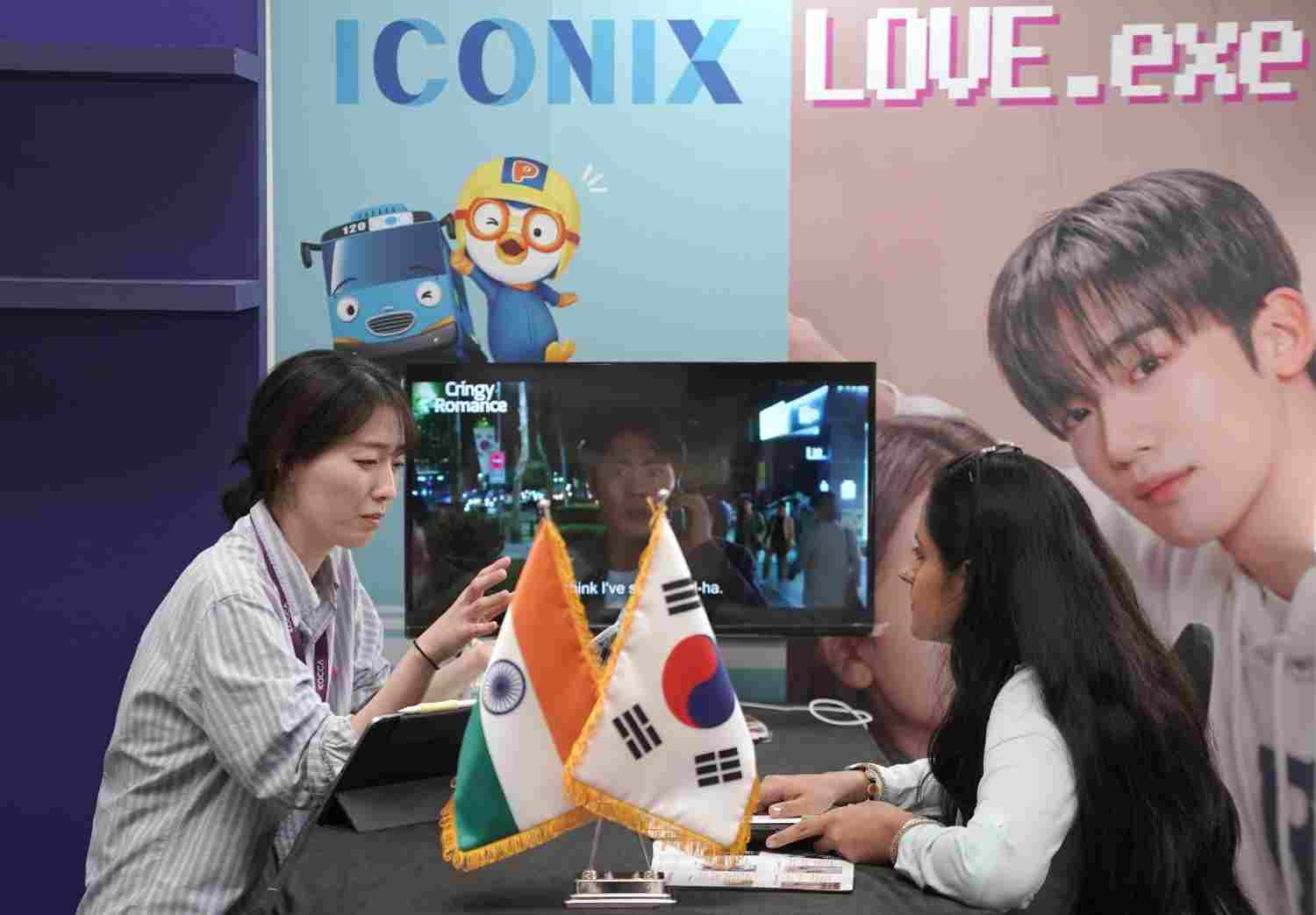 Taken together, the three programmes demonstrate a deliberate progression: buyer identification in February, business matching in May, and deeper negotiations in New Delhi in September. The next test will be whether these meetings and MoUs produce signed licensing arrangements, Indian distribution, locally adapted content and sustained revenue.
KOCCA President Kim Yoon-ji said the India Business Center would continue supporting Korean companies across the entire process—from identifying local partners and facilitating discussions to contract negotiations and follow-up cooperation.
“The 2026 Korea–India K-Content BizWeek provided a platform to advance potential partnerships between Korean content companies and local companies identified through our ongoing efforts into concrete business discussions and commercial agreements,” she said.
Indianisation will determine success: The approach also reflects an important recognition: Korean content cannot rely solely on the existing popularity of the Korean Wave to succeed commercially in India.
The India Market Entry Strategy Forum therefore addressed some of the practical difficulties that companies encounter after their initial enthusiasm for the market.
 Lee Min-woo of KRAFTON India discussed localisation strategies adopted by global gaming companies, while Kim Gyu-jin, Executive Director at Samil PwC, explained Indian tax policies and the business environment. Kim Young-soo, Director of the KOCCA India Business Center, outlined the characteristics of India’s content market and the considerations Korean companies must address before entering it.
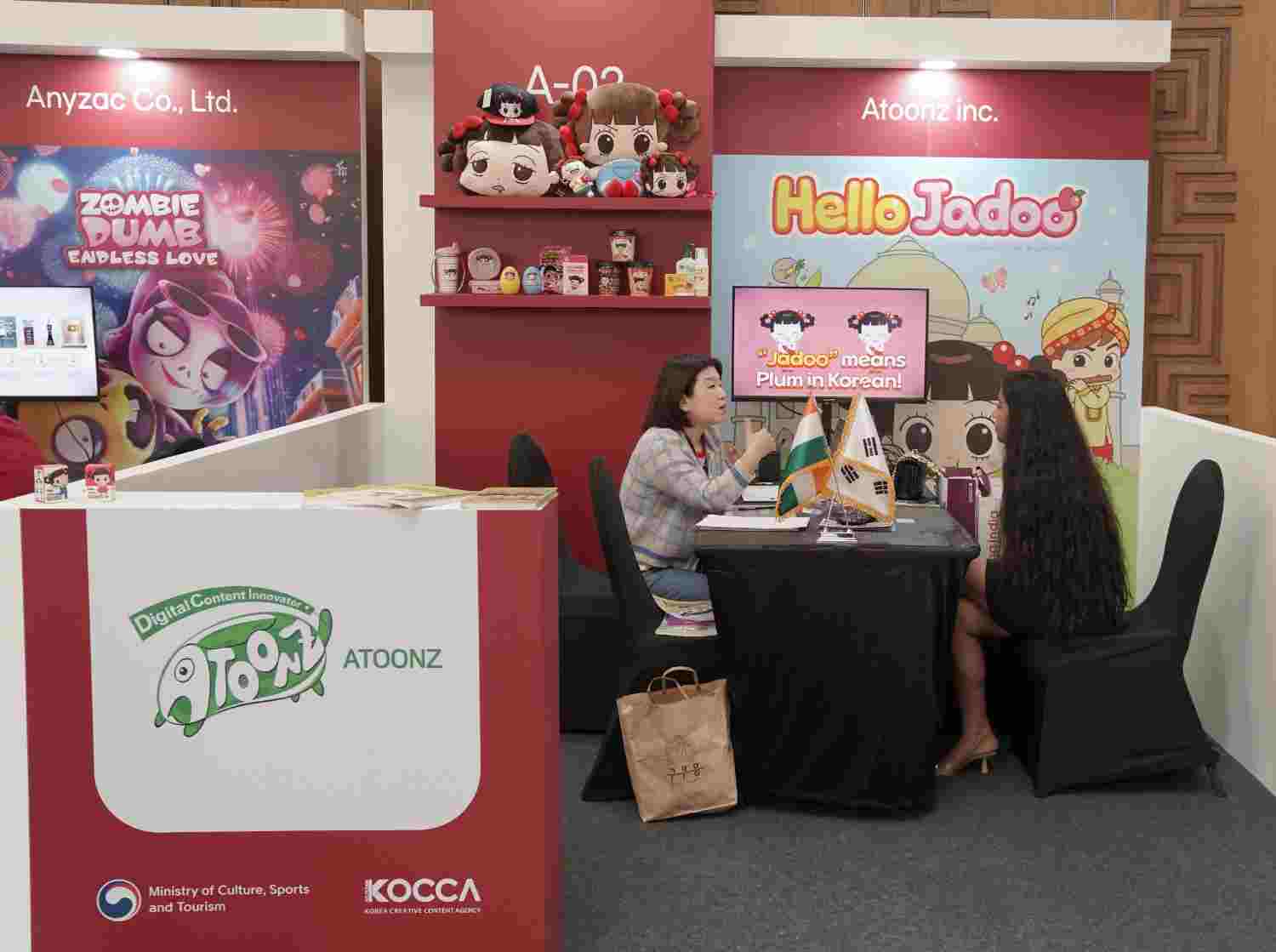
All 20 Korean participants received specialist advice on legal matters, company incorporation and taxation; trademarks and intellectual-property protection; trade and commerce; publishing and distribution; and gaming.
This focus on execution may ultimately prove more valuable than simply promoting Korean titles. India is not a single-language market, and content that succeeds in Seoul may need new languages, formats, pricing models and distribution partners to connect with audiences in Delhi, Mumbai, Bengaluru, Chennai or smaller cities.
Future Korean expansion is therefore likely to depend increasingly on Indian collaboration—not only to distribute finished products but also to co-create stories and characters suited to local preferences.
AI opens a new collaboration frontier: Artificial intelligence emerged as another potential bridge between the two industries.
Content Saero presented “K-Short Form & AI Animation, Built for India,” NewUniverse showcased AI-driven drama production and its global intellectual-property portfolio, while Sharebox introduced an AI-powered immersive-space platform used by leading international properties.
Their presentations suggested that the next phase of Korean content in India may extend beyond K-dramas and music into short-form entertainment, animation, character licensing, immersive experiences and AI-assisted production.
The Spotlight on K-IP session similarly allowed 10 Korean companies from animation, character IP, broadcasting and gaming to present flagship properties, forthcoming titles and their preferred partnership models before entering individual negotiations with Indian buyers.
Indian participants represented broadcasting, OTT platforms, production and distribution, licensing, animation, character IP and gaming. Discussions covered content acquisition, distribution rights, co-production and local market partnerships.
Government support adds momentum: The programme also benefited from growing political support for the creative economy relationship.
Prabhat, Additional Secretary in India’s Ministry of Information and Broadcasting, said the Korea–India summit in April had generated momentum for bilateral cooperation. BizWeek, he said, represented a symbolic step towards moving exchanges between the two countries’ content industries into a more substantive phase.
Oh Jin-hee, Minister at the Embassy of the Republic of Korea in India, highlighted the creative strengths of both countries and described the gathering as a step towards greater friendship and cultural harmony.
Around 150 government, institutional and industry representatives attended the welcome reception, where Korean singer LYN and Indian singer Sejal Morris demonstrated the emotional connection already created through music and drama.
That cultural connection gives the emerging business partnership a valuable starting advantage. India does not need to be introduced to K-content; a growing section of its audience already consumes it enthusiastically.
KOCCA’s future task will be to transform that enthusiasm into a durable commercial ecosystem. If its consultations lead to contracts, distribution and co-created intellectual properties, India could evolve from being primarily a consumer of Korean entertainment into one of its most important international production and business partners.