In My Opinion: The WHAT IF? Question
By Harry Hakuei Kosato FRSA

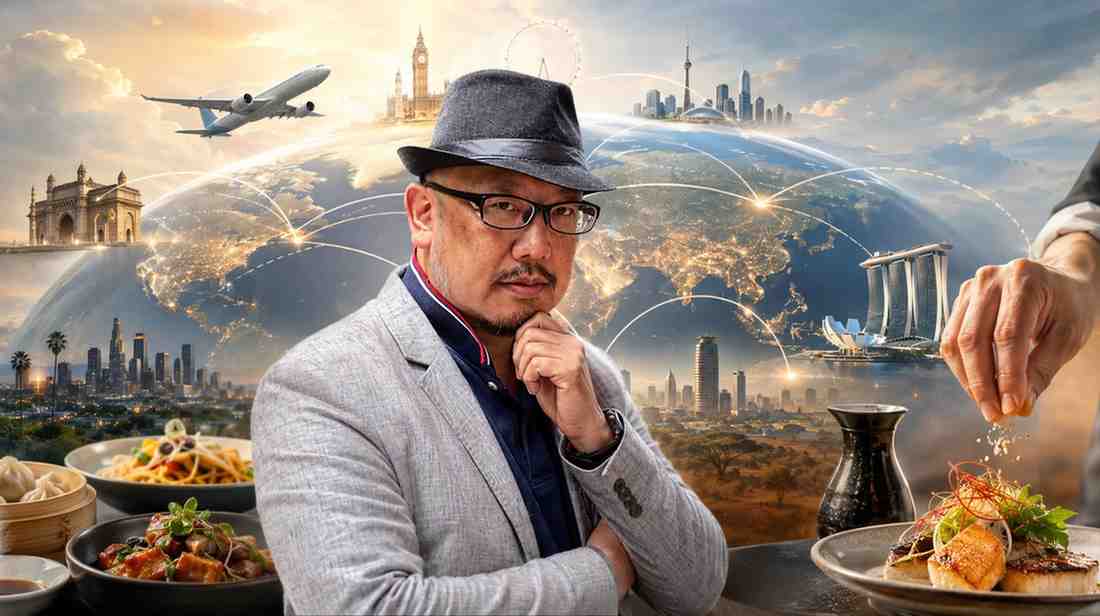
In just over a fortnight, I had the privilege of traveling 7 cities across 4 continents. I went from Mumbai to Nairobi, Kenya in Africa > back to Mumbai, India > then to Singapore > onwards to Los Angeles, USA > then on to Toronto, Canada > over to London, United Kingdom > and, finally, back to Mumbai, where I had started from, one full circle around our Earth.
I took 7 flights, around 50 hours of flying. Covering a total distance of some 43,503 km, the trip included, amongst other things, a long non-stop 16-hour flight from SIN (Singapore) to LAX (Los Angeles), a 13-hour stop in SIN, a 24-hour stop in LAX, and a 14-hour stop in Toronto (YYZ).
Incredible. Crazy, as many would say. Yes, indeed, quite true. But it has to be said, post the fact, and once done, it was not only possible to do the trip; it’s been done, yes, done, done, done, and anyone who wants to can do the trip if she or he wishes to do it.
But imagine someone 100 years ago, in the year 1926. Would anyone like me or anyone, for that matter, have been able to do the trip I did, back then?
Of course not; impossible.
But someone must have thought back then, “WHAT IF someone wanted to go from Nairobi to Mumbai to Singapore to Los Angeles to Toronto and London and back to Mumbai in a week, how to go about it, would it be possible, one day?”
Yes, now, that impossible thing, the epic trip that I’ve done, that no one could imagine back then, is not only possible, it is do-able every single day of the year, if you wanted you could go around the world every week for 52 times on the same route, or even an infinite number of routes flying east or west or north or south, it is all eminently POSSIBLE.
In fact, we always move from (the seemingly) impossible to the possible.
That is progress. That is evolution. That is change.
The WHAT IF? question is what we should always be asking, to make the impossible possible.
Some 70-odd years ago, when Kikkoman started the internationalisation strategy in earnest in the United States of America, starting from scratch – from zero- the team back then must have asked: “WHAT IF all Americans could enjoy better-tasting dishes using naturally brewed soy sauce?”
Fast forward to 2026, most of the thousands of Chinese restaurants in cities like Los Angeles and New York use Kikkoman Soy Sauce as a base seasoning. In fact, most American households keep Kikkoman soy sauce stocked in their refrigerators. Kikkoman has become a common, staple, and essential ingredient in the USA.
70-odd years ago, the “WHAT IF? question that was asked has now become a firmly established common reality in the United States of America; today, it is no longer “WHAT IF?” at all. The impossible back then has become possible, a common reality here in the USA, too.
In Toronto, I met Joanna Lim san, sister of Owner-Chef Joel Huang of India’s oldest family-run Chinese restaurant “Eau Chew”, based in Kolkata.
She told me she tried many soy sauces early in her career. Joanna san continued, “We chefs do trial and error. But when you know, you know. Other soy sauces other than Kikkoman do not have the flavour I want. I am a label reader, and I like products with no additives, a clean label, as I am conscious of health. What is most important is taste, obviously. For us, I only want to use the best products for my family and for my customers. If change is for the better, that’s all that matters. I choose the best, and it shows in the taste. I cannot imagine using any other soy sauce other than Kikkoman.”
Chef Joel san and Chef Joanna san, both born into the Eau Chew Chinese food in India legacy, one based in Kolkata, the other based in Toronto, share the common use of Kikkoman soy sauce in the tasty dishes they prepare with love and dedication.
They both asked, “What if I wanted to create the best Chinese dishes for my family and my customers, how would I do it?” And like millions of other people in over 100 countries, they found the answer in Kikkoman.
As I often like to say, “the best choose, and only use the best”.
I hope more and more chefs and people cooking at home in India and around the world ask the “WHAT IF? question, and make what was seemingly impossible possible. Because that is progress; evolution always happens, and change for the better is inevitable.
About the author:
The author, Harry Hakuei Kosato FRSA, is a Member of The International Federation of Journalists, Japanese Cuisine Goodwill Ambassador, Founder of Sushi and More India, and Kikkoman India’s representative