
India Invites Keidanren Network to Help Double Japanese Corporate Presence
インド、経団連の幅広い企業ネットワークに進出企業倍増への協力を要請

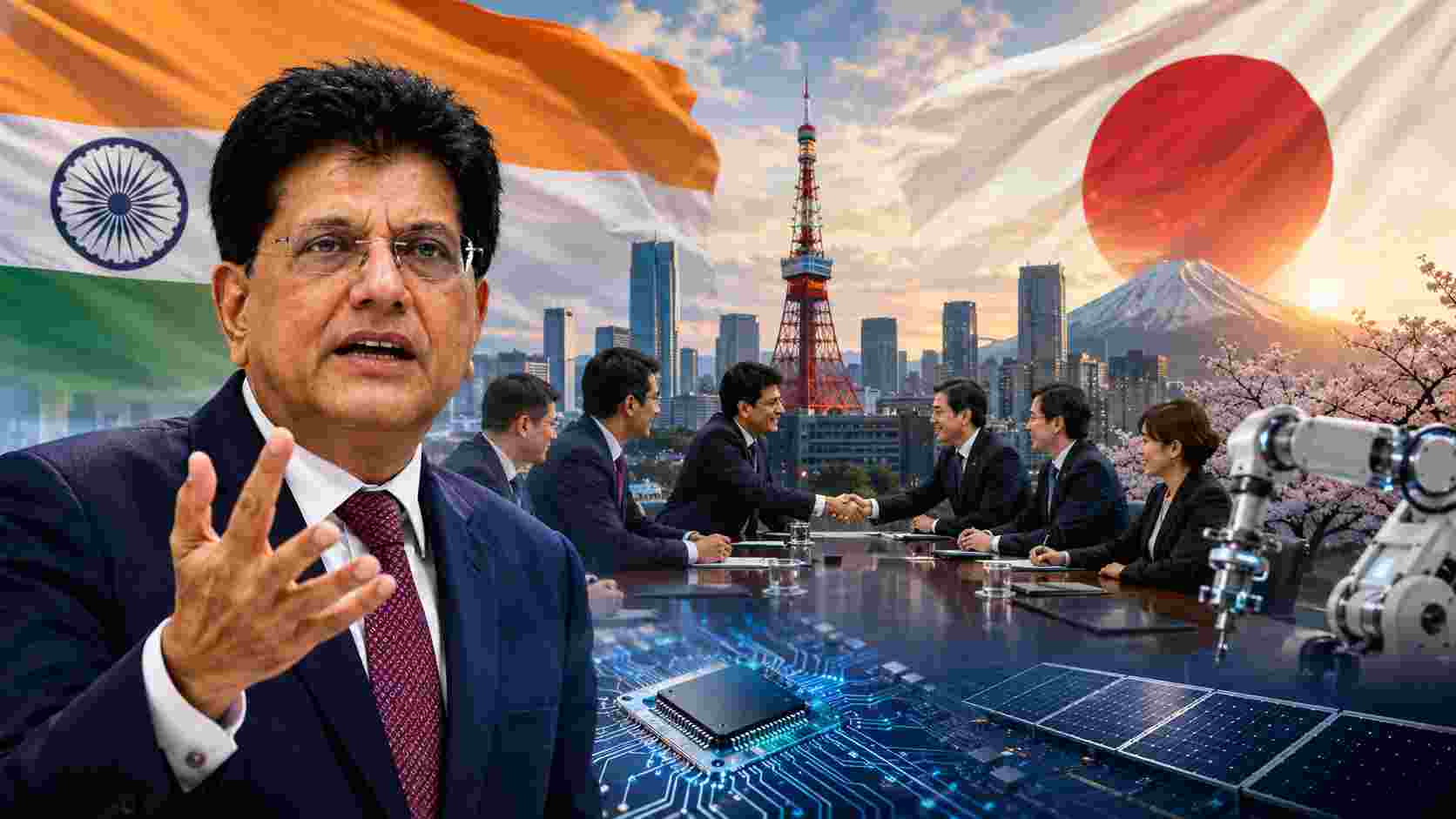
Tokyo: India has invited the extensive corporate network represented by Keidanren, the Japan Business Federation, to help double the number of Japanese companies operating in the country and lead a new phase of investment and industrial cooperation.
Around 1,400 Japanese companies currently operate in India, with nearly half engaged in manufacturing. Commerce and Industry Minister Piyush Goyal said their number should double during the current decade as the two countries expand their partnership into high-technology and next-generation industries.
Addressing a Keidanren round-table in Tokyo on Wednesday, Goyal called for greater business-to-business engagement encompassing investment, technology, research, employment and integration with global supply chains.
Keidanren’s reach underlines the scale of the opportunity. As of April 1, 2026, it comprised 1,580 representative companies, 103 nationwide industry associations covering manufacturing and services, and 47 regional economic organisations. Keidanren
Goyal presented India as both a rapidly expanding consumer market and a competitive manufacturing base from which Japanese businesses could serve international markets through India’s network of free trade agreements.
He encouraged Japanese automotive, machinery and capital-goods companies to increase localisation, establish manufacturing capacity and work more closely with Indian suppliers.
Greater engagement could allow Indian Tier-II and Tier-III suppliers, including MSMEs, to gain access to Japanese technology, precision-engineering practices, quality systems and global markets.
A round-table on capital goods, machinery and the automotive industry brought together around 70 Indian and Japanese businesses. Participants discussed industrial collaboration, technology partnerships and stronger, more resilient supply chains.
Semiconductors move to centre stage: Semiconductors emerged as an important component of Goyal’s Japan visit as India looked for international partners to build its chip-manufacturing ecosystem.
The minister met representatives of Tokyo Electron, a major semiconductor-production equipment supplier, and MinebeaMitsumi, which is involved in a semiconductor plant project in India.
He also held discussions with senior representatives of Sumitomo Corporation, Mitsubishi Corporation and Meiji Seika Pharma on expanding their activities and investments in the country.
These meetings reflected the widening scope of India–Japan economic relations. Cooperation traditionally associated with automobiles and infrastructure is now moving into semiconductors, artificial intelligence, clean energy, digital technology, economic security and advanced manufacturing.
Goyal was leading India’s largest-ever business delegation to Japan, comprising more than 200 representatives from manufacturing, semiconductors, clean energy, steel, automobiles, financial services, healthcare and start-ups.
The delegation’s engagements across Tokyo, Nagoya and Osaka were also designed to reach specialised and regional Japanese enterprises that do not yet have an Indian presence.
Keidanren’s regional organisations could serve as an important bridge to such businesses, many of which possess sophisticated technologies but have limited exposure to India.
The outreach supports the bilateral objective of mobilising 10 trillion yen in Japanese private investment in India over a decade. New Delhi, however, is seeking more than capital: it wants Japanese partnerships to generate technology, skills, local manufacturing, employment and integration with global value chains.
With 2027 designated the India–Japan Year of Shared Horizons, doubling the Japanese corporate presence could provide the anniversary with a substantial and measurable economic outcome.
東京: インド政府は、経団連(日本経済団体連合会)が持つ幅広い企業・産業ネットワークに対し、インドで事業を展開する日本企業数の倍増と、新たな投資・産業協力を主導するよう呼びかけた。
現在、インドでは約1,400社の日本企業が事業を展開しており、その約半数が製造業に携わっている。ピユシュ・ゴヤル商工相は、両国がハイテク産業や次世代産業での協力を拡大するなか、今後10年以内にその数を倍増させるべきだと述べた。
東京で開催された経団連とのラウンドテーブルで、ゴヤル商工相は、投資、技術、研究、雇用、グローバル・サプライチェーンへの参画を含む、より深い企業間協力を求めた。
経団連の規模は、インドにとっての可能性の大きさを示している。2026年4月1日現在、経団連は日本を代表する企業1,580社、製造業やサービス業などを網羅する全国規模の業種別団体103団体、地方別経済団体47団体などで構成されている。
ゴヤル商工相はインドを、急速に成長する消費市場であると同時に、日本企業がインドの自由貿易協定ネットワークを活用して海外市場に製品を供給できる競争力のある製造拠点として紹介した。
また、日本の自動車、機械、資本財関連企業に対し、現地調達・現地生産を拡大し、新たな製造能力を構築するとともに、インドのサプライヤーとの連携を深めるよう促した。
こうした協力により、中小零細企業を含むインドの二次・三次サプライヤーは、日本の先端技術、精密工学、品質管理システム、グローバル市場へのアクセスを得られる可能性がある。
資本財、機械、自動車産業をテーマにしたラウンドテーブルには、インドと日本から約70社が参加した。産業協力、技術提携、より強靱なサプライチェーンの構築について意見が交わされた。
半導体が協力の中心分野に
インドが半導体製造エコシステムの構築に向けて海外パートナーを求めるなか、半導体はゴヤル商工相の訪日における重要議題となった。
同相は、主要な半導体製造装置メーカーである東京エレクトロンと、インドの半導体工場プロジェクトに関わるミネベアミツミの関係者と会談した。
さらに、住友商事、三菱商事、明治製菓ファルマの経営幹部とも会談し、インドにおける事業と投資の拡大について協議した。
一連の会談は、日印経済関係が新たな分野へ広がっていることを示した。従来、自動車やインフラを中心としてきた協力は、半導体、人工知能、クリーンエネルギー、デジタル技術、経済安全保障、先端製造業へと拡大している。
ゴヤル商工相は、日本を訪問したインドの経済使節団として過去最大となる代表団を率いた。代表団には、製造業、半導体、クリーンエネルギー、鉄鋼、自動車、金融サービス、医療、スタートアップなどから200人を超える企業関係者が参加した。
東京、名古屋、大阪での交流は、まだインドに進出していない専門性の高い企業や地方企業との接点を築くことも目的としていた。
経団連傘下の地方別経済団体は、高度な技術を持ちながらインド市場への接点が限られている地域企業とインドを結ぶ重要な役割を担うことができる。
今回の働きかけは、今後10年間で10兆円の日本からの対インド民間投資を実現するという両国の目標にも沿っている。
インドが求めているのは資本だけではない。日本との協力を通じ、技術、技能、現地生産、雇用、グローバル・バリューチェーンへの参画を拡大することを目指している。
2027年が「日印交流年」と定められるなか、日本企業のインド進出を倍増させることができれば、この記念年を象徴する具体的な経済成果となる可能性がある。