Japanese Firms in India Stay Profitable and Bullish on Expansion in 2025: JETRO Survey
Despite the trade turmoil caused by the additional tariffs imposed by the United States, the performance of Japanese companies operating overseas remains strong.

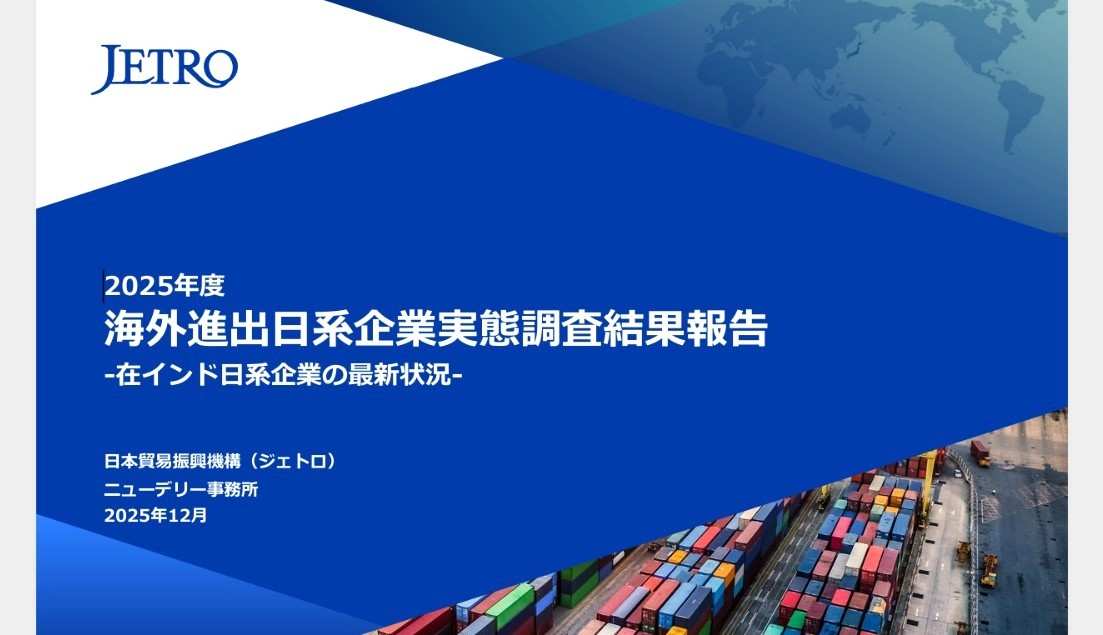
New Delhi: Japanese companies operating in India continued to demonstrate strong resilience and long-term confidence in the Indian market in 2025, according to the latest Overseas Japanese Companies Survey released by the New Delhi office of Japan External Trade Organization (JETRO)
The findings underline India’s position as one of the most promising destinations for Japanese businesses globally, even amid trade disruptions and geopolitical uncertainties.
The survey revealed that 75.5 per cent of Japanese firms in India expected to remain profitable in 2025, marking the fourth consecutive year in which more than 70 per cent of companies reported operating in the black. This performance placed India among the top-performing locations worldwide for Japanese enterprises. Nearly half of the respondents (48.2 per cent) also projected an improvement in operating profits compared to 2024, highlighting a broadly positive business trajectory.
JETRO attributed this profitability primarily to strong growth in India’s domestic market, with close to 80 per cent of firms citing rising local demand as the main reason for improved performance. Companies also reported gains from strengthening their local sales networks, improving operational efficiency, and better utilisation of production capacity. Export-led growth, however, played a relatively smaller role, reinforcing India’s status as a consumption-driven market for Japanese firms rather than an export hub
Business sentiment regarding future growth remained particularly strong. The survey found that 81.5 per cent of Japanese companies in India plan to expand operations over the next one to two years, the highest expansion intent recorded among all major global markets covered in the survey. Expansion plans are largely focused on sales functions, followed by the production of high value-added goods, customer service, and new business development, indicating deeper localisation and long-term commitment to India
At the same time, the report pointed to intensifying competition in the Indian market. Indian local companies were identified as the biggest competitors by 46 per cent of Japanese firms, far surpassing competition from Chinese or other foreign enterprises. This reflects the growing strength and sophistication of Indian businesses and the increasingly competitive nature of the domestic market
Regulatory challenges also featured prominently in the survey. More than 57 per cent of Japanese companies reported being affected by mandatory certification requirements under India’s Bureau of Indian Standards (BIS). Key concerns included lengthy approval timelines, complex procedures, frequent regulatory changes, and high compliance costs. These factors were cited as operational bottlenecks, particularly for manufacturing firms
On the human resources front, the survey highlighted a tightening labour market in India. Around 35.6 per cent of companies reported increased difficulty in hiring over the past two years, reflecting heightened competition for skilled talent. In response, Japanese companies in India implemented relatively high wage increases, with an average base salary hike of 9.4 per cent in 2025, significantly higher than the 3–5 per cent range seen in many other Asian economies. Over 70 per cent of firms reported salary increases exceeding 8 per cent, underlining rising labour costs
Despite these challenges, India’s market size and growth potential remained its strongest attraction. Nearly 90 per cent of respondents cited market scale and long-term growth prospects as the top investment advantage. However, firms also flagged risks related to taxation complexity, administrative procedures, and infrastructure gaps, particularly in power supply and road connectivity, as areas requiring continued policy attention
Overall, JETRO concluded that Japanese companies in India remain highly optimistic and expansion-oriented, viewing India as a core strategic market for future growth. While regulatory simplification, talent availability, and infrastructure improvements remain critical challenges, the strong profitability outlook and aggressive expansion plans indicate deepening economic engagement between Japan and India in the years ahead.
INFO-BOX 1 | Business Performance Snapshot (2025)
- 5% of Japanese companies in India expect to remain profitable in 2025
- Fourth consecutive year with over 70% firms in profit
- 2% of companies project improved operating profits compared to 2024
- Growth driven mainly by strong domestic market demand and improved local sales networks
INFO-BOX 2 | Expansion & Investment Intent
- 5% of Japanese firms in India plan to expand operations in the next 1–2 years
- India ranks highest globally among major markets for expansion intent
- Key expansion areas include:
- Sales & distribution (3%)
- High value-added manufacturing
- Customer service and new business development
- Reflects long-term strategic commitment to India
INFO-BOX 3 | Challenges & Workforce Trends
- Indian domestic companies identified as the biggest competitors (46%)
- 3% of firms impacted by BIS certification requirements
- Hiring challenges have increased due to tight labour market
- Companies implemented an average wage hike of 9.4% in 2025, higher than many Asian peers