
Japan’s Daughter of India Remembered: Embassy Honours INA Veteran Lt Asha Sahay for a Lifetime Bridging Two Nations
Japanese Ambassador Keiichi Ono presents a posthumous commendation to the family of Lt Bharati Asha Sahay Choudhry, celebrating a rare life of courage, memory, and India–Japan friendship.

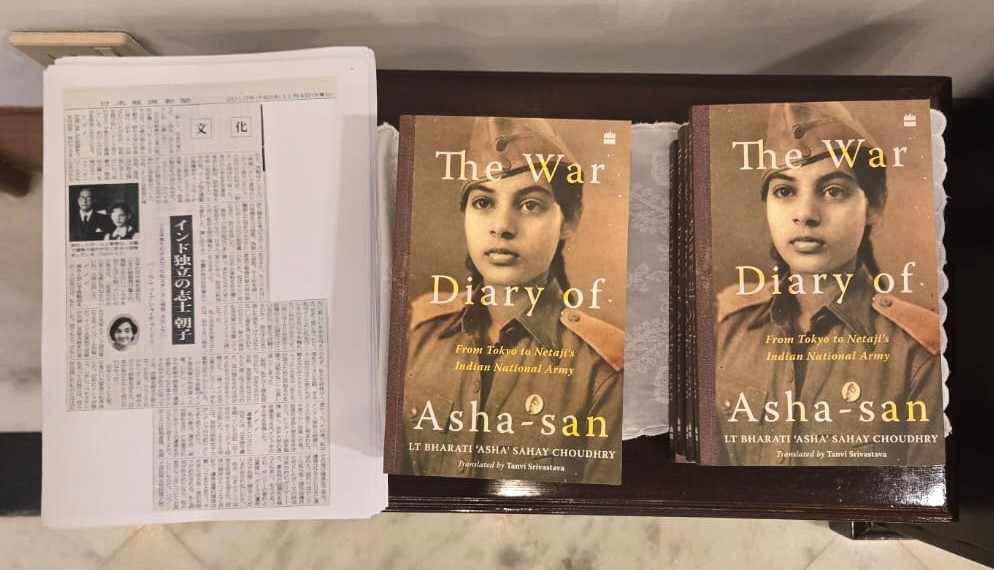
New Delhi — In a solemn ceremony marked by remembrance and gratitude, the Embassy of Japan in India posthumously honoured Lt Bharati Asha Sahay Choudhry, the Japan-born Indian freedom fighter whose life became a living bridge between India and Japan. Widely known in Japan as Asha-san, she was remembered not only as a soldier of India’s armed freedom struggle, but as a woman whose convictions transcended borders and generations. Professor Sugata Bose, the grand nephew of Netaji and Gardiner Professor at Netaji Institute of Technology/Harvard University, was also present on the occasion.
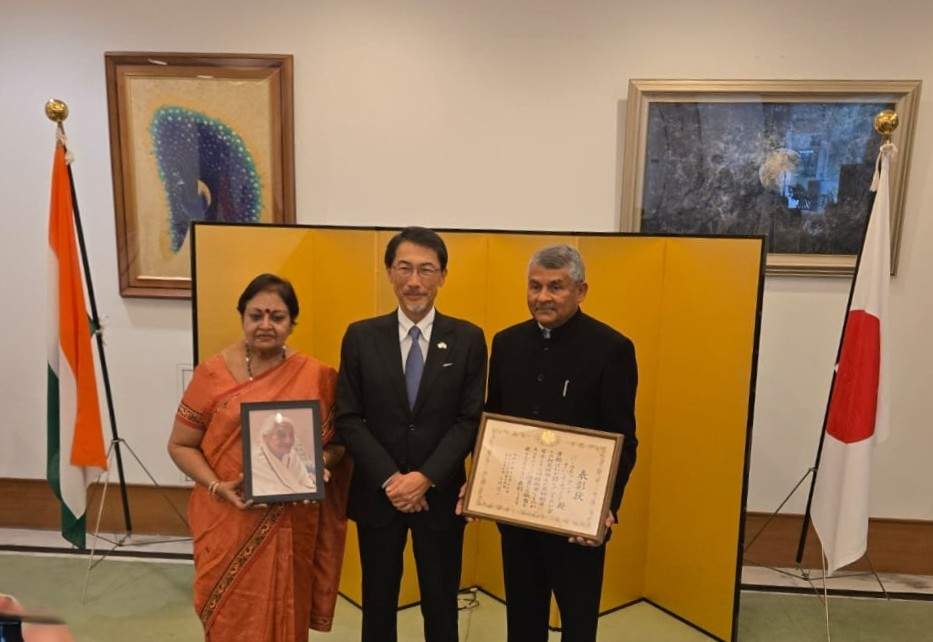 The Certificate of Commendation was presented to her son, Sanjay Choudhry, by Keiichi Ono, who paid tribute to Lt Asha Sahay’s extraordinary journey—from a childhood shaped by exile to frontline service with the Indian National Army (INA), and finally to a lifetime dedicated to peace and friendship between nations. The ceremony also served as a moment of collective mourning following her passing earlier this year.
Born in 1928 in Kobe, Japan, to Indian parents who had fled British rule, Asha Sahay grew up in a household steeped in the ideals of independence. Her father, Anand Mohan Sahay, was a founding member of the Indian Independence League and a close associate of Subhas Chandra Bose.
Educated entirely in Japan, she studied at what is now Showa Women’s University in Tokyo, where a meeting with Netaji Bose proved decisive. Inspired by his call for a free India, she joined the Rani of Jhansi Regiment, the all-women combat unit of the INA, at just 17, earning the rank of Lieutenant.
 As Lt Asha Sahay, she served across Southeast Asia, including Thailand, Singapore, Malaysia, and Burma, enduring the final, brutal years of the Second World War. Her service placed her among the small but formidable cohort of women who stood on the frontlines of India’s armed struggle—an experience she later chronicled with rare honesty in her memoir, The War Diary of Asha-san.
After Independence in 1947, she returned to India, married Dr L. P. Choudhry, and settled into civilian life. Yet her engagement with Japan never waned. She worked as a Japanese-language interpreter at the Indosan Nipponji Japanese Temple in Bodh Gaya, and remained a tireless advocate of cultural understanding. Even in her final years, she spoke consistently against the horrors of war, once remarking, “Japanese or English or Indian or American, there should be no war. War is a terrible thing. People suffer.”
Lt Asha Sahay passed away on 12 August in Patna, aged 97, leaving behind a legacy that is as much moral as it is historical—one that reminds the present generation that freedom movements crossed borders, and that women stood at the centre of those struggles.
 The ceremony was attended by members of her family, friends, academics, writers, and senior Indian officials, reflecting the wide arc of her influence. Present were her family members Ratna Choudhry, Tanvi Srivastava, Neeraj Srivastava, Harsha Choudhry, Parveen Miglani, and Gyan Chand Sahai. Friends and associates included Sugata Bose, Sharia Raj, Rohit Ravinder, Pramatha Raj Sinha, writers and filmmakers Bhuvan Lal and Arti Mathur, and former senior police officers Rakesh Jalhar and Manjari Jalhar.
The Indian government was represented by Hariwansh Narayan Singh, Deputy Chairman of the Rajya Sabha, along with officials from the Ministry of External Affairs’ East Asia Division, namely Deepak Kumar, P. N. Singh, and Megha Arora.
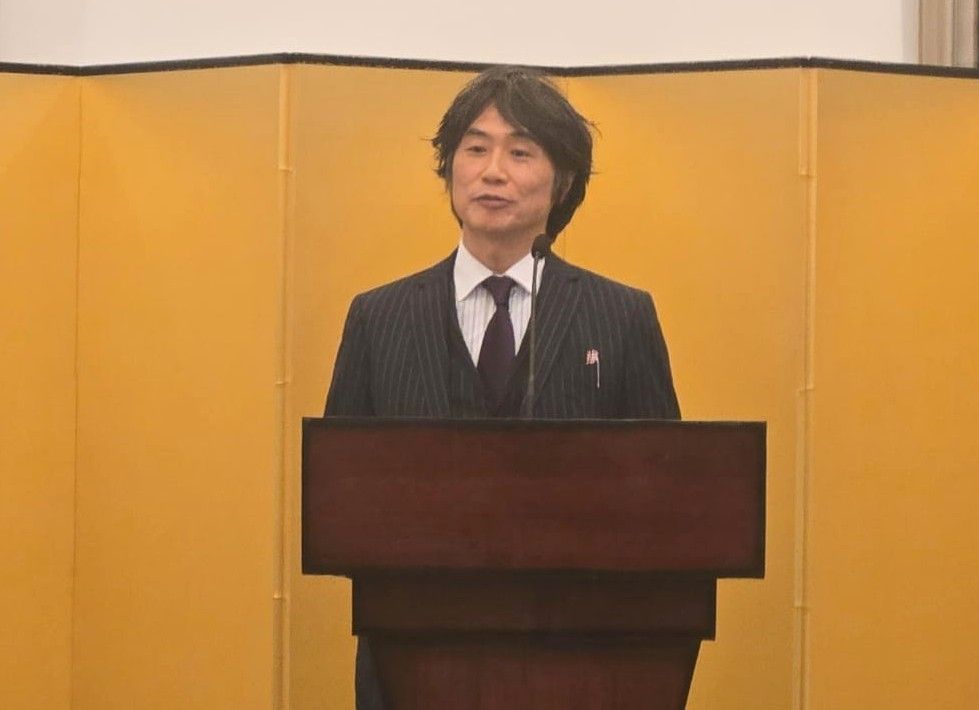
IWAKI Satoshi, Bureau Chief of the New Delhi Bureau at NIKKEI Asia, who had the opportunity to interview Asha San, also recalled his past interaction with her.
As tributes concluded, a shared sentiment lingered across the hall: Lt Asha Sahay’s life remains a testament to courage without borders—proof that the bonds between India and Japan were forged not only by diplomacy, but by individuals who lived history, carried its scars, and chose peace over conflict.