K-Food Fair Moved from Trade Tables to Mall Aisles
30 Korean companies presented more than 150 brands spanning beverages, ready foods, ginseng, snacks, sauces, kimchi, ramyun, fruit and seaweed to Indian buyers before reaching consumers in Gurugram.

New Delhi/Gurugram: The K-Food Fair 2026 brought a broad cross-section of South Korea’s food industry to Delhi-NCR, combining two days of business meetings in New Delhi with a public showcase at Ambience Mall in Gurugram.
Held from July 30 to August 2, the four-day programme began with business-to-business meetings at Pullman New Delhi Aerocity on July 30 and 31. The products were subsequently taken to Ambience Mall, where the consumer-facing segment opened on August 1 and was scheduled to continue through August 2.
 Hosted by South Korea’s Ministry of Agriculture, Food and Rural Affairs and Ministry of Oceans and Fisheries, the fair was organised by the Korea Agro-Fisheries & Food Trade Corporation, or aT. Byun Kyung Yong (Kevin), Managing Director, aT, led the delegation to India to oversee the entire K Food Fair. He was present during last year’s K Food Fair held in Mumbai too, where only 20 Korean companies had participated.
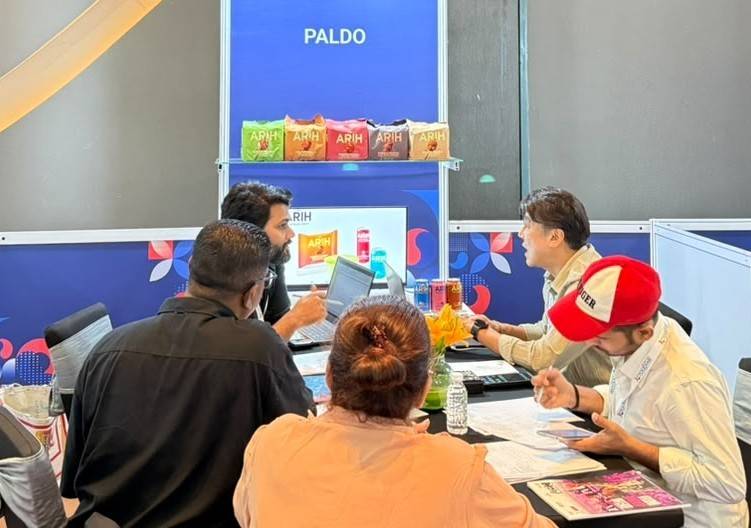
The B2B programme brought together around 30 Korean exporters and approximately 50 prospective Indian buyers for discussions on importing, distribution, retail placement and product localisation.
The official trade platform said the participating companies collectively represented more than 150 brands covering Korean ingredients, packaged foods, snacks and confectionery, sauces and condiments, noodles, kimchi, rice-based foods and beverages. Korean food demonstrations, sampling sessions and pre-arranged meetings accompanied the product exhibition.
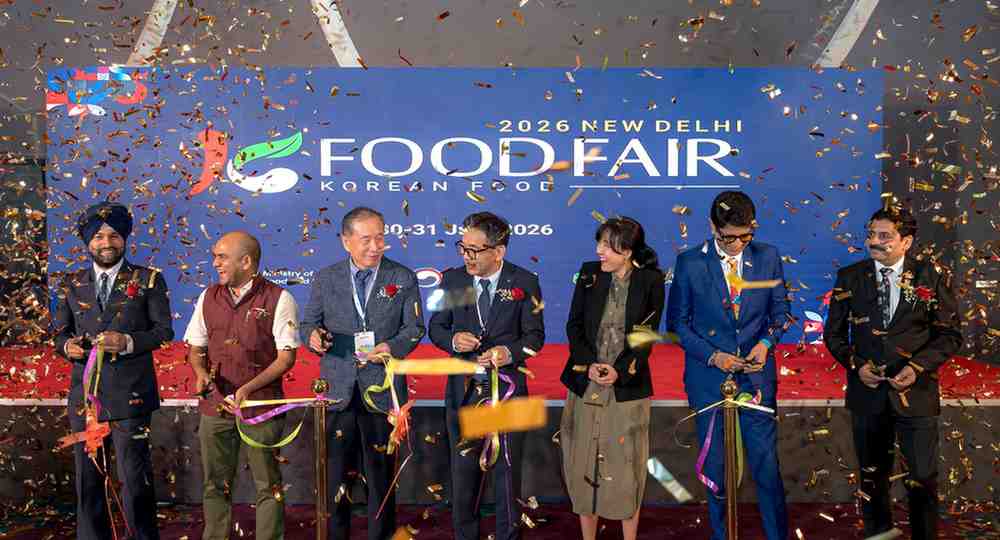
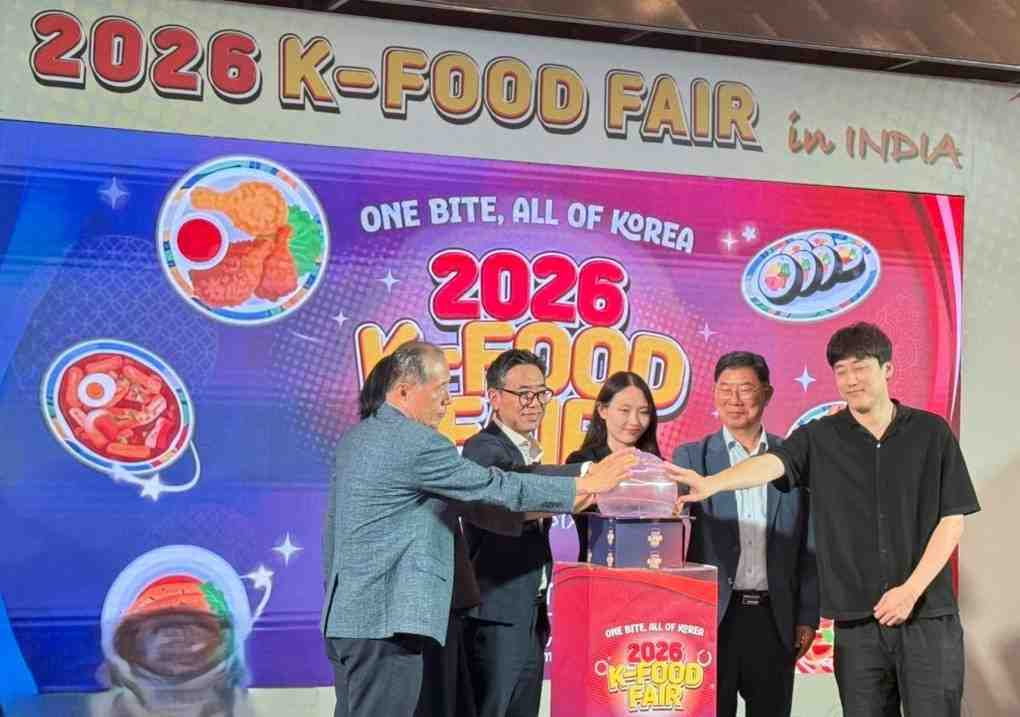
 The event was inaugurated on July 30 in the presence of Byun Kyung Yong (Kevin), MD, aT; Ms. Euijin Chon, Minister Counsellor, Embassy of the Republic of Korea; Park Euy Don, Chairman, Peaceful Unification Advisory Council, Southwest Asia; Amit Lohani, Founder and Director, Forum of Indian Food Importers (FIFI); Manpreet Singh, President, ICIB; Prof Kaushal Kumar, Chairperson & Associate Professor at Centre for Korean Studies, School of Language, Literature & Culture Studies, Jawaharlal Nehru University; and Sanjeev K Ahuja, Editor-in-Chief and CEO, Asian Community News (ACN Network).
On August 1, the B2C format of the 2026 K-Food Fair was attended by Byun Kyung Yong (Kevin), MD, aT; Ms. Cho Yoonmi, Director, Korea Tourism Organisation, New Delhi office; Lim Tae Han, CEO, & Rinyami, Director, BRICS India Trade; Euy Don Park, Chairman, Peaceful Unification Advisory Council, Southwest Asia; Lee Sang Hyun, Managing Director of Kaiel Hotel & Restaurant, and Sanjeev K Ahuja, Editor-in-Chief and CEO, Asian Community News (ACN Network).
Wider product portfolio moved beyond noodles and kimchi: While ramyun and kimchi remained among the most recognisable Korean products for Indian consumers, the exhibitor line-up demonstrated that the country’s food-export portfolio extended far beyond these familiar categories.
 The largest representation came from the beverages and health-drinks segment, which included Nokchawon, Dal’s Farm, Sweetdeo, INEO, OKF Corporation, Wholesome Korea, Royal Greens, Insan Bamboo Salt Inc., Ilhwa, Tium Global and TeamC.
Their participation brought attention to Korea’s expanding range of conventional and functional beverages, wellness-oriented drinks and health-food concepts. The presence of companies associated with bamboo salt and traditional wellness products also highlighted Korea’s interest in positioning food and drink at the intersection of taste, convenience and health.
The packaged ready-food section featured Agricultural Corporation Company Homsarang, The Bab, Sandeul Food and Allgot. These companies represented products aimed at consumers seeking convenient meal options and packaged preparations that could be introduced through supermarkets, speciality stores, restaurants and online retail channels.
 The category was particularly relevant to India’s growing market for convenient international foods, although exporters were also required to consider local preferences concerning spice levels, ingredients and vegetarian classification.
Ginseng and Korean wellness foods attracted attention: Traditional health foods formed another prominent part of the exhibition.
Klian Industrial, Samiya Food and Cheil General Food participated under the ginseng and health-food category, presenting Korea’s long-established wellness-food sector to potential Indian partners.
 Ginseng remains one of Korea’s most recognised traditional products globally, but its naturally bitter taste can be unfamiliar to many Indian consumers. Korean exporters therefore explored possibilities such as combining it with fruit flavours or offering it in more accessible drink and food formats.
The companies’ participation reflected the potential for Korean health foods in India, particularly among consumers interested in functional foods and traditional wellness products. However, successful market development would require clear communication about ingredients, usage and taste.
 Snacks, confectionery and Korean bakery products: The snacks and confectionery section included A Bear Gathering Greens Cooperative Federation, Dailymeal, Han & Global and Raon Corporation.
The overall product portfolio promoted through the fair included Korean bakery and snack items such as gaesung juak, twisted doughnuts, sweet red-bean doughnuts, soboro bread, croissants, pastries, organic rice rusks, rice sticks and melting snacks. Broccoli-sprout products were also included in the category presentation.
These products offered Indian buyers alternatives beyond the packaged chips and instant noodles commonly associated with Korea. Rice-based snacks and lighter products could be particularly relevant to health-conscious consumers and families, while bakery products could find opportunities through cafés, bakeries, hotels and premium retail stores.
 Sauces, condiments and ingredients for local kitchens: Korean sauces and condiments were represented by Onggojib Agricultural Association Corporation and Wehada Company.
This segment carried particular potential because sauces and seasonings could help Korean flavours enter Indian homes and restaurants without requiring consumers to prepare an entirely unfamiliar dish.
Indian restaurants, cloud kitchens and home cooks could use Korean sauces in traditional Korean recipes or combine them with Indian ingredients to develop localised dishes. Such adaptation was also discussed during the fair as an important route for expanding Korean food beyond a niche consumer base.
Fruit, kimchi, noodles and seaweed completed the range: The exhibition also included specialised companies representing individual product sectors.
Yeongju Grape Export Farming Association Corporation participated in the fruit and fruit products category, highlighting Korea’s fruit-processing and agricultural export capabilities.
Wirofood represented kimchi and kimchi-based foods, while leading Korean food company Paldo participated in the noodles and ramyun segment.
Rice-based foods were also part of the broader exhibition portfolio. Products promoted at the fair included healthy rice, tteokbokki and topokki rice cakes, Jeju rice cakes, and corn-based rice cakes, with variants featuring rice, wheat, fish, and rose-style sauces.
In the marine-food segment, Unione represented seaweed and packaged foods, while Chungnam Laver Fisheries Cooperative showcased products under the seafood and seaweed category.
The inclusion of seaweed reflected growing international interest in Korean laver and other marine products as snacks, cooking ingredients and accompaniments to rice-based meals.
Why Brewery represented the beverages and alcohol category, adding another dimension to the Korean beverage portfolio presented during the trade exhibition.
Buyers explored import, distribution and localisation: The B2B section was designed to help the participating exporters establish direct contact with Indian importers, distributors, retailers and food-industry representatives.
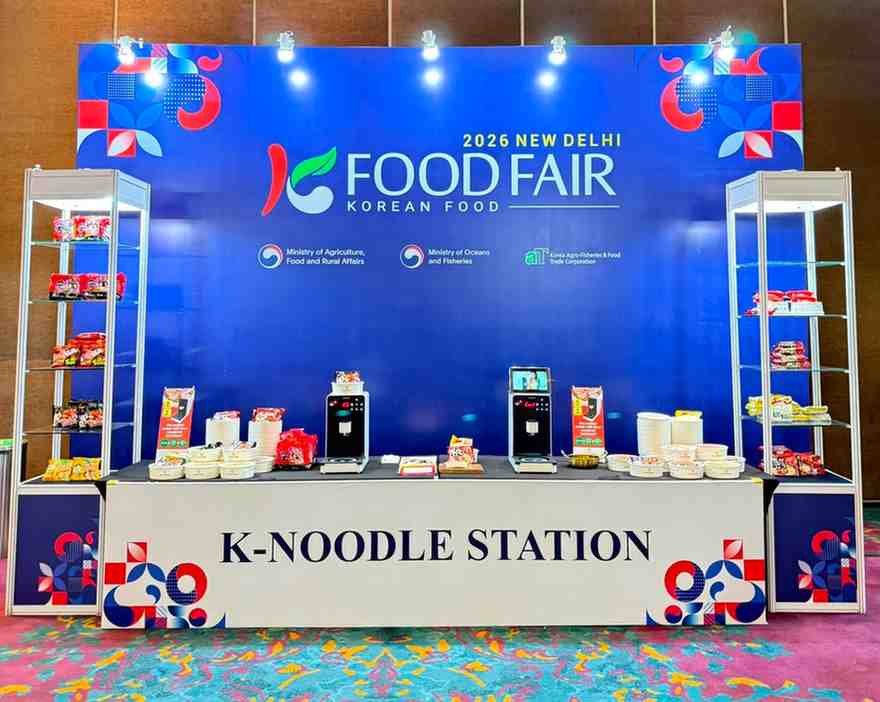
One-to-one meetings allowed the companies to assess demand, discuss pricing and import requirements, and identify potential local partners. The venue also featured an open kitchen, a K-noodle station, a K-Food collection zone, consultation facilities, and an intellectual property support desk.
The fair consequently operated not only as a sales platform but also as a market-learning exercise. Korean exporters received feedback on which flavours, ingredients, packaging formats and product categories were likely to work in India.
This feedback was important because India’s food market included vegetarians, non-vegetarians and vegans, along with communities following religiously prescribed dietary practices. Korean companies therefore needed to carefully examine their ingredients and clearly comply with India’s green and red food-labelling requirements.
The expanded format reflected India’s growing importance: In an interview with Asian Community News, aT Korea Managing Director Mr Kevin said it reflected the Korean food industry’s growing interest in India.
The previous edition in Mumbai had been limited to a two-day B2B programme and featured around 20 Korean companies. In 2026, the fair grew to four days, accommodated 30 exporters and added a separate consumer-facing component.
According to him, India was becoming an increasingly important market for the Korean food industry. The B2C programme was introduced to enable participating companies to interact directly with local consumers, rather than limiting the initiative to meetings between businesses.
Products reached consumers at Ambience Mall: After the trade meetings, the participating product categories were displayed at Ambience Mall in Gurugram as part of the public K-Food experience.
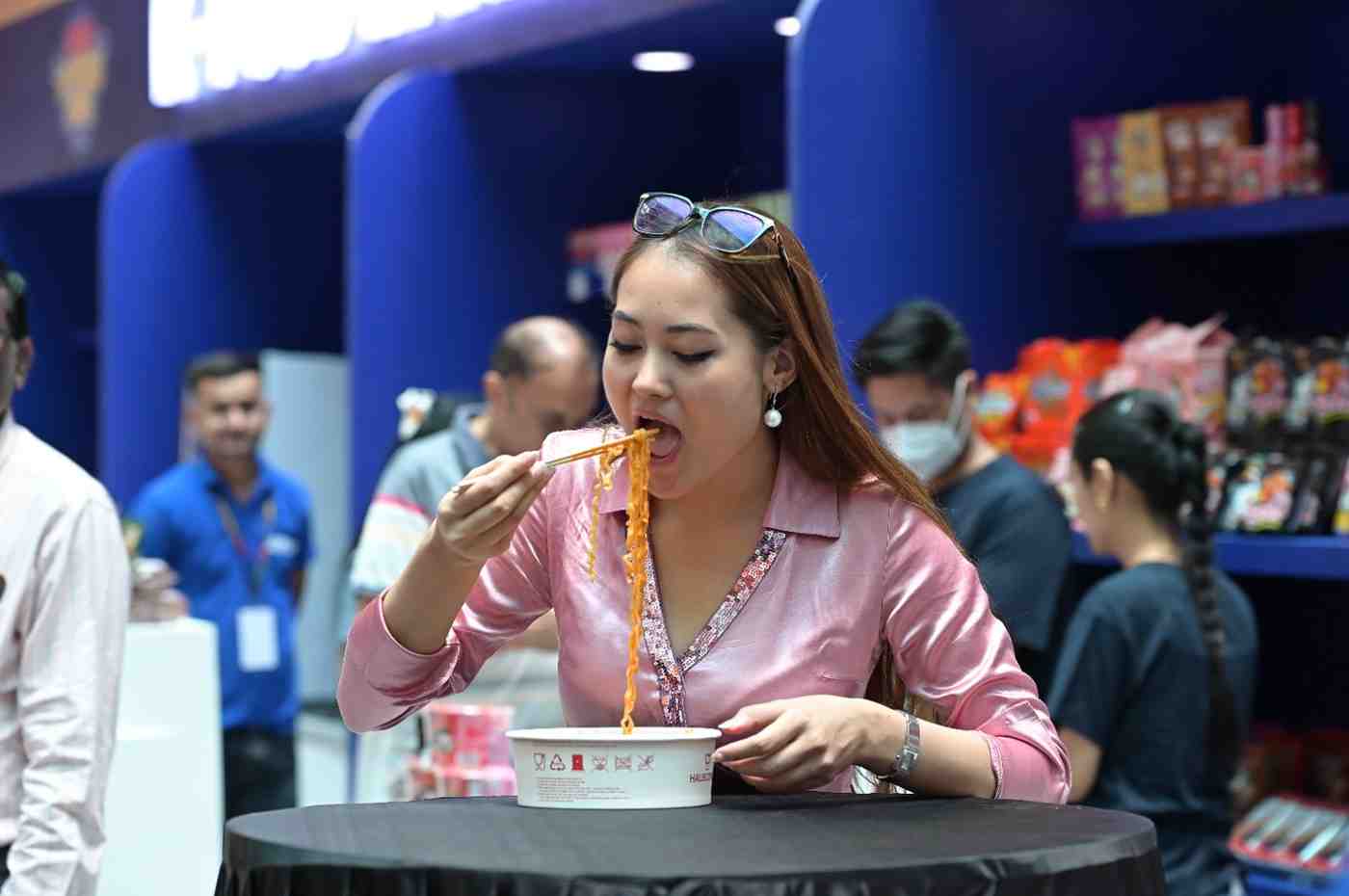
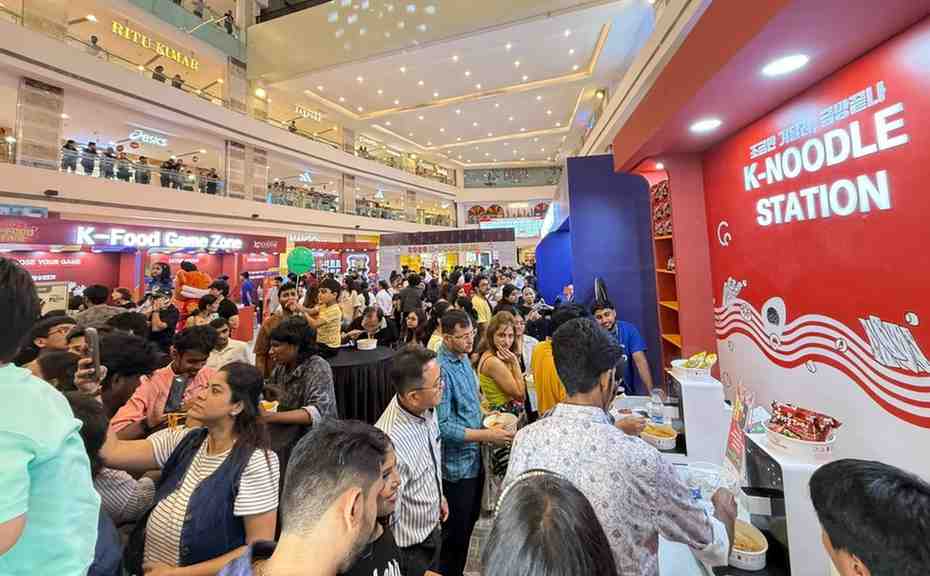
Visitors were given opportunities to discover Korean foods through displays, tastings, cooking demonstrations and interactive activities. The programme also featured a K-noodle station and Korean cultural attractions, including K-pop and Taekwondo, with the Korea Tourism Organization participating in the consumer outreach.
By taking the same products from formal buyer meetings to a busy public venue, the fair allowed exporters to observe both sides of the Indian market: the commercial response from importers and distributors, and the immediate reaction of consumers encountering the products.
The Delhi-NCR edition therefore marked an important step in K-Food’s transition in India—from cultural curiosity and restaurant-based discovery towards structured trade partnerships, wider retail availability and products adapted to Indian dietary preferences.