Korea–India Relations Poised for a Major Leap in 2026, Says Korean Ambassador
In a New Year message to the Korean community in India, Ambassador Lee Seong-ho highlights deepening strategic ties, rising Korean investments, and the expanding influence of Korean culture across India.

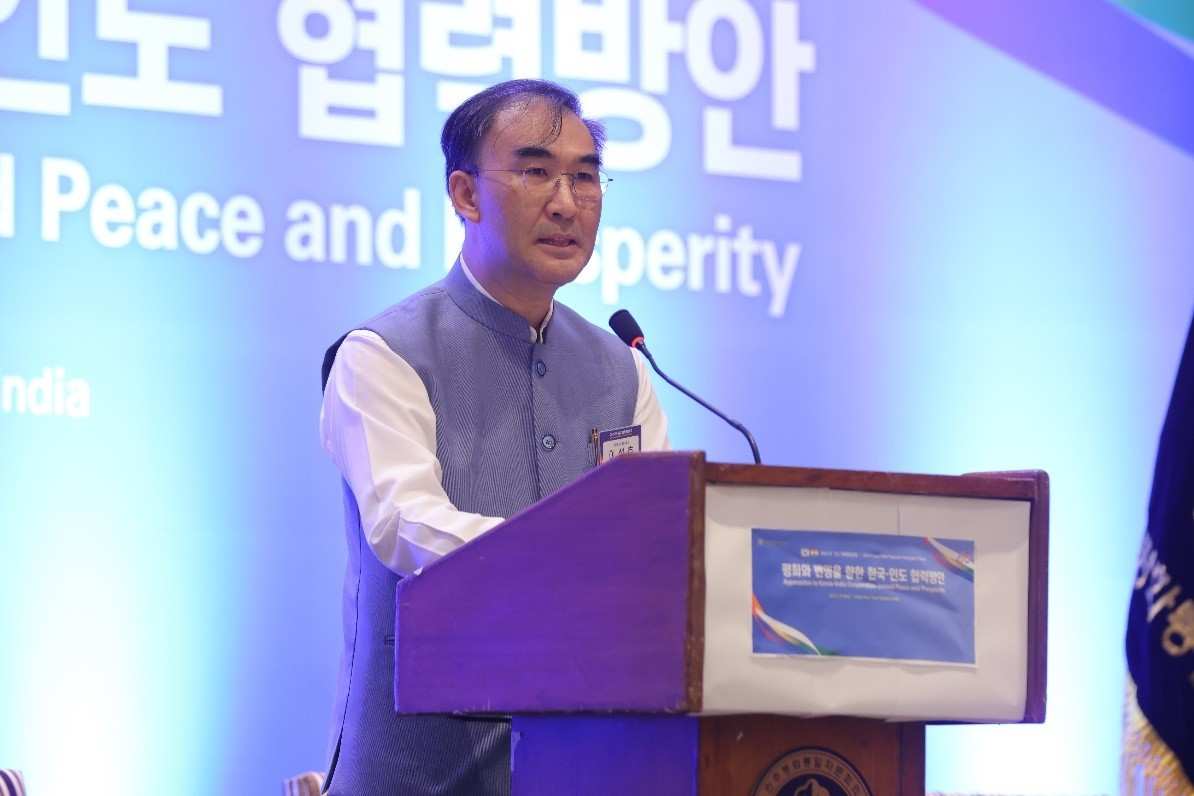
New Delhi: The Republic of Korea’s Ambassador to India, Lee Seong-ho, has expressed strong confidence that 2026 will mark a significant new phase in Korea–India relations, driven by closer political engagement, expanding economic cooperation, and deepening cultural and people-to-people exchanges.
In his New Year’s message addressed to members of the Korean community living across India, Ambassador Lee reflected on the past year as an essential period of resilience and reaffirmation for South Korea. He noted that despite facing serious domestic challenges, Korean society demonstrated its democratic maturity by restoring stability through constitutional order and democratic processes. According to the Ambassador, this experience reinforced Korea’s core values of freedom, democracy, and the rule of law, while also strengthening the country’s standing in the international community.
Turning to bilateral relations, Ambassador Lee observed that Korea–India ties have been developing faster and more deeply than ever before. He highlighted the fact that within a span of just six months, the leaders of both countries met twice, reaffirming mutual trust and a shared commitment to cooperation. He also pointed to the anticipated visit of the Korean President to India—the first in eight years—as a symbolic and substantive milestone, signalling that the partnership is entering a new stage of advancement.
The Ambassador underlined India’s growing importance as a global economic powerhouse and noted that Korean companies are increasingly expanding their footprint in the Indian market. Major Korean conglomerates such as Samsung, LG, Hyundai, and Lotte are scaling up investments through public listings, expansion of production facilities, and the strengthening of research and development centres. He added that cooperation is broadening beyond traditional manufacturing into strategic and future-oriented sectors, including semiconductors, shipbuilding, biotechnology, and emerging consumer industries such as K-beauty.
Ambassador Lee also drew attention to the expanding influence of the Korean Wave (Hallyu) in India. From music, television dramas, and films to cuisine and beauty, Korean culture has gained strong visibility and popularity across Indian society. He noted that these cultural connections are increasingly translating into wider economic, educational, and human exchanges, becoming a key pillar for the sustainable growth of Korea–India relations.
Looking ahead, the Ambassador expressed hope that the overall strengthening of bilateral ties would lead to tangible benefits for the Korean community in India, including improved living conditions, greater safety, and expanded opportunities for businesses, professionals, and students. He reaffirmed that the Embassy would continue to place the safety and protection of Korean nationals as its top priority while supporting harmonious coexistence and mutual prosperity with Indian society.
Concluding his message, Ambassador Lee said he expects 2026 to be remembered as a year of meaningful progress and new achievements for both countries, as well as for the Korean community in India, as the Korea–India Special Strategic Partnership continues to mature and expand.