
PSMC–Tata Fab and Foxconn–HCL JV Mark Twin Pillars of Taiwan–India Semiconductor Cooperation
At the Taiwan National Day reception in New Delhi, Ambassador Dr Chen Mu-min says the Gujarat and Uttar Pradesh projects represent logic and display chip collaboration—signalling Taiwan’s deepening role in India’s high-tech supply chain.

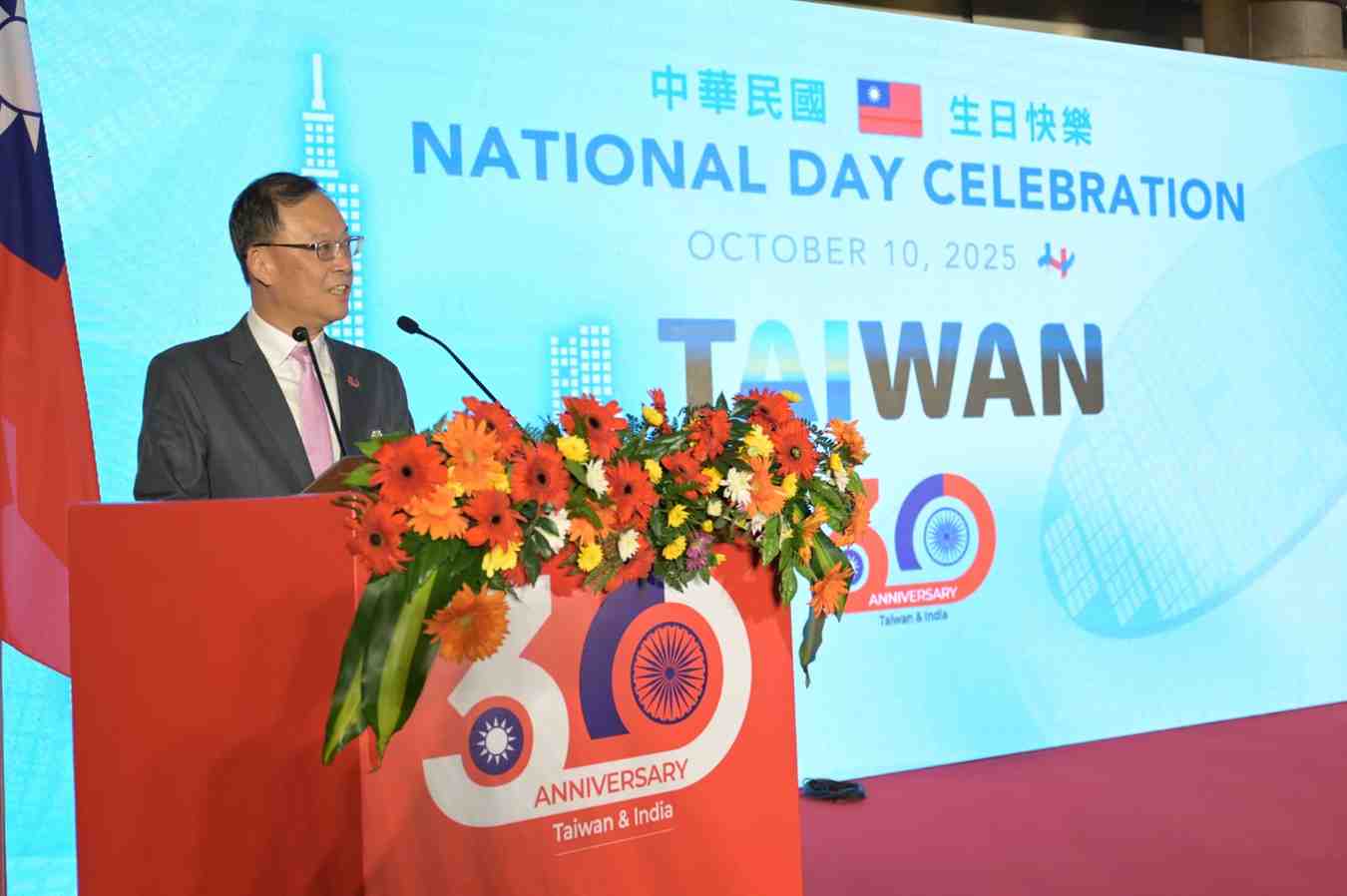
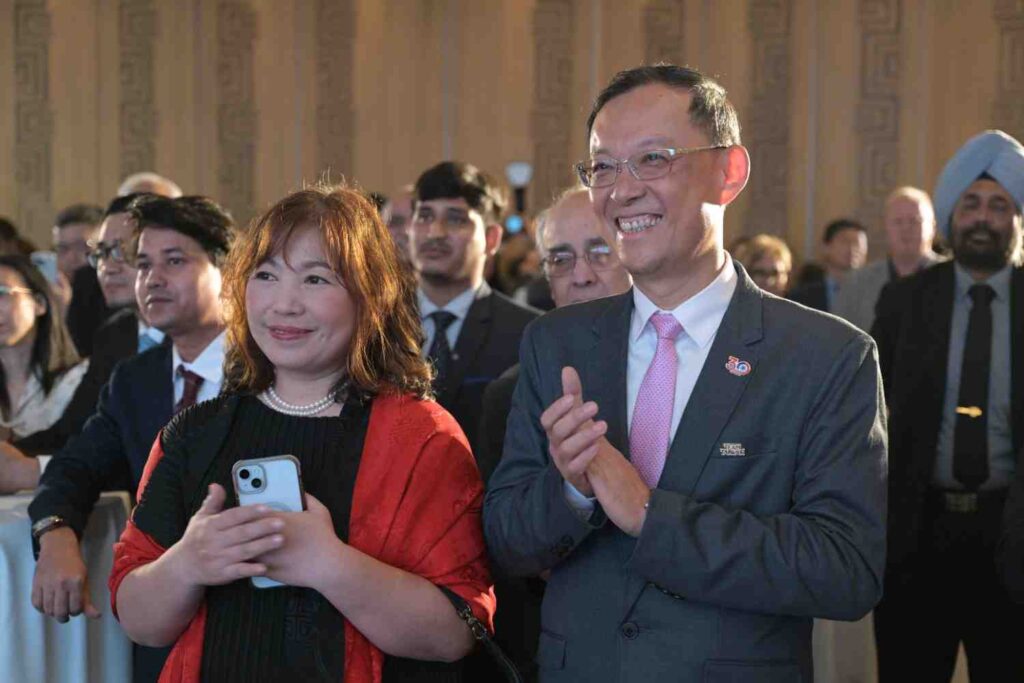
New Delhi, India – The upcoming PSMC–Tata Electronics semiconductor fab in Dholera, Gujarat, and the Foxconn–HCL joint venture in Uttar Pradesh will anchor India’s entry into global chip manufacturing, said Dr. Chen Mu-min, Taiwan’s Ambassador and Representative of the Taipei Economic and Cultural Center (TECC) in India, during his address at the Taiwan National Day reception in New Delhi on Wednesday.
 Dr. Chen described these twin projects as the two foundational pillars of Taiwan–India semiconductor cooperation, bridging logic chip fabrication and display driver technologies.
“The PSMC–Tata Electronics project in Dholera, Gujarat, will build India’s first 12-inch semiconductor fab, while the Foxconn–HCL joint venture in Uttar Pradesh will produce display driver chips with a capacity of 20,000 wafers per month,” he said.
“Together, these projects represent two pillars of Taiwan–India semiconductor cooperation—logic chip fabrication and display technologies—showing how our partnership is advancing into core supply chains.”
The envoy’s remarks come as India accelerates its semiconductor manufacturing ambitions under the government’s “Make in India” and “Semicon India” initiatives, with Taiwan emerging as a key technology partner.
The event also celebrated the 114th National Day of the Republic of China (Taiwan) and the 30th anniversary of the establishment of TECC in India and the India Taipei Association (ITA) in Taiwan—milestones that Dr Chen said symbolise three decades of “steady, people-centred partnership” across multiple sectors.
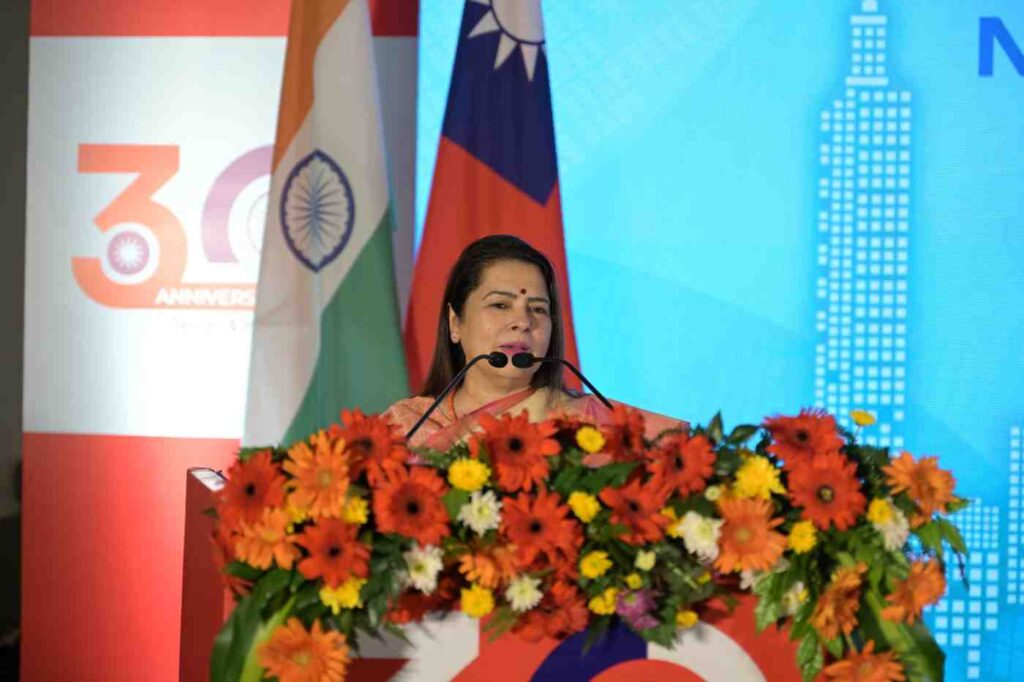
Highlighting the expansion of Taiwan’s official presence in India, he noted that TECC now operates offices in New Delhi, Chennai, and Mumbai, supported by TAITRA and the Taiwan Chamber of Commerce in major cities, ensuring full national coverage and connectivity with Indian industries.
“India may be 90 times larger in land area and 60 times bigger in population, but our shared democratic values and mutual spirit of innovation bring us remarkably close,” he said. “We both love milk tea—and we both cherish freedom, openness, and democracy.”
Taiwan’s New Southbound Policy (2016) and India’s Act East Policy have propelled bilateral trade from USD 5 billion in 2016 to USD 10.6 billion in 2024, Dr Chen said.
More than 300 Taiwanese companies have invested nearly USD 6 billion in India, creating approximately 200,000 jobs in industries such as electronics, machinery, ICT, and petrochemicals.
The envoy also highlighted the success of the Taiwan Expo 2025, recently held in New Delhi, where over 100 Taiwanese companies participated—half of them newcomers to India. “This enthusiastic participation reflects the growing confidence of Taiwan’s business community in India’s potential,” he added.
Scientific collaboration between the two sides has also gained momentum, with over 150 joint research projects completed since 2009 and around 50 ongoing each year. Areas of focus include green energy, nanotechnology, and biomedical research.
 Dr Chen mentioned a new 2024 MoU between Taiwan’s National Academy of Marine Research (NAMR) and India’s National Institute of Ocean Technology (NIOT) to advance marine research. Another 2025 agreement between Taiwan’s National Science and Technology Council and India’s Ministry of Earth Sciences will deploy P-Alert Plus seismic sensors across India to improve earthquake monitoring and early warning systems.
Education has become another defining dimension of bilateral relations. Taiwan has established 42 Taiwan Education Centers in Indian universities, promoting Mandarin learning and cultural studies. More than 3,000 Indian students are currently studying in Taiwan.
Dr Chen announced that in 2025, Taiwan awarded a record 150 government scholarships to Indian students—the highest number ever granted to any single country.
 A new MoU signed between the Foundation for International Cooperation in Higher Education of Taiwan (FICHET) and the Association of Indian Universities (AIU) will further expand student exchanges, joint degrees, and research programs. “We are building bridges of learning that go beyond borders,” he said.
Dr Chen also emphasised the growing importance of cultural diplomacy. Recent initiatives included the Taiwan Indigenous Music Night in New Delhi. Upcoming events include the Taiwan Film Festival, featuring the first Taiwan–India co-produced movie, Call Demon Hunter, and a performance by Taiwan’s top street dance group later this year.
He also acknowledged the Council for Strategic and Defence Research (CSDR) for releasing the landmark report “Taiwan Beyond Semiconductors: Three Decades of India–Taiwan Relations and Emerging Collaboration”, describing it as “the first comprehensive think tank assessment of our ties in a decade.”
The reception also featured displays of TAYSIS UAVs, ASUS computers, Kavalan Whisky, and Taiwanese Pop Tea, showcasing Taiwan’s technological and cultural innovation.
Concluding his remarks, Dr Chen expressed gratitude to the TECC team, Indian partners, and guests for their support.
“Our cooperation in semiconductors marks not just a technological alliance, but a shared vision for a resilient and innovative Indo–Pacific,” he said. “Together, Taiwan and India are powering the future—from logic chips to lasting friendship.”
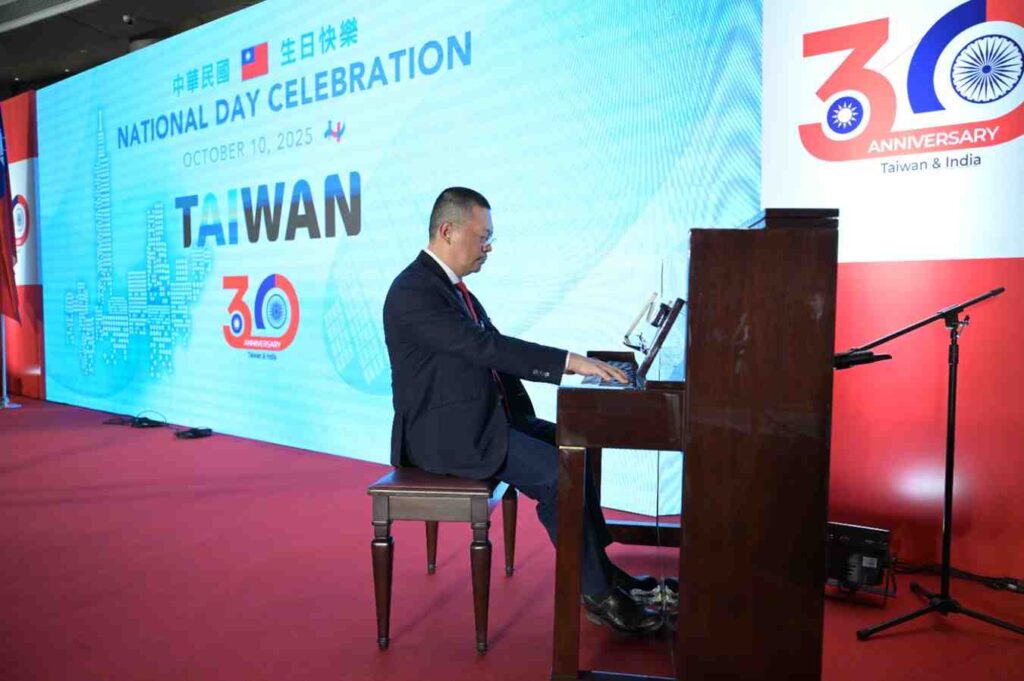
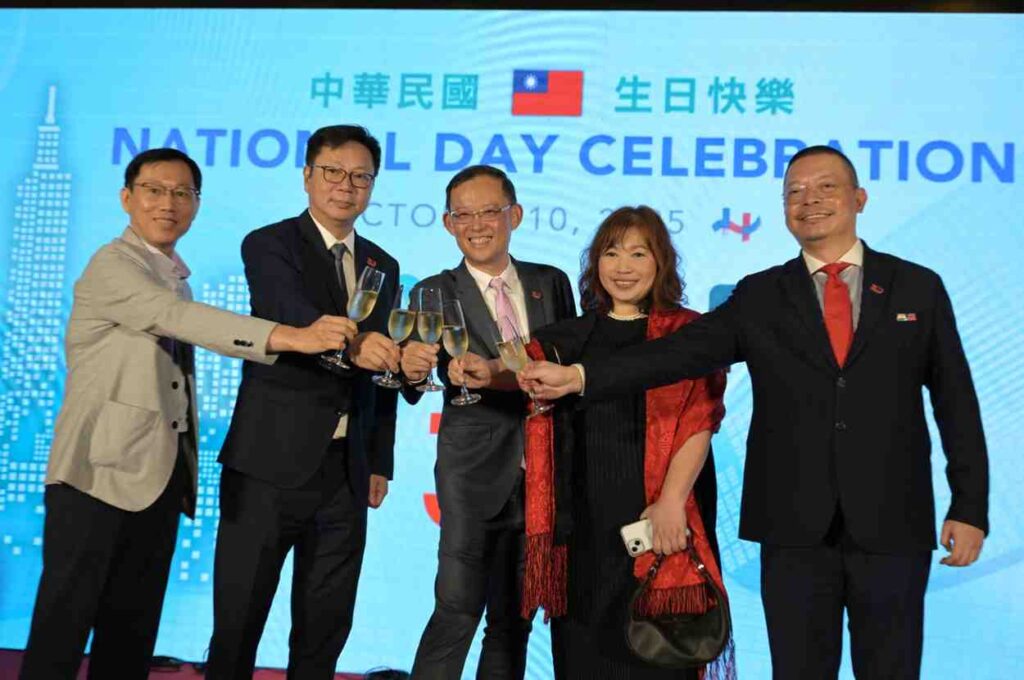
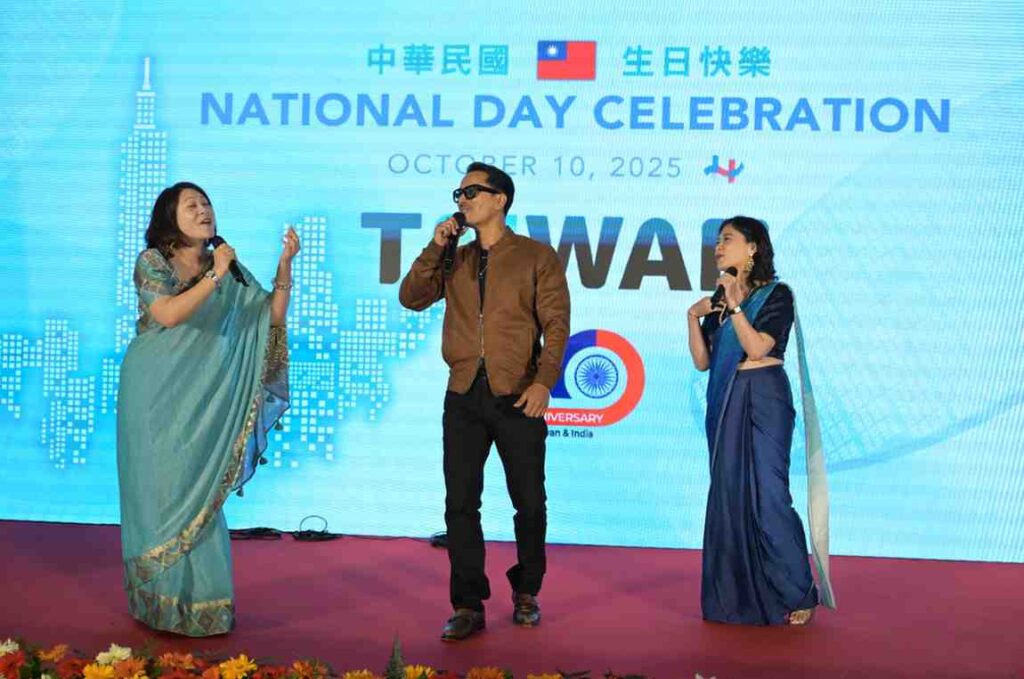
During the Taiwan National Day reception, Sunit Bora, deputy chief of mission Robert Hsieh, and assistant representative Isabel mesmerised the guests with their outstanding performance. Sunit Bora sang songs, Robert Hsieh played piano, and assistant representative Isabel sang a song.