A Korean Association that Runs on Foot: Lee Kwang‑il
In an exclusive interview with the ACN Network, Chairman Mr. Lee said, "When we scale up in 2026, we will be able to deliver consistently with more events, more partners.

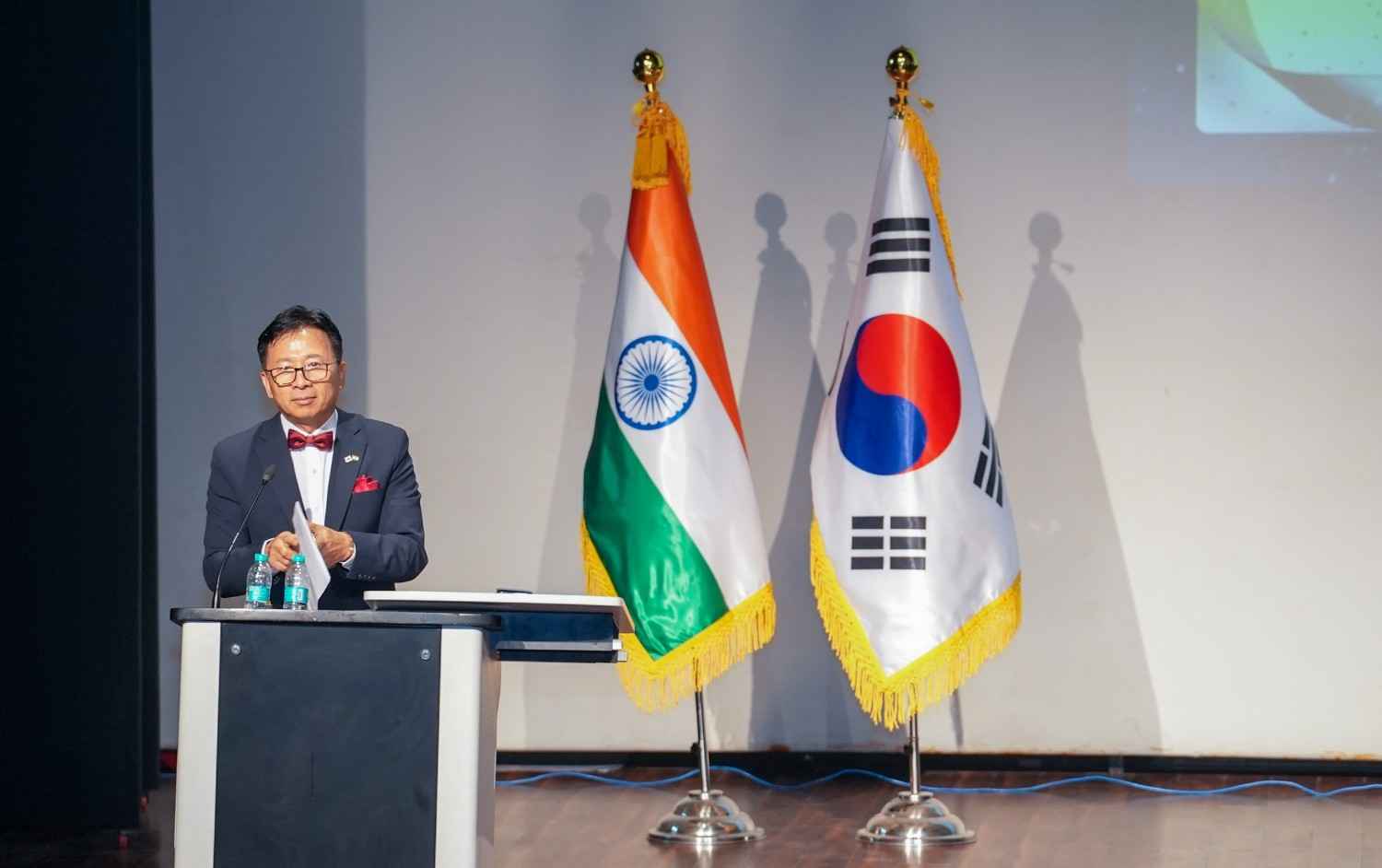
Under the leadership of Lee Kwang‑il, 2025 marked a year of structural reform, cultural visibility, and community-centric action for the Korean Association in India. In 2025, Mr Lee focused on building a more agile, transparent, and community-driven organisation, beginning with strategic restructuring and clear annual business planning. Financial transparency and accountability were strengthened through systematic budgeting and reporting, while community communication was enhanced through upgraded digital platforms that connect Koreans across India. Education and youth development were prioritised by strengthening Korean language schools and involving second-generation youth as active co-creators and leaders. Culturally, the Association marked a historic milestone with the Korean Community 70th Anniversary celebrations and expanded Korean cultural outreach into public spaces. Welfare support was reinforced through the launch of a dedicated Community Support Center at the Korean Embassy, alongside stronger partnerships with Indian media and healthcare institutions. The inclusion of members of Indian origin was an unprecedented move to foster cordial relations between the Korean and Indian communities. Here are excerpts from an interview with Mr Lee:
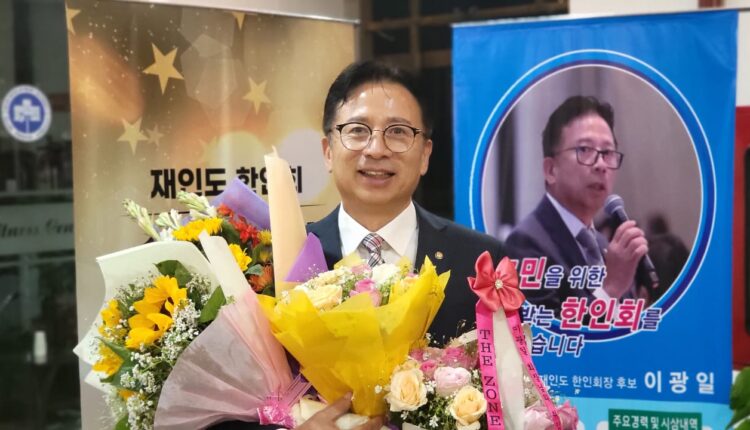 Q1. You took charge as Chairman of the Korean Association in India at the start of 2025. What was your first clear priority?
Lee Kwang‑il: My first priority was to give the Association a sharper structure and direction, not just organise events on autopilot. We held a strategy workshop at the IBS Center in Gurugram and presented an annual business plan focused on financial transparency, agile decision‑making and measurable community impact.
Q2. At that Gurugram workshop, you spoke about a “Korean Association that runs on foot.” What did you mean by that?
Lee Kwang‑il: I wanted to move away from the image of a slow, bureaucratic set‑up. A “Korean Association that runs on foot” is one that reaches out proactively—whether by helping a new family settle in, supporting a student in distress, or responding quickly to ideas from members across India.
 Q3. Financial transparency was a major theme in your 2025 agenda. What concrete steps did you take on this front?
Lee Kwang‑il: We committed to financial independence and clean accounting as the foundation of trust. This meant clearer budgeting for every project, systematic reporting to members, and a culture where sponsors and community members can see exactly how their contributions are used.
Q4. Communication within the Korean community is always a challenge in a large country like India. How did you strengthen this in 2025?
Lee Kwang‑il: We upgraded and actively used digital platforms like the magazine “Namaste India” and the online “Band” group to keep members informed in real time. These channels became hubs for announcements, welfare information and event updates, making it easier for Koreans in different cities to feel connected to one association.
A first-of-its-kind initiative was inviting two known personalities of Indian origin – Dr Abraham Lee and Sanjeev K Ahuja to be a part of the Korean Association in India. This move not only aimed at bringing the Korean and Indian communities closer but also offered an opportunity to the Korean nationals to think out of the box and forge new friendships beyond the Korean circles.
Q5. Education and youth featured prominently in your early speeches. What happened on that front in your first year?
Lee Kwang‑il: We treated the three Korean language schools supported by the Association as an “investment for the future” and prioritised improving their educational resources. The aim is to help children immerse themselves in the Korean language and culture while growing up in India, so they develop a confident dual identity rather than feeling caught between two worlds.
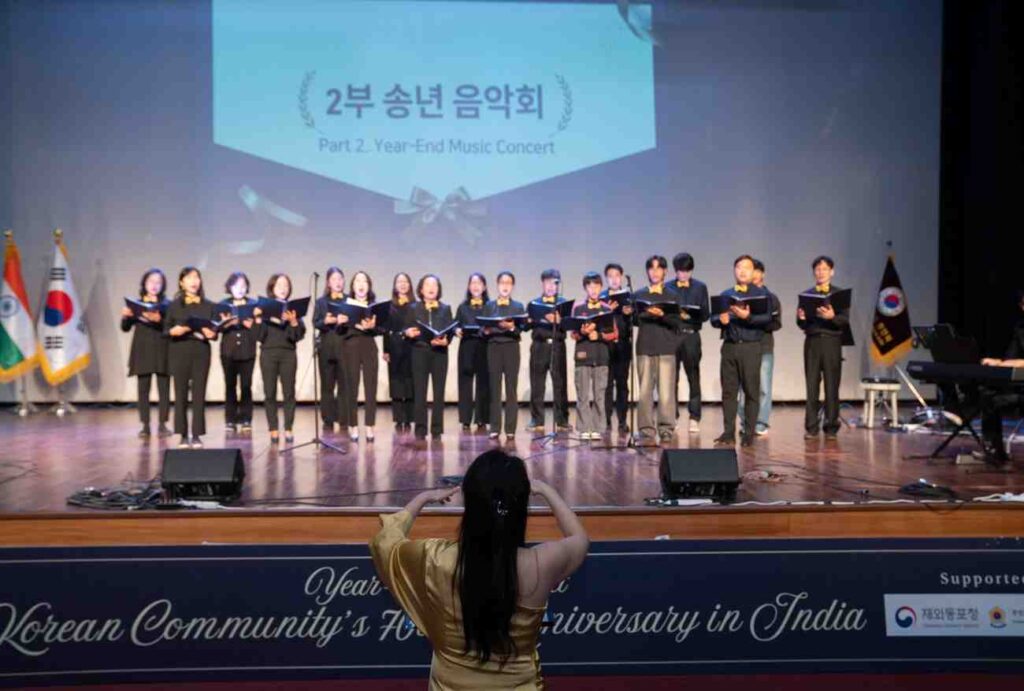 Q6. One of the biggest public milestones in 2025 was the Korean Community 70th Anniversary Year‑End Concert in New Delhi. Why was this event so important?
Lee Kwang‑il: The 70th Anniversary Year‑End Concert at the O.P. Jindal Auditorium was much more than a year‑end show; it was our community’s tribute to seven decades of Korean presence in India. We brought world‑class Korean classical musicians and dancers to perform for both Korean residents and Indian audiences, turning the evening into a shared celebration of history, gratitude and cultural harmony.
Q7. The celebrations also extended beyond the concert hall. How did you take Korean culture into public spaces in 2025?
Lee Kwang‑il: We started with a performance at Ardee Mall and Ambience Mall in Gurugram, where violin, dance and other acts converted a regular shopping space into a spontaneous cultural arena. Watching Indian shoppers pause, listen and engage reminded us that Korean culture is now woven into India’s everyday urban life, not confined to formal venues.
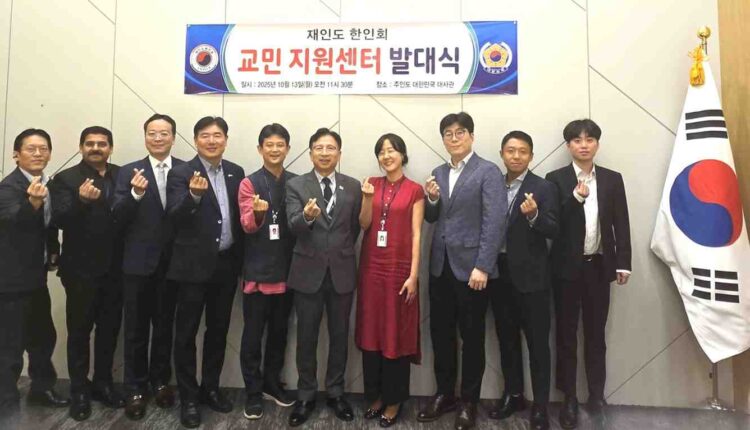 Q8. Welfare and support structures are critical for any diaspora. What new initiative did you launch in partnership with the Korean Embassy?
Lee Kwang‑il: Together with the Embassy of the Republic of Korea in India, we launched a dedicated Community Support Center at the Embassy premises in New Delhi. The idea is to create a systematic, responsive help desk for Korean nationals—from newcomers needing orientation to families and students dealing with emergencies or bureaucratic challenges.
Q9. You also worked closely with Indian partners, such as the media and healthcare institutions. How do these collaborations fit into your 2025–26 vision?
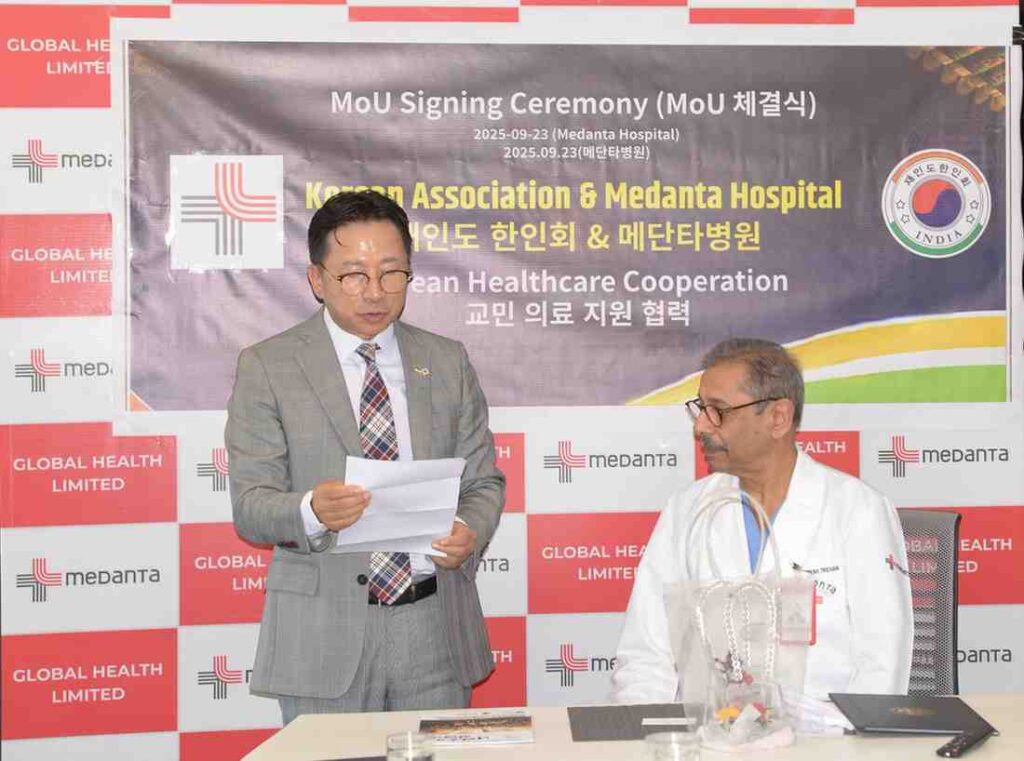
Lee Kwang‑il: Large‑scale concerts and anniversaries are visible, but quieter partnerships are equally important. Engagements with media platforms like Asian Community News (ACN) Network and collaborative initiatives with Indian hospitals such as India’s biggest healthcare institution, Medanta – The Medicity, help us communicate Korea’s story better and expand practical support networks for our community. In 2026, we plan to collaborate with more healthcare facilities for the benefit of the Korean community.
Q10. Looking ahead to 2026, what are the top three goals you are personally driving as Chairman?
Lee Kwang‑il: First, to deepen the work of the Community Support Center so that every Korean in India knows exactly where to turn in times of need. Second, to scale our cultural programming beyond one‑off concerts into a year‑round calendar that includes youth forums, joint India–Korea projects and more regional outreach. And third, to consolidate our financial and organisational reforms so that the Korean Association in India truly lives up to that vision of being agile, transparent and always “running on foot” alongside the community it serves.
 Q11. Many Indians know Korea mainly through K‑pop and dramas. In 2025, how did the Association try to go beyond just Hallyu fandom?
Lee Kwang‑il: Hallyu is a wonderful doorway, but we wanted people to step into the house, not just stay at the entrance. So, alongside contemporary music and screenings, we gave equal space to classical music, traditional dance, literature and history‑focused talks, so Indian audiences could see Korea as a complex, living culture—not only as entertainment content.
Q12. The 70th anniversary concert brought together Korean and Indian dignitaries, artists and community members. What kind of feedback did you receive from them?
Lee Kwang‑il: Many guests told us they felt they were witnessing a “maturing” of the Korean community in India—moving from small community functions to carefully curated, professional‑level productions. Several Indian partners also said they now see the Korean Association as a serious cultural and civic stakeholder, not just a community club, which is exactly the perception shift we were hoping for.
Q13. How are you encouraging second‑generation Korean youth in India to take ownership of Association activities?
Lee Kwang‑il: We have started involving them as co‑curators rather than just volunteers. Young members help design event concepts, social‑media campaigns and collaborative projects with Indian friends, and they also serve as emcees and youth representatives at major programmes. This dual role lets them practise leadership while shaping an association that reflects their own hybrid Korean‑Indian identity.
Q14. From an organisational standpoint, what internal changes in 2025 will make the Association stronger in 2026 and beyond?
Lee Kwang‑il: Internally, we clarified roles within the executive team, set up small task‑based committees, and insisted on documented processes for events, finances and communication. It may sound technical, but these foundations mean that when we scale up in 2026—more events, more cities, more partners—we will be able to deliver consistently without burning out our volunteers.
Q15. Finally, what would success in 2026 look like for you when you look back a year from now?
Lee Kwang‑il: If by the end of 2026, more Koreans in India say, “The Association really stood by us this year,” and more Indians say, “Because of the Association, I feel closer to Korea,” I will consider it a successful year. Numbers matter—attendance, partnerships, programmes—but ultimately success is when people feel more supported, more connected and more inspired by the Korea–India journey we are part of together.