New Delhi Successfully Hosts 27th World Korea Forum with Wide Global Participation
Two-day international gathering at the DU brought together diplomats, policymakers, academics, strategic experts and Korean diaspora leaders to discuss Korea–India relations, Korean Peninsula peace, economic security and the changing global order

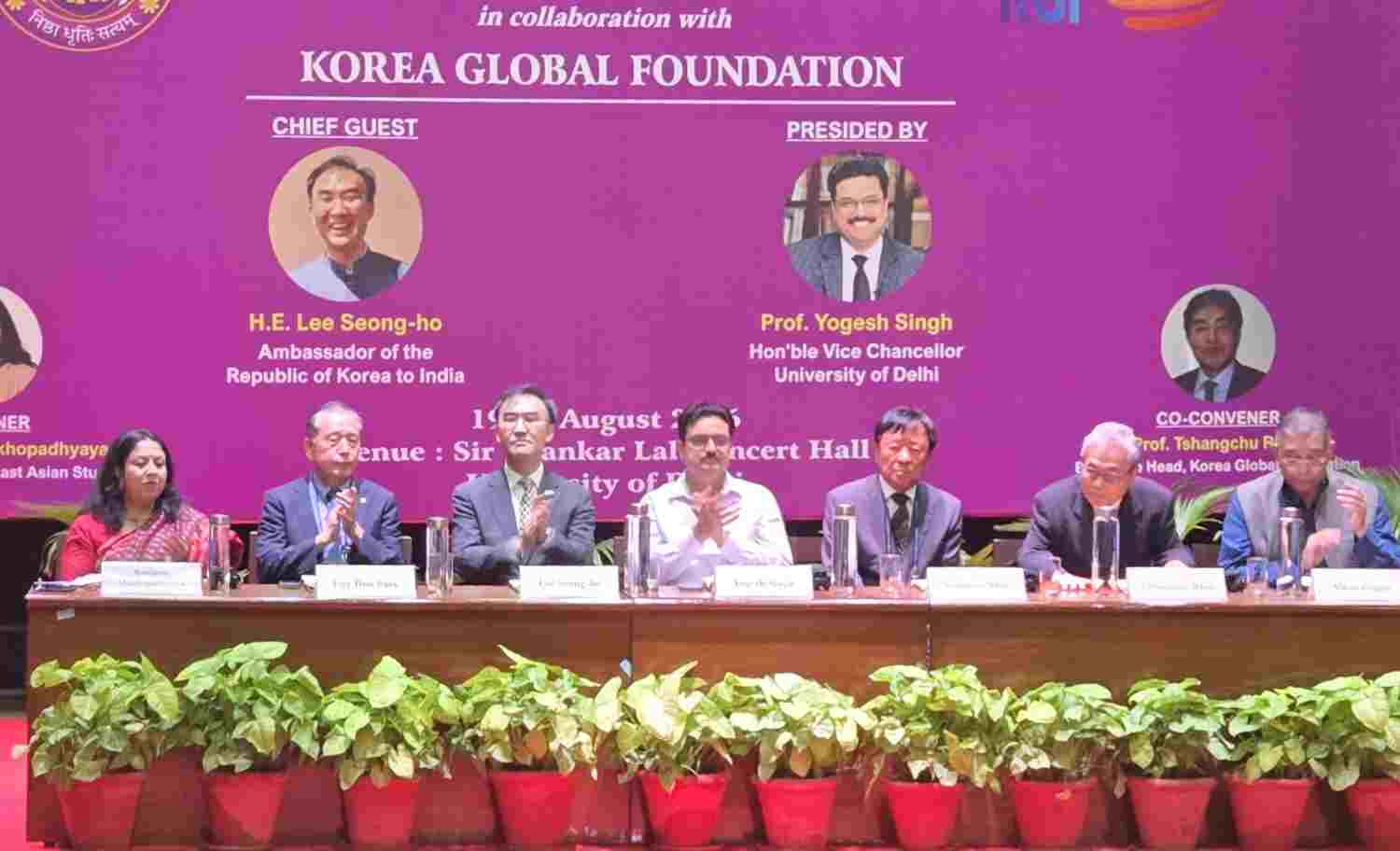
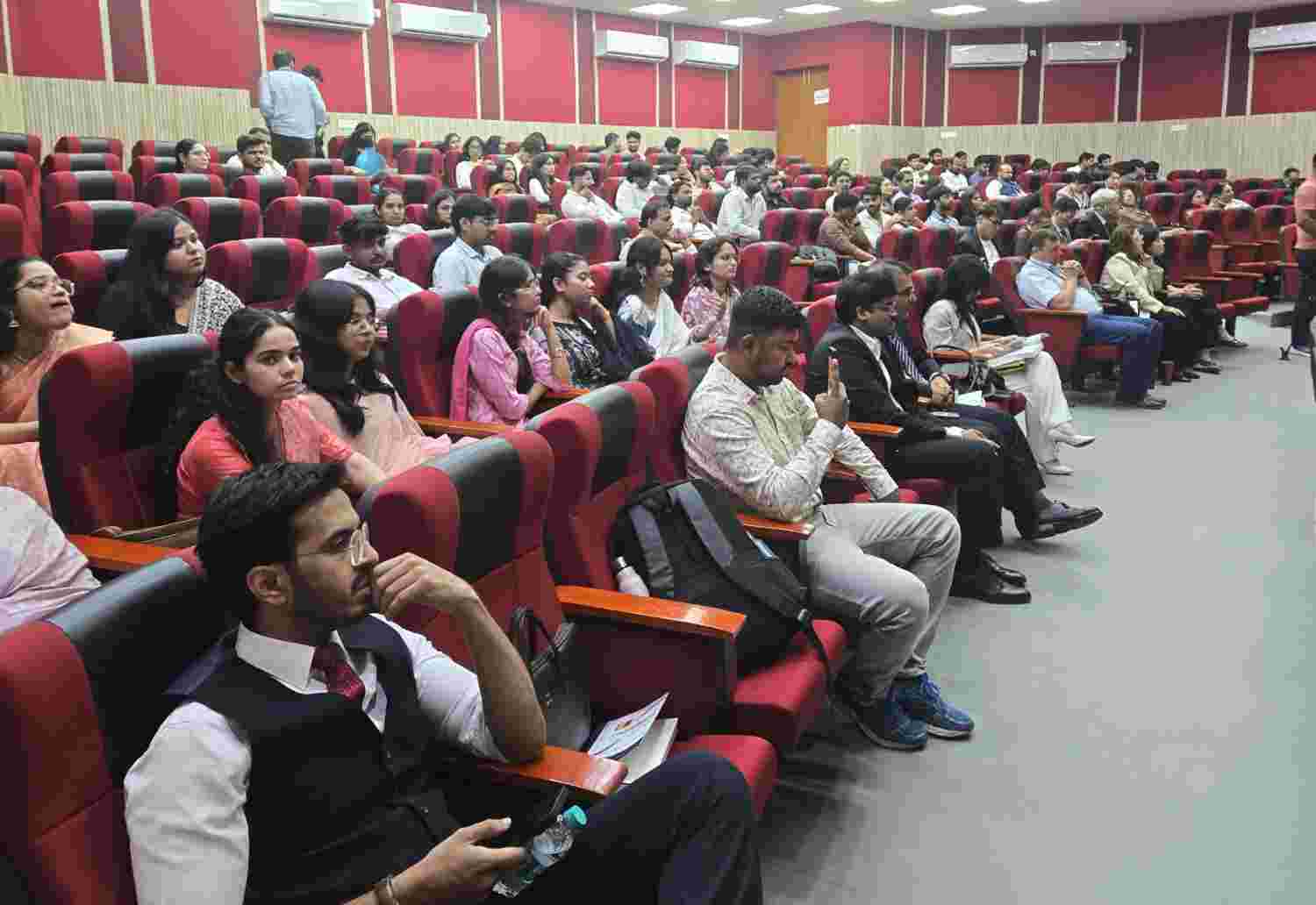
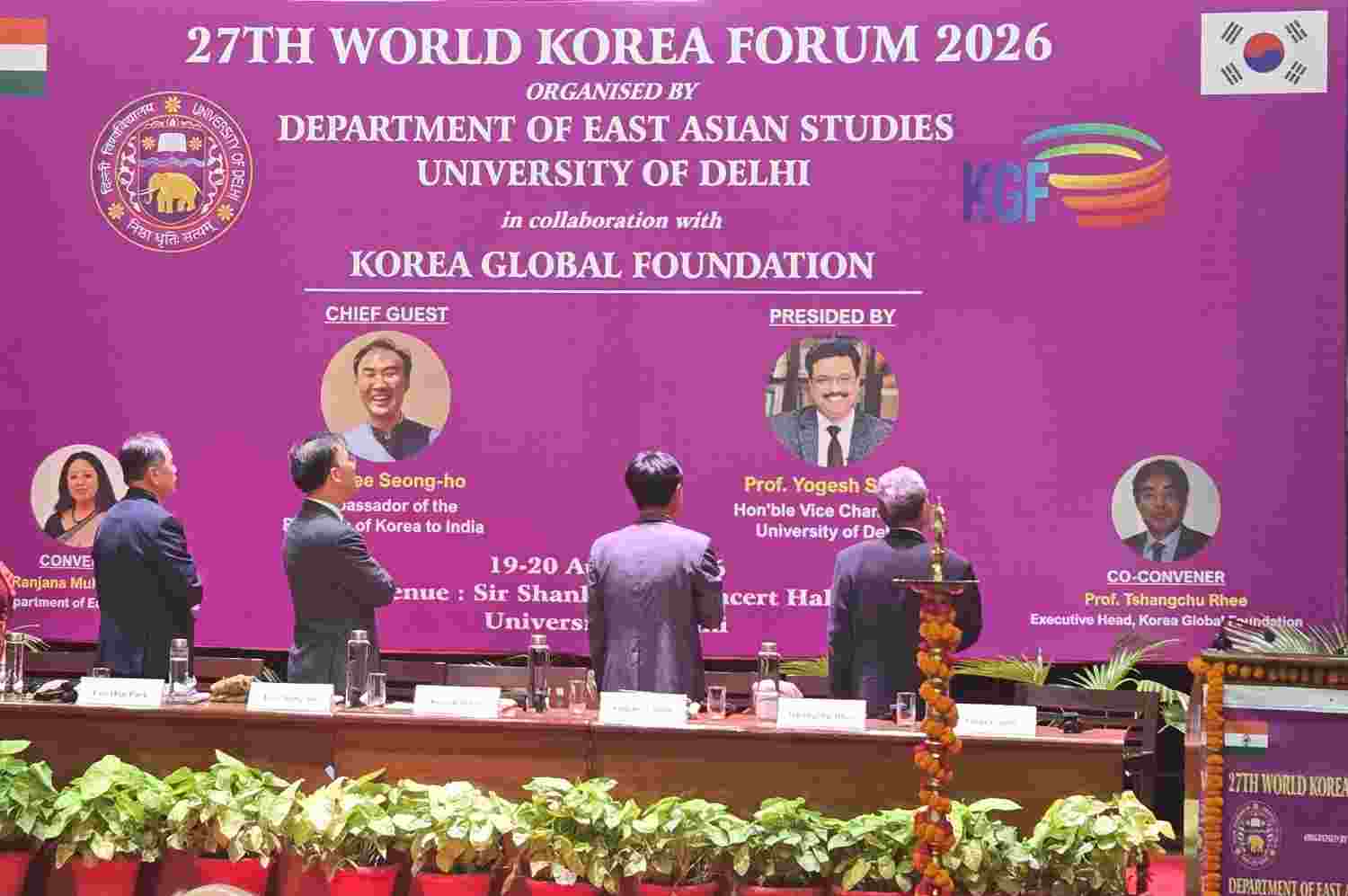
New Delhi: New Delhi successfully hosted the 27th World Korea Forum and Global Opinion Leaders Summit 2026, bringing together an impressive assembly of diplomats, policymakers, academics, strategic thinkers, business representatives and Korean diaspora leaders from across the world.
Held on August 19 and 20 at the University of Delhi’s North Campus, the two-day forum transformed the Indian capital into an international platform for substantive dialogue on the Korean Peninsula, India–South Korea relations, Indo-Pacific geopolitics, economic security, public diplomacy, cultural cooperation and the changing global order.
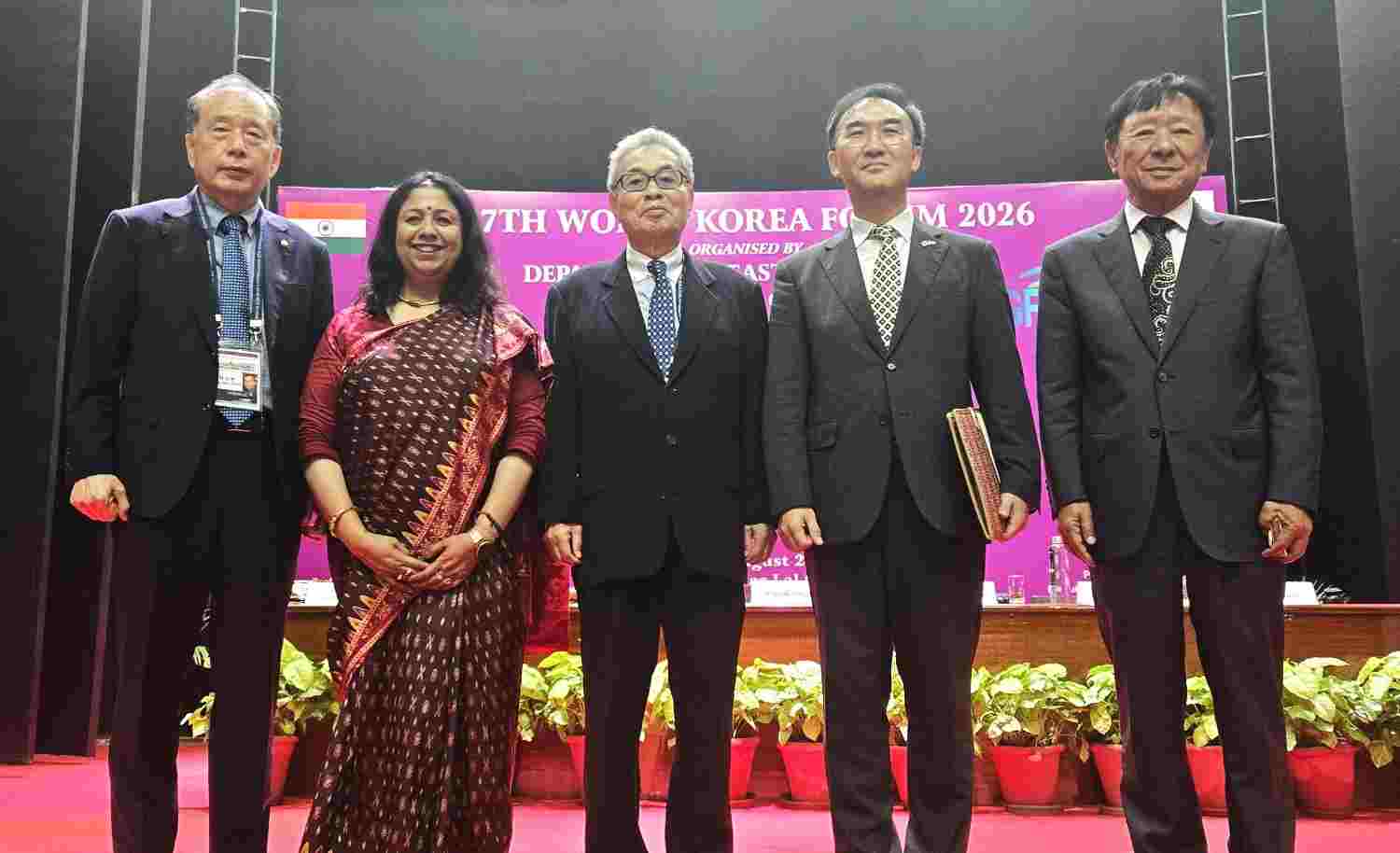 The scale and diversity of participation emerged as one of the most significant features of the forum. Experts and opinion leaders associated with institutions in India, South Korea, the United States, the United Kingdom, Russia, Italy, Japan, China, New Zealand, Kazakhstan and Uzbekistan contributed to its wide-ranging deliberations.
The successful organisation of such a large international gathering underlined New Delhi’s growing importance as a centre for global policy dialogue, particularly on issues connecting East Asia, South Asia and the wider Indo-Pacific.
The Korea Global Foundation organised the forum in association with the Department of East Asian Studies, University of Delhi, and the Southwest Asia Chapter Council of the Peaceful Unification Advisory Council, or PUAC.
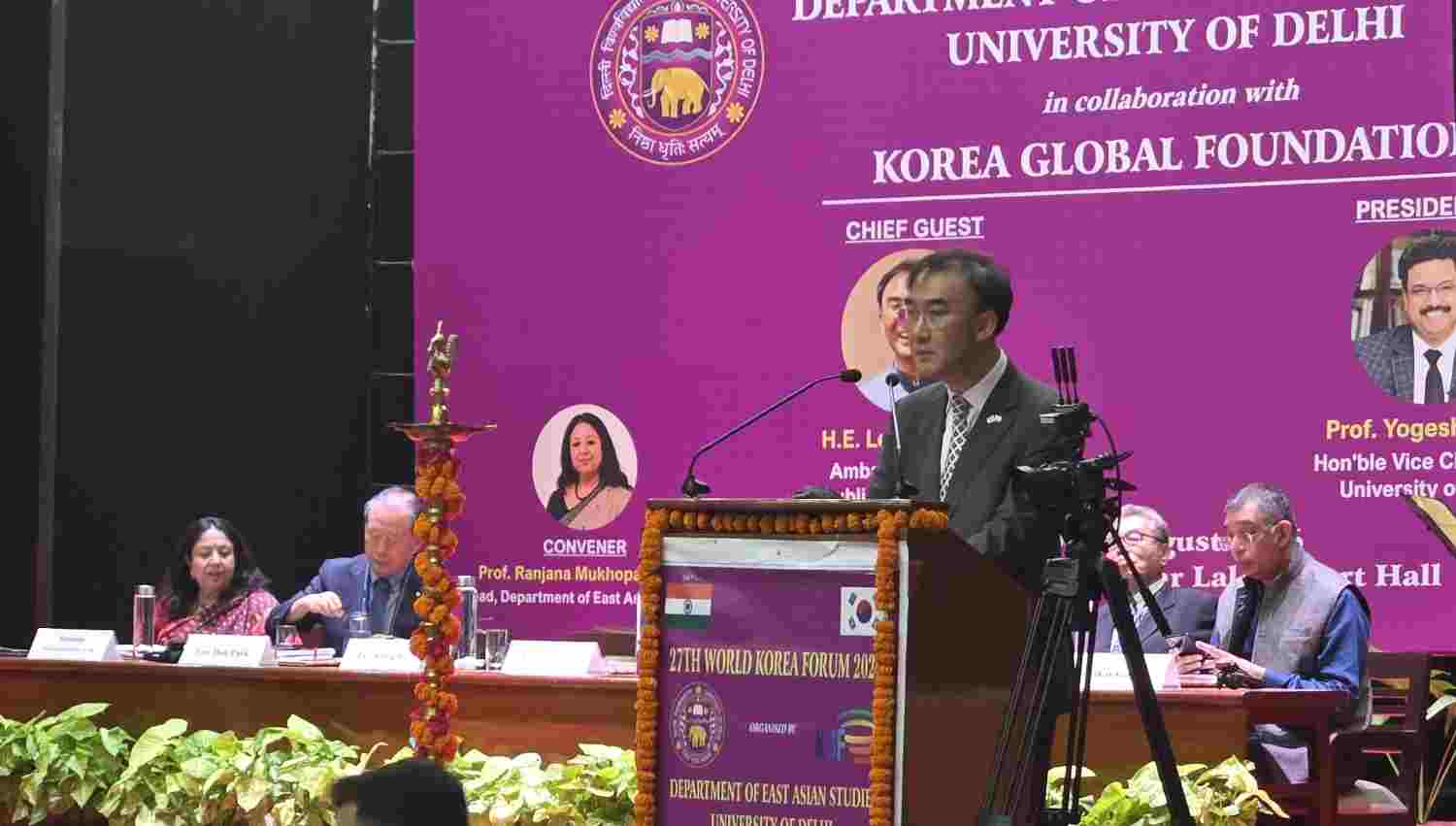 Sessions were held at the historic Vice Regal Lodge and Shankar Lal Auditorium of the University of Delhi, providing an academic setting for exchanges involving specialists from diverse professional, institutional and national backgrounds.
Rather than limiting itself to a conventional discussion of bilateral relations, the forum examined Korea and India within a much wider geopolitical framework. It connected developments on the Korean Peninsula with the rise of India, changes in the Indo-Pacific, the growing influence of the Global South and the restructuring of international political and economic systems.
India placed at the centre of global deliberations: The decision to hold the 27th edition in New Delhi carried particular significance. Throughout the programme, India was discussed not merely as an economic partner of South Korea but as an increasingly influential geopolitical and civilisational power capable of contributing to peace, stability and cooperation in Asia.
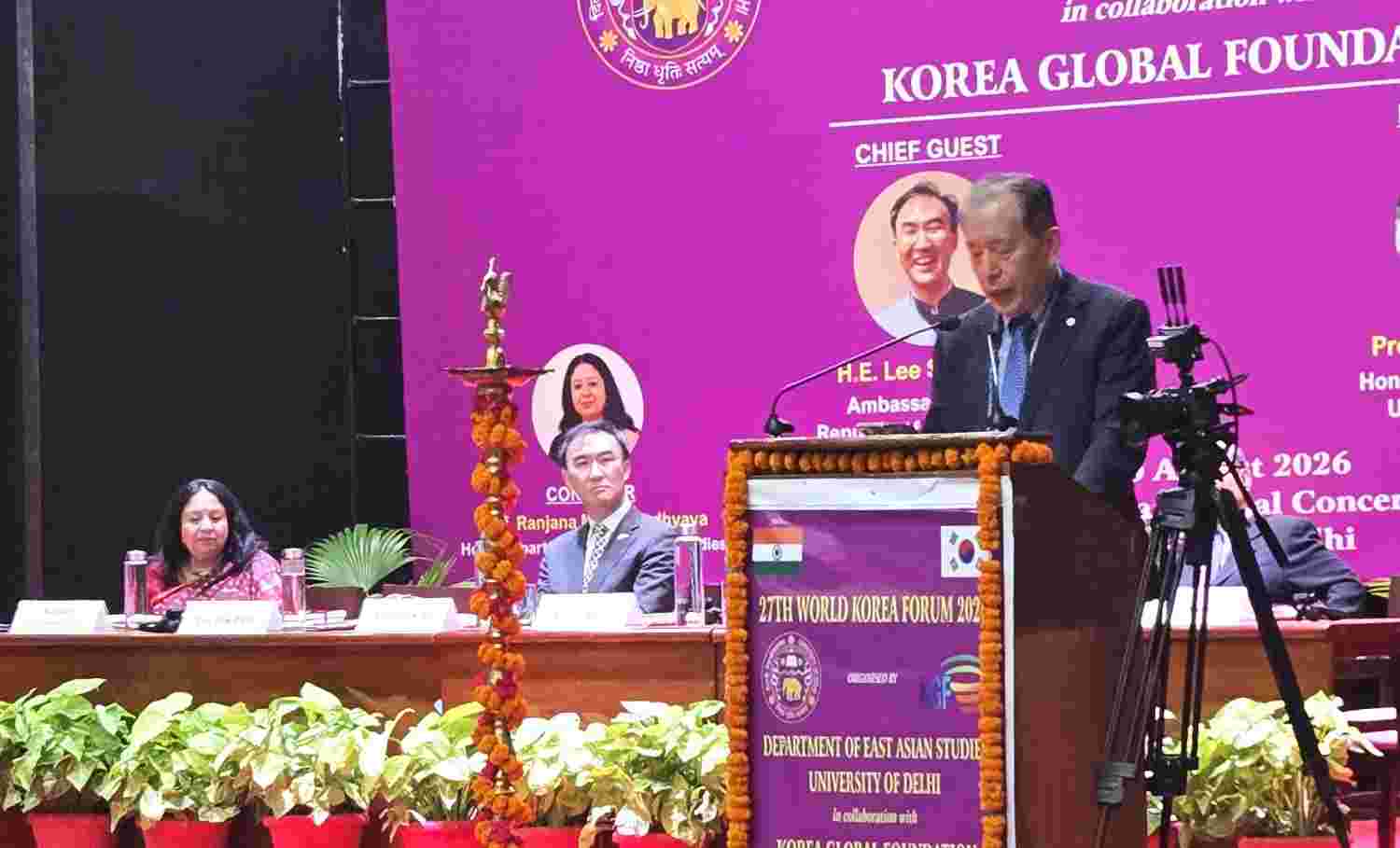 The forum highlighted India’s position between East and West, its leadership role in the Global South and its expanding engagement with the Indo-Pacific, BRICS and other multilateral arrangements.
It also examined how India and South Korea could strengthen strategic solidarity at a time of intensifying geopolitical competition, supply-chain restructuring and growing concerns about economic and national security.
The inaugural proceedings included reflections on the 26-year journey of the World Korea Forum and its evolution into a meeting ground for international opinion leaders.
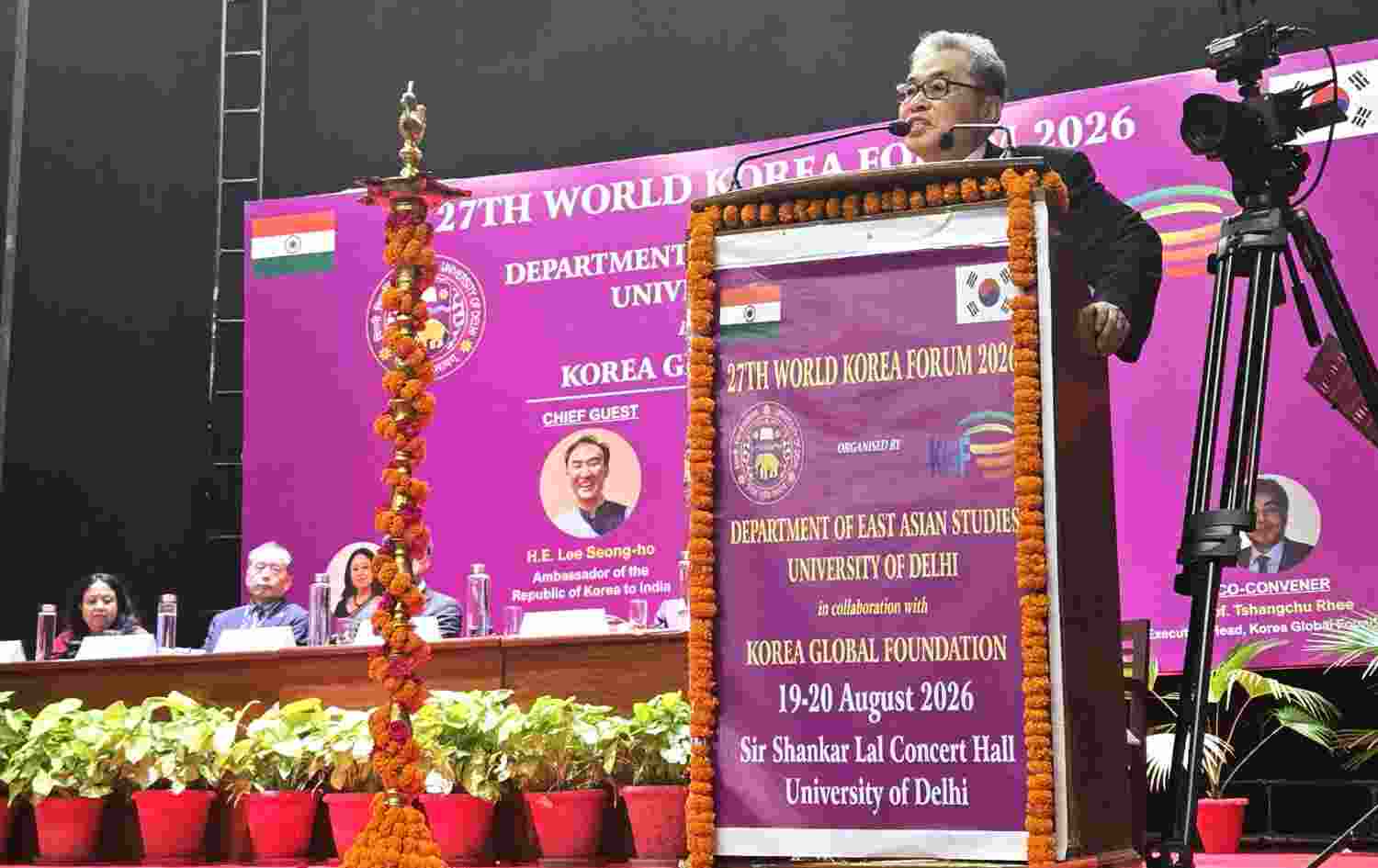
 Prof. Dr. Tshangchu Rhee, Executive Head of the Korea Global Foundation, placed the discussions in the context of multilateral geopolitical changes and increasing competition within the global order.
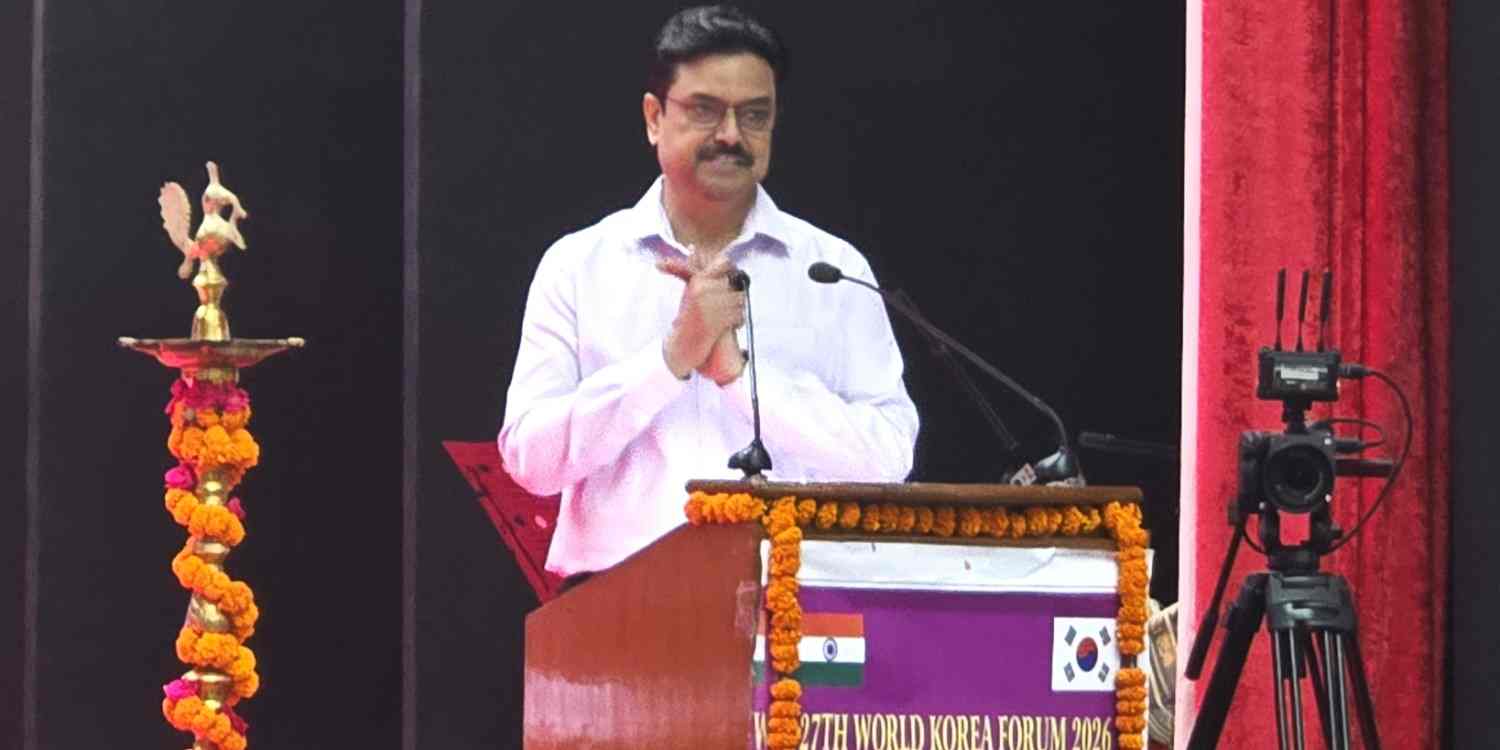
Prof. Dr. Yogesh Singh, Vice-Chancellor of the University of Delhi, addressed India’s civilisational heritage, modern development and future trajectory, giving international participants a broader understanding of the country hosting the forum.
Welcoming the participants, Prof. Dr. Ranjana Mukhopadhyaya, Head of the Department of East Asian Studies at the University of Delhi, said the university was delighted to host a prestigious international gathering that brought together diplomats, academics, policy experts, scholars and students from around the world.
 She said the forum provided an important opportunity to examine the evolving dynamics of the Korean Peninsula and the rapidly expanding India–South Korea relationship. Describing the bilateral partnership as one founded on shared democratic values, mutual trust, economic cooperation and technological innovation, she said it was further enriched by the historic Ayodhya–Gimhae connection and the growing influence of the Korean Wave among young Indians.
The gathering also highlighted more than half a century of diplomatic relations between India and South Korea and the need to take the partnership beyond its existing economic foundations.
South Korea’s Ambassador to India, Lee Seong-ho, described New Delhi’s hosting of the forum as particularly meaningful, noting that the World Korea Forum had brought together experts from government, academia, industry and the media for the past 27 years. Referring to the Joint Strategic Vision announced during President Lee Jae Myung’s state visit to India in April, he said the two countries had agreed to deepen cooperation in advanced technologies, digital transformation, shipbuilding, defence industries, supply chains and clean energy. “This marks an important milestone, demonstrating that our bilateral relationship is evolving beyond traditional cooperation into a strategic partnership,” the Ambassador said, adding that no country could respond alone to the profound changes reshaping the international order.
Sangman Shim, Chair of the forum and a prominent leader of the global Korean community, highlighted the expansion of Korean associations and businesses overseas and the emerging role of diaspora networks.
Dr. Euy Don Park, President of the Southwest Asia Chapter Council of PUAC; Dr. Vikas Gupta, Registrar of the University of Delhi; and other institutional leaders also participated in the forum.
Korean Peninsula peace receives sustained attention: Peace and security on the Korean Peninsula remained one of the central themes of the gathering.
Experts examined the prospects for peaceful coexistence between North and South Korea, Seoul’s approach towards Pyongyang and the implications of North Korea’s increasingly confrontational “two hostile states” position.
The discussions went beyond the immediate North–South relationship to consider nuclear security, extended deterrence, US–North Korea negotiations and closer strategic coordination among North Korea, China and Russia.
Dr. Seong-Chang Cheong, Vice-President of the Sejong Institute, addressed South Korea’s nuclear-security challenges and the potential for cooperation among strategically important middle powers.
Other contributors included Prof. Dr. Kevin Gray of the University of Sussex; Dr. Divakaran Padma Kumar Pillay, a retired Indian Army colonel and fellow at the Manohar Parrikar Institute for Defence Studies and Analyses; Prof. Dr. Sudhakar Vaddi of Jawaharlal Nehru University; Prof. Dr. Jojin V. John of Mahatma Gandhi University; Prof. Dr. Hyun-chul Yeo of Kookmin University; and Jenny Town, Senior Fellow at the Stimson Center and Director of 38 North.
The participation of experts representing different national and academic perspectives gave the forum’s deliberations a genuinely international character.
India’s possible peace-building role explored: A dedicated segment organised with the Southwest Asia Chapter Council of PUAC examined how India could contribute to peace, reconciliation and shared prosperity on the Korean Peninsula.
Participants discussed India’s long-standing relations with both Koreas, its growing strategic relevance and its credibility across the Global South. These factors were presented as potential assets that could allow India to support constructive engagement without becoming directly entangled in traditional power rivalries.
 Dr. Euy Don Park said the world was standing at a major turning point as the centre of gravity of the global economy and security shifted towards the Indo-Pacific. “PUAC firmly believes that peace on the Korean Peninsula cannot be achieved through military strength alone,” he said, adding that sustainable peace could only be built upon dialogue, mutual trust, cooperation and shared prosperity. Describing India as an exceptionally important strategic partner, Dr. Park said its strategic autonomy, balanced diplomacy and international credibility could become valuable assets in easing tensions, building confidence and expanding international support for peace on the Korean Peninsula.
Among the other contributors were Prof. Dr. Wongi Choe of the Korea National Diplomatic Academy; former Indian Ambassador to South Korea Skand R. Tayal; Prof. Dr. Sandip Mishra of Jawaharlal Nehru University; geopolitical analyst Robinder Sachdev; Prof. Dr. Navnita Rehra of the University of Delhi; and Prof. Dr. Nansi Paulraj of Loyola College, Chennai.
Bun Do Choi, Vice-Chairman of PUAC’s Asia-Pacific region, connected the Korean peace question with public diplomacy and the need for wider international solidarity during a period of global transformation.
The session reinforced the forum’s broader message that peace on the Korean Peninsula should not be viewed exclusively through the strategic calculations of major powers. Middle powers, academic institutions, civil-society networks and diaspora communities could also make meaningful contributions.
Changing world order and economic security: The forum devoted considerable attention to changes in international relations and the emergence of new economic-security considerations.
Scholars examined North Korea’s strategy towards South Korea and the United States, reform of the United Nations Security Council, Buddhist perspectives on international order, political division on the Korean Peninsula and the influence of nationalism on peace and conflict in East Asia.
The international panel included Prof. Dr. Tae-Hyung Kim of Soongsil University; Prof. Dr. Dmitry N. Baryshnikov of Saint Petersburg State University; Sangmo Chung of the Korean Peace Culture Institute; Prof. Dr. Narender Kumar of Jawaharlal Nehru University; Prof. Dr. Antonio Fiori of the University of Bologna; and Dr. Juhee Seok of the Northeast Asian History Foundation.
Former British Ambassador to North Korea John Everard moderated discussions examining some of the most complex political and security questions confronting the region.
A separate geoeconomic session considered economic security, fair trade and the changing roles of major and middle powers.
The deliberations covered the foreign economic policies of India, Russia and China; the political economy of BRICS and the Global South; relations between great and middle powers; and the European Union’s strategic engagement with India and other emerging economies.
Prof. Dr. Youcheer Kim of Duksung Women’s University addressed economic-security structures and minilateral cooperation, while Apurv Kumar Mishra, Consultant to the Economic Advisory Council to the Prime Minister of India, examined trends and prospects in India–South Korea economic cooperation.
Antara Ghosal Singh of the Observer Research Foundation, Prof. Dr. Rahul Mishra of Jawaharlal Nehru University and Dr. Amaia Sanchez-Cacicedo of the London School of Economics and Political Science were among the other contributors.
Diaspora, culture and academic cooperation: The forum’s scope extended beyond geopolitics and economics. It recognised the Korean diaspora as a strategic bridge connecting Korea with countries and communities around the world.
Discussions explored the development of the Korean community in India, diaspora-led public diplomacy, Korean-American identity and the experiences of Korean communities in Central Asia.
Participants from South Korea, India, New Zealand, Kazakhstan, Japan, China and Uzbekistan brought regional and community perspectives to these exchanges.
The concluding thematic deliberations focused on literature, philosophy, migration, education and cultural interaction.
Dr. Eunjoo Choi, General Director of the Seoul Museum of Art, examined Rabindranath Tagore’s contributions to literature, art, education and philosophy and their continuing relevance to cultural relations between India and Korea.
Other speakers addressed the translation of Korean literature into Hindi, Korean-language education in India, South–South cooperation, Indian philosophy, K-culture, K-philosophy and the future of institutional academic collaboration.
By combining strategic affairs with economics, diaspora engagement, education, literature and culture, the 27th World Korea Forum presented India–South Korea relations as a multidimensional partnership.
The forum’s successful conclusion demonstrated that New Delhi could host a major international dialogue on Korean and East Asian affairs while bringing a distinct Indian and Global South perspective to the discussions.
More importantly, it created opportunities for scholars, diplomats, policymakers and community leaders who might otherwise work within separate professional or national spheres to engage with one another on a common platform.
The gathering ultimately positioned India not as a distant observer of developments on the Korean Peninsula but as a relevant stakeholder and potential contributor to Asian peace, economic cooperation and international dialogue.