
Tower of Justice Without Lawyer Chambers? Gurugram Bar Seeks CJI’s Intervention
After the court fire disrupted seating arrangements and forced hearings into make-shift facilities, Gurugram lawyers say the nearly completed ₹295-crore Tower of Justice must include proper working space for advocates.

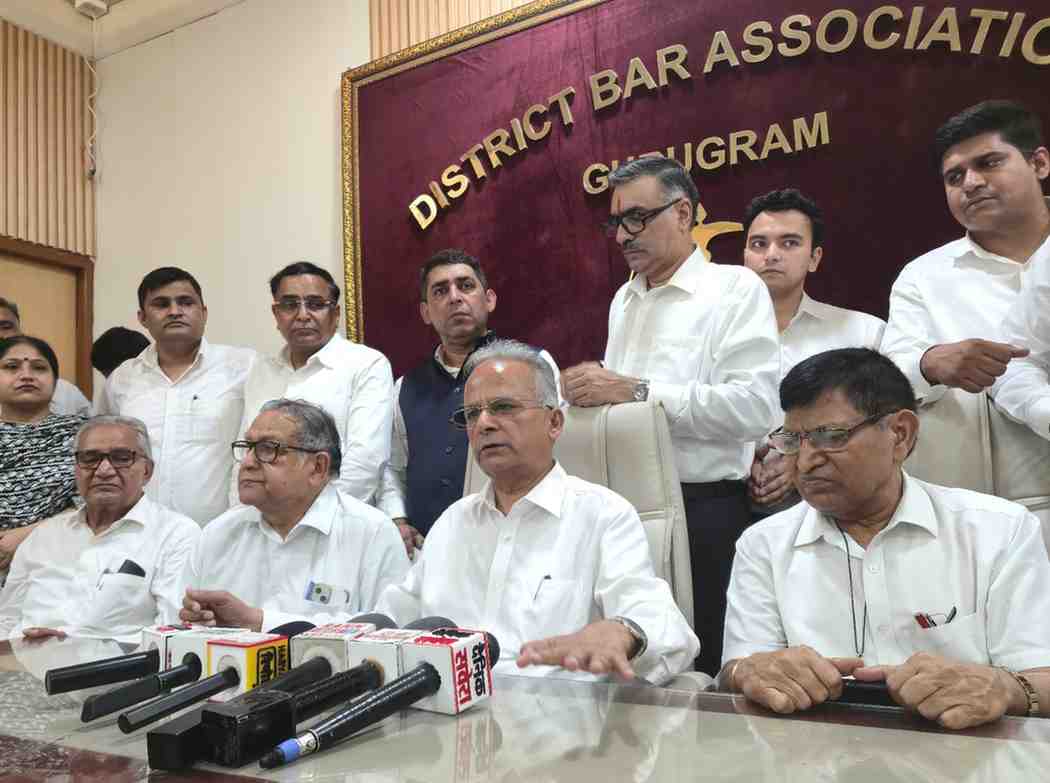
New Delhi: Even before its formal inauguration, Gurugram’s much-awaited Tower of Justice has triggered a major concern among the city’s legal fraternity, with the District Bar Association demanding that the new judicial complex must make adequate provision for lawyer chambers and seating space.
The issue has become more urgent after the recent fire incident in the existing court complex disturbed the already limited seating arrangements for advocates. Following the incident, the judicial department had to shift court hearings to a make-shift arrangement at the PWD Guest House located in the vicinity. While the courts continued to function under temporary arrangements, several lawyers who lost access to their earlier seating space were forced to manage their professional work either from whatever limited space remained available or from their private offices and homes.
Against this backdrop, the Bar Association says the upcoming Tower of Justice cannot be treated merely as a building for courtrooms. It must also have proper space for advocates, who are an essential part of the justice delivery system.
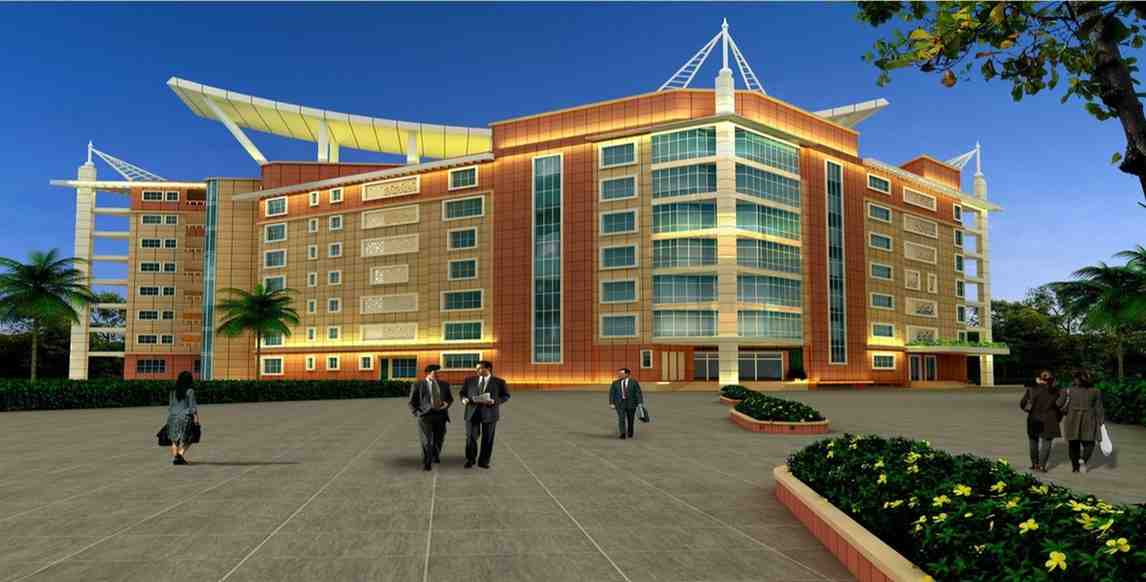
The seven-acre project, estimated at around ₹295 crore and nearing completion, is expected to be inaugurated soon by the Chief Justice of India. However, the District Bar Association, Gurugram, has raised a serious objection, saying that a judicial complex of such scale cannot function effectively without proper working facilities for lawyers.
 District Bar Association president Chandra Kant Sharma said the association would seek the intervention of the Chief Justice of India and would also meet Haryana Chief Minister Nayab Singh Saini to press for the demand. He warned that if the issue remained unresolved, the Bar would be left with no option but to approach the Punjab and Haryana High Court.
According to Sharma, the issue is not new. He said the Bar Association has been raising the demand for lawyer chambers since 2015, when the plan for the Tower of Justice first came to the fore. Repeated representations were made over the years, including to the then Chief Minister Manohar Lal Khattar, but the demand was not addressed, he said.
“The Tower of Justice is being completed without any proper provision for lawyers’ chambers. How can courts function without lawyers having a place to sit, consult clients, prepare cases and operate professionally?” Sharma said.
The District Bar Association has a membership of more than 10,000 lawyers. At present, advocates are operating from the existing court premises, where the number of available chambers is highly limited. Bar representatives said the present arrangement roughly works out to only about 100 chambers for every 1,000 lawyers, leaving a large number of advocates without proper working space.
The situation worsened after the fire incident, as even the limited seating arrangement available earlier was disturbed. Lawyers said that many advocates, especially younger members of the Bar and those without private offices, have been facing severe difficulty in meeting clients, preparing case files, conducting consultations and attending court proceedings in an organized manner.
Advocate Kulbhushan Bhardwaj said the absence of proper seating space for lawyers is not just an inconvenience for advocates but also a problem for litigants.
“When lawyers do not have a proper place to sit and work, the first person to suffer is the litigant. A lawyer needs space to meet clients, study files, prepare arguments and coordinate with court staff. After the fire incident, many advocates have been left without even basic seating arrangements. Therefore, it becomes even more important that the new Tower of Justice should have dedicated chambers and working space for lawyers,” Bhardwaj said.
The association has argued that the absence of lawyer chambers in the new complex would create serious practical difficulties for advocates, litigants and the justice delivery system itself. Lawyers said the new court complex may provide modern courtrooms and judicial infrastructure, but without adequate space for advocates, it would remain incomplete from a functional point of view.
Sharma said that almost all court complexes in Haryana have provision for lawyer chambers, but the Tower of Justice, despite being projected as one of the most modern judicial complexes in the region, has allegedly ignored this essential requirement.
The Bar Association is expected to intensify its campaign in the coming days. Its representatives plan to meet the Chief Minister and seek immediate administrative intervention before the inauguration of the complex. They also want the matter to be taken up at the highest judicial level so that a suitable arrangement for lawyer chambers can be incorporated into the project.
The Tower of Justice has been planned as a major judicial infrastructure upgrade for Gurugram, a city where litigation pressure has grown rapidly with urban expansion, commercial development and population growth. The complex is designed to accommodate 55 district and sessions courts, compared to the existing 45 courts handling a large pendency of cases. The project includes two blocks, with one block having eight floors and the other seven floors. Each floor is expected to have court-related facilities, waiting areas and space for prosecution officials.
When originally conceptualised, the project was projected as one of the largest judicial complexes in North India, with modern facilities for courts, public access, meeting halls and conference spaces. However, the Bar Association’s objection has now put the spotlight on whether the planning adequately took into account the working requirements of advocates.
The issue has gained urgency as the project is said to be in its final stage. Bar leaders argue that once the complex is inaugurated and occupied without chambers, it would become far more difficult to correct the planning gap.
The association has now made it clear that it does not oppose the Tower of Justice project. Instead, it wants the authorities to ensure that the complex serves all stakeholders of the judicial system, including judges, court staff, litigants and lawyers.
For Gurugram’s legal community, the demand is simple: a Tower of Justice must also have space for those who help deliver justice.