From Chips to Ships: India–Korea Partnership Gains Momentum
At CSDR dialogue, Ambassador Lee Seong-ho calls for greater Korean SME participation, increased investments, AI collaboration and stronger people-to-people exchanges between India and South Korea.

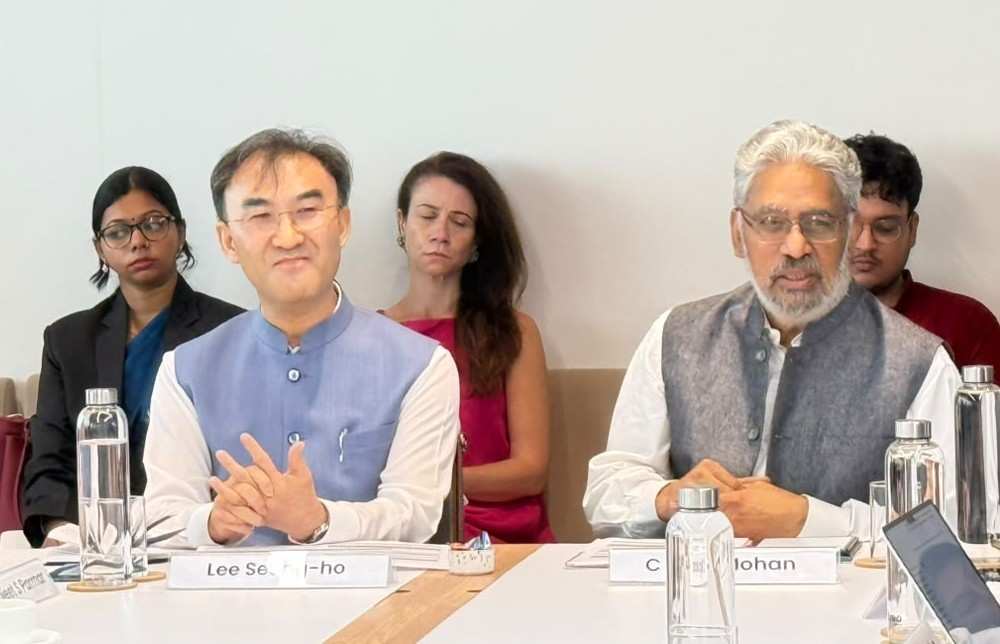
New Delhi, June 10, 2026: The Council for Strategic and Defense Research (CSDR) hosted a high-level discussion titled “From Chips to Ships: Assessing the Modi–Lee Summit and the Road Ahead” at its New Delhi office, bringing together diplomats, policymakers, industry leaders and strategic experts to examine the evolving contours of the India–Republic of Korea partnership.
The discussion featured Lee Seong-ho, Ambassador of the Republic of Korea to India; Dr. Choongjae Cho, Director of the Delhi Office of the Korea Institute for International Economic Policy (KIEP); Capt. Sarabjeet S. Parmar (Retd), Distinguished Fellow at CSDR; and Ms. Nemesisa Ujjain, Vice President and Head of The Circle: Founders Club. The session was moderated by Prof. C. Raja Mohan, Korea Chair at CSDR.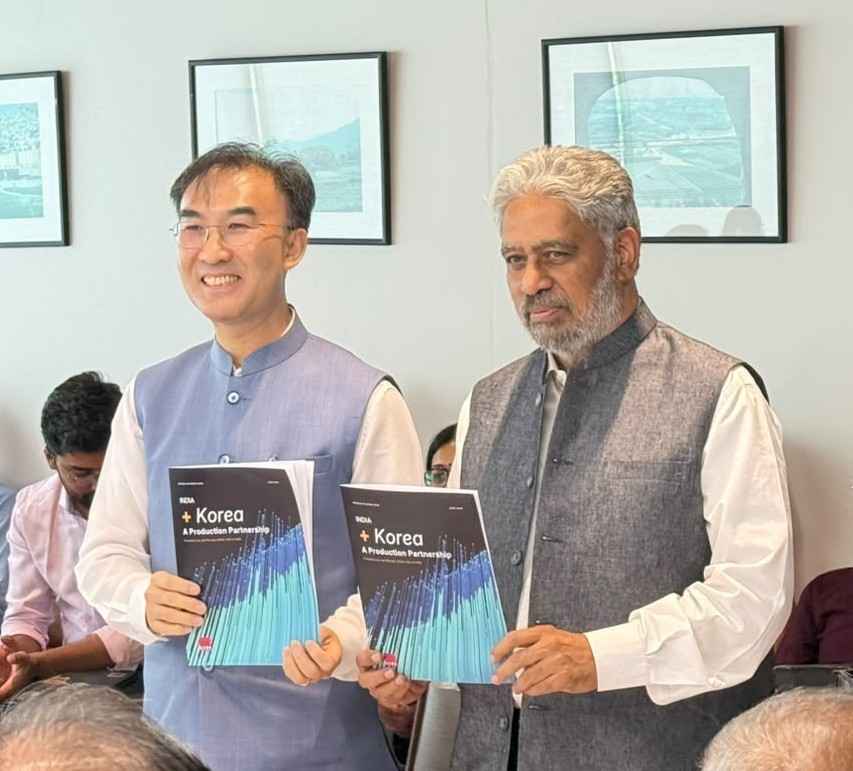
The dialogue focused on the outcomes of the recent Modi–Lee Summit and explored new avenues for bilateral cooperation ranging from semiconductors and advanced manufacturing to shipbuilding, artificial intelligence and strategic technologies.
Addressing the gathering, Ambassador Lee Seong-ho emphasized the immense potential of the India–Korea partnership and called for greater participation of Korean small and medium enterprises (SMEs) in India. He highlighted the need for increased Korean investments, deeper collaboration in artificial intelligence and enhanced people-to-people exchanges, particularly through workforce mobility and professional engagement. He noted that stronger economic and technological ties would further reinforce the strategic partnership between the two nations.
Euy Don Park echoed the Ambassador’s views on the future of India–Korea cooperation, emphasizing the importance of strengthening workforce and industrial partnerships between the two countries. He noted that South Korea is seeking greater skilled manpower and support from India to meet its growing industrial and technological requirements. Highlighting the complementary strengths of both nations, Park said Korea and India share a common vision for growth and development and should work together to build stronger economic, technological and people-to-people connections. He stressed that deeper collaboration would enable both countries to achieve mutual prosperity and grow together in the years ahead.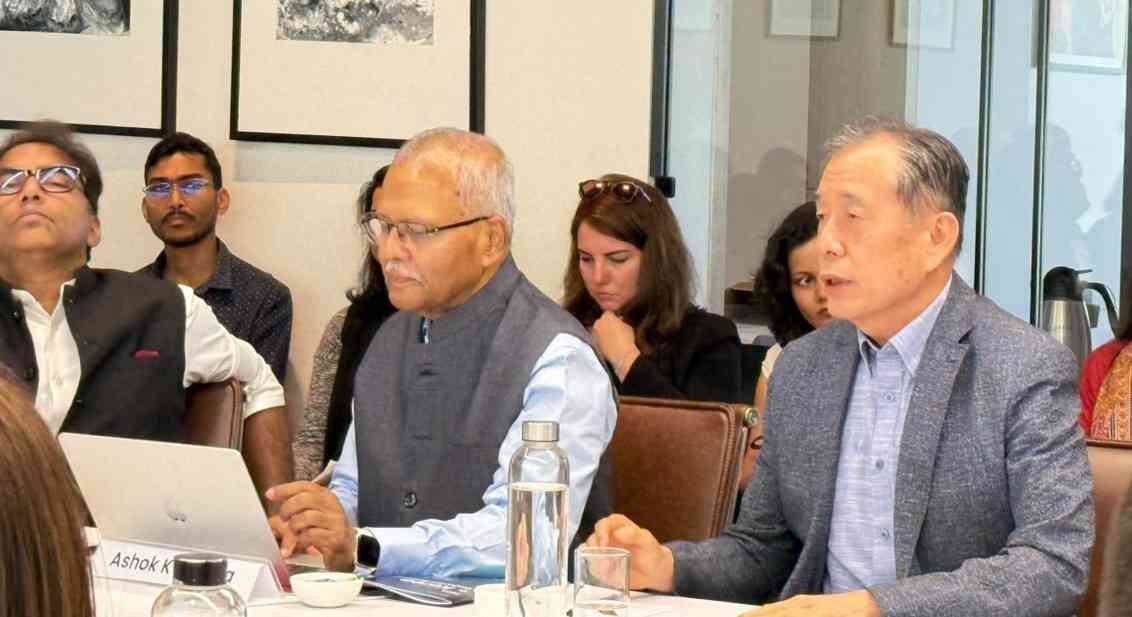
A major focus of the discussion was the future of India–Korea cooperation in the shipbuilding sector. Experts highlighted how India’s growing maritime ambitions and Korea’s globally recognized shipbuilding expertise could create significant opportunities for joint development, technology transfer and industrial collaboration. The participants underscored the importance of leveraging complementary strengths to build resilient maritime supply chains and expand cooperation in commercial and defense shipbuilding.
Speaking on the sector’s prospects, Capt. Sarabjeet S. Parmar (Retd) observed that shipbuilding could emerge as one of the most important pillars of the bilateral relationship in the coming decade. He stressed the need for long-term collaboration, skill development and industrial partnerships to unlock the sector’s full potential.
During the discussion, participants also highlighted South Korea’s growing demand for skilled manpower and the opportunities this presents for India. It was noted that Korea seeks greater workforce cooperation and stronger support from India as both countries pursue shared economic growth and industrial expansion. The speakers emphasized that collaboration in talent development and mobility would contribute significantly to the next phase of bilateral engagement.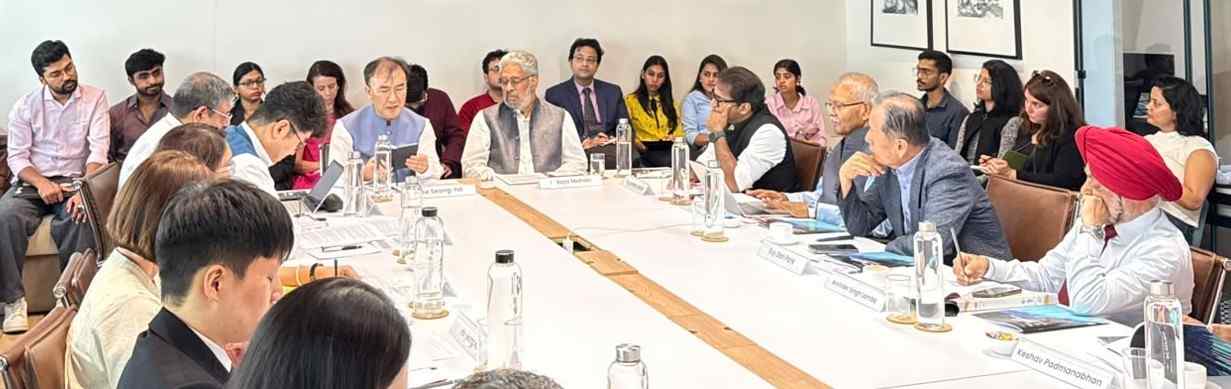
The panelists agreed that the India–Korea relationship is entering a new phase marked by strategic convergence, technological cooperation and economic partnership. They stressed that sustained engagement between governments, businesses, academic institutions and industry stakeholders would be essential for translating shared ambitions into tangible outcomes.
The event concluded with an interactive exchange of views on strengthening bilateral cooperation and charting a roadmap for future collaboration across emerging sectors, reaffirming the commitment of both countries to grow together as trusted strategic partners in the Indo-Pacific region.