Haryana Launches ‘Make in Haryana Industrial Policy’ with Rs 5 Lakh Crore Investment Push, 9 Sectoral Policies
Chief Minister Nayab Singh Saini also unveiled the Intelligent Investment Facilitation Portal and the logo of the upcoming Happening Haryana Global Investors Summit as MoUs worth Rs 1.10 lakh crore were signed on the first day.

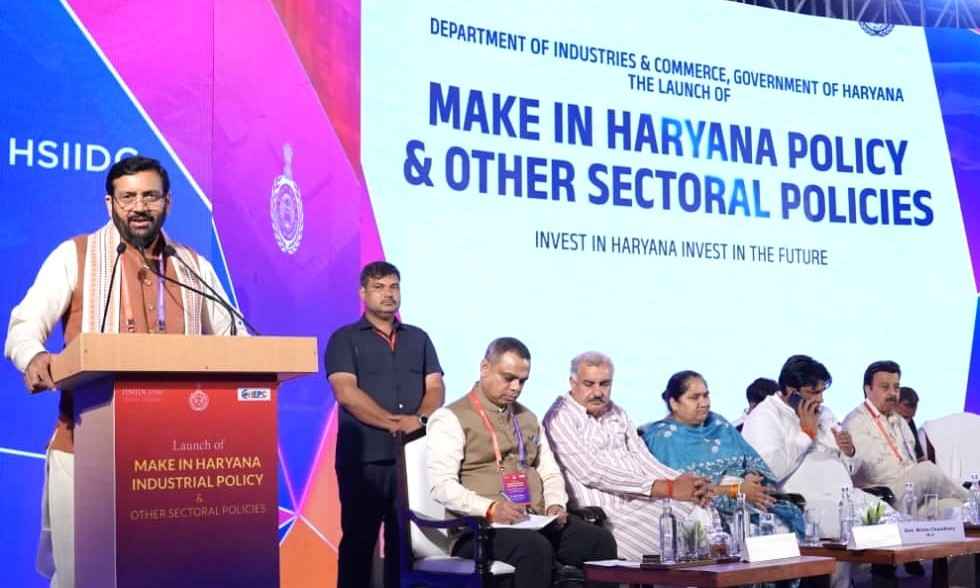
New Delhi: Haryana moved to sharpen its pitch as one of India’s most competitive industrial and investment destinations as Chief Minister Nayab Singh Saini launched the Make in Haryana Industrial Policy 2026 in Gurugram, setting an ambitious target of attracting Rs 5 lakh crore in investments and positioning the state as a future-ready manufacturing and innovation hub.
The policy was launched at Grand Hyatt Gurgaon on June 1 in the presence of Industries and Commerce Minister Rao Narbir Singh. The event was organised by the Department of Industries and Commerce, Government of Haryana, along with HSIIDC and HEPC. The official launch agenda included unveiling of the policies by the Chief Minister, presentation of policy highlights, key announcements, an MoU exchange ceremony, special address by Rao Narbir Singh and a keynote address by the Chief Minister.
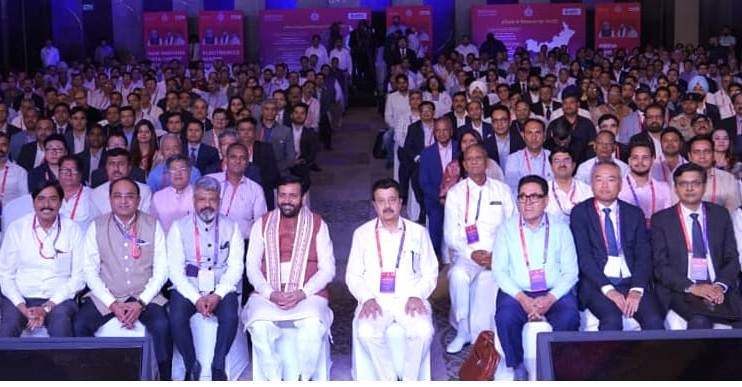 On the very first day, investment MoUs worth Rs 1.10 lakh crore were signed, sending what the state government described as a strong message of industry confidence in Haryana. The companies and organisations that signed MoUs included NTF Group, AUMOVIO, Proterial, National Australia Bank Global Innovation Center, Sumitomo Corporation India, Reliance MET City, Star Wire India, Saatvik Green Energy, India Cellular and Electronics Association, Gautam Solar, Venus Remedies, Varun Beverages, Horizon Industrial Parks, Anant Raj Limited, Welspun One, Star Cement, GLS Group, SMTA, Karnal Pharma Park, Universal Success Enterprises, RAKBANK and Amber Group.
Along with the flagship industrial policy, the Chief Minister also unveiled nine new sector-specific industrial policies, launched an Intelligent Investment Facilitation Portal, and released the logo of the upcoming Happening Haryana Global Investors Summit. The official policy notification, issued on May 26, 2026, stated that the Make in Haryana Industrial Policy 2026 superseded the Haryana Enterprises & Employment Policy 2020 and would remain valid for five years from the date of notification or until a new policy or amendment is introduced, whichever is earlier.
Addressing industry leaders and investors, Saini said the new policy would strengthen Haryana’s industrial ecosystem, simplify investment procedures and create wider opportunities for growth. He described the policy as a new direction and fresh momentum for the state’s industrial development.
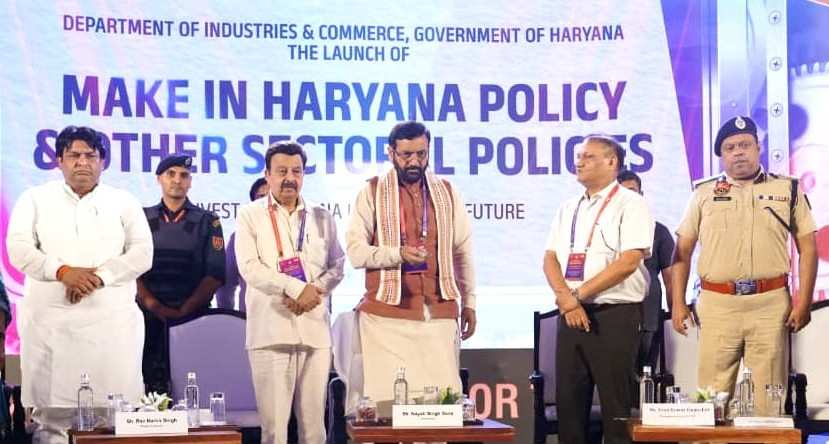 The Chief Minister said the global investment landscape was changing rapidly and investors were no longer looking only at incentives. According to him, industries now assess the larger ecosystem, including faster decision-making, trust, reliability and the ability of a state to become a long-term growth partner.
“Make in Haryana is not merely an industrial policy. It is the roadmap for Haryana’s next phase of economic growth, built on competitiveness, innovation, sustainability, exports, employment generation and future-ready manufacturing,” the Chief Minister said.
Inviting investors from India and abroad, he said, “Invest in Haryana, grow with Haryana and build your future with Haryana. Investing in Haryana means investing in the future.”
Major Takeaways of the Policy
The biggest takeaway from the launch was Haryana’s effort to combine policy incentives with faster governance, sector-specific support and technology-driven facilitation. The government announced a Rs 5 lakh crore investment target and highlighted that the first-day MoUs worth Rs 1.10 lakh crore reflected strong industry confidence in the state.
Another major announcement was the launch of the Intelligent Investment Facilitation Portal, which the Chief Minister described as a transformational step in the way industries would interact with the government. He said the next phase of industrial governance would go beyond ease of doing business and move towards intelligent governance.
The portal is expected to provide investors with a single integrated platform for approvals, land allocation, incentives, compliance support and clearances. According to the government, it will include GIS-based land identification, automated investment blueprint generation, AI-enabled assistance, approval pathway guidance, infrastructure information and comprehensive policy support.
“This is not merely digitisation; it is governance transformation,” Saini said, adding that speed and trust would be the guiding principles of the state’s new investment facilitation model.
The policy also placed strong emphasis on future-ready manufacturing, export competitiveness, green industrial development, research and innovation, startups, MSMEs and sectoral growth ecosystems. The official policy document identifies multiple enablers, including competitive and outcome-based incentives to reduce cost, robust industrial infrastructure, a unified government approach for ease and speed of doing business, a future-ready talent ecosystem, export promotion, sustainable and green industrial development, research-led innovation and promotion of “Brand Haryana.”
The policy seeks to strengthen Haryana’s position as a manufacturing and logistics powerhouse. The state already benefits from proximity to the National Capital Region, expressways, freight corridors, rail connectivity, industrial estates, logistics hubs and access to major markets. The Chief Minister said Haryana, despite having only 1.3 percent of India’s geographical area, contributed nearly 3.6 percent to the country’s GDP, reflecting its strong industrial base.
Saini said Haryana’s extensive network of expressways, freight corridors, rail connectivity, logistics hubs and direct access to the NCR had transformed the state into one of India’s most strategic investment destinations. He added that global companies were now viewing Haryana not only as a manufacturing destination but also as a growth destination.
Industries and Commerce Minister Rao Narbir Singh said the launch would be remembered as a significant milestone in Haryana’s industrial history. He said the government was not merely introducing new policies but reshaping Haryana’s industrial vision to align with future requirements.
“Our objective is not just to establish Haryana as a manufacturing destination but to position it as a leading centre for innovation, exports, technology and future industries,” Rao Narbir Singh said.
He added that the investment agreements, new partnerships and participation of industry leaders demonstrated Haryana’s growing reputation as a trusted investment destination. The investment commitments, he said, were not just figures on paper but would translate into real investment and employment opportunities on the ground.
Principal Secretary to the Chief Minister Arun Kumar Gupta said the launch marked not just the introduction of a policy but the unveiling of a vision for a prosperous future. He said the policy was prepared after extensive consultations with industry representatives and stakeholders, and aimed to create an ecosystem that inspired investor confidence.
He said the MoUs worth Rs 1.10 lakh crore reflected investors’ trust in the Chief Minister, his policies, leadership and the government system. According to him, this confidence would motivate the government to continuously improve governance and deliver on its commitments.
Commissioner and Secretary, Industries and Commerce Department, Dr Amit Agrawal said the objective of the event was not merely to launch a policy but to showcase Haryana’s new vision and investment approach. He said investors today wanted to know whether governments could take quick decisions and act as long-term growth partners.
Dr Agrawal said the Make in Haryana policy was the outcome of serious work carried out over several months and reflected the government’s commitment not only to attracting investment but also to standing alongside industry during future challenges and disruptions.
He added that the simultaneous launch of nine sectoral policies reflected the government’s focus on building sector-specific growth ecosystems. According to him, Make in Haryana positioned the state not merely as a manufacturing base but as a globally competitive investment destination.
Director General, Industries and Commerce Department and MSME Department, Dr Yash Garg made a detailed presentation on the Make in Haryana Policy and the nine newly launched sectoral policies.
A major theme running through the policy is employment generation. The government expects new investments to create opportunities for youth, generate demand for MSMEs, encourage new supply chains and promote wider regional industrial development. The policy also recognises the role of local employees, startups, R&D units, centres of excellence, export-oriented units and large industrial projects in building a more balanced industrial ecosystem.
The official policy framework also gives importance to industrial dispersion across different categories of areas in the state, with differentiated thresholds and incentives for ultra-mega, mega and large projects. This is expected to encourage investment beyond already developed industrial clusters and support balanced regional growth.
Export promotion is another important pillar. The policy aims to make Haryana-based enterprises more globally competitive through support for certifications, export-linked facilitation and product-line diversification. This fits into the state’s larger goal of expanding its manufacturing footprint and connecting local enterprises with global supply chains.
Sustainability has also been placed at the centre of the policy. The new framework encourages green industrial development, renewable energy, circular economy projects, recycling technologies and environmentally responsible industrial practices. This reflects Haryana’s effort to align industrial expansion with climate-conscious growth.
The state also plans to strengthen innovation and technology-led industries. Priority areas include artificial intelligence, electronics, pharmaceuticals, medical devices, AVGC-XR, startups, advanced manufacturing and R&D-led enterprises. The policy’s focus on innovation, research and future industries is aimed at moving Haryana beyond conventional manufacturing towards higher-value economic activity.
The launch event was attended by MLAs Bimla Chaudhary, Tejpal Tanwar, Mukesh Sharma and Randhir Singh Panihar, HSIIDC Managing Director Sushil Sarwan, Media Advisor to the Chief Minister Rajiv Jetly, CCI Sunil Sharma, CP Shivas Kaviraj and ADC Sonu Bhatt, among others.
The Make in Haryana Industrial Policy 2026, therefore, represented a comprehensive attempt to reposition the state for the next phase of industrial growth. With its focus on investment, employment, exports, infrastructure, intelligent governance, sustainability, sector-specific policies and global investor outreach, Haryana has sought to present itself as a state ready to compete for both domestic and international capital.
The real test, however, will lie in implementation. If Haryana can ensure speedy approvals, transparent incentive delivery, effective coordination among departments and faster development of industrial infrastructure, the Make in Haryana Industrial Policy could become a major instrument for accelerating investment-led growth and strengthening the state’s role in India’s manufacturing future.