
High Land Prices in Haryana Pushing New Japanese Investors to Other States: JETRO (I) Chief
ACN EXCLUSIVE: Haryana Chief Minister admitted the high land rates but attributed it to the proximity of the NCR cities to the IGI airport, and to the rising popularity of Haryana as favorite investment destination.

New Delhi/Gurugram: Haryana, once one of the most preferred destinations for Japanese companies setting up manufacturing operations in India, is now facing growing competition from neighbouring Uttar Pradesh and Rajasthan, with high land prices and rising labour costs emerging as key concerns for new investors.
The concern was flagged by Takashi Suzuki, Chief Director General, Japan External Trade Organization (JETRO), India, who said new Japanese investors were increasingly looking beyond Haryana because of steep land costs, including in emerging industrial locations outside Gurugram.
Speaking to Asian Community News (ACN) Network, Suzuki said land prices in Haryana had become a major deterrent for new Japanese entrants.
“The problem is that land prices in Haryana are very high. Newcomers from Japan hesitate to come to Haryana and look for options in Rajasthan and Uttar Pradesh. Some also go to South India,” Suzuki said.
According to him, Haryana’s land allotment mechanism, based on open tendering, often pushes prices upward, making it difficult for genuine industrial investors to compete. He said investors and intermediaries enter the bidding process, acquire premises and then look to sell them at higher prices.
 “Even locations beyond Gurugram, such as Kharkhoda in neighboring district Sonipat are also very costly. That is why potential investors are looking for land parcels in different parts of India,” he said.
Suzuki said Haryana needed to maintain a level playing field and offer competitive land prices, especially when surrounding states were trying aggressively to attract manufacturing investments.
“I do not expect cheap land rates in Gurugram, but Haryana should look at what surrounding states are offering and remain competitive,” he said.
India currently has about 1,500 Japanese companies, while Haryana hosts more than 400 of them, including major names such as Suzuki, Honda and Denso. The state has long benefited from its proximity to Delhi, the international airport, the national capital market, and the established Japanese industrial ecosystem in Gurugram, Manesar, Bawal and other locations.
However, the investment geography is now changing. Uttar Pradesh’s Noida-Greater Noida belt, backed by improving infrastructure and the upcoming Jewar airport, and Rajasthan’s Japanese industrial zones such as Neemrana, are increasingly being considered by new Japanese investors.
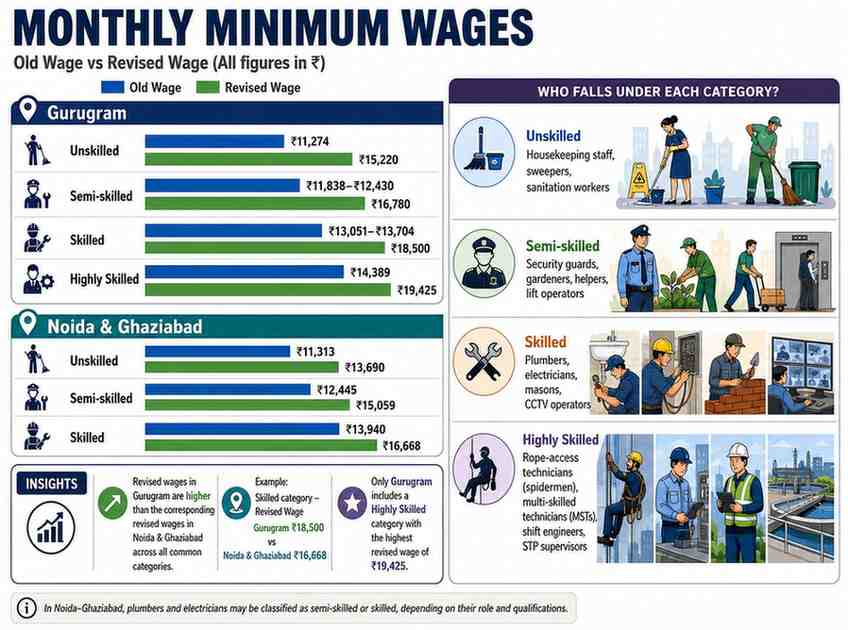
Apart from land prices, labour cost is another factor influencing investment decisions. Industry observers said minimum wages in Haryana have risen more sharply than in Uttar Pradesh after recent labour-related developments in the NCR region. While Uttar Pradesh reportedly raised minimum wages by around ₹2,000, Haryana’s increase was around ₹4,000, adding to cost concerns for labour-intensive and mid-sized manufacturing units.
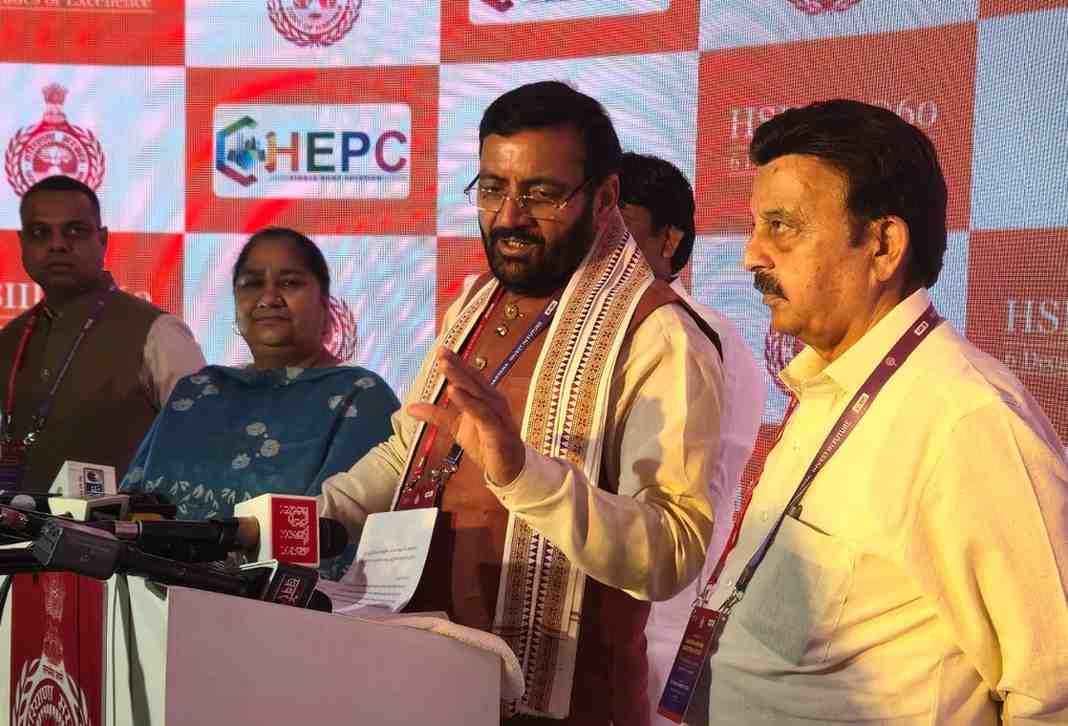
The issue was raised by ACN Network directly with Haryana Chief Minister Nayab Singh Saini during a media briefing on the sidelines of the launch of the “Make in Haryana” Industrial Policy and nine new sectoral policies in Gurugram on Monday.
Responding to the ACN question, the Chief Minister said Haryana continued to enjoy strong investor confidence because of its location, governance and industrial ecosystem.
“Yes, NCR is close to the airport, and every industrialist wants to set up industry here. But land availability is limited. Investors’ trust in Haryana has increased due to the double-engine government under the leadership of Prime Minister Narendra Modi. They want to set up industries here, but land is limited,” Saini said.
When asked whether the upcoming Noida airport could reduce Haryana’s traditional advantage of airport proximity, the Chief Minister said the state government was conscious of the changing competitive landscape and was working to offer more industrial options near Jewar as well as Hisar airport.
He said Haryana had announced 10 new Industrial Model Townships (IMTs), with land acquisition for two of them already completed. The government, he added, was also arranging land for other industrial areas and would soon bring a new land pooling policy to ensure participation and benefit for landowners.
The issue has gained significance at a time when Haryana is seeking to position itself as a renewed manufacturing destination through its “Make in Haryana” policy framework. The policy is aimed at attracting investment across sectors while strengthening the state’s industrial base beyond the Gurugram-Manesar belt.
On the same occasion, JETRO signed a Memorandum of Understanding with the Haryana State Industrial and Infrastructure Development Corporation (HSIIDC). This was JETRO’s first MoU with the Haryana government, although it already has similar arrangements with states such as Uttar Pradesh and Rajasthan.
Suzuki said the MoU with HSIIDC would help strengthen institutional cooperation and facilitate more Japanese investment into Haryana.
JETRO established its first presence in India in 1966 with the opening of its New Delhi office. The latest MoU comes as JETRO moves closer to completing six decades of operations in India, and as Haryana works to deepen its engagement with Japanese companies under its new industrial policy push.
For Haryana, the challenge now is not merely to retain its legacy as a Japanese manufacturing hub, but to convince new investors that it can remain cost-competitive against emerging alternatives in Uttar Pradesh, Rajasthan and southern India