

New Delhi, India, September 6, 2025 — Traveling to Japan is a fascinating experience for Indians, as it offers a blend of modern innovation and deeply rooted traditions. However, the Japanese way of life is guided by subtle manners and unspoken cultural rules. For Indians visiting Japan—whether for tourism, business, or study—it is important to understand these etiquette practices to avoid misunderstandings and to show respect. Cultural awareness not only enhances one’s travel experience but also builds stronger relationships with locals.
One of the most striking differences Indians will notice is Japan’s emphasis on punctuality. Time is considered sacred in Japanese society, and being late, even by a few minutes, is often seen as disrespectful. Indians, who may be accustomed to a more flexible approach to timing, should remember to arrive early for meetings, trains, and appointments. A Japanese train leaving exactly on schedule is a symbol of the nation’s discipline, and travelers are expected to match that punctuality.
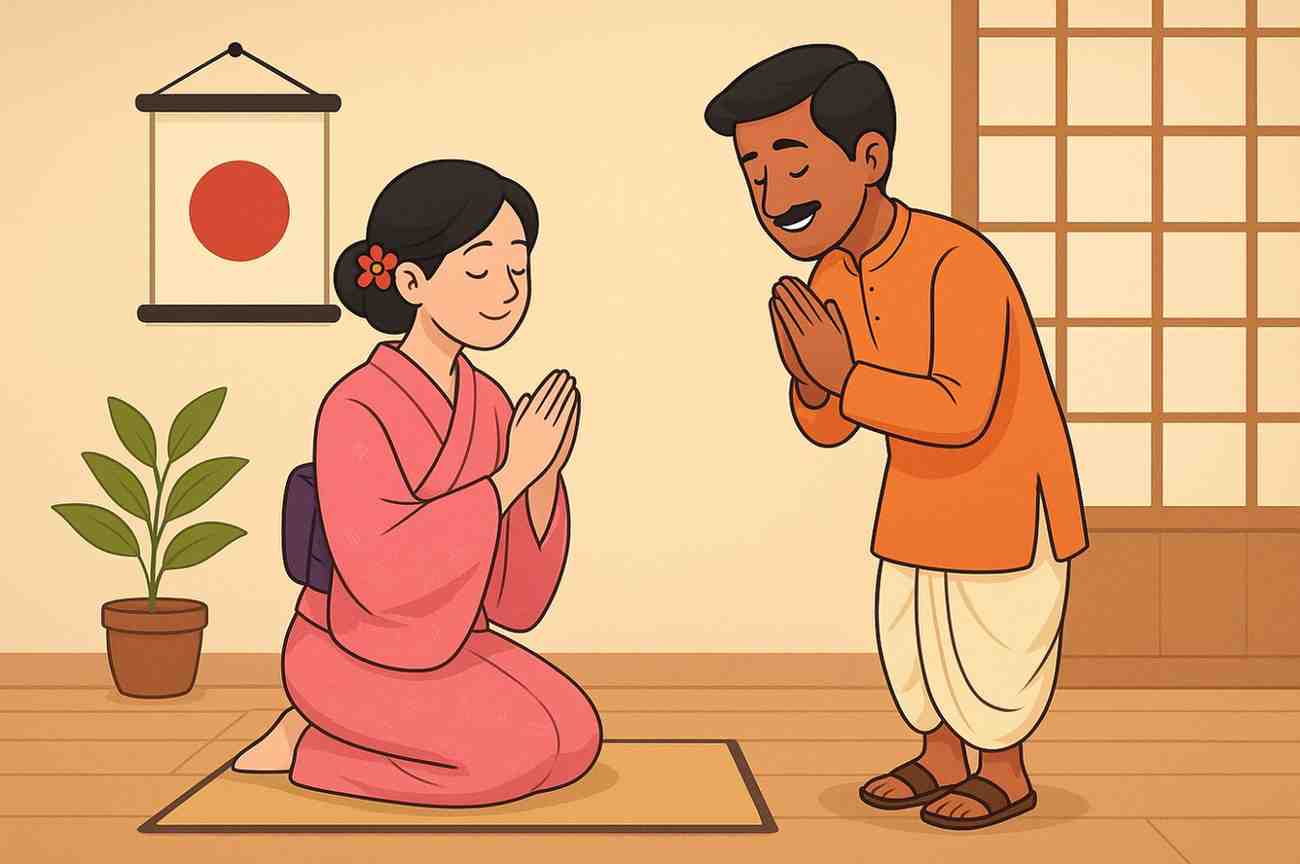
Another key element of Japanese etiquette is the bow. Bowing is a traditional way of greeting, thanking, or apologizing. Unlike the Indian practice of saying “Namaste” with folded hands, the bow has varying depths and durations depending on the context. A casual bow suffices for greetings among peers, while a deeper, longer bow is reserved for formal settings. Indians should be mindful that a handshake is not always the default form of greeting in Japan, though it is becoming more common in international environments.
Dining manners are another area where cultural differences emerge. In India, sharing food from the same plate or eating with hands is common and affectionate. In Japan, however, it is considered polite to use chopsticks properly and avoid actions like pointing with them, sticking them upright in a bowl of rice, or passing food directly from one set of chopsticks to another, as these resemble funeral rituals. Slurping noodles, which may surprise Indians, is perfectly acceptable and even seen as a sign of appreciation for the meal.
Gift-giving also holds special importance in Japanese culture. While Indians often exchange gifts during festivals or family occasions, in Japan, small but thoughtful gifts, known as omiyage, are a way to express gratitude. For example, when visiting someone’s home or returning from a trip, it is customary to bring neatly wrapped souvenirs. Indians should avoid giving gifts in sets of four, as the number is associated with death, and they should take care to present the gift with both hands as a mark of respect.
Public behavior in Japan is guided by consideration for others, something that Indians might find notably strict compared to their own social settings. Talking loudly on mobile phones in trains, eating while walking, or leaving litter in public spaces is frowned upon. Silence is valued in public transport, and cleanliness is maintained to a remarkable degree. Indians traveling in Japan should be mindful to adopt these practices, as they reflect the country’s collective harmony and discipline.
Shoes are another area of etiquette to be aware of. In Japan, it is customary to remove footwear before entering homes, certain traditional restaurants, temples, and even some schools. Slippers are usually provided indoors, and special slippers are reserved for restrooms. While Indians are also familiar with removing shoes in temples and homes, the strictness and universality of this rule in Japan may take them by surprise.
Business etiquette in Japan also differs from India’s. Hierarchy is strongly respected, and exchanges of business cards (meishi) follow a formal ritual. Cards are offered and received with both hands, and one should carefully examine the card before keeping it, rather than stuffing it in a pocket. Indians, who may be accustomed to more relaxed business introductions, should adapt to this formality to leave a positive impression in Japanese corporate culture.
Ultimately, understanding and respecting Japanese etiquette is not about suppressing one’s Indian identity but about showing cultural sensitivity. Indians visiting Japan will find that following these customs opens doors to warmth and hospitality from the Japanese people. The effort to bow politely, handle chopsticks correctly, or maintain silence in public shows not only adaptability but also genuine respect. In return, Indians can share their own traditions with Japanese friends, leading to meaningful cultural exchange. By being mindful of etiquette, every Indian visitor can experience Japan with grace, dignity, and mutual respect.