Former Korean Envoy Finds Shared Spirit Between Hangawi’s Full Moon and Diwali’s Lights
In his Naeil Shinmun column, the ex-diplomat Chang Jae-bok recalls his Diwali memories in India, drawing parallels between Korea’s Chuseok and India’s Festival of Lights as symbols of gratitude and community.

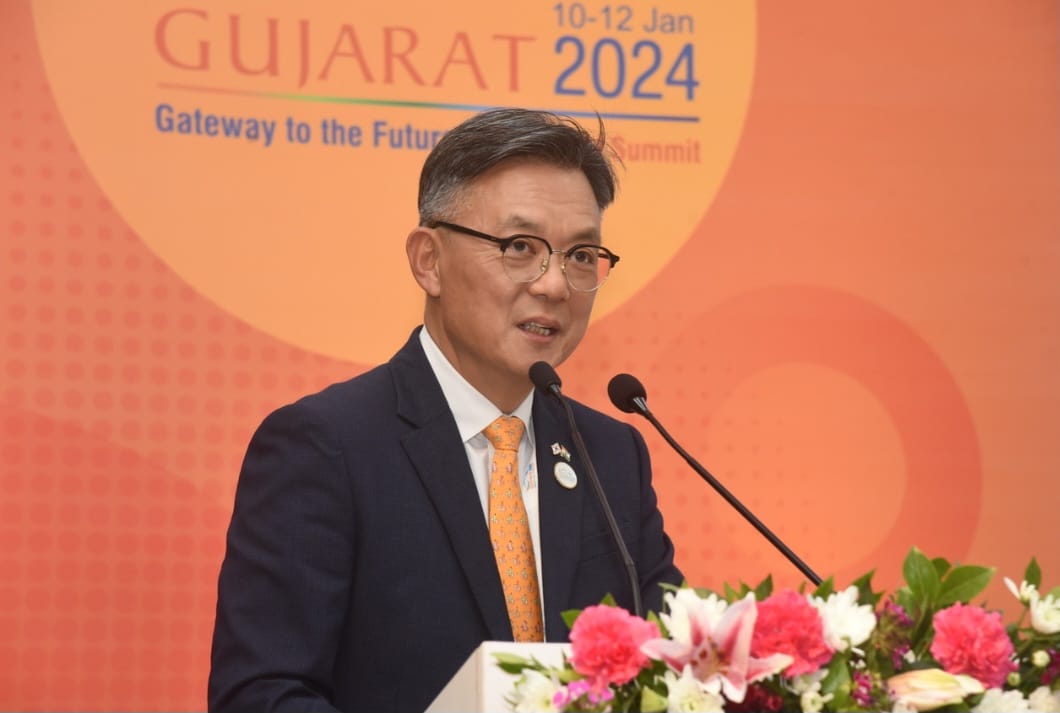
New Delhi, India – A former Korean envoy to India has drawn a heartfelt cultural connection between Korea’s Chuseok (Hangawi) and India’s Diwali, describing both as festivals that illuminate the shared values of gratitude, abundance, and togetherness. Writing in his Friday column in the Korean daily Naeil Shinmun, the diplomat reflected on his personal memories of Diwali during his posting in India, and how they resonated with his lifelong celebration of Hangawi back home in Korea.
The Korean ambassador had a successful stint in New Delhi between July 23, 2021, and July 20, 2024, during which he made headlines due to his distinctly India-centric approach. He was generally seen in the Modi jacket during his tenure here. Ambassador Lee Seong-ho succeeded him.
“During my years in India, I vividly remember the streets glowing with countless lamps during Diwali—the Festival of Lights. That sight often reminded me of the bright full moon of Hangawi, which I always cherished with family back home,” he said in a social media post introducing his column titled The Full Moon of Hangawi and the Lights of Diwali: Festivals that Connect Korea and India.
In the article, he explored the essence of Hinduism to explain the cultural and religious backdrop of Indian festivals. Unlike other world religions, he wrote, Hinduism has no single founder, messiah, or authoritative text; instead, it embodies a vast civilizational mosaic of beliefs, philosophies, rituals, and traditions that have shaped Indian society for millennia.
He likened its pervasive influence on daily life—covering food, dress, marriage, and social practices—to Korea’s Confucian heritage.
Turning to Diwali, he described it as India’s most important holiday, celebrated in late October or early November, when streets and homes across the country glow with oil lamps and skies are lit with fireworks.
The festival, he noted, is both an agricultural and spiritual milestone: it marks the end of the monsoon and the onset of the harvest-friendly dry season, while also symbolising the triumph of light over darkness and renewal over despair. Families clean their homes, don new clothes, exchange gifts, and pray for prosperity during this time of joy.
Comparing this with Hangawi, celebrated under the radiant full moon of autumn, he found a profound similarity: both festivals are anchored in agrarian traditions, family gatherings, and the symbolism of light and abundance. The moonlit sky of Hangawi and the lamps of Diwali, he wrote, “shine as beacons of hope for tomorrow.”
“Though different in ritual form, both festivals emphasise gratitude, sharing, and community,” the former envoy explained, adding that such parallels offer fertile ground for cultural understanding between the two nations.
He concluded that as Korea and India continue to strengthen their economic, technological, and security ties, mutual appreciation of each other’s cultural foundations will be vital. “To understand Hindu festivals is not merely to learn about ritual; it is to glimpse the very heart of India—and in doing so, to build another bridge of connection between our two nations,” he wrote.
As both Hangawi and Diwali approach in the coming weeks, his reflections resonate as an invitation for Koreans and Indians alike to celebrate light, prosperity, and community while deepening the bonds of friendship.