Global Scholars converge at AUH–AKS Int’l Conference to Explore Korea–South Asia Partnerships
Two-day academic event at Amity University Haryana explored cultural heritage, strategic cooperation, Hallyu influence, diplomacy, and emerging people-to-people dynamics

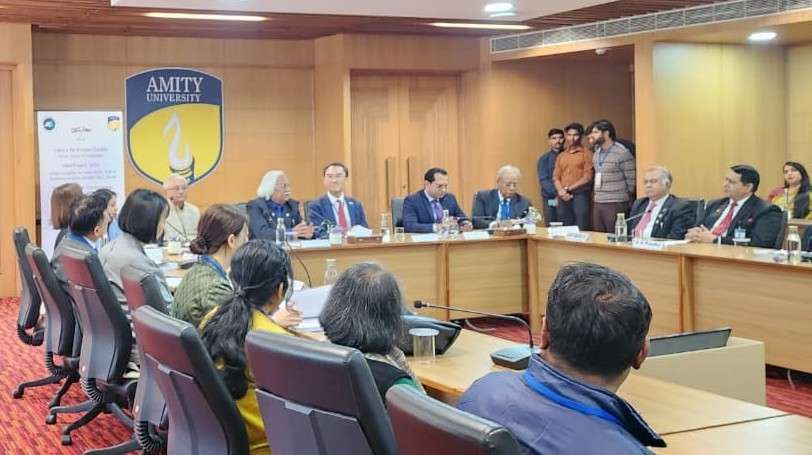
Gurugram, India – Amity University Haryana hosted a landmark two-day international conference titled “From Cultural Affinities to Strategic Partnerships: Multifaceted Perspectives on Korea–South Asia Partnerships” on 20–21 November 2025, under the AUH–AKS Seed Project 2024–2027 supported by the Academy of Korean Studies (AKS), South Korea. The conference took place at the D-Block Conference Hall and brought together eminent diplomats, senior academics, researchers, and members of the Korean community, reaffirming the growing significance of Korean Studies in India.
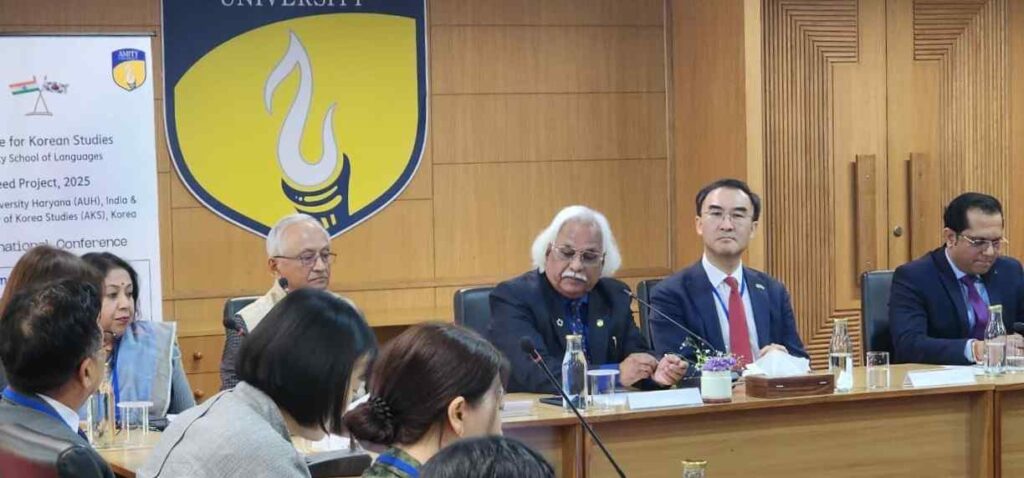
The event opened with a formal inaugural ceremony that set a distinguished tone for the discussions that followed. Dr. Santosh K. Gupta, Associate Professor at AUH and Project Director of the AUH–AKS Seed Project, introduced the conference theme and welcomed the delegates. Prof. (Dr.) Vikas Madhukar, Pro Vice-Chancellor of Amity University Haryana, extended the official welcome address, after which Vice-Chancellor Prof. (Dr.) P. B. Sharma inaugurated the conference by reflecting on the expanding academic interest in Korean Studies within India’s higher education ecosystem. His remarks were followed by special addresses from several dignitaries.
Former Indian Ambassador to South Korea, Mr. Skand Tayal, highlighted the historical depth and contemporary value of India–Korea friendship, particularly in the context of shared democratic values and complementary economic strengths. Prof. (Dr.) Dhananjay Singh, Member Secretary of the Indian Council of Social Science Research (ICSSR), underscored the importance of interdisciplinary research in understanding evolving bilateral dynamics.
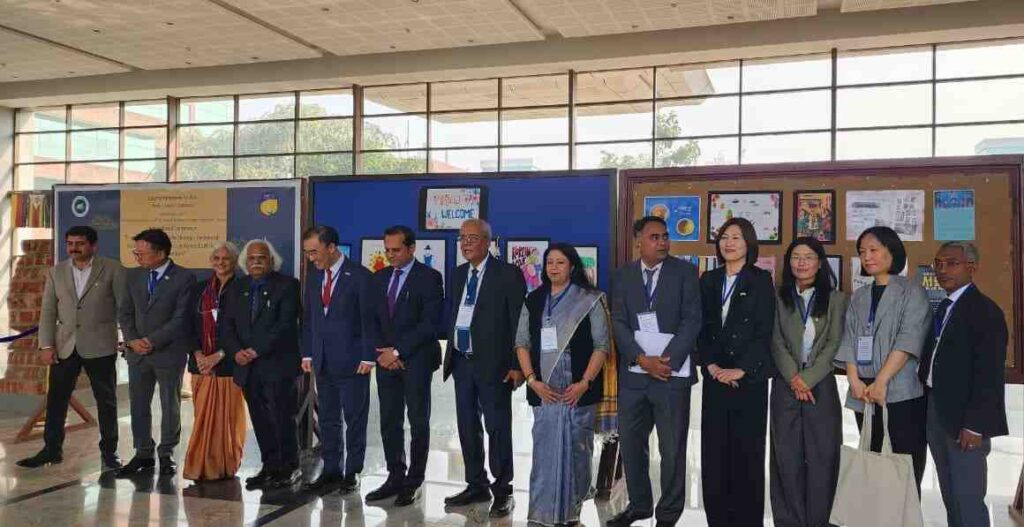
Additional remarks were delivered by Prof. (Dr.) Ranjana Mukhopadhyaya of the University of Delhi, Ms. Anju Ranjan of the Indian Council for Cultural Relations (ICCR), Ms. Ho Jeong Ko from the Korean Education Centre in India, and Mr. Kwang-il Lee, President of the Korean Association in India.
The inaugural session culminated in a congratulatory message from Mr. Lee Seong-ho, Ambassador of the Republic of Korea to India, who praised the conference for strengthening academic, cultural, and people-oriented cooperation between both nations. Prof. (Dr.) Udaya N. Singh delivered the vote of thanks.
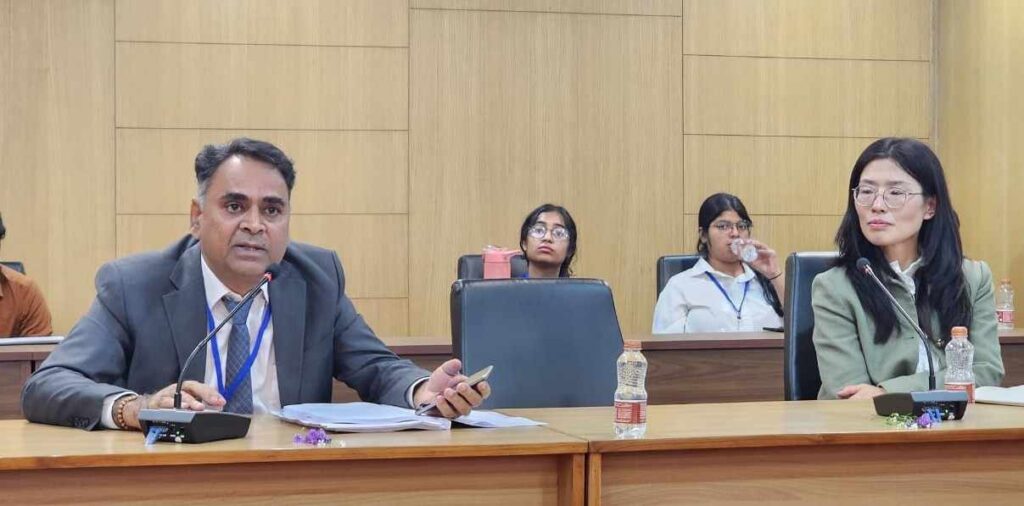 The first day of the conference continued with sessions dedicated to historical, cultural, and strategic dimensions of Korea–South Asia relations. Scholars presented research tracing ancient cultural connections such as those described in Samguk Yusa, the Indic influences on the formation of the Korean script, the spread of Hallyu across Bangladesh and its impact on youth identity, and new geopolitical developments involving North Korea and Russia.
Discussions also addressed the pedagogical value of Korean folktales for Indian learners of the Korean language. The afternoon session shifted the focus toward education and cultural diplomacy, examining how Korean culture shaped language learning preferences, mobility patterns between Nepal and Korea, and the rising significance of strategic educational partnerships between South Korea and India. Presenters also explored the growing influence of Korean popular culture on South Asian consumer behavior.
The second day opened with a session that investigated emerging cultural and societal issues in India–Korea engagement. Participants discussed the evolution of Korean soft power, perceptions of corruption and trust in both societies, the role of the Indo–Myanmar border in diffusing Korean culture into India, and historical echoes that connected the two civilizations.
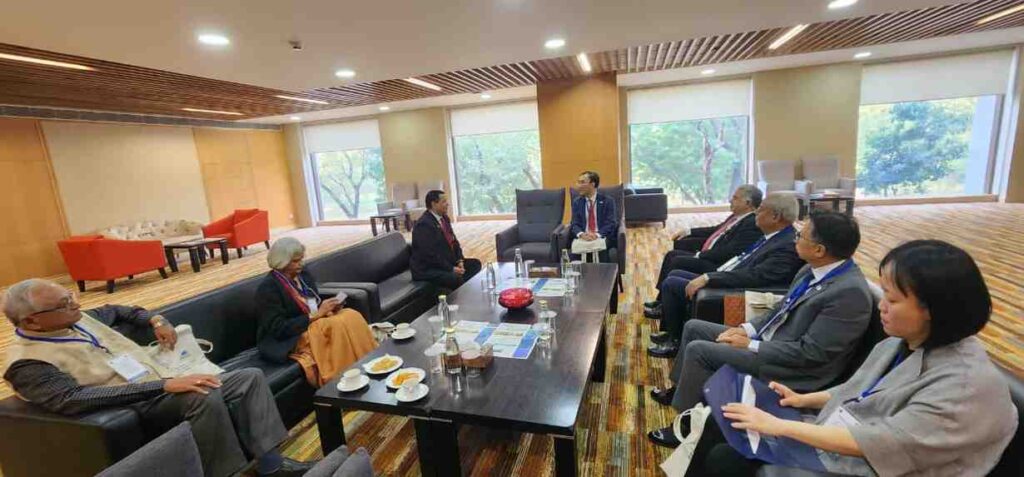 This was followed by a session on digital culture, regional order, and societal change, where scholars examined topics such as the Ayodhya–Korea civilizational link, the rise of K-pop and K-drama among Indian youth, and the changing structure of Korean families in a rapidly modernizing society.
Another session addressed policy transformations and religious connections, offering insights into shifts in diplomatic relations from the era of Buddhist cultural exchange to contemporary cooperation driven by globalization. Scholars also discussed South Korea’s foreign policy under President Lee Jae-myung, India–Korea strategic coordination in a multipolar world, and the expanding multicultural environment in South Korea, shaped partly by international students.
The final thematic session focused on demographic change, youth culture, and mobility-based cooperation. Presenters reflected on the importance of educational exchanges, feminist readings of K-drama, transcultural youth identities shaped by Hallyu, and the enduring legend of Princess Suriratna and King Suro as a symbol of Indo–Korean civilizational bonds. The discussion concluded with comparative perspectives on democratic movements in both countries.
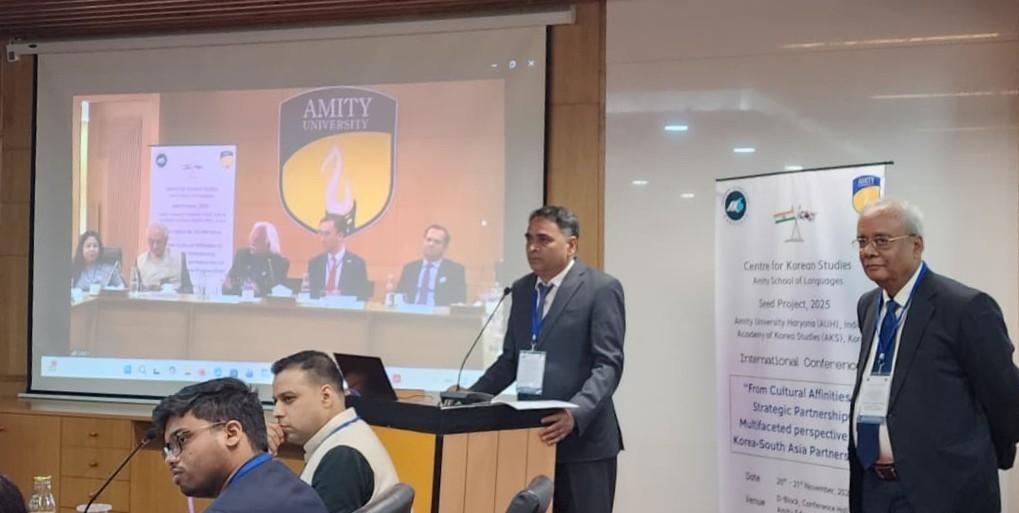 Across both days, the conference succeeded in fulfilling its objective of closely examining the historical, cultural, socio-economic, and geopolitical layers shaping Korea–South Asia relations. It provided an essential platform for established academics, emerging scholars, and graduate students to present research on themes ranging from global migration and demographic challenges to the diffusion of Korean popular culture across South Asia.
It also strengthened the collaboration between academia, policymakers, and the Korean community living in the National Capital Region, aligning closely with the goals of the AUH–AKS Seed Project.
The conference concluded with closing remarks from Dr. Santosh K. Gupta, who presented the progress report of the AUH–AKS Seed Project 2024–2027. He emphasized the significant advancements made in promoting Korean Studies at Amity University Haryana and outlined future plans for the project. Certificates of participation were distributed to all presenters and delegates, marking a successful conclusion to the two-day academic event.